





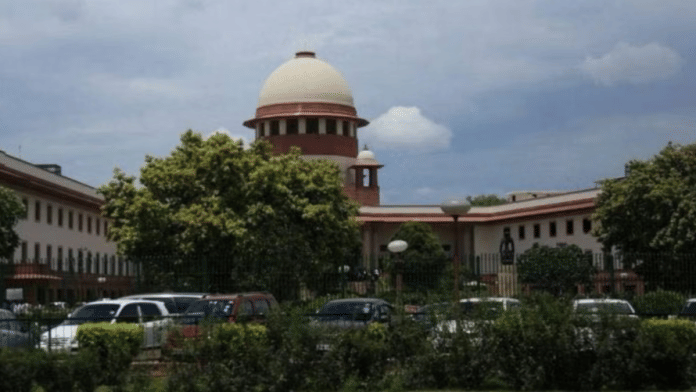



New Delhi: The Supreme Court has stayed the 2026 UGC regulations meant to tackle cast-based discrimination in higher education institutions, expressing concerns over the norms.
The top court has said that the regulations must be revisited by an expert committee, involving key jurists. The regulations are prima facie “vague” and “capable of misuse”, the court has observed.
The University Grants Commission’s Promotion of Equity in Higher Education Institutions Regulations, 2026, notified on 13 January, have sparked a sustained controversy, leading to protests, political backlash, resignations of BJP office-bearers and legal challenges across the country.
A major issue for general category students and BJP leaders is the removal of a section on “false complaints” from the draft. The earlier draft provided for fines or disciplinary action in cases of “false complaints of discrimination”.
The regulations, framed to “prevent caste-based discrimination” and promote equitable treatment in colleges and universities, mandated that every higher education institution (HEI) set up ‘Equal Opportunity Centres (EOCs)’, equity committees, 24×7 helplines, and monitoring teams to receive and resolve complaints of harassment of Scheduled Castes (SC), Scheduled Tribes (ST), Other Backward Classes (OBC), persons with disabilities (PwDs) and women.
According to the UGC, the new rules aimed to create “safer, discrimination-free campuses” by institutionalising mechanisms for redressal and awareness building. Each HEI must handle complaints and take corrective action within prescribed timelines and report annually to the regulator.
Supporters asserted these measures aligned with constitutional principles and the objectives of the National Education Policy (NEP) 2020, which emphasises inclusion and equity.
However, the language and design of the regulations—particularly a focus on protections for SC, ST and OBC students—have drawn sharp criticism from many. Several upper-caste organisations claim the provisions might be misused for false complaints against students and faculty from their communities.
Also Read: Brahmins weren’t always ‘dominant’ in medieval India. How history can decode UGC controversy
Seems like even the courts have started waking up after having seen the misuse of IPC 498A over the years. In this day and age, “blatant discrimination” like yesteryears is not a reality anymore. Justice means providing equal chance to both sides to prove innocence.