





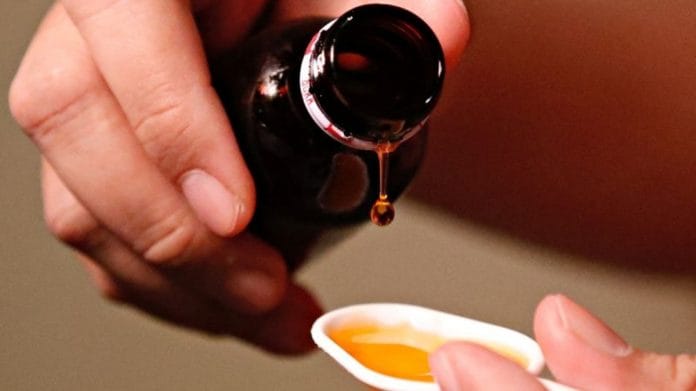



New Delhi: Holding directors wholly and fully responsible for running a company, the Allahabad High Court has declined relief to six directors of a Noida-based pharmaceutical firm that manufactured cough syrups which was linked to the deaths of at least 18 children in Uzbekistan in 2022.
A bench of Justice Harvir Singh refused to quash the summons issued to Marion Biotech and its directors by a Gautam Budh Nagar trial court in January 2024 for violating the provisions of the Drugs and Cosmetics Act, 1940.
The company and the directors are booked for violating several provisions of the law. They are charged with manufacturing spurious and adulterated drugs and misbranding.
In its 14 January order, the court also remarked that substandard drugs are a major issue in the health system, and that the “enforcement of public health laws cannot be thwarted by technical objections”.
The company and its directors had argued they could not be held liable simply because they held the designation of directors, but the court rejected this argument saying it led “nowhere”. The court said the directors were “fully responsible” as the company would not exist without them.
According to the directors, there was no allegation of direct liability, involvement, connivance or neglect against them, which they argued, are essential elements required to impute criminal liability against company officials.
Justice Singh said the directors are “closely associated” with the company’s day-to-day working and in their absence the company does not exist. To accept the directors’ argument, felt the judges, would be a narrow interpretation of the law, and would defeat the purpose and objective of the Drugs and Cosmetics Act.
The drugs inspector had operated well within his rights under the Drugs and Cosmetics Act, 1940, by collecting samples of the syrup and initiating prosecution based on the lab results, the court noted in its order, while rejecting the company’s concerns about the manner of carrying out the sample-collection.
The report which was prepared after this analysis also laid the basis for prosecution of the company and its directors, the court pointed out.
Also Read: Noida pharma company linked to Uzbekistan deaths halts cough syrup production, says report
The court’s ruling
The case is related to DOK-I Max cough syrup manufactured by Marion Biotech and it was linked to deaths of children in Uzbekistan. The court noted that the magistrate had issued a summoning order, requiring the company’s directors to present themselves before the court.
The court also said ethylene glycol was used in the syrup despite it being prohibited under prevailing quality standards for medicines in 2021.
Appearing in the case, the Centre said, “Ethylene Glycol and Diethylene Glycol were completely prohibited for use in manufacturing of DOK 1 Max Syrup.”
But, test reports showed that these were used in manufacturing the syrup, the Centre said.
It said both of these chemicals are toxic and harmful for human health. They are used in lubricants, brake fluid and inks, and if swallowed, can result in coma, seizures or even renal failure, the Centre said.
In its 21-page ruling, the court also said that Marion Biotech had failed to produce the supplier certificate, which would show the analysis of propylene glycol used in their products, as was required under the 1940 Act.
The court also said the cough syrup company had purchased and used an industrial grade, non-pharmaceutical chemical like propylene glycol from a company called Maya Chemtech India, which did not hold any drug license.
A drug license is a basic prerequisite to manufacturing a drug.
‘Not of standard quality’
The company directors were summoned by Gautam Budh Nagar’s Chief Judicial Magistrate in January 2024, after a complaint was filed against them with the drugs inspector, alleging violations of the manufacture and sale of drugs which were declared to be “not of standard quality”.
The basis for acting against the company and its directors was a test analysis report which declared certain samples to be of substandard quality, under the 1940 Act. However, the company’s lawyers argued that the report fell short of Rule 46 of the Drugs Rules, 1945, which states that the full protocol, methods or results of drugs must be disclosed.
The company’s lawyers argued before the court that the summons were issued without proper application of mind, and that the complaint didn’t disclose any specific allegations showing that the directors were responsible for the conduct of the company’s business.
They also argued that no valid sanction was obtained for filing the complaint from the state or central government, as is required under Section 32 of the Drugs and Cosmetics Act, and thus, the complaint suffered from procedural irregularities.
On the other hand, the Centre argued the company and its directors had violated the Act by using Ethylene Glycol while manufacturing the cough syrup, which was completely prohibited under the applicable British pharmacopoeia, which was an annual compilation of quality standards for medicines, prevailing in 2021 when the cough syrup was manufactured.
It also argued that the analytical report is enough evidence for the case to proceed.
(Edited by Ajeet Tiwari)
Also Read: Indians are obsessed with cough syrups. Are they really needed?