





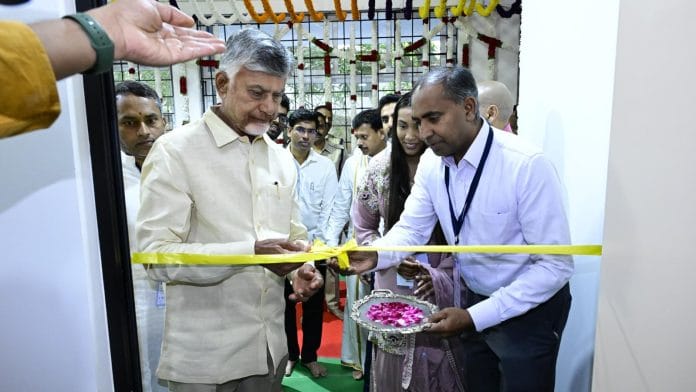



Tirumala, Andhra Pradesh: When reports that adulterated ghee may have been used to make the famous Tirupati laddu first surfaced in 2024, the deputy chief minister of Andhra Pradesh, K. Pawan Kalyan, was furious.
“I’m willing to stake everything for the sake of Dharma. My life, my family, my political career, and my political position,” he declared emphatically.
Chief Minister N. Chandrababu Naidu, who claimed that the laddus offered to Lord Venkateswara were made with inferior ingredients during the Yuvajana Sramika Rythu Congress Party’s (YSRCP) tenure, thundered at a press conference at Amaravati that he wouldn’t care even if he lost his life protecting the sanctity of the temple dedicated to Lord Venkateswara.
The intensity of the statements was a reflection of the importance of the issue, both to them and to millions of Hindus shaken by the suggestion of adulteration of the sacred laddu allegedly with animal fat.
Nearly three crore Hindus visit the temple town of Tirumala in Andhra Pradesh’s Tirupati district each year, and an average of 3.5 lakh to 4 lakh laddus are given to devotees as prasadam (sacred offering) every day.
Given the nationwide outrage, the government immediately got down to handling the crisis at the hilltop shrine.
To begin with, the Central Bureau of Investigation (CBI) was called in, and a Special Investigation Team (SIT) was constituted to probe the procurement of ghee for the Tirupati laddu.
The CBI-supervised SIT finally found no animal fat in Tirupati laddu ghee, refuting Naidu’s allegations against the previous YSRCP administration. Instead, it confirmed that 5,971 tonnes of what was called ghee was adulterated with vegetable oils, causing the Tirumala Tirupati Devasthanam (TTD) a Rs 234 crore loss due to supplier-staff collusion.
The YSRCP is now demanding an apology for the claims and has since been protesting in Vijayawada and other towns. The issue was tabled for discussion in the assembly on 24 February, when 10 MLAs from the ruling Telugu Desam alliance were asked to speak.
Apart from the SIT, purification rituals according to the Agama Shastra, practical manuals of Hindu rituals, were held at the temple, managed by the TTD, the world’s richest temple administration body.
The TTD blacklisted and barred dairy companies accused of malpractices in ghee processing and sales, allegedly during the term of the previous government led by YSR Congress Party founder Y.S. Jagan Mohan Reddy.
The party chief, his uncle Y.V. Subba Reddy, who was the TTD Board chairman at the time, and the administrators who headed the TTD during his tenure, have denied any wrongdoing.
Since then, the Naidu government has been in overdrive, overhauling processes and policies to restore people’s faith.
What began with the disposal of adulterated ingredients and fresh sourcing of ghee from certified suppliers who meet Food Safety and Standards Authority of India (FSSSAI) standards culminated in an administrative cleanse of outdated processes and redundant policies.
From restructuring the TTD and relooking at administrative functions to overhauling the entire procurement process of raw materials and streamlining testing and storage systems, the government has taken a series of measures to restore confidence.
“Our systems in every department from planning and procurement to pilgrim safety and temple security have been redesigned keeping in mind transparency and accountability to the devotees and our donors,” Ch Venkaiah Chowdhary, additional executive officer of the TTD, told ThePrint.
Multi-department reform at TTD
The government has overhauled systems across departments to protect the 300-year-old tradition of preparing and offering the laddus to Lord Venkateswara.
Under the leadership of B.R. Naidu, the newly elected TTD chairman under the Telugu Desam-led government, IAS officer J. Syamala Rao was brought as the executive officer (EO) to “clean up” the system.
New appointments to the posts of additional executive officer and assistant vigilance and security officer (AVSO) signalled efforts to revamp the top brass of the administrative body.
Shortly after, the heads of procurement, marketing, storage, and security were called to present plans for improving efficiency. Fresh budgets were sanctioned for each department, and progress reports were submitted to the cabinet every week.
The changes weren’t limited to an administrative reshuffle and fresh budgets. Authorities also overhauled the entire process of making and distributing laddus.
The process is staggering, and the TTD requires much more than a few hundred hands and heads working together in each department.
The TTD uses 10,000-15,000 kg of ghee per day, seven tonnes of gas, 10 tonnes of gram flour, 10 tonnes of sugar, about 800 kg of cashew, 540 kg of raisins, 250 kg of cardamom, and approximately 500 kg of sugar candy to make four lakh laddus a day, temple priests said.
Separately, nearly 15 tonnes of rice and approximately eight tonnes of vegetables are used to dish out elaborate free meals on plantain leaves to lakhs of devotees at the Annaprasadam centre.
“Our procurement numbers are so large that even if we bought out the ingredients needed from every single grocery store in Tirupati town, we would fall short of items by a huge margin,” Tilak Kumar, head of the Srivari Potu, or where the prasadam is prepared, told ThePrint.
“So, only machines can help maintain the purity of ingredients at such a large scale,” he added.
The main storage centre, or Ugranam, where the process begins, was the starting point of change.
Two new machines were procured at a cost of Rs 75 lakh to grade and sort more than 60 items used in everyday prasadam preparation.
A Genn Controls India conveyor belt sorts and grades ingredients of all sizes and shapes, checking sacks of aromatic ingredients and cloves for any anomaly in density, colour or size. It also separates any items that do not match the computerised notification set for identifying substandard items.
To prevent stockpiling as well as ant and rodent attacks, jaggery, almonds and tamarind are stored in refrigerated rooms in the Vagabadi, or godown, along with rice, flour and other items.
As a newly-introduced best practice, stock is held in the outer quarters of the temple only for 10 days and in the inner quarters close to the sanctum only for two days.
To maintain hygiene standards, advanced Tray Cleaning Unit (TCU) machinery is used to remove ghee and grease and steam-clean 12,000 trays a day before they are stacked with laddus in the inner sanctum and sent off to the 64 laddu counters at the dispatch centre.
But the most critical component of this exercise is the testing of ingredients.
The existing lab was upgraded with new equipment sent by the National Dairy Development Board (NDDB) in December 2024, a few months after the adulteration reports surfaced.
The TTD spent about Rs 1 crore on testing equipment from laboratories across the country, the officials told The Print.
Apart from a sensory evaluation of the colour, smell, taste, texture and appearance, ghee sourced from various dairy units is also checked for additives, preservatives and any adulterating agents.
After 2024, the TTD lab also introduced a fatty acid composition test.
Lakshminarayana Reddy, the head of the in-house laboratory, told ThePrint that ghee samples are now tested every other day, and the tankers that transport ghee are sent to the storage unit only after clearing the battery of tests conducted by the lab.
The lab strength was almost doubled in December 2024 to ensure there is no fatigue amongst the employees.
A new lab, being set up near the old one for Rs 19.75 crore, will be triple certified by the NDDB, FSSAI, and the National Accreditation Board for Testing and Calibration Laboratories (NABL).
Once a quarter, the TTD lab’s results will be sent to these institutions for cross-verification of processes and results.
“When the new FSSAI lab comes up in a few months, we will have a designated analyst for every parameter. All legal protocols will be followed in addition to the ones in place now, and the laddu will also be checked for its nutritional value, something we have not done so far,” Reddy added.
Critics of the TTD administration have questioned the propriety of self-certification by an in-house lab. But past EOs say relying on test results from external labs could delay the use and disposal of stocked ingredients.
Re-tendering ghee procurement
After the administrative changes to the marketing, storage, and testing departments, the procurement process was next in line for a major overhaul.
Ghee, after all, was at the centre of the controversy that brought the TTD and its 30,000 employees, both full-time and contractual, under scrutiny.
Key changes in the process of procuring ghee include maintaining the quality of ghee during transportation.
To ensure it does not deteriorate during transportation, the previous collection range of 1,500 km has been reduced to 800 km.
Technical monitoring is enabled through a mandatory GPS lock system for tankers transporting ghee.
“When the retendering was conducted, tenders were conducted in seven phases between 2024 and 2025, and a total of four companies qualified to supply ghee,” B.R. Naidu told ThePrint.
“The dairy companies that won the tender passed all the tests as per FSSAI and NDDB norms. The price of ghee was also as per the recommendations of NDDB experts. The tender allocation was done in the most transparent manner,” he added.
The changes in the tendering process and tightening of rules had an almost immediate effect.
The TTD reported record laddu sales in January. The temple administration said sales hit an all-time high in 2025, with 13.52 crore laddus sold during the year, a 10 percent increase over 2024.
Daily production now averages 4 lakh units to meet the increased demand. Temple executives said this was a reflection of devotees reposing faith in the administration.
A regular prasadam laddu weighs 175 gms and costs Rs 50, while the bigger one, sold for Rs 100, weighs 700 gms.
Integrated Command Control Centre
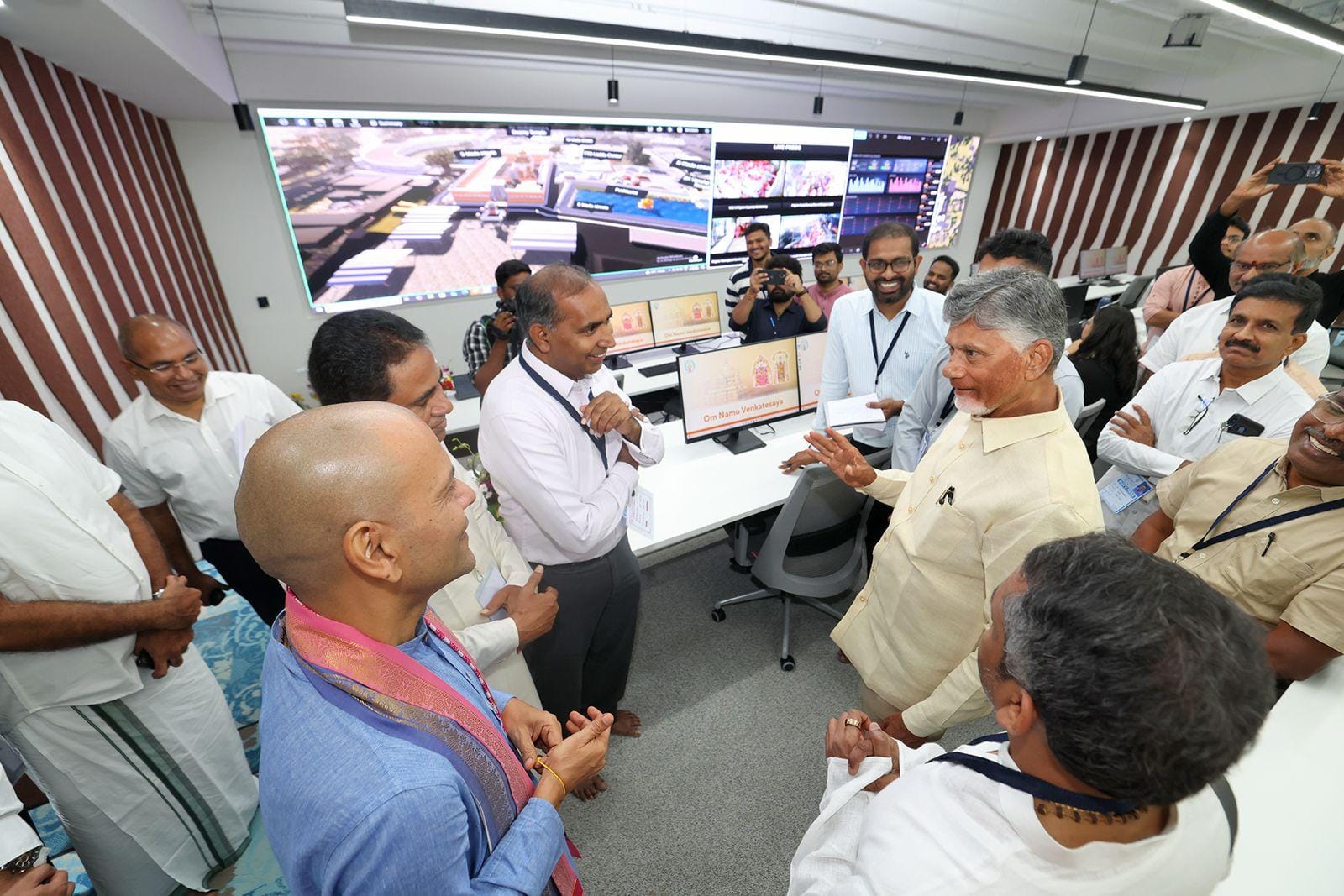
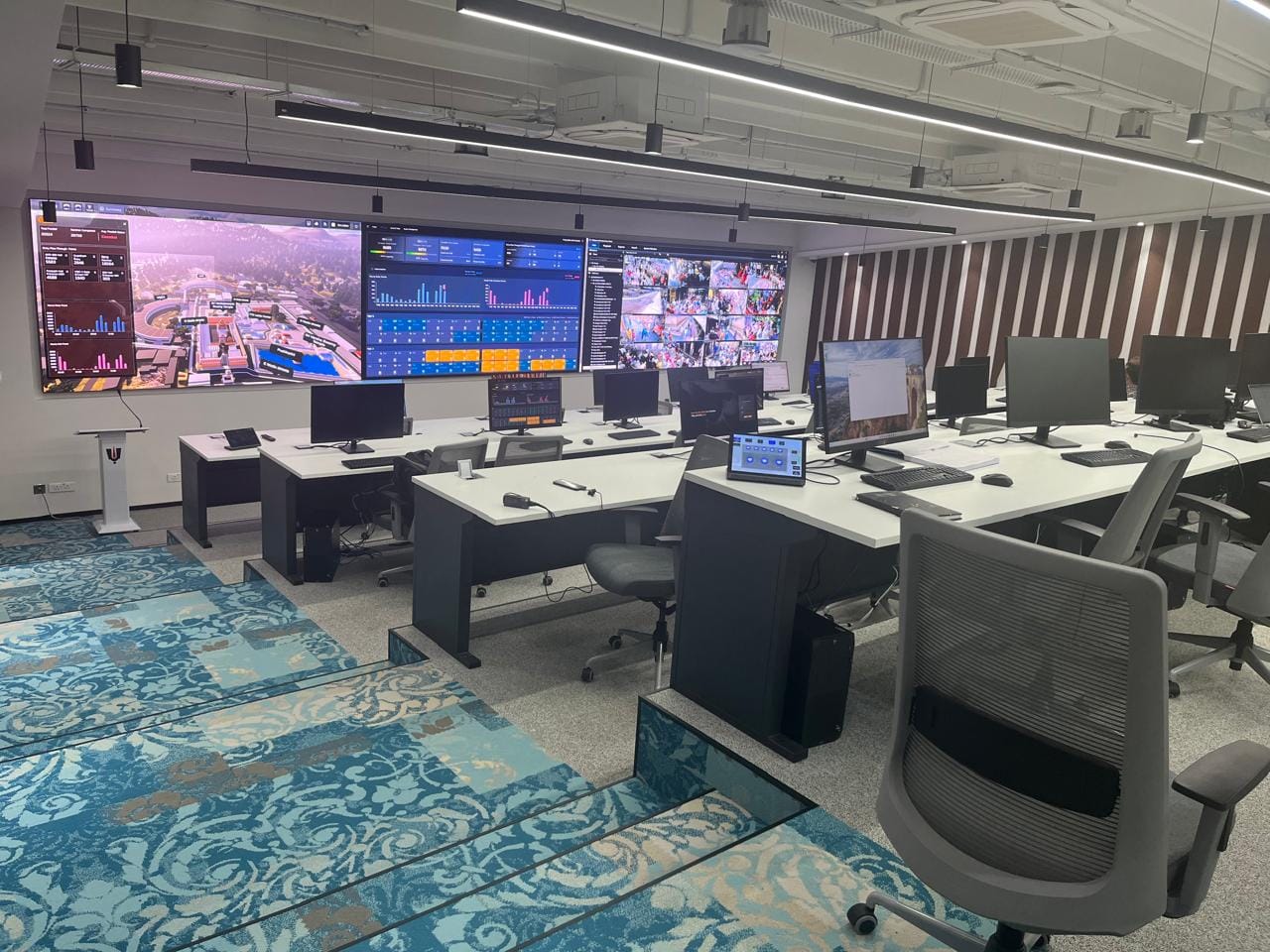
The bejewelled Lord Venkateswara may be the centrepiece of the temple, but a state-of-the-art AI-powered command centre in the heart of the temple premises forms the core of the TTD’s transformation initiative.
The Integrated Command Control Center (ICCC) brings together the majority of its functions like pilgrim management, prasadam distribution, temple schedule management and traffic management.
The ICCC helps TTD supervisors, managers and executives in improving coordination between departments, increasing visibility, and facilitating quick decision-making. This enables executives to monitor and manage the mammoth functions through a single dashboard.
Data from 6,000 cameras and 300 centres within the temple premises is mapped and analysed on a real-time basis.
The ICCC was planned before the annual Brahmotsavams (temple festival) in 2025, and by September of the same year, it was operational.
The project was conceived and executed by Forsys Inc and its founder, Jaya Prasad Vejendla, who is known to be the chief architect of the project.
At a cost of Rs 35 crore that Vejendla and 10 other donors contributed, the entire ICCC unit was built from scratch in just 30 days.
“Earlier, everything was based on assumption and experience. Today, we have visibility on every square inch of the 26 km temple town of Tirumala,” said Gurappa, the security superintendent of the temple premises, and an employee who has worked with the TTD for nearly 30 years.
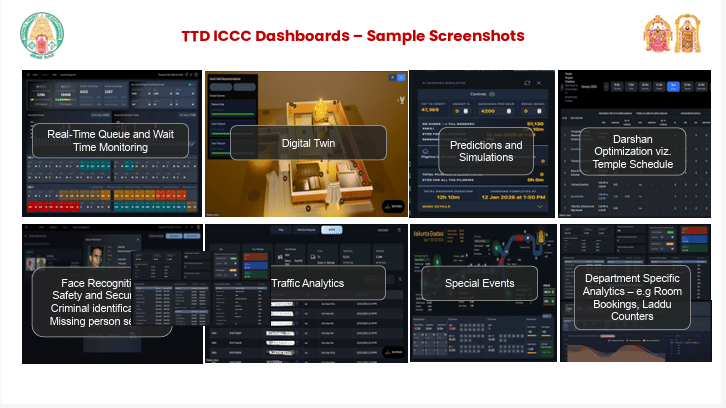
With the TTD being the first temple body to integrate artificial intelligence into temple management, the ICCC has been projected as a ‘Global Model for Temple Governance’.
“This initiative has transformed TTD, enabling real-time governance, proactive decision-making, and data-driven public service excellence,” said Nara Lokesh, minister for IT and real-time governance.
TTD Board member Bhanuprakash Reddy told ThePrint that larger systemic changes to deter any internal or external malpractices in temple administration are also underway.
“Faith is central to this metamorphosis as much as technological intervention and administrative reformation,” Reddy said.
TTD employees are also more vigilant.
With all its 6,000 employees given good raises over the last two years, the TTD hopes that a happy working environment will lead to devotees’ fulfillment.
The TTD manages 64 temples in the country and has a budget of more than Rs 5,400 crore for 2026-27.
“To all of us in Tirupati, the incident, the glare, and the calumny are personal,” Reddy says before rushing to attend to his administrative duties.
“But I do believe that Daiva Preeti (love for God) is as important as Papa Bheeti (fear of wrongdoing) to bring about more accountability in the system,” he added.
(Edited by Sugita Katyal)
Also read: After TDP, ally JSP plans membership drive, offers card-carrying members accidental cover, legal aid