





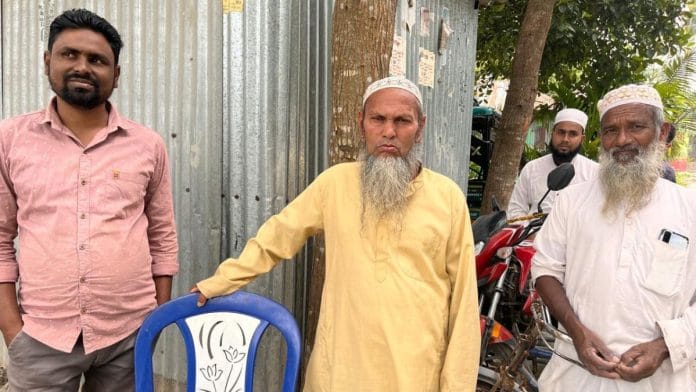



Dinhata/Cooch Behar: Amir Hussain spent a decade exercising his rights as an Indian citizen.
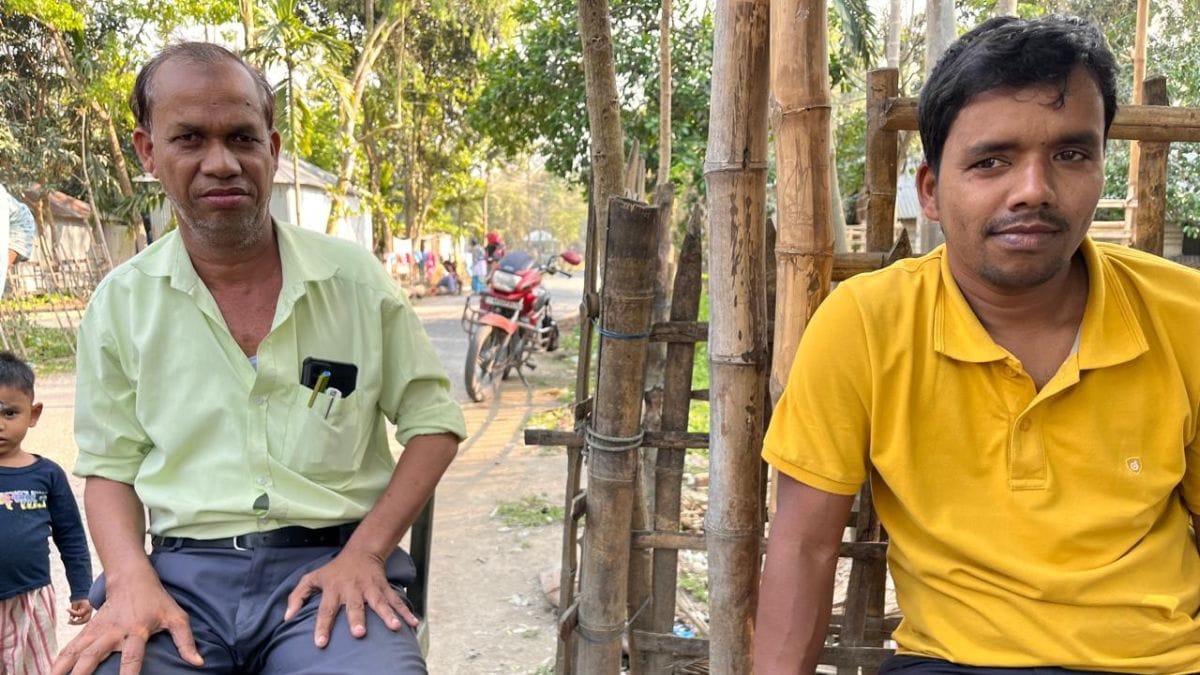
The 70-year-old mason from Dakshin Mashaldanga—one of 51 former Bangladeshi enclaves in West Bengal’s Cooch Behar district that merged with India on 31 July 2015—holds an Aadhaar card and a voter identity card, and has voted in every election since citizenship was conferred on him by a constitutional amendment.
Now, the Election Commission of India’s (ECI) Special Intensive Revision (SIR) of electoral rolls has placed all seven members of his family under adjudication—his wife, three sons and two daughters-in-law—because their names do not appear in the 2002 electoral rolls that is taken as the reference point for the exercise.
“How will our names be there in the 2002 electoral rolls when we were not part of India back then,” Hussain asks.
The question cuts to the heart of a crisis unfolding across the former enclaves, called chitmahals in Bengali, in Cooch Behar.
Hundreds of former enclave dwellers, the majority of them Muslim, find themselves in legal limbo a decade after an international treaty gave them Indian citizenship. They cannot get answers from authorities, do not know whether they will be able to vote when Cooch Behar’s Dinhata goes to polls, and are haunted by a question they had hoped never to face again: where do they belong?
“Fate is playing a cruel joke on us,” Hussain told ThePrint.
Dinhata, one of the 54 assembly seats of West Bengal, goes to polls in phase 1 elections, on 23 April. The second and final phase of polling will be held in the state on 29 April, and votes will be counted on 4 May.
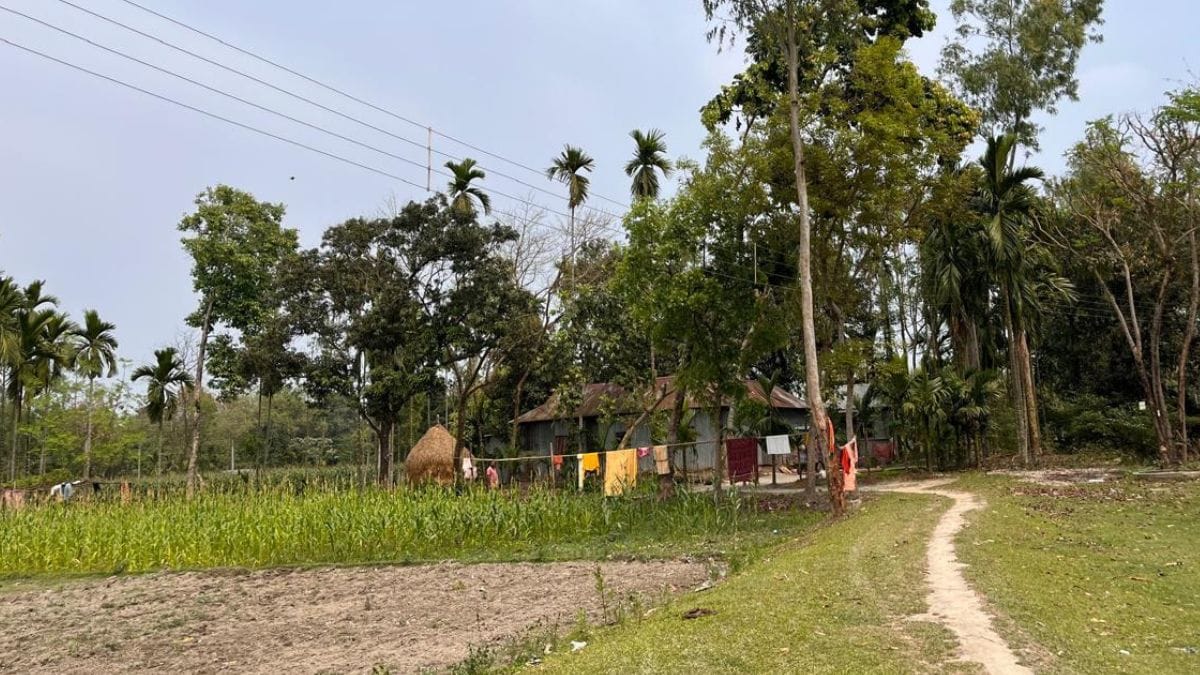
A citizen twice over
The weight of Hussain’s predicament is inseparable from his history.
More than three years before the enclaves merged with India, he left Dakshin Mashaldanga for New Delhi in search of work. He had a family of eight to feed, and employment in Cooch Behar was scarce. But he never made it out of the district.
Local police arrested him for failing to produce identity documents. Without proof of who he was, he was treated as an illegal Bangladeshi immigrant, produced before a Dinhata court and jailed.
His release came only after other enclave settlers learnt of his arrest and scrambled to obtain school documents belonging to his son from the enclave to establish his identity before the court. He spent ten months behind bars, and for two years afterwards was required to report to the local police station to mark his attendance.
It was the passage of the 100th Constitutional Amendment bill in Parliament in May 2015 — and the formal exchange of territories with Bangladesh on 31 July that year — that finally settled the question of who Hussain was. He and his family became Indian citizens, and received what he describes as their most precious possessions: the Aadhaar card and the voter identity card.
“Now, the ECI has put seven voters in my family under adjudication saying their names are not there in the 2002 electoral rolls. How will there names be in the rolls? We were not Indian voters in 2002. We were Bangladeshis,” he said.
Also Read: Mamata says ECI transferred officers by breaking convention. What former ECs say on the norm
‘Will we become stateless again?
Hussain’s is not an isolated case.
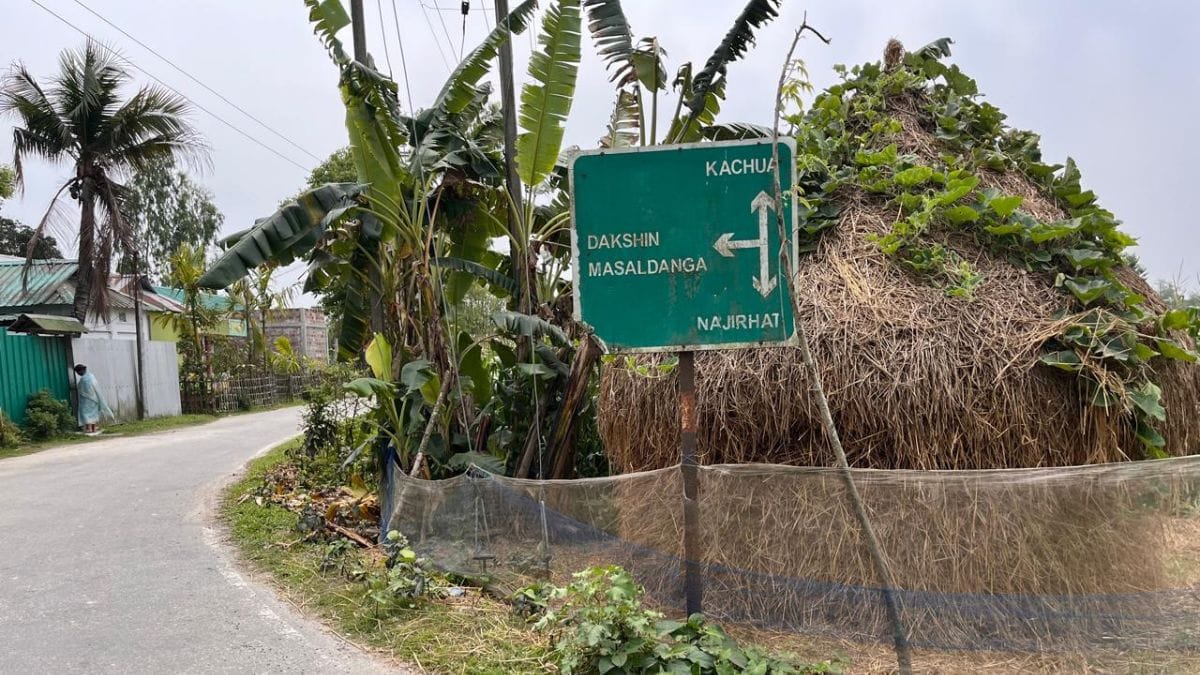
In Kachua village of Mashaldanga enclave, of approximately 480 voters—the majority of them Muslim—over 200 names have been placed under adjudication after SIR was carried out.
The anomalies lay bare the structural flaw of using 2002 rolls as a baseline for SIR. In one family’s case, for instance, a son’s name is on the voters’ list. But his father, mother and two elder brothers, all residents of Kachua, are classified as ‘suspect’.
In Batrigacch enclave in Cooch Behar’s Sitalkuchi assembly constituency, the names of six brothers remain on the electoral rolls—but their only sister, who used the surname ‘Khatun’ before her marriage and changed it to ‘Bibi’ afterwards, is on ECI’s adjudication list.
“We became citizens of India by choice after an international treaty was signed between India and Bangladesh. Now, if our name is struck from the voters’ list, where will we go? Where do we belong,” asked Kabiruddin Shekh, 30, who was born in Kachua village before the enclave merged with India.
His grandmother and wife are on the voters’ roll, but his father, mother, elder brother and sister-in-law have been put under adjudication.
“It defies logic. My name is on the list, but my father’s name has been put under adjudication. My grandmother’s name is also there. They are asking my father why his name is not there in the 2002 voter list? How can his name be there in 2002 when we were not Indian voters? We became voters only in 2015,” said Kabiruddin, who runs a fertiliser shop in the enclave.
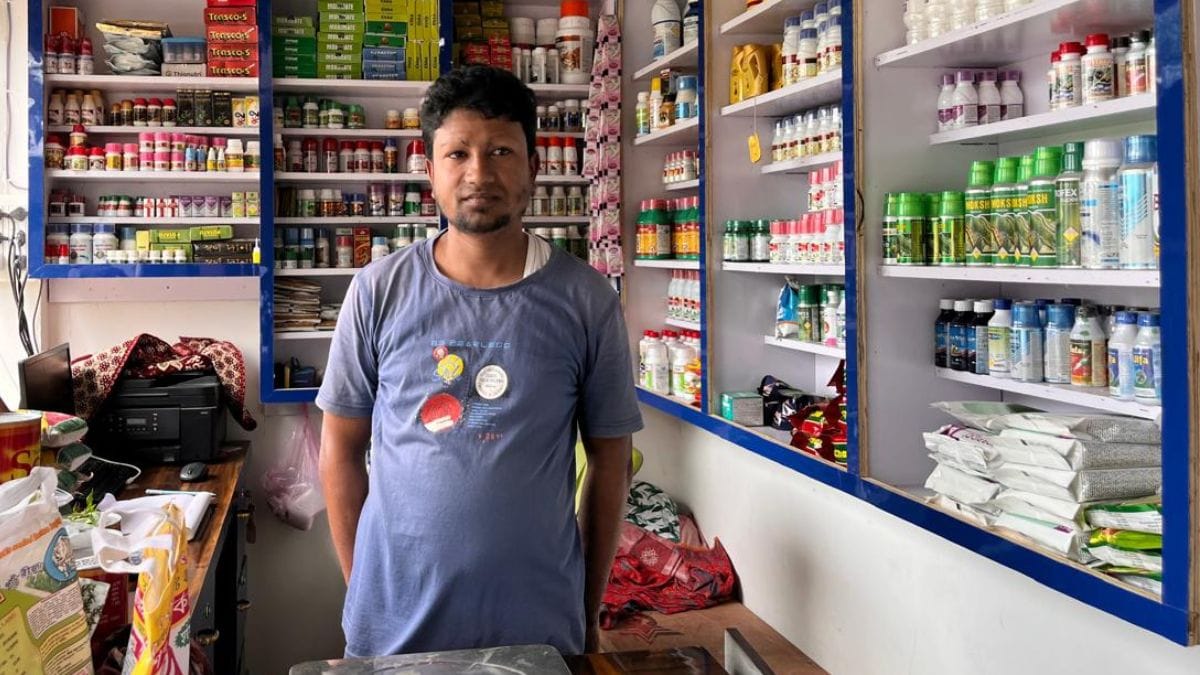
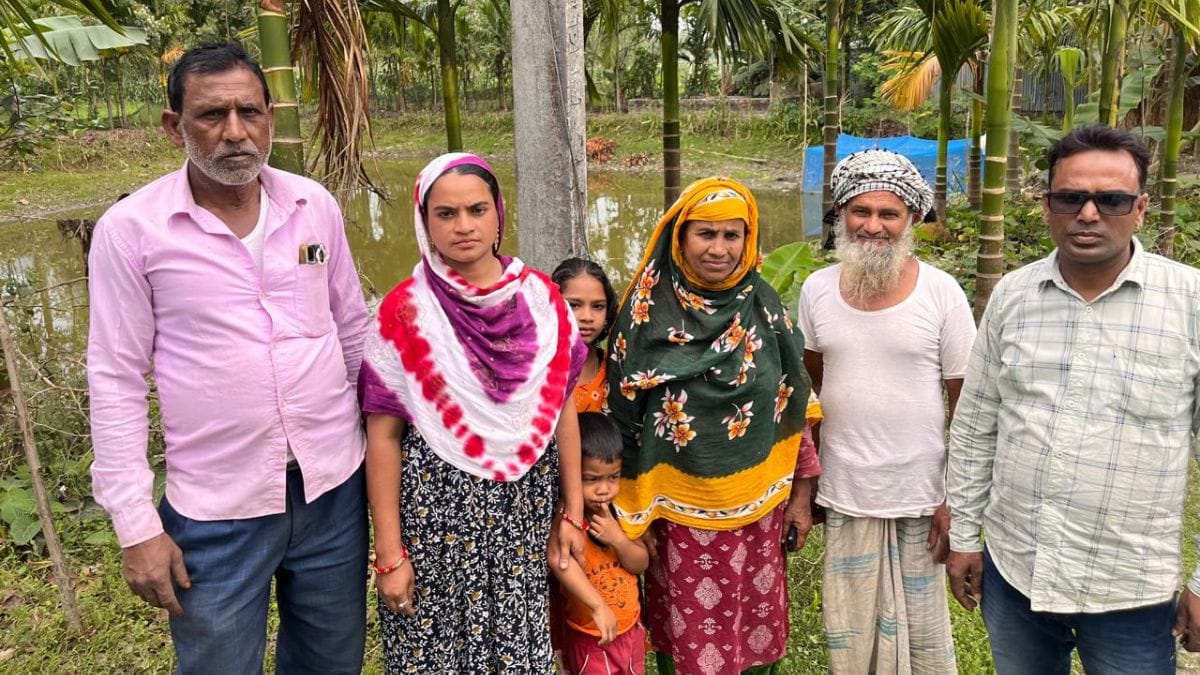
His father, Abdul Barik Shekh, 72, told ThePrint he is unable to sleep. “I keep thinking what will happen if my name is struck off the voter list? Will I be sent to the detention camps, where illegal Bangladeshis are being kept,” he asked.
“They are asking for documents like birth and education certificates. I don’t have any of these documents. But I have the government’s survey list, where I am registered as an enclave dweller. The government made me a citizen and has now left me nowhere,” he added.
The documents
ECI’s SIR guidelines require voters whose names do not appear in the 2002 electoral rolls to establish their identity through one of 11 specified documents, including birth certificates and educational records. For residents of the enclaves—who became Indian citizens only in 2015—such pre-2002 records do not exist in any Indian registry. The requirement is, for them, structurally impossible to fulfil.
The 51 enclaves that India absorbed were pockets of Bangladeshi territory enclosed within Indian land, and their absorption was the result of a diplomatic settlement between the two countries.
Under the Land Boundary Agreement, 162 enclaves in total were exchanged between India and Bangladesh. The 51 Bangladesh enclaves, covering 7,110 acres and home to approximately 15,800 people, became Indian territory.
In return, 111 Indian enclaves covering 17,160 acres, with over 37,000 settlers, went to Bangladesh. Settlers on both sides were given the right to choose their country of residence. All 15,000-plus Bangladeshi enclave dwellers chose to remain in India; 922 people from Indian enclaves opted to cross over and were subsequently rehabilitated in three dedicated clusters in Cooch Behar.
Diptiman Sen Gupta, who was part of the India-Bangladesh Enclave Exchange Coordination Committee and has fought for the rights of former enclave dwellers, is categorical about the constitutional stakes.
“It was through a constitutional amendment that the Bangladeshi enclaves came to India and the dwellers became Indian citizens. If even one of them gets disenfranchised because of SIR, it will be a violation of the Constitution by the ECI and judiciary,” he told ThePrint.
Manoj Kumar Aggarwal, West Bengal’s chief electoral officer, did not respond to multiple calls from ThePrint. The report will be updated if and when he responds.
Hindu settlers affected too
The crisis is not confined to Muslim families.
Seema Bhattacharya, a Hindu settler in Mashaldanga, also finds her name in the adjudication list. She grows vegetables on a small farm to make ends meet.
“I don’t understand. If I have been voting all these years, why am I suddenly in the doubtful category. I have married off my three daughters and live on my own. Where am I going to go if my name is not there in the voters list,” she asked.
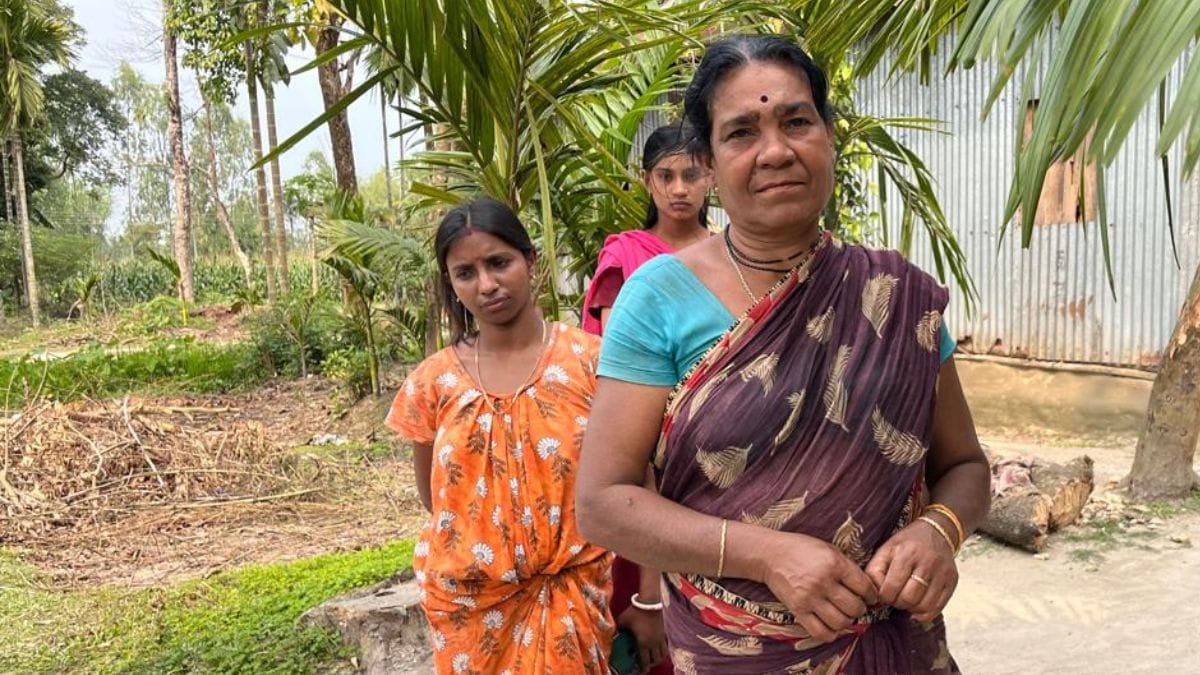
There are no official figures for the number of Hindu and Muslim families affected by by the roll revision exercise, but many across north Bengal, from Cooch Behar to Alipurduar, Jalpaiguri and Siliguri, say that Muslims are among the worst affected.
‘Nothing is in our hands’
Enclave dwellers say they have received no guidance from any authority about what to do or where to turn.
Most residents of Batrigacch and Mashaldanga say their names do not appear in either of the two supplementary voters’ lists published so far, making their ability to vote on polling day doubtful.
“When we went to the SDO (sub-divisional officer) and DM (district magistrate) in Dinhata, they told us nothing is in their hands as the matter is in the Supreme Court. Not even a month is left for voting and we do not have any clarity about our status. The authorities have left us to fend for ourselves,” said Mizanur Bapari, 34, a resident of Batrigachh Fragment, a former enclave in Cooch Behar.
The Election Commission on 28 February published the revised electoral roll for West Bengal. In it, 5.46 lakh names were deleted, and another 60.06 lakh names were marked ‘under adjudication’.
Since then, the poll panel has released two supplementary lists of voters in West Bengal after the adjudication process was completed for 37 lakh people. Adjudication for another 23 lakh people is yet to be resolved. On Supreme Court’s orders last month, judicial officers have been tasked to help complete the process in the eastern state.
Political stakes
North Bengal’s 54 assembly seats go to polls in the first phase of state elections on 23 April. BJP won 30 of those 54 seats in the 2021 assembly elections, making it a stronghold for the party.
Local BJP leaders in Cooch Behar, speaking off the record, acknowledged the anxiety on the ground. “People are linking SIR with citizenship here. We are telling them that is not the case but they are worried. It will not make a big dent to BJP’s prospects in north Bengal, but during the election every vote counts,” a party leader said.
Udayan Guha, the sitting Trinamool Congress MLA from Dinhata who is re-contesting the seat, said SIR had become the single largest concern among voters in his constituency.
“Of the 3.8 lakh voters in Dinhata, about 36,000 voters are under adjudication in Dinhata. Another 16,000 names have been deleted. We do not know what will happen. People are puzzled. They don’t know where to go,” he said.
Guha alleged a partisan pattern to the exercise. “Maximum voters who have been under the adjudication are from constituencies where Trinamool Congress had won. People from both Hindu and Muslim communities are there but the percentage of Muslim voters who have been put under adjudication is more. The SC should take initiative and clearly direct ECI to complete the process before elections,” he said.
(Edited by Prerna Madan)
Also Read: West Bengal SIR exercise is making Ritwik Ghatak relevant again. 50 years after his death