





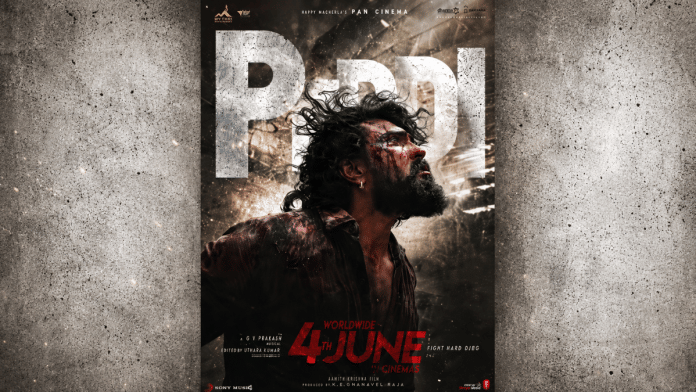


Hyderabad: Blockbuster films and big budgets that create larger-than-life stars rarely translate into proportionate financial returns for all stakeholders involved in the business of making and showing films. This is the nub of the dispute between film producers, exhibitors, and distributors in Telangana and Andhra Pradesh, home to India’s second-largest movie makers.
Producers resisted single-screen exhibitors’ demands for an equitable distribution of ticket-sales proceeds for nearly two decades, but they reached a truce days before the launch of ‘Peddi’.
‘Peddi’, a Rs 250 crore movie starring Ram Charan Tej, is scheduled to hit the theatres on 4 June. Exhibitors, or single-screen owners in the 1,500-plus theatres in the Telugu states, managed a hard-nosed bargain to transition to a new revenue-sharing model with producers. The profit-sharing model replaces a decades-old rental model, promising a fairer and more agreeable way to share gains from films made with extravagant budgets.
“Here on, a percentage-based revenue-sharing model for all big-budget movies that spend more than Rs 250 crore was agreed upon. The finer details of the actual percentage will be finalised in July. The producer’s forum in both states assured us, giving the exhibitors a lifeline,” Vanka Sridhar, speaking for single-screen owners in Telangana, told ThePrint.
Under the new agreement, the film distributors will also pay an additional 7.5% of the ticket prices to the theatre owners. Film distributors acquire the rights to a completed film and handle its marketing, sales, and release strategy, ensuring the movie reaches audiences in theatres, on streaming platforms, or through home media.
According to the Telugu Film Chamber of Commerce (TFCC), 6,675 producers, 765 distributors, 2,118 exhibitors, and 177 film studios are registered with the film body. The TFCC was established in 1969 with five regional offices in Andhra Pradesh and Telangana.
Industry bodies and movie veterans welcomed the resolution of the long-standing feud for helping the exhibitors survive the onslaught of the ‘Over-the-Top’ platforms.
This is already the norm for multiplexes and in other South Indian states and Maharashtra, but single screens in Telangana and Andhra Pradesh have historically operated on fixed rentals. However, the producers said at press conferences held at multiple locations across Andhra Pradesh and Telangana at the end of May that the new model will only be applicable from July.
The industry-wide debate in both Telugu states refused to die down as exhibitors protested and were firm about resolving the long-standing issue. Nearly 180 theatre-owners banded together, demanding a fair revenue-sharing system.
Actor-politician Chiranjeevi and his brother, Andhra Pradesh Deputy Chief Minister K Pawan Kalyan, addressed exhibitors’ concerns and brokered peace after theatre owners threatened to block the release of ‘Peddi‘. Theatre owners who spoke to ThePrint said that veteran actor Chiranjeevi was forced to intervene and mediate between producers and exhibitors because his son Ram Charan Tej’s movie was at stake.
Representatives of the Telugu Film Producers’ Council (TFPC), the Telugu Film Chamber of Commerce, and the Telangana Exhibitors Association agreed to finalise a mutually agreeable percentage for all upcoming big-budget movies, the officials told ThePrint.
Tollywood, a colloquial term for the Telugu film industry, accounts for nearly a third of India’s movie market share and commands a massive audience. Despite producing slightly fewer films than Bollywood, Telugu cinema commands a massive audience, with its movies dubbed into many regional languages. Andhra and Telangana have the highest number of theatres in the country, and the movies have consistently driven high ticket sales over the years. Telugu cinema claims an impressive share of the ₹1,000 crore club, boasting massive international and overseas revenue with movies such as ‘RRR’, ‘Baahubali’, and the ‘Pushpa’ series doing lucrative business in the Hindi states as well.
However, with COVID leading to a rise in the number of over-the-top (OTT) platforms, most single-screen owners witnessed a massive fall in occupancy rates, pushing them to the brink of existence.
“Producers who pay Rs 60 crore to a hero, and Rs 50 crore to the cinematographer in the industry, are now being standoffish. We have been requesting a change in the revenue-sharing model since 2008, and due to their non-redressal, hundreds of theatres have closed down across Andhra Pradesh and Telangana,” Subbaiah, the president of the Distributors Association in Visakhapatnam, told ThePrint.
The exhibitors’ union has assured that the new profit-sharing model will not have a bearing on ticket prices. The state governments mandate ticket fares in both states, with 12 percent GST levied on tickets priced below Rs 100 and 18 percent GST levied on tickets over Rs 100.
(Edited by Varnika Dhawan)
Also Read: Ram Charan’s Peddi teaser out. Cricket, wrestling, action