





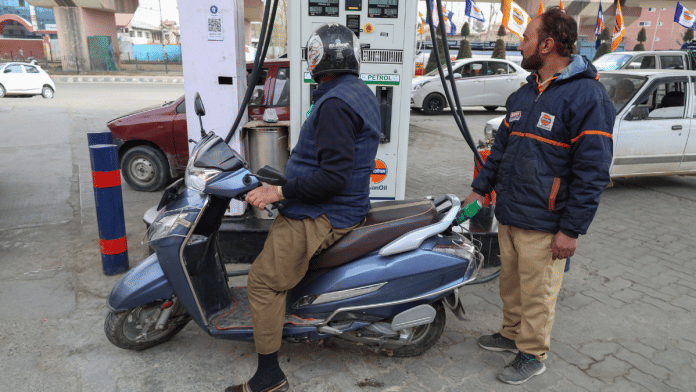



New Delhi : India stepped up plans to shield its economy as the worsening conflict in the Middle East disrupted oil and gas supplies and put millions of Indian workers in the region at risk.
The government on Tuesday set up a panel to monitor risks and keep exports and imports running smoothly in the face of disruptions. Officials also reviewed petroleum reserves to ensure adequate buffer stocks and directed state-run refiners to diversify sources of crude beyond West Asia.
The Reserve Bank of India stepped up surveillance of the currency market and traders said Wednesday the central bank intervened to curb volatility after the rupee plunged to a record low.
India is one of the more vulnerable economies in Asia to the fallout from the US-Israeli war against Iran. India imports about 90% of its oil, with about half of that coming from Persian Gulf countries, where trade through the key Strait of Hormuz has virtually come to a halt. Crude prices have surged around 15% since the attacks on Iran over the weekend, which economists say will pose serious risks to India’s current account, currency and inflation if the conflicts persists.
“If there is an escalation and this continues for a relatively longer time, it could have a severe implication in terms of the pricing of oil,” said Indranil Pan, chief economist at Yes Bank. “And that would be negative in terms of the current account and balance of payments.”
Officials say India has nearly eight weeks of commercial and strategic stockpiles of crude and products, so it may not feel an immediate pinch in oil. The bigger concern is cooking gas, where households may run into shortages in the coming weeks because of a halt in liquefied petroleum gas from the Persian Gulf.
India is the world’s second-largest LPG buyer and buys more than 90% of its supply from the Middle East, according to data intelligence firm Kpler. A government official said on Tuesday that India’s LPG stocks can stretch nearly 30 days.
Oil Appetite
If crude supplies through the Persian Gulf are disrupted for months and India’s reserves are depleted, the country may be forced to take other steps to secure oil. One option would be for refiners to buy more Russian oil again, after purchases were significantly cut in recent months to comply with US demands.
“India will have to look at alternatives to tap into, to satiate its voracious appetite for oil, an appetite which is growing fast,” said Kabir Taneja, Executive Director of the Observer Research Foundation’s Middle East office.
To monitor supply chains, the government set up an inter-ministerial group to ease trade procedures and coordinate with ports and customs to mitigate any disruptions and protect exporters, Commerce and Trade Minister Piyush Goyal Tuesday on X.
The central bank estimates that a 10% annualized increase in crude prices could raise inflation by 30 basis points and reduce economic growth by about 15 basis points, assuming full pass-through to domestic prices. A weaker rupee could add further pressure.
So far, inflation remains well below the RBI’s 4% inflation target, while the current account deficit remains manageable. India’s foreign exchange reserves are also close to a record high of $725 billion, providing a buffer against shocks. The economy is also expanding more than 7%.
What Bloomberg Economics Says
New Delhi is not directly involved in the war in the Middle East. But India’s deep links to Gulf energy supplies, trade corridors, remittance flows and aviation routes leave it uniquely exposed to conflict in the region. The economy is expanding at a solid pace and inflation is low. Easing US tariffs have only just given exporters relief after months of pressure. A prolonged disruption in the Middle East would threaten growth.
India’s large population of migrant workers in the Gulf region — estimated at almost 10 million — is another major concern for the government. Local airlines announced evacuation flights for stranded citizens, with the largest airline IndiGo operating special relief operations from Jeddah to India on March 3. SpiceJet said it will operate four special flights from Fujairah, in the United Arab Emirates, to India starting March 4.
India is the world’s largest recipient of remittances from workers abroad, with inflows of $135.4 billion in the year through March 2025, according to figures from the Finance Ministry.
“If the war extends itself, and if the people coming back to India can’t go back, then obviously remittances will be much lower,” said Yes Bank’s Pan.
This report is auto-generated from Bloomberg news service. ThePrint holds no responsibility for its content.
Also Read: Indians laughing at their countrymen in Dubai are a disgrace. We have much to learn