








Lucknow: People going to police stations in Uttar Pradesh to file complaints may be in for a surprise soon. They may soon be greeted with a “namaskar” and a polite address as “Sir” or “Ma’am”.
Signalling a shift in policing priorities, the Uttar Pradesh Police have started a training programme for personnel in communication, gender sensitivity, polite conduct and AI awareness.
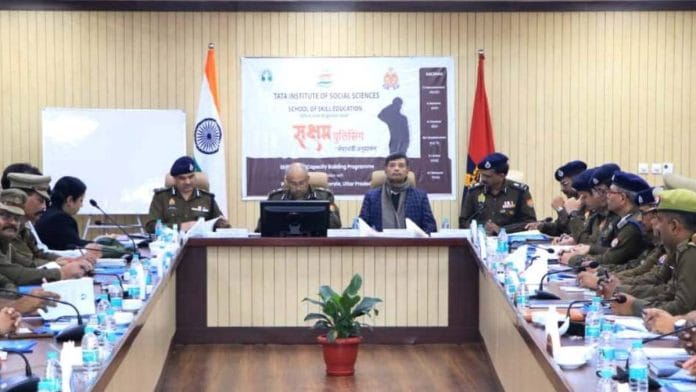
The initiative, termed ‘Skill-Based Capacity-Building Programme’, has been designed in collaboration with the Tata Institute of Social Sciences (TISS) and seeks to strengthen the practical, social and technical competencies of state police officials.
To conduct the training, a team of 40 officials has been selected as “master trainers”, who will be responsible for training nearly 4 lakh police personnel across the state, ThePrint has learnt.
A three-day workshop on the programme was launched Tuesday and the master trainers will thereafter go district-wise to conduct the training.
According to UP Police officers, the programme has been designed to help personnel improve their behaviour, communication skills and decision-making in real-life situations.
The training is divided into three modules. The first focuses on behaviour-related aspects, such as communication skills, cultural and gender sensitivity, ethical conduct and self-awareness, that will be carried out through questionnaires and self-reflection. It also covers effective verbal and non-verbal communication.
The second module deals with the practical use of soft skills in real-life policing situations. This includes stress and conflict management, decision-making, time management, social media use, digital awareness, AI awareness, data protection, grievance redressal and responding to public issues on social media platforms.
The third module focuses on learning through real-life case demonstrations, role-playing, reflection and feedback. Group-based role-playing and case studies would help officers translate classroom learning into practical action on the ground.
Speaking to ThePrint, Uttar Pradesh Director General of Police (DGP) Rajeev Krishna said behavioural conduct was a core component of the training programme. He added that the police were also considering online training modules for the cyber wing, as it could help save time.
The DGP emphasised that, along with knowledge and skills, attitude ultimately determines an officer’s effectiveness, and that both verbal and non-verbal communication play a crucial role in policing, since the way officers interact with people shapes the overall image of the police force.
He said the excellent conduct of the UP Police during large scale events like the Mahakumbh had been appreciated at the national and global level, and that it was a result of better training.
Also Read: Lawyer-Delhi Police row: is it tough to empathise with cops due to their poor image?
‘Experiential, activity-based approach’
Explaining the first module of the training programme, a senior police official said that to improve ethical conduct and communication, personnel are being advised to address complainants politely with words such as “Sir”, “Ma’am” or greet them with “namaskar”.
“Whatever feels convenient, it should be said in a respectful manner so that a message of politeness is conveyed,” the official told ThePrint.
“As the saying goes, the first impression often becomes the lasting impression. If we behave politely, complainants are more likely to respond in a friendly and cooperative manner,” the official added.
Speaking about the second module, the official said the training covers several areas, with special focus on AI awareness.
“A large number of fake images and videos circulate on social media, and our personnel need to know how to verify such content and use the right tools for cross-checking,” the official explained. “We are also exploring the possibility of developing in-house applications to help identify and debunk fake posts for internal use.”
A second senior official said the aim is to prepare officers to handle stressful situations in a professional, sensitive and legally correct manner.
“The training will be practical in nature, using real examples and role-play exercises so that officers can apply what they learn on the ground. It also aims to equip officers to respond professionally, sensitively and in accordance with the law in high-pressure, public-facing and digital situations.”
“The training follows an experiential, activity-based approach, incorporating case studies to ensure practical application, skill integration and operational readiness,” he added.
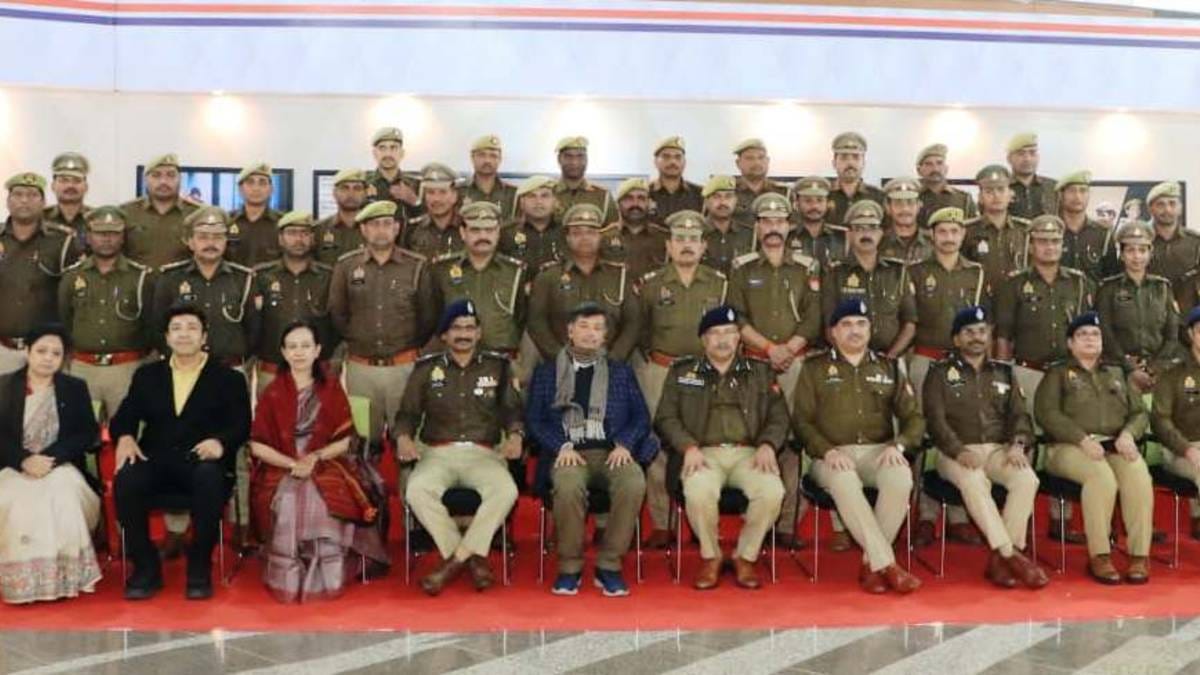
A three-day workshop on the programme was launched Tuesday by the Uttar Pradesh Police Training Directorate in collaboration with TISS. Professor Badri Narayan Tiwari, Vice-Chancellor of TISS, DGP Krishna, DG (Training) Rajeev Sabharwal, and other senior police officers were present at the programme at the police headquarters in Lucknow.
The training modules were finalised in the pilot phase and will be scaled up and implemented across the state in the coming days.
(Edited by Nida Fatima Siddiqui)
Also Read: Indian police academies need an upgrade, must go beyond old drill-based training