





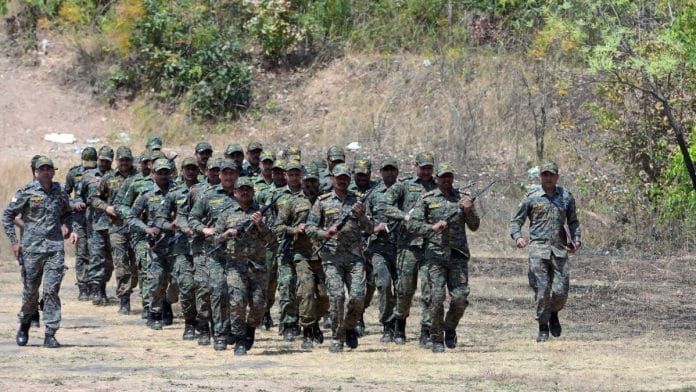



Balaghat: As the Maoist movement nears its extinction in India today, a decade ago, the rebels had one pressing concern—to break out of the Abujmarh forest region in Chhattisgarh that was then the core “heartland” of the Naxalite-Maoist insurgency.
Dense and inaccessible, Abujmarh lies in the forested Dandakaranya region spanning several states. It had been the Maoists’ home for more than three decades, but they were now spooked by fear of encirclement by security forces, and lower-level cadres had already begun deserting.
The banned Communist Party of India (Maoist) thus formed a new zone—called Maharashtra-Madhya Pradesh-Chhattisgarh (MMC)—and set its sights on another dense forest range, the Amarkantak in Madhya Pradesh, that would give them direct access to several states and a vast expanse of territory. A senior leader was brought in for the ambitious push.
The expansion plan, however, ran aground as security forces squeezed the rebels from two sides: Madhya Pradesh’s elite anti-Maoist unit Hawk Force swept and sealed forest corridors along the state’s borders that offered escape and expansion routes, and Chhattisgarh’s District Reserve Guards (DRG) pushed deeper into Abujmarh.
The cadres were given no space to disperse or regroup.
It also became clear that the forests of Madhya Pradesh were never conducive to swift movement, let alone a takeover. For the Maoists to develop a base in Amarkantak, they had to cross forests in districts such as Balaghat and Mandla—manned by the Hawks.
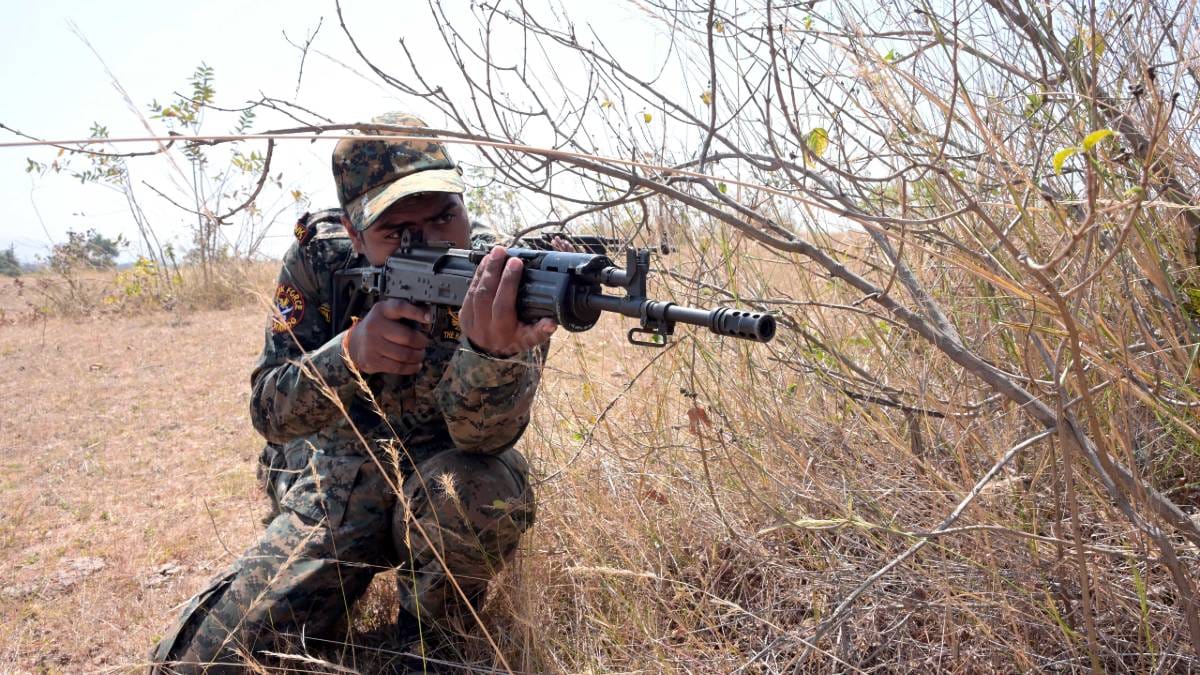
In 2021, Maoist central committee member Milind Teltumbde was killed in a gunbattle with Maharashtra’s elite C-60 commandos in Gadchiroli district, along with 26 other Maoists.
The pressures not only blunted the MMC’s northward expansion but also compressed Maoist presence into shrinking pockets, dealing a significant blow to what was once envisioned as a strategic shift into central India’s forested heartland.
The Maoists’ expansion plans were revealed by Teltumbde’s aide Pahad Singh, who had surrendered to the Chhattisgarh Police in 2018.
The Hawk Force has been central to blunting the Maoist push into Madhya Pradesh, but it was established in the year 2000, only after a decade of alarm.
Back in 1990, the rebels had trickled into the forests of the state, and the state police had their first exchange of fire with them in a wood outside Balaghat district.
There were numerous other Maoist-police encounters that claimed lives of security forces over the next nine years. IED explosions staged by the rebels reportedly killed at least 20 personnel over the next five years.
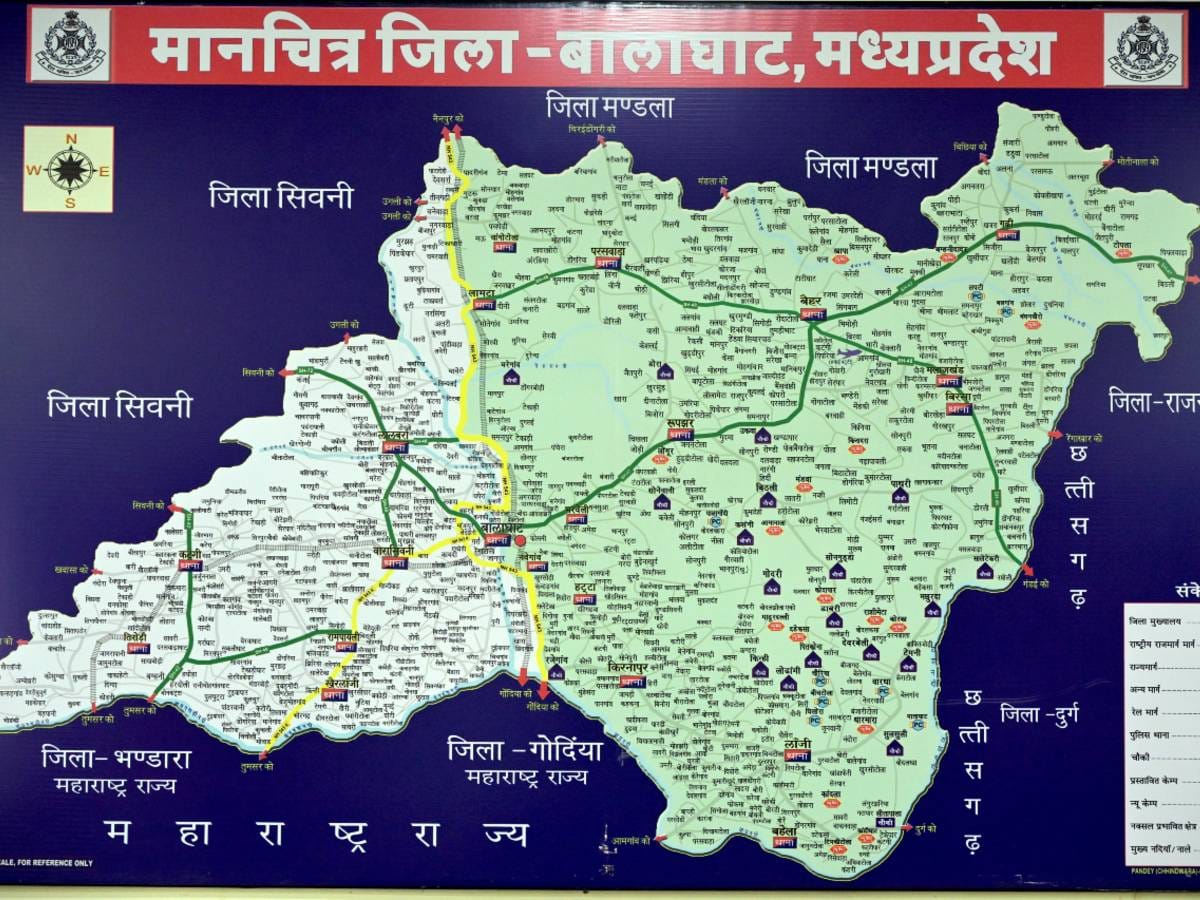
Police records suggest that in the wake of these incidents, coupled with continuous intelligence inputs about the movement of Maoist cadres in MP forest ranges, then Director General of Police S.C. Tripathi wrote to the home department seeking the formation of an elite unit of the police force, specialised in jungle warfare, to combat the Maoist cadres.
“By that time, the Greyhounds had already been formed (in Andhra Pradesh) and had proved their mettle in containing the threat of Maoists, even in dense forests. Considering that the rebels had fled Andhra Pradesh due to relentless pressure from the Greyhounds in the 1980s, we anticipated a big challenge on our hands too,” a senior Madhya Pradesh Police officer told ThePrint.
A decision was taken after senior officers visited Balaghat, Mandla and other Maoist-infested areas of Madhya Pradesh in early 1999, recalled officials who were then serving at the ranks of superintendent of police.
The file seeking a specialised anti-Maoist unit, however, gathered dust in the state secretariat for weeks, until transport minister Likhiram Kavre was hacked to death by the Maoists in December 1999. The merciless killing of Kavre, a tribal, sparked outrage.
Finally, in August 2000, the state government sanctioned establishment of the Hawk Force.
“Officers/employees serving in the Hawk Force should be granted ‘Naxalite Operation Risk Allowance’ of 70 percent of the basic pay. Therefore, arrangements should be made to ensure immediate action accordingly,” the then home secretary wrote to the Madhya Pradesh Director General of Police on 18 August, 2000. ThePrint has accessed the letter.
Up to Rs 2.74 crore had been allocated for the force in the state Budget, the letter added.
However, before wider policies and provisions could be put in place, the state of Chhattisgarh was carved out of Madhya Pradesh on 1 November, 2000.
All areas where Maoists had established a formidable base fell within Chhattisgarh’s jurisdiction, and the task of the newly instituted Hawk Force shifted from combat to denying Maoists opportunities to expand their presence and influence in Madhya Pradesh.
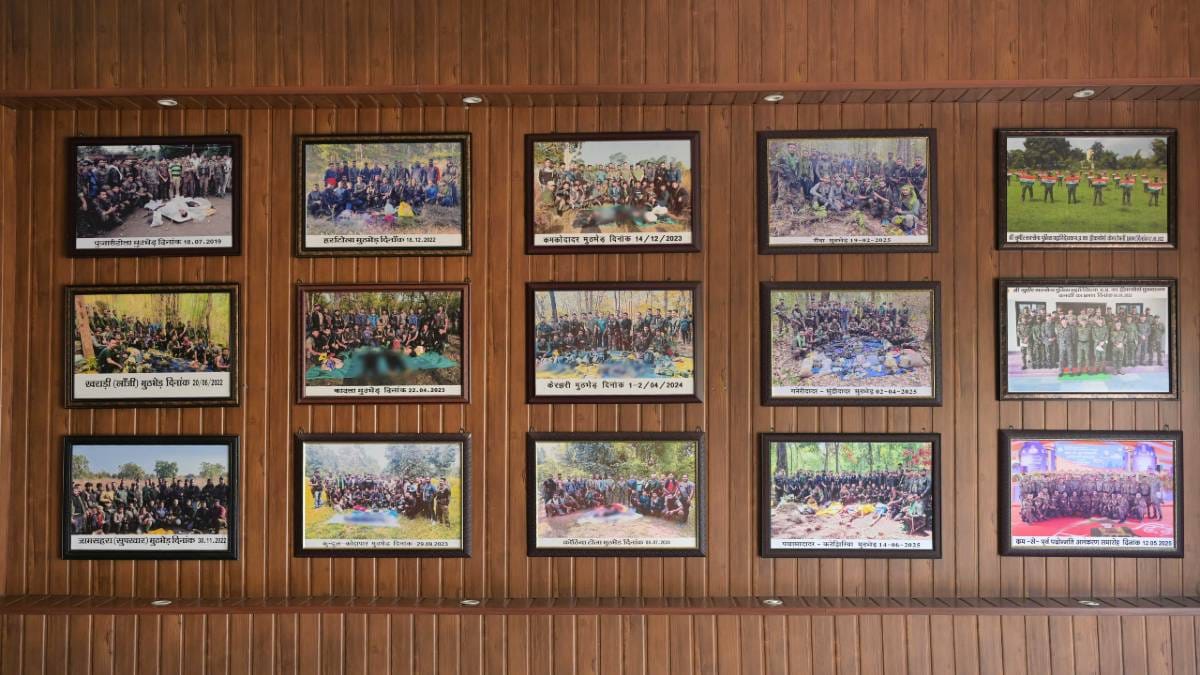
“The Hawk Force played a phenomenal role to play in denying Maoists freedom to move in the jungles of Madhya Pradesh. The MMC that was formed to carry out their expansion plans is now completely defunct,” a second senior state police officer told ThePrint.
Last December, Madhya Pradesh Chief Minister Mohan Yadav declared the state Maoist-free following the surrender of the “last two rebel leaders” active in the state. This was after three tribal districts of Balaghat, Mandla and Dindori, including 658 villages, had been identified as Maoist-affected in 2024.
The ambitious achievement, state police officials told ThePrint, was met with two broad plans—relentless operations in the jungles and aggressive outreach to the people.
Also Read: Chhattisgarh Maoists suffering from betrayal, fewer leaders and weapons, and too many roads
Formation of Hawk Force, risks & incentives
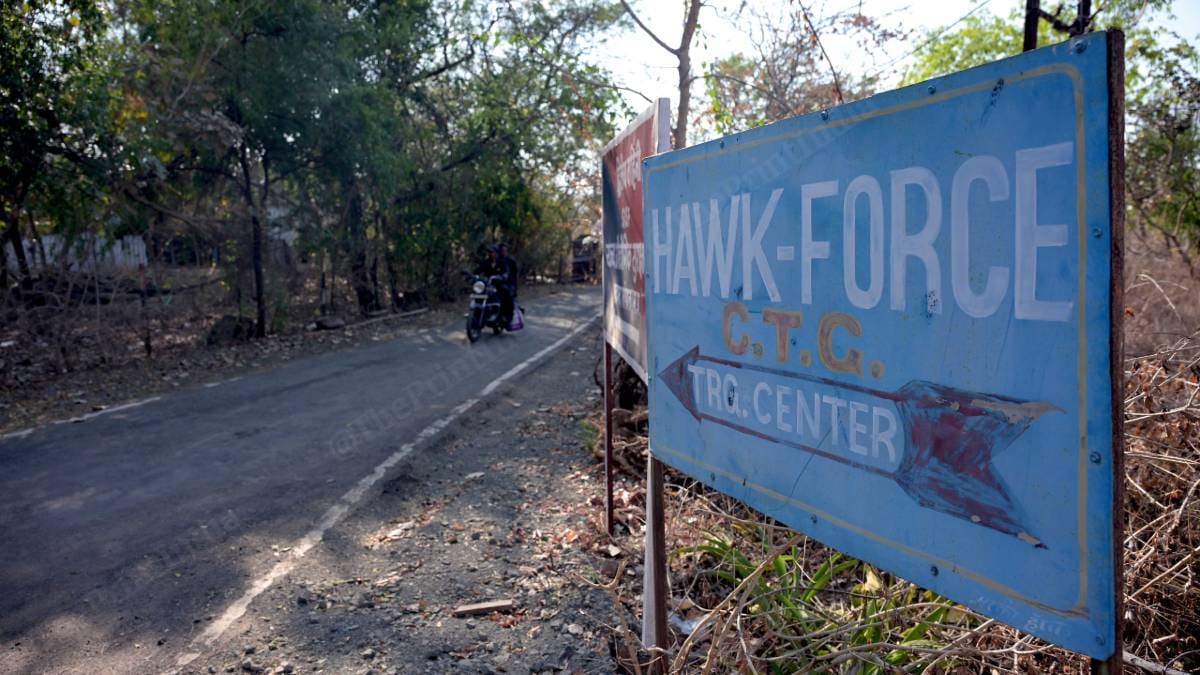
Inspector Mangru Uikey, 48, has a history synonymous with the Hawk Force, having joined the Madhya Pradesh Police in 2000. He joined as a constable and received several promotions over the years, rising to the rank of inspector.
Mangru, whom ThePrint spoke to in Balaghat earlier this month, joined the Hawk on deputation from the state police in 2007 and has continued with the force ever since. Born and brought up in the nearby district of Seoni, the posting brought him closer to home, notwithstanding the rigorous routine and risk of IEDs that is part of the job.

The Hawk Force comprises mostly of jawans drawn from the state police or its Special Armed Force (SAF). The deputation, according to rules, is for a period of five years, post which it can be extended for a period of two years. The Hawk Force also has a policy of inducting troops and officers from the Central Armed Police Forces (CAPFs), but Deputy Commandant Sachin Choubey, from Border Security Force (BSF) is the sole man on deputation from the central forces.
Inspector Mangru is one of those whose deputation has gone on for long.
“The main incentives for working with the Hawk are promotional opportunities and salaries due to an allowance of 70 percent on basic pay,” Mangru told ThePrint, after taking part in the morning drill at the headquarters of the force on the outskirts of Balaghat.
The 70 percent allowance was more of a necessity than a reward, senior police officials said, given the state’s history and the situation at hand.
“Balaghat and other districts were heavily infested with Maoists. The situation in the 2000s was starkly different from today. Who would come for such high-risk posts at the time? Hence, an allowance was the least the state could have done for those willing to put their lives at stake,” a second senior state police officer said. While the allowance was a major factor, out-of-turn promotions was another offering that made the posting compelling.
But there were other strict directives. “Every officer was mandated to serve in Balaghat and other districts infested with Maoists at the start of their career,” said a third state police officer.
The majority of initial recruitment for the Hawk Force was from the State Armed Force (SAF), which also served as the precursor to a specialised anti-Naxalite force. Even today, the Hawk shares training facilities and headquarters with the SAF.
Once personnel join the force, they have to undergo a four-month induction process.
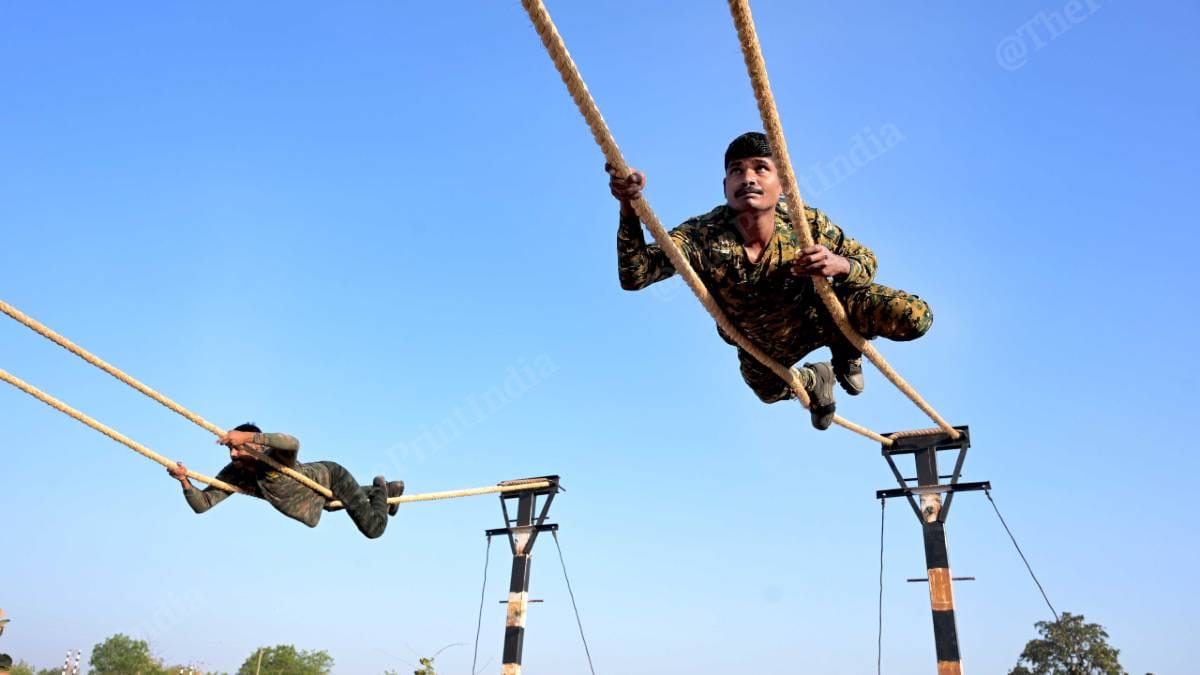
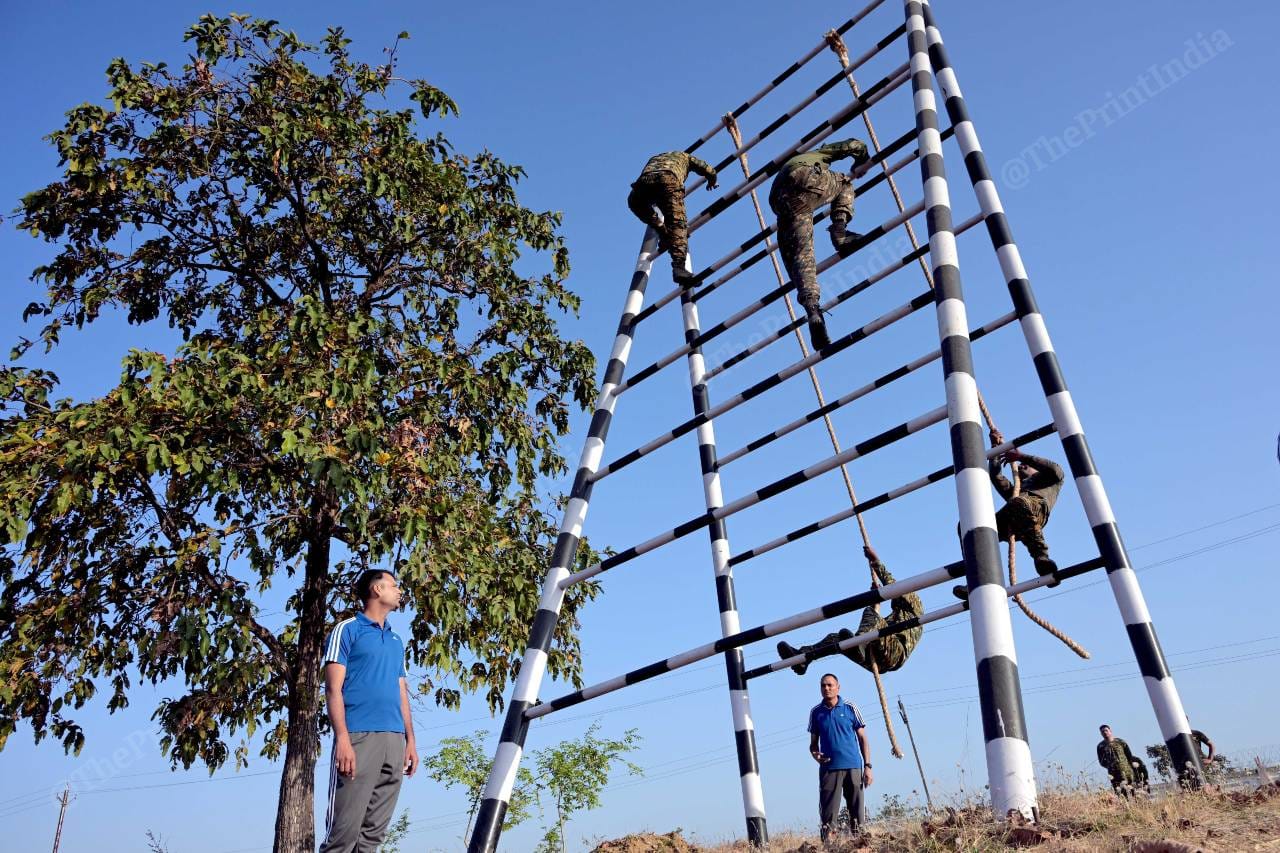
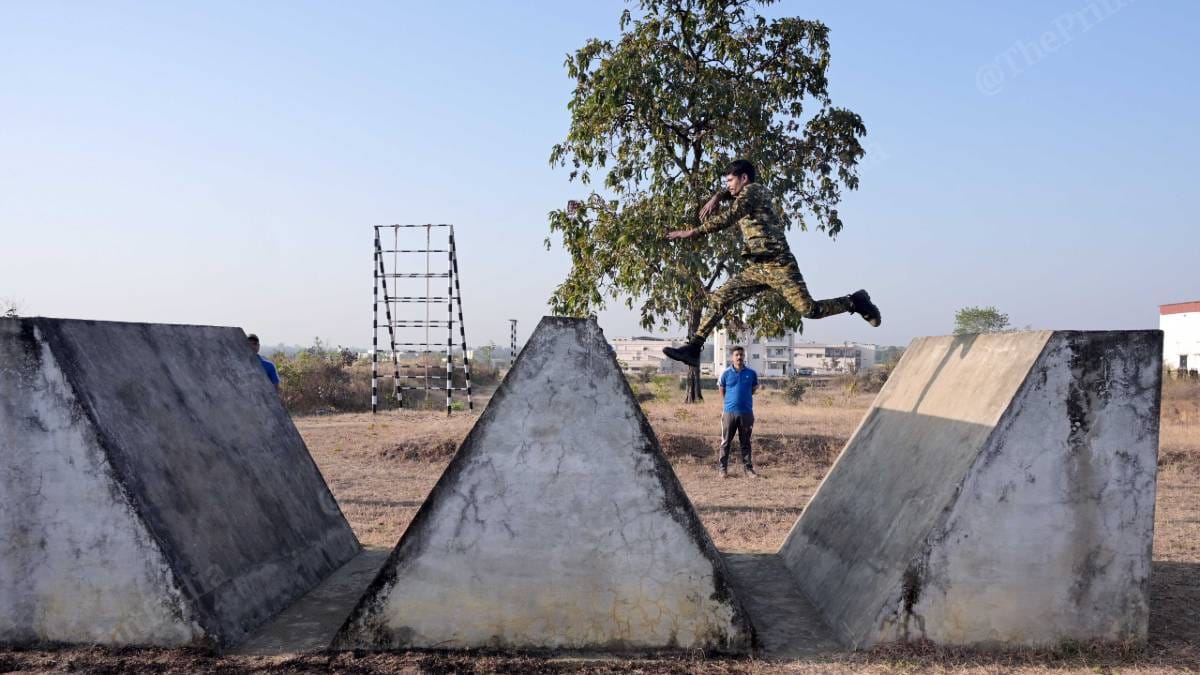
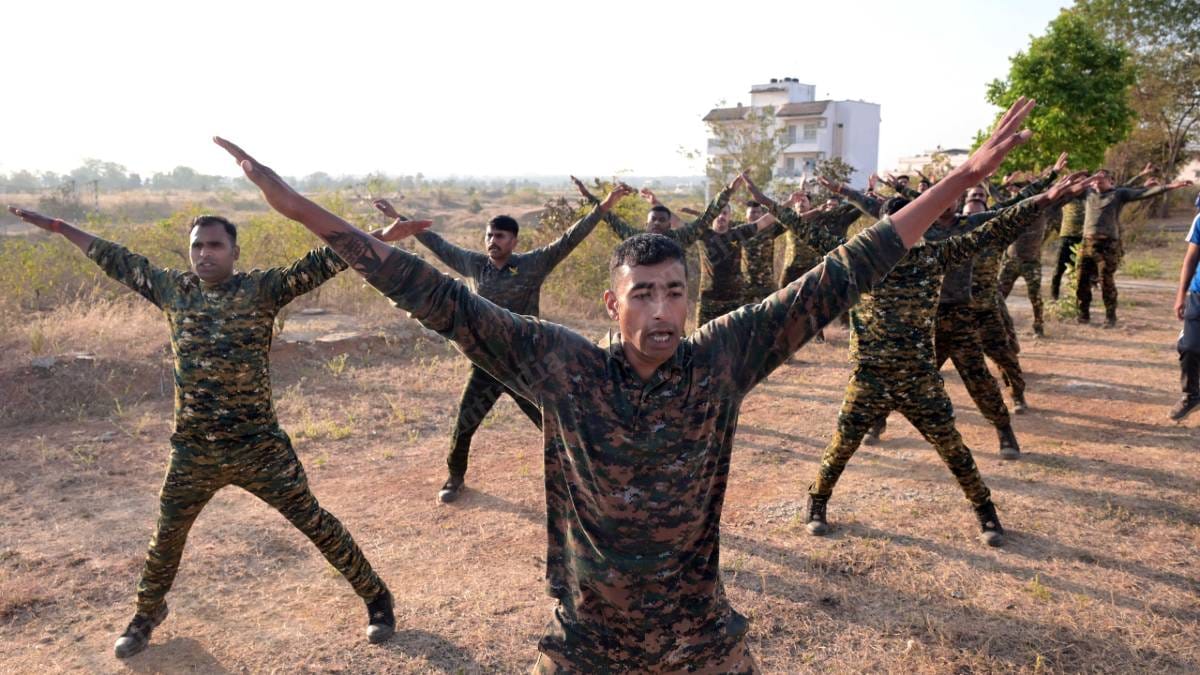
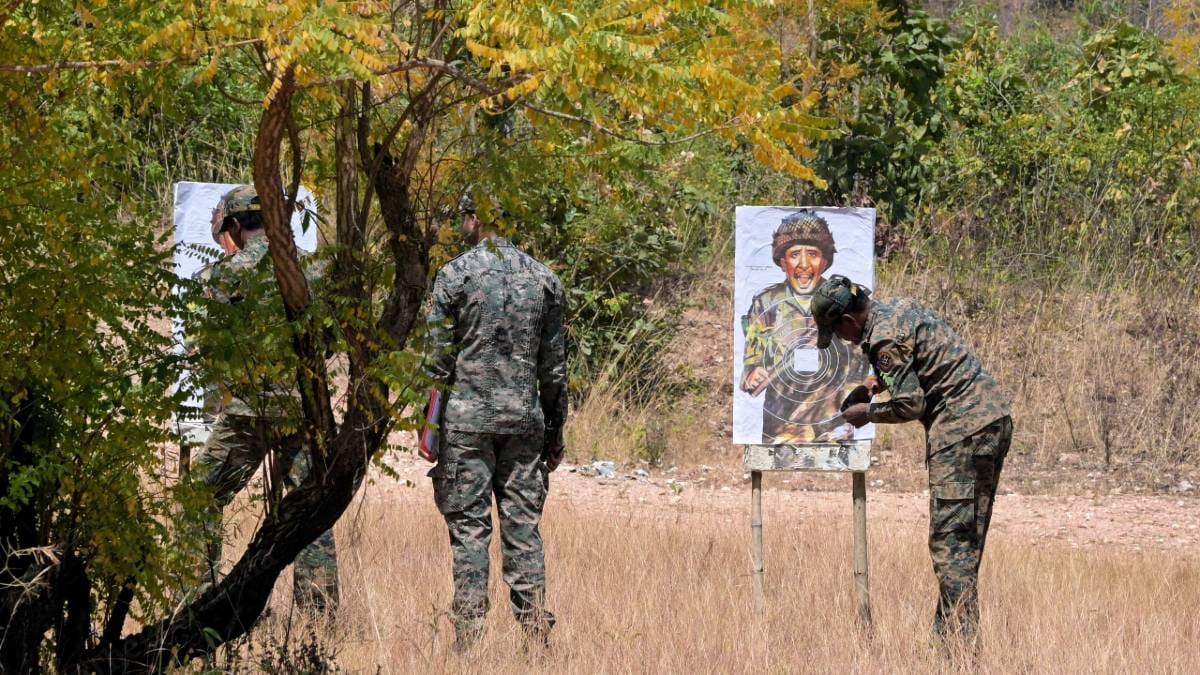
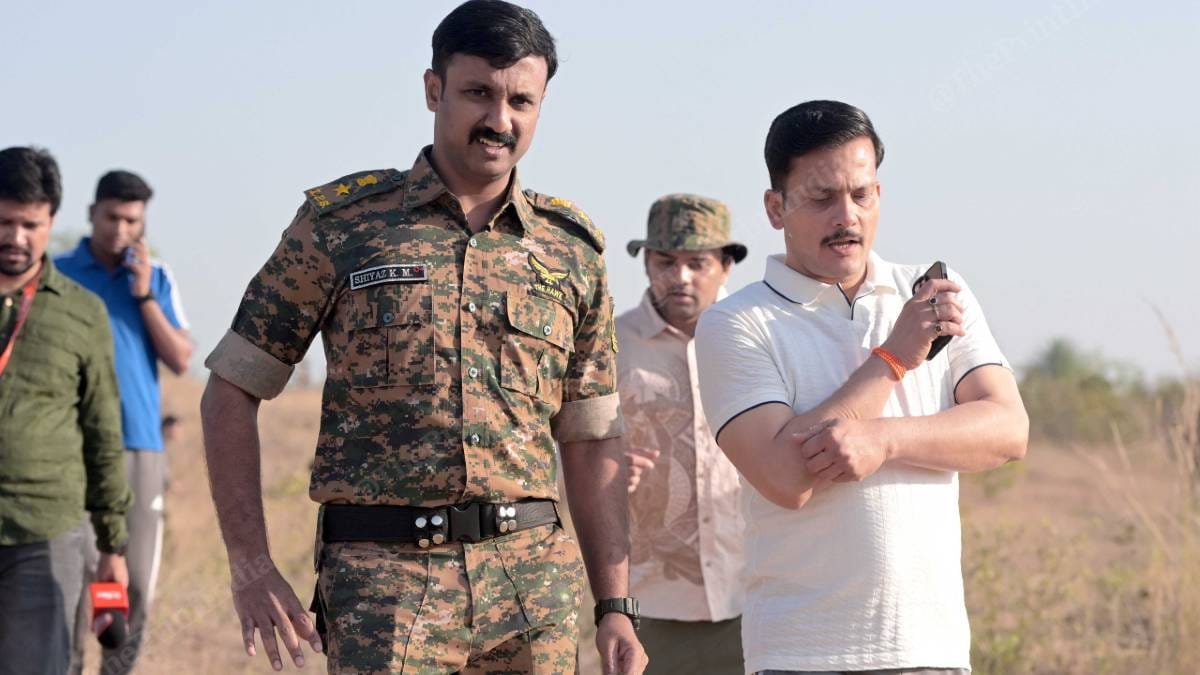
“Recruitment criteria, especially with respect to physical fitness, are quite strict. Personnel turning up to join the force have to pass a rounds of tests or they are sent back to their primary posting,” Hawk Force commandant K.M. Shiyaz told ThePrint, while overseeing the daily morning drill of around 50 troops posted at the headquarters.
The troops are further required to complete a four-week refresher course every year. They receive training from the National Security Guards and the Greyhounds from Andhra Pradesh and Telangana in batches of 40.
Also Read: Bastar armed with new weapons to end Maoism once & for all. Roads, ration cards & CRPF gurukul
History of Maoism in Madhya Pradesh
Overseeing anti-Naxalite operations and outreach measures for the tribal population in far-flung areas, Balaghat Superintendent of Police Aditya Mishra sees the history of Maoists in the state as spanning four decades.
The first was the 1990s when they announced their arrival by killing cabinet minister Kavre in Balaghat. Having questioned some Maoists who had laid down arms, the police later discovered that Kavre was slaughtered in retaliation for Greyhounds’ killing of three Maoist commanders in Andhra Pradesh in 1997.

The Hawk Force subsequently took shape and took to the field across Maoist-infested districts. By 2006-2007, the central government had also deployed companies of CAPFs in these areas. In the last phase of the movement in the state, which Mishra said started in 2020, the Hawk turned a corner with unprecedented numbers of operations and area domination exercises. During this phase, the Maoists had started making attempts to expand their base from Abujmarh amid pressure from security forces in the Dandakaranya region.
The MP Police received intelligence about the MMC strategy somewhere in 2017, when some literature was recovered in an encounter. “There were a total of 5 dallams (groups) active in the region. The Maoists formed another zone in Maharashtra, Madhya Pradesh and Chhattisgarh as part of the strategy. Two of their platoons were freed up and directed to move north towards Amarkantak,” the Balaghat SP told ThePrint.
For the expansion, the Maoists brought Teltumbde as the central committee member in charge of the MMC zone. “As part of the strategy, their cadres held meetings with villagers in the deep pockets of the jungles and undertook surveys to gauge support for the movement,” Mishra said.
The expansion plans suffered a setback when Pahad Singh surrendered in 2018. Three years later, Teltumbde was also killed. Already suffering a body blow with the loss of Teltumbde, the Maoists did not get any leeway in the forest ranges of Madhya Pradesh, as the Hawk Force was in action. The combing of forest ranges further strengthened once Union Home Minister Amit Shah set the 31 March 2026 deadline for a Maoist-free India.
Also Read: Forces dealt a big blow to Maoist top rung with Chalapathi killing. But many big guns still at large
‘Rule of the jungle’
For the entire 1,200-odd members of the Hawk Force and senior officers overseeing them, inspector Ashish Sharma was a known daredevil. He joined the force in 2018 and quickly rose to the rank of inspector through out-of-turn promotions based on performance.
However, he was hit fatally during an attempt to ambush the Maoist cadres last November.
Officers part of the operation told ThePrint that, on intelligence inputs that senior cadres from the MMC zone had assembled and were moving through the dense forests in Chhattisgarh’s Rajnandgaon district, a plan was laid to encircle them.
From the Chhattisgarh side, troops from the DRG were there, the Hawk Force looked after cordon and search operations in the MP side, and C-60 commandos were looking out on the Maharashtra side. As they were forming a circle for combing ops, a Maoist leader, Vikas Nagpure alias Anant, opened fire at the sub units led by Sharma, prompting him to fire back. “While he took position and guarded his troops, Vikas fired a shot at him from sideways, piercing his vital organs,” a police officer part of the operation told ThePrint.
Enraged by Sharma’s killing, the Hawk Force intensified operations in the area, forcing Vikas to surrender before the Maharashtra Police. Shortly after, MMC in-charge and central committee member Ramdher Majji also surrendered to the Chhattisgarh Police.
“The rule of the jungle was simple. Either the security force will occupy them, denying Maoists a hideout, or the rebels would do so. The Hawk Force played the role brilliantly and stopped the expansion. As pressure increased from all sides, they did not have a getaway, leading to near extinction of the armed movement,” a top MP Police officer part of anti-Maoist operations told ThePrint.
As part of the strategy, the force carried out as many as 2,786 search operations last year in jungles across districts affected by the Maoists, and 38 cordon and search operations to clear large tracts of forest land from potential use as hideouts, according to MP Police data shared with ThePrint. Nearly half of the search ops were conducted during the monsoon season, a feat previously thought impossible due to the terrain and dense forests.
Apart from this, the Hawk Force held outreach activities over the last few years, especially since 2024.
Also Read: A solid tip-off, a 25-km trek on a dark night. How Maoist hideout in heart of Abujhmad was breached
Hawk camps as ‘suvidha kendras’
Going beyond combing and anti-Naxalite operations, the force established dozens of camps in far-flung villages to provide access to the hinterland, and also used them to deliver government services to villagers’ doorsteps.

Mishra said that one of the foremost things highlighted by Maoists to recruit tribals was the lack of a bhumi adhikar patta, a landholding document issued by the state confirming their ownership of land. To combat this, the Hawk Force, in company of state officials, facilitated the issuance of as many as 4,164 such documents last year alone.
The camps of Hawk were transformed into “Ekal Suvidha Kendras”, with internet and electricity connections, providing five services, including issuance of Ayushman health cards, Aadhaar, and other beneficiary programmes of the state and central governments.
To ensure a quick turnaround for these welfare measures implemented in the camps, Hawk personnel were trained to handle documentation, and the district police appointed dedicated nodal officers for each department to follow up on the work.
“Villagers have been assured by the administration that it is the state which is capable of fulfilling their ambitions and necessities,” Mishra said.
As the number of camps increased and Hawk penetration intensified in villages, the district administration also began revamping schools. Mishra said that a full-fledged plan called “Vidyanjali” was launched to revamp schools in the Maoist-infested villages of Balaghat.
“As part of the plan, 39 individuals from the district came forward to adopt schools in villages. Funds pooled in from them were deposited in the accounts of Vidyanjali, which has been incorporated as a society, registered with the Registrar of Societies,” he explained.
With the outreach, Mishra added, the Hawk Force has been able to lay the groundwork to conduct a Rozgar Mela, where firms such as Foxconn, Indian supplier to the global giant Apple, inducted more than 100 women for their factory in Bengaluru.
“A team of women police officers go to these locations to get these women settled. The police and Hawk Force in Balaghat have gone beyond the mandate to reach out to the villagers, who were earlier deprived of development and welfare,” Mishra told ThePrint.
(Edited by Nida Fatima Siddiqui)
Also Read: From Bihar to Andhra, how India fought, and won, its 50-yr war with Left-wing extremism