





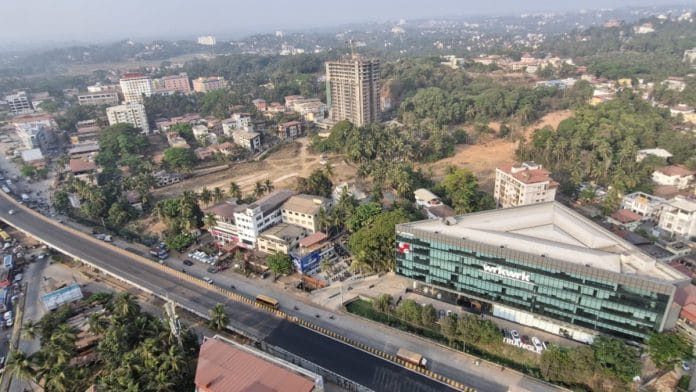



Mangalore-Udupi: Namith Padmaraj had been working in Singapore for 12 years when he got an offer he couldn’t refuse: US audio solutions company Bose Professional asked him to build a new product line from scratch. Along with this, the company also asked him to select a location for its brand-new facility, Bose Professional’s first unit outside the US.
“First they (Bose) suggested Bengaluru, but I thought I was better off in Singapore. The main thing that R&D requires is long-term commitment,” Padmaraj says.
Padmaraj had worked in Bengaluru, known as India’s Silicon Valley, and was well aware of the challenges: he knew that the city’s growing congestion and high attrition rates would conflict with the long-term commitment required for R&D.
He then suggested the coastal city of Mangaluru in Karnataka as an option.
For years, the port city’s economy has largely centred around refineries, shipping-related businesses, fisheries and agriculture.
But Padmaraj, who grew up in nearby Karkala in Udupi district, was confident that Mangaluru was a better choice; it had a great talent pool, good quality of life. A coastal city with space to breathe, and free-flowing traffic.
His bosses were apprehensive about the choice of location but trusted Padmaraj to deliver.
In November 2024, he started advertising jobs on LinkedIn. He even reached out to people hailing from the region but working outside Mangaluru.
It wasn’t a hard sell: more time with family, the opportunity to build a product from scratch, good pay and good quality of life.
In January 2025, Padmaraj hired the second employee of Bose Professional in India. By the end of the year, he had a team of 50.
The team is now building almost all of the software for the US major’s new product line from a smart new office in Mangaluru’s Kottara Chowk.
Bose Professional is one of hundreds of major IT companies working out of Karnataka’s coastal region of Mangaluru, Udupi and Dakshina Kannada, which has witnessed an economic boom in recent years.
Padmaraj and Bose’s decision was not just about a calculated bet. It was a signal. He had joined the regional movement.

Previously, hundreds of IT professionals who graduated from colleges in Mangaluru and Udupi were forced to look outside for work. But now they have options closer to home in the region, dubbed the Silicon Beach of India.
The shift is revitalising the economy of the region, which had been dominated by years of communal politics with retaliatory killings, simmering religious tensions, moral policing, vigilantism and other challenges.
Now, undeterred by these past challenges, a group of entrepreneurs, High-Networth Individuals (HNI) and the broader business community are rallying to restore the region’s economic prominence.
In the past two years, revenues from IT have grown from Rs 3,200 crore and are on their way to cross the Rs 5,000-crore mark this March. Of this, Rs 3,000 crore is estimated to be salaries of professionals, which will infuse capital into the local economy.
The broader IT community is now aiming for Rs 45,000 crore in revenues by 2034 and increasing the number of tech professionals in the region from around 50,000 to 200,000 during this period.
Over the past three years, the region has seen three companies acquired by global corporations in deals worth nearly $100 million each, indicating the quality of the technology being developed in these parts.
Historically, the erstwhile district of South Canara (later renamed Dakshina Kannada) with Mangaluru at its heart, has a rich legacy rooted in entrepreneurship and education.
“We want to reignite the belief,” Rohit Bhat, a serial entrepreneur, investor and founder of Robosoft, 99games and WrkWrk, a co-working space, told ThePrint.
Also Read: Inside Chennai’s data centres. Fortresses of the AI era
‘Coastal Bengaluru’
Nestled between the Western Ghats on one side and a pristine shoreline on the other, the region comprising Mangaluru, Dakshina Kannada, and Udupi—historically known as “Tulunadu”—has a long-standing reputation for its industriousness and self-reliance.
The region is growing into an IT powerhouse as tech firms are setting up shop there because of the advantages it offers.
Travelling long distances in Mangaluru and Udupi feels like a breeze compared to short commutes in cities like Bengaluru, Hyderabad, Mumbai or Delhi. Moreover, the quality of roads is also vastly superior.
It’s called the ‘15-minute city’ because that’s average travel time, including the airport.
“My commute takes me five to seven minutes, which includes dropping my daughter off at school. For my colleagues in Mumbai, this is unheard of,” says Suyog Shetty, the CEO & co-founder of Niveus, which was acquired by global digital and IT services bellwether, NTT Data, last February.
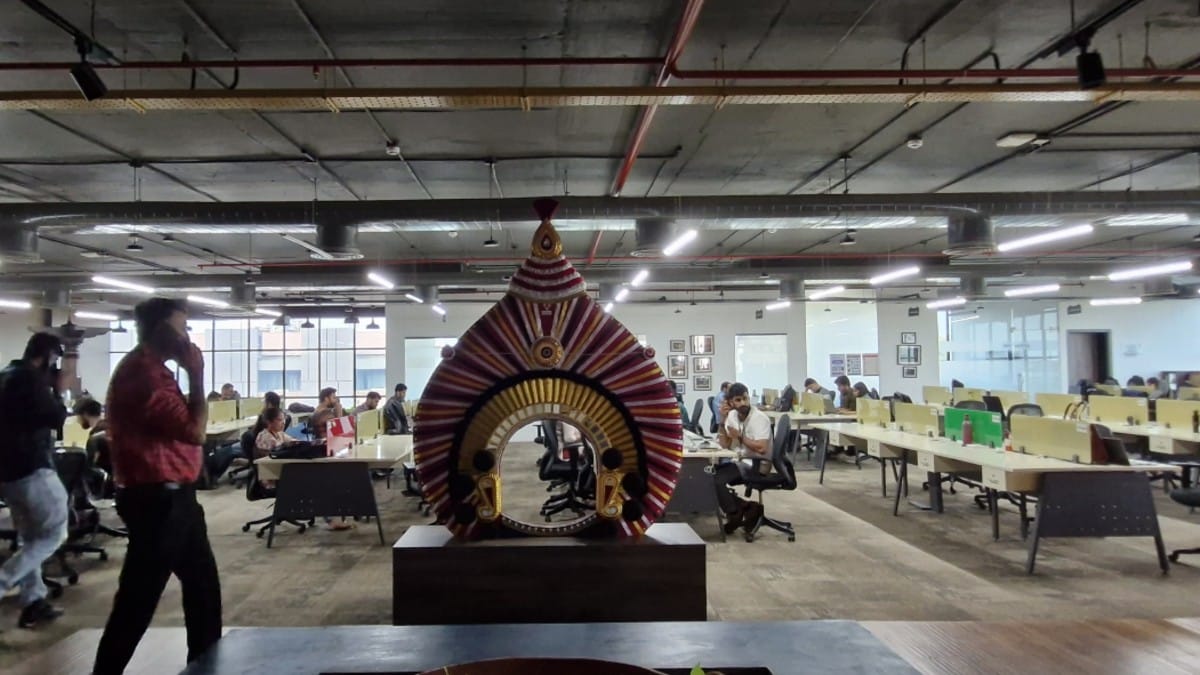
Mangaluru has many other benefits: cheaper housing, lower operational costs, lower salaries, 80 percent lower attrition and a ‘safe city’ tag.
Industry captains say office spaces are 30 percent cheaper than Bengaluru, Pune or Hyderabad.
Home rents are also lower. Padmaraj, for instance, pays Rs 35,000 for a 2000 sq ft three-bedroom apartment, a fraction of what it would cost in a city like Bengaluru.
Moreover, education is more affordable. CEOs say that they pay Rs 4,5000 to Rs 1 lakh as annual fees in top schools as school fees, which is unthinkable in a city like Bengaluru or Hyderabad, where tuition fees run into several lakhs.
The quality of life is also infinitely better, they say.
“Autos do not overcharge, employees go home for lunch, and many of them are living with their aged parents,” says Mohammed Hanif, the co-founder of Novigo (acquired by Blackstone portfolio company R Systems).
“These things matter. We cannot imagine doing this in any other big city,” he adds.
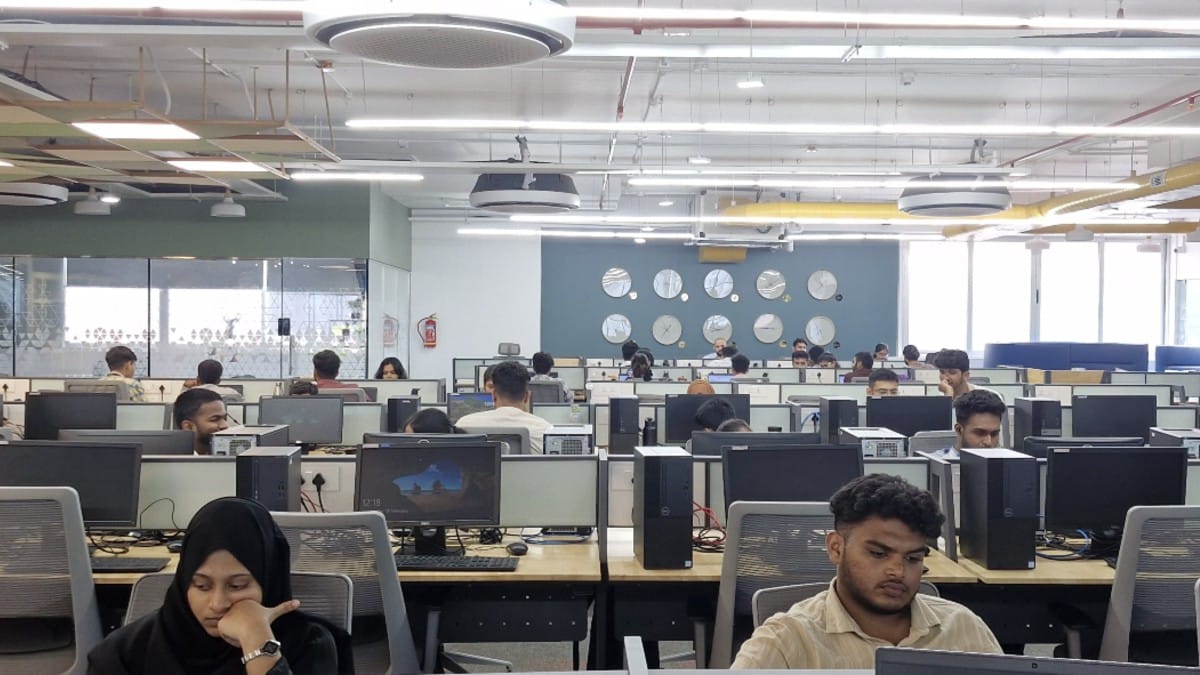
Global CEOs of various corporations are frequent visitors to Mangaluru.
Most of them go surfing in the morning, trekking on one of the many peaks in the region or join the many vibrant fitness groups in running or cycling, IT industry captains say.
The revamping of the Pilikula Golf course, cradled within the 370-acre Pilikula Nisargadhama, is also being showcased as part of the appeal to investors.
The rich cultural diversity, coastal cuisine, and the globally renowned ‘Gadbad’ ice cream which originated right here, are added advantages.
Dakshina Kannada contributed 5.4 percent to the state’s GSDP in 2023-24 while Belagavi accounted for 3.9 percent. In comparison, Bengaluru Urban contributes nearly 40 percent, illustrating the skewed development model that is centred around India’s IT capital.
“We are where Bengaluru was at the turn of the century,” Bhat says, his eyes gleaming with promise. “This growth is despite a lack of government support and not because of it,” Bhat says.
The running joke is that Mangaluru should be named ‘Coastal Bengaluru’ for it to get any attention from the government.
Popular programmes like the government-backed ‘Beyond Bengaluru’ where companies are encouraged to set up shop in other parts of the state, have not been implemented with the same fervour as it is announced, according to industry professionals.
Capt Brijesh Chowta, first-time BJP MP from Dakshina Kannada district, says he has started campaigns that would help attract talent back to Mangaluru.
“Tech, tourism and trade”, he says, is his priority in office, helping fuel the IT wave in the region.
Chowta has started campaigns like “Back to Ooru” (Back to hometown) and written letters, reaching out to nearly 500 accomplished leaders from the region to return.
“Over the past year, we have been nurturing a simple but powerful idea: Back to Ooru, a collective effort to bring our most accomplished sons and daughters back into the story of the region’s rise. Not as visitors or nostalgic well-wishers, but as co-creators of a new chapter,” he said, adding that “#BackToOoru” is neither a programme or a scheme, but “a movement rooted in belonging, responsibility and pride”.
History of the region
Historically, the region was always known to punch above its weight.
Despite limited administrative support during the erstwhile Madras Presidency, it became known as the “cradle of banking”, establishing 22 banks between 1880 and 1935.
Four of the banks would eventually be nationalised, a distinction no other state can claim, let alone a single district.
The region is also known for its rich legacy in education. It now churns out around 60,000 graduates every year, including engineers and in medicine.
Satya Nadella (Microsoft), Rajiv Suri (formerly Nokia) and chef Vikas Khanna are among the many high achievers from Mangaluru and Udupi-based educational institutions.
But for years, a large number of graduates moved to cities like Bengaluru, Pune and Hyderabad in India, and other global centres for jobs.
Although IT bellwether Infosys has been present in the region since the early 1990s, retaining talent wasn’t easy.
Being in the Mangaluru office did not carry the same appeal at the time as Bengaluru, which offered a vibrant nightlife and better opportunities.
But all that is changing. Infosys now has around 5,000 people. Mangaluru has eight companies with more than 1,000 employees.
Many industry leaders are returning to Managaluru.
Anand Fernandes, CEO and Director of EGDK India, is a prime example of this transition. After a successful career in the Middle East and Bengaluru, Fernandes returned to his hometown in 2019 to scale operations in his earlier company, FrontAvenue, locally.
“The intention was that Mangaluru was already producing so many engineers. Even if I could scale from two to four people, it was a big achievement for me,” Fernandes told ThePrint.
His company was eventually acquired by Danish major EG, and today it employs 850 people in India, 95 percent of whom are based in Mangaluru and as many as 80 percent hail from the region itself.
‘Avoid mistakes of Bengaluru’
For years, the Mangaluru and Udupi region was known for its diverse heritage.
The 7th-century Zeenath Baksh Jumma Masjid, Rosario Cathedral and the temples of Murudeshwar and Gokarna stand alongside a rich history of Jain architecture, exuding the cultural diversity of the region, allowing its residents to coexist harmoniously and thrive over the centuries.
But this diverse heritage was also used to create divides and fuel communal disharmony in the past.
The IT wave is shifting the narrative.
Today, almost every second billboard on the streets in Mangaluru and Udupi is that of graduating students.
Towering glass buildings, co-working spaces and smartly dressed IT company workers are quietly raising aspirations of the local population.
“If this IT wave continues, then aspirations will go up and there will be no space for other issues to overshadow the achievements,” says Mohammed Hanif, the 43-year-old co-founder of Novigo.
Shetty recalls how at one time no bank wanted to partner with Niveus nor was there any help with compliance or other legal assistance when setting up companies.
“The ecosystem was non-existent,” he says.
Today, successful entrepreneurs are selling the region’s success story to the world, investing not just time but also money to organise events and acting as its ambassadors.
The region’s skyline is also expanding with nearly 1 million square feet of Grade-A office spaces under construction to meet the growing demand. High-rise apartments are also mushrooming to cater to those working in these sectors.
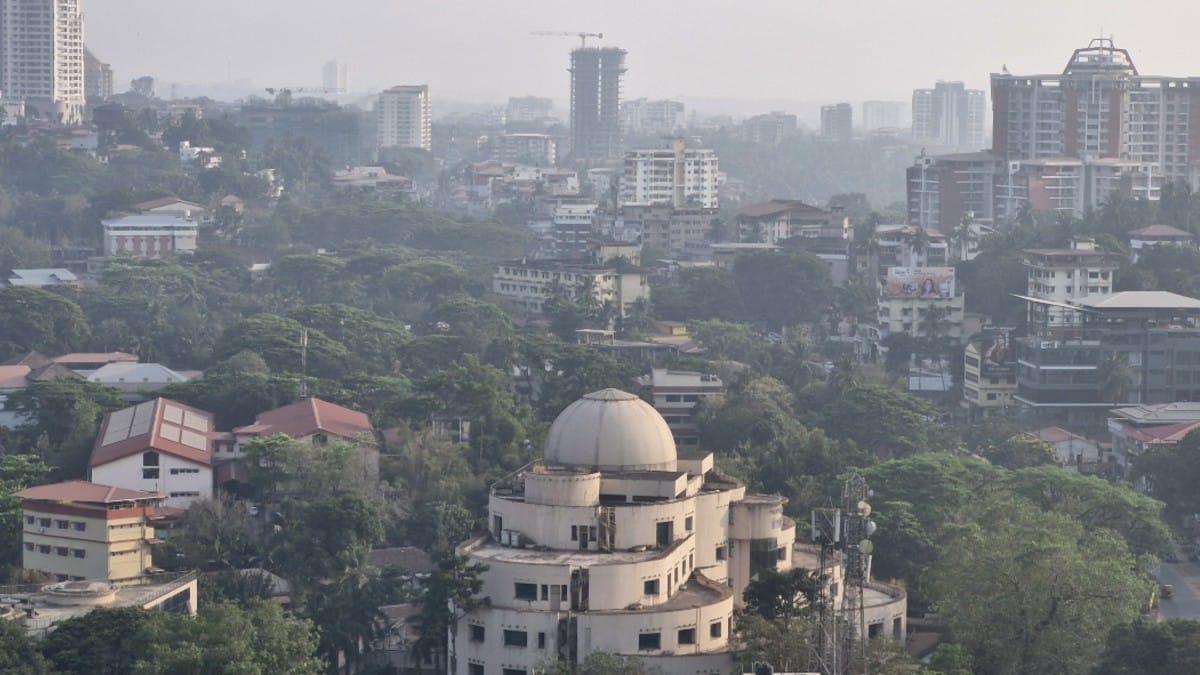
But there is also a conscious effort to avoid the same mistakes as Bengaluru.
Bhat and other entrepreneurs are advocating for organised development along the 100 km highway between Kasargod to Udupi.
“IT professionals can live in their villages, or other places and travel to their offices without entering the city at all,” he says.
Bhat himself juggles between Udupi and Mangaluru, which lie about 50 km from each other. “It takes me about 45 minutes,” he laughs.
Entrepreneurs are hoping that the government will share this vision and avoid a repeat of the mistakes made in places like Bengaluru, one of the most congested cities in the world.
“With government support, we can scale this vision rapidly,” he says.
(Edited by Sugita Katyal)
Also Read: Late-stage startups in Karnataka feel funding winter as overall investments decline 28%