





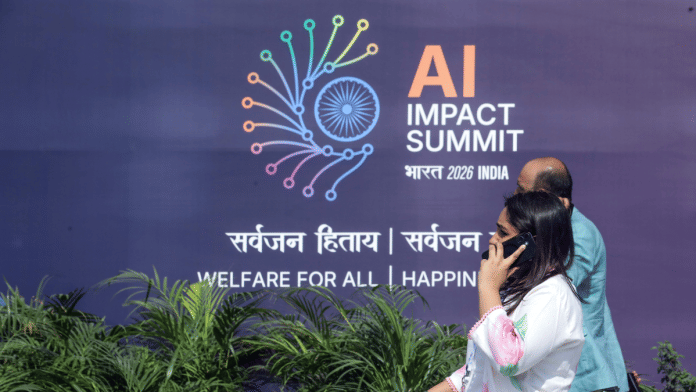



New Delhi: From entertainment to driving assistance to healthcare, top Indian companies showcased how they are venturing into the artificial intelligence space in the India AI Impact Summit in New Delhi.
ThePrint brings what Indian and international companies showcased in their pavilions.
1. Reliance Jio
The Reliance Jio pavilion was one of the grandest at the India AI Impact Summit.
The main attraction was a recreation of the AI-generated series Mahabharat: Ek Dharmayudh, which was recently launched on JioHotstar. The show, which featured the characters at the pavilion, used AI to bring the Indian epic to life.
Jio also showcased its smart home solutions, including AI-assisted automation of electronic devices, smart kitchen services, intelligent lighting, health monitoring, and custom automations. These services will use IoT sensors and voice commands, similar to services such as Amazon Alexa and Google Assistant.
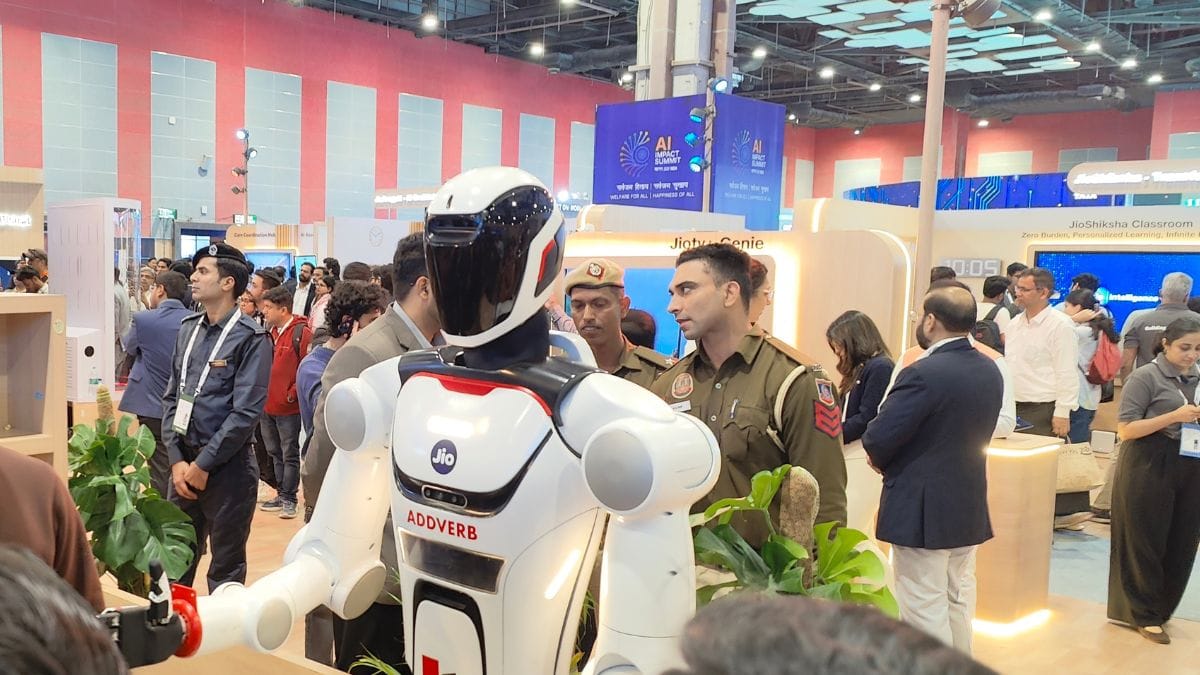
The pavilion also featured a humanoid, developed by the global robotic company Addverb, handing out Pringles boxes to visitors. Delegates excitedly clicked photos and gave directions to the robot.
Reliance Jio is also experimenting with AI-powered beauty solutions. The portal will help create a customised beauty and skincare regime for individuals, tailoring it to their skin type, texture, age, and skin concerns.
2. Wipro
The Wipro pavilion showcased a range of AI designs at the pilot and operational phases in the fields of healthcare, visual inspection services, and engineering and robotics.
The company’s CloudCareAI system is designed to revolutionise the healthcare industry by transforming medical devices into cutting-edge, adaptable, scalable, and future-proof systems. Powered by remote device monitoring and predictive analytics, the platform will enhance the quality of medical care and make healthcare efficient, cost-effective, and future-proof.
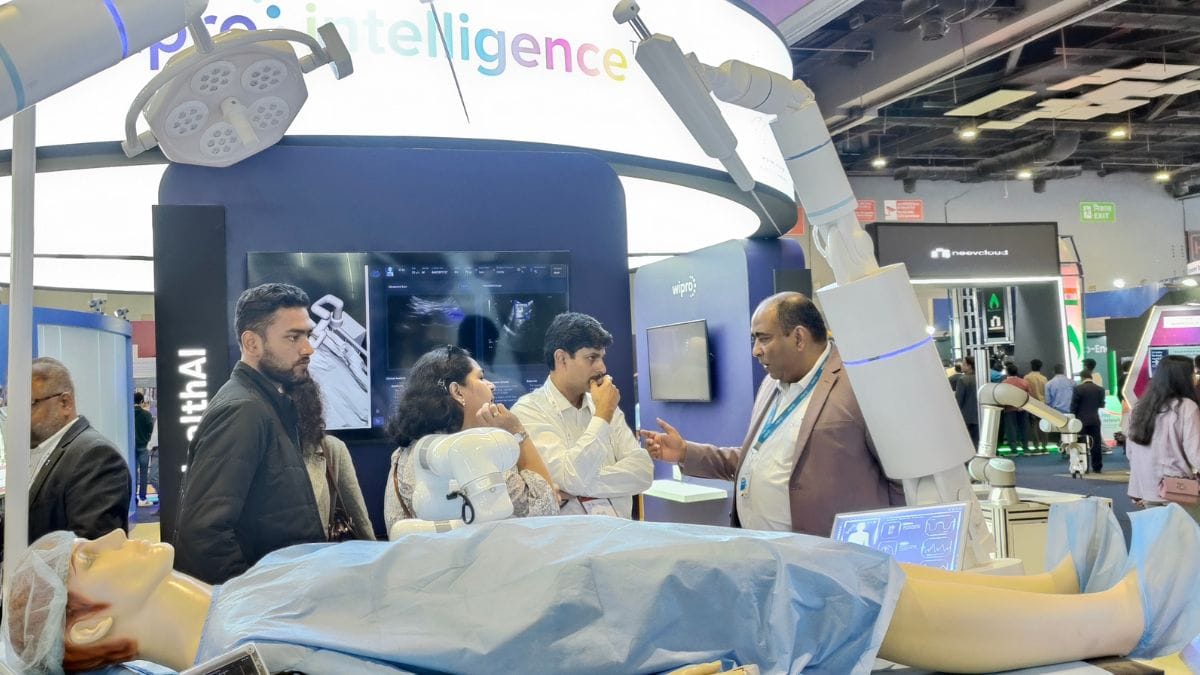
The stall featured a robotic arm hovering over a mannequin’s abdomen, suggesting how robotic surgery will eventually become imperative in the medical field.
Wipro also showcased its partnership with NVIDIA.
“Wipro and NVIDIA combine accelerated computing, sovereign-ready architectures, and enterprise-grade AI engineering to help global organisations turn strategy into scalable, governed, and high-value AI deployment,” the company said in a statement during a guided tour of its pavilion.
Also read: Need deeper Indo-Canadian ties to curb dependence on hegemons like US, China—Canadian AI Minister
3. Tech Mahindra
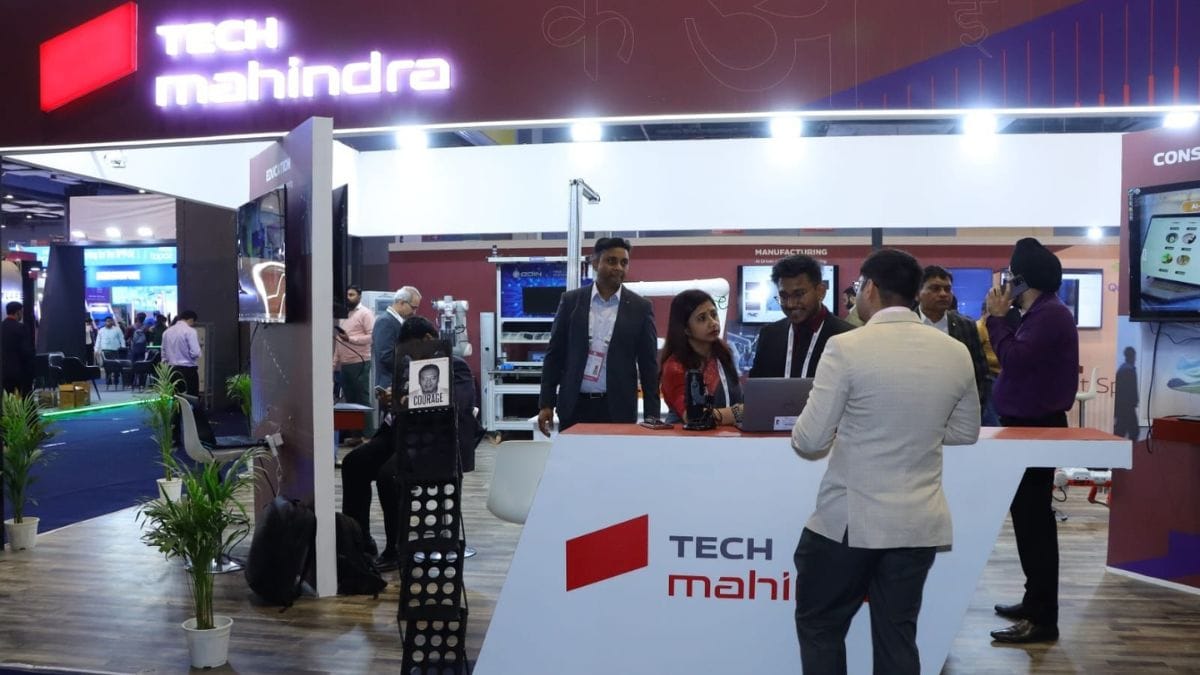
Tech Mahindra launched an 8-billion-parameter Hindi-first Large Language Model (LLM) during the summit. The company has partnered with NVIDIA for the project, and will benefit from NVIDIA’s advanced AI frameworks and infrastructure.
The LLM has been built to ensure that students with non-English backgrounds can access educational resources and better understand subjects such as chemistry, physics, and mathematics. It seeks to remove the language barrier.
The Mahindra Group’s automobile company, Mahindra and Mahindra, has also partnered with other companies to develop driver-assist services for its cars that detect driver motion and help prevent accidents and violations. These systems can recognise drivers’ movements and indicate risks such as drowsiness or smoking.
4. OpenAI
Indian companies had tough competition from their global counterparts, which are way ahead in the AI race. And the pavilions proved this.
At the OpenAI pavilion, visitors thronged to get a glimpse of how the company’s products—ChatGPT, DALL-E, and Sora—were taking the AI game to the next level.
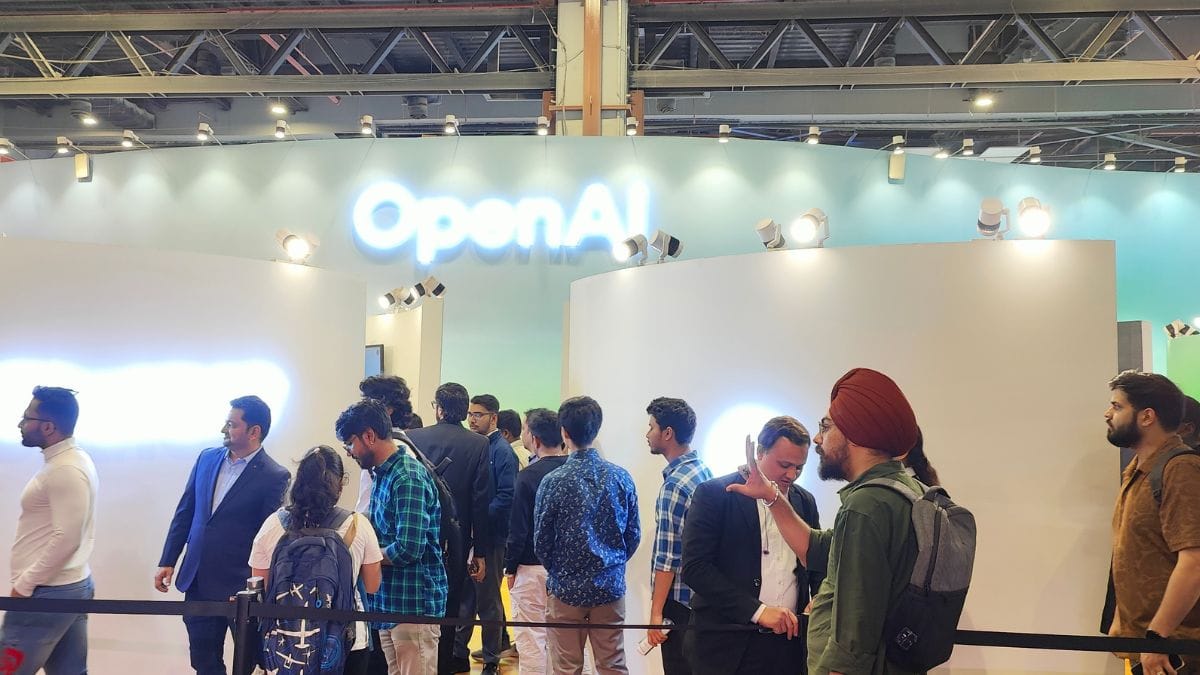
During the Summit, the company announced the launch of a new version of Sora 2—OpenAI’s flagship video and audio generation model—named Sora 2 Pro, in India. This new and improved version will focus on production-ready videos fit for commercial use, marketing campaigns, and professional content creation.
5. Meta
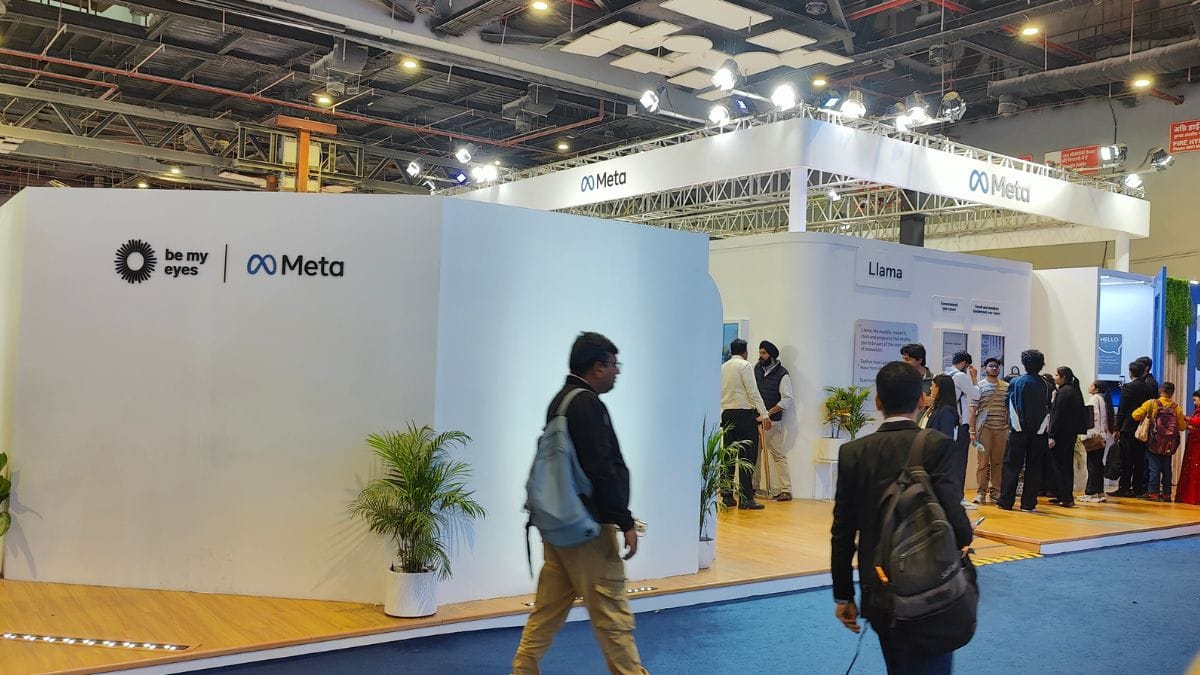
The highlight of the Meta pavilion was its language conversion booths. The platform allows users to speak in their native languages, while the service translates their speech to any language in real-time.
The service goes a step further by allowing this translation in the user’s own voice.
6. Google
The Google pavilion became a delight for cricket lovers at the AI Summit. Along with its other services, the company gave the visitors a glimpse into its ‘AI real-time cricket coach’ service, which allowed people to play in a simulated setup and get AI insights into their batting and bowling form.
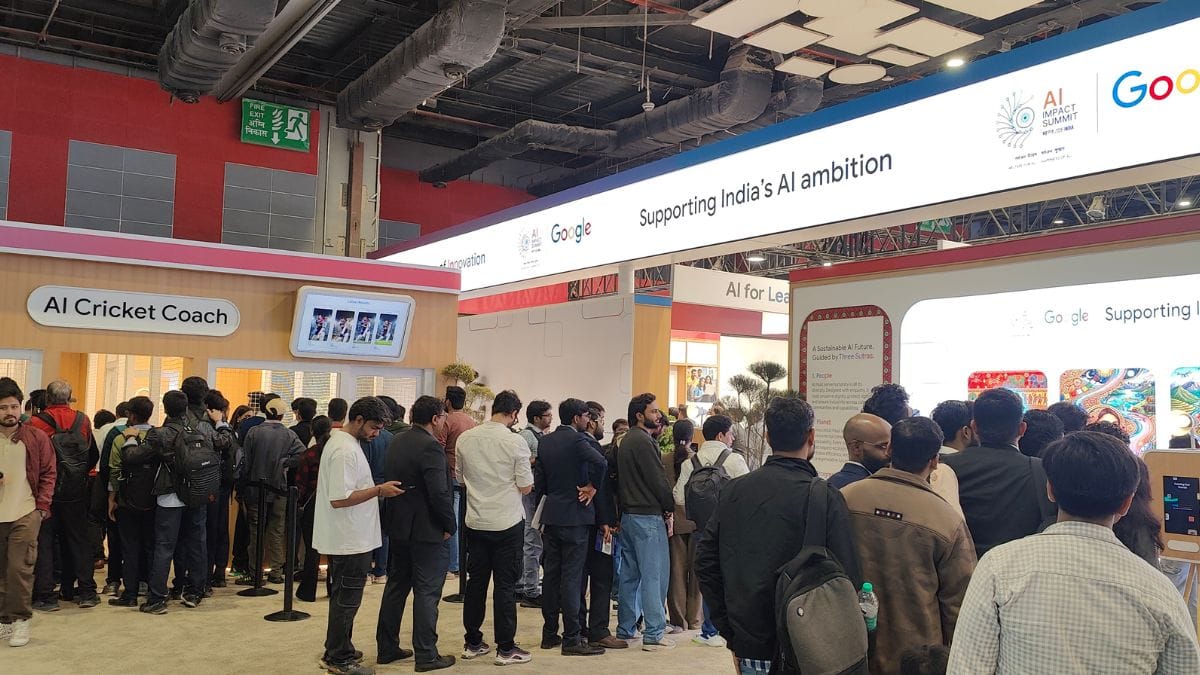
Google also showcased its agriculture and weather models as well as AI-enabled language accessibility models at its stall.
(Edited by Prasanna Bachchhav)