





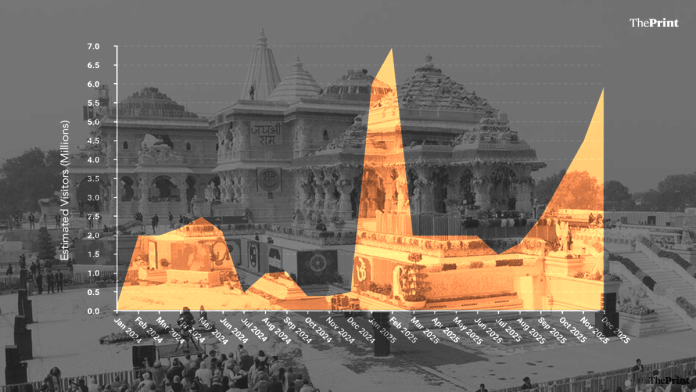



Lucknow: A new study by the Indian Institute of Management Lucknow (IIM-L) has said that the construction of the Ram Temple has catalysed a measurable economic transformation in Ayodhya, marked by reverse migration, rising GST collections and rapid urban development.
Titled “The Economic Renaissance of Ayodhya: A Case Study on Sri Ram Mandir”, the January 2026 report analyses the temple’s impact on local employment, business activity, governance systems and infrastructure expansion.
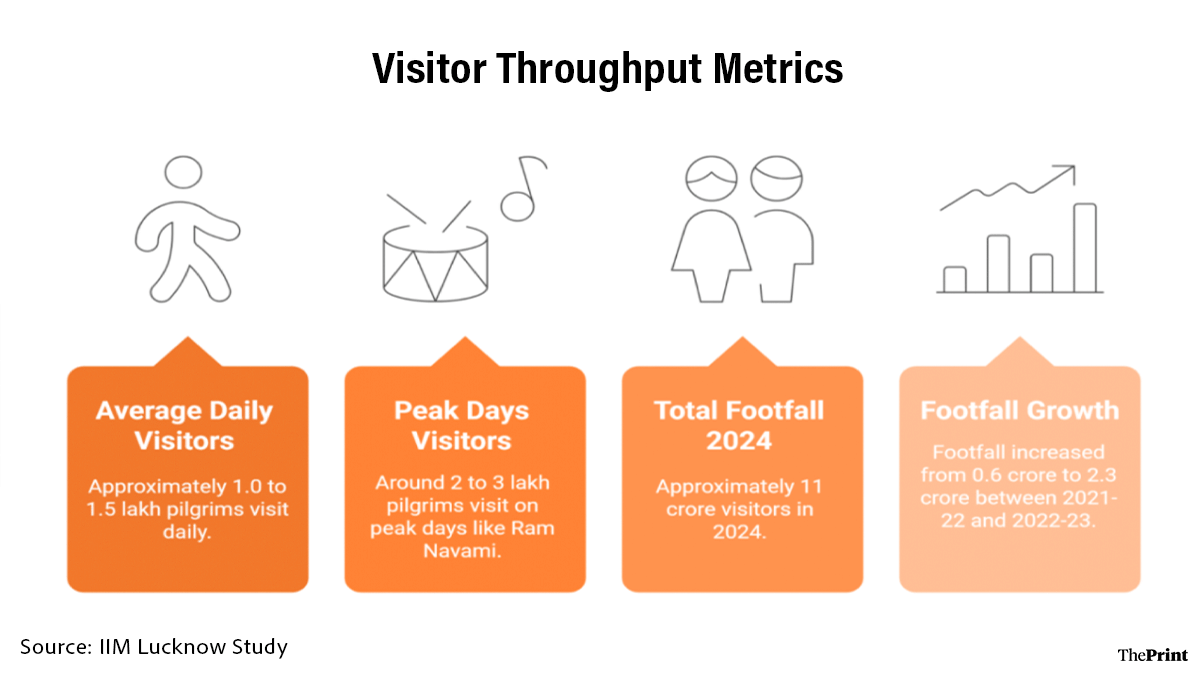
The report, accessed by ThePrint, highlights an unprecedented surge in visitor numbers since the temple’s opening in January 2024. The study suggests that annual footfall jumped from around 1.7 lakh visitors pre-temple era to over 11 crore in the first six months of 2024 alone.
This also reflects a more than 60-fold increase in pilgrim traffic within months of the temple’s public opening.
One of the key figures mentioned in the report is the significant rise in tax revenues. Goods and Services Tax (GST) collections in the Ayodhya region reached approximately Rs 400 crore, driven largely by higher commercial activity and formalisation of local businesses.
“The consecration of the Shri Ram Mandir in Ayodhya in January 2024 marks a turning point, driving regional development through infrastructure expansion, tourism growth, employment, and real estate appreciation,” says the report.
Analysts in the study project that tourism-linked economic activity could generate up to Rs 10,000 crore annually in overall revenue in the near term.
The sharp surge in the number of visitors has led to a visible expansion across multiple sectors of Ayodhya’s economy, says the study.
The study was led by IIM-L’s Venkataramanaisah Saddikuti, a professor of Operations and Supply Chain Management, along with two other academicians.
According to Saddikuti, the research team spent nearly a week in Ayodhya conducting on-ground assessments, interacting with pilgrims, local traders and officials to understand the temple’s economic impact.
Speaking to ThePrint, Saddikuti highlighted a striking trend he observed during fieldwork—the growing interest among people from southern India in visiting Ayodhya.
“One interesting thing I noticed was the huge interest among people from the South in visiting Ayodhya. During my ground visit, I came across a private bus from my hometown, Srikalahasti in Andhra Pradesh. I interacted with some of the passengers and even sent prasad for my family back home through that same bus,” he said.
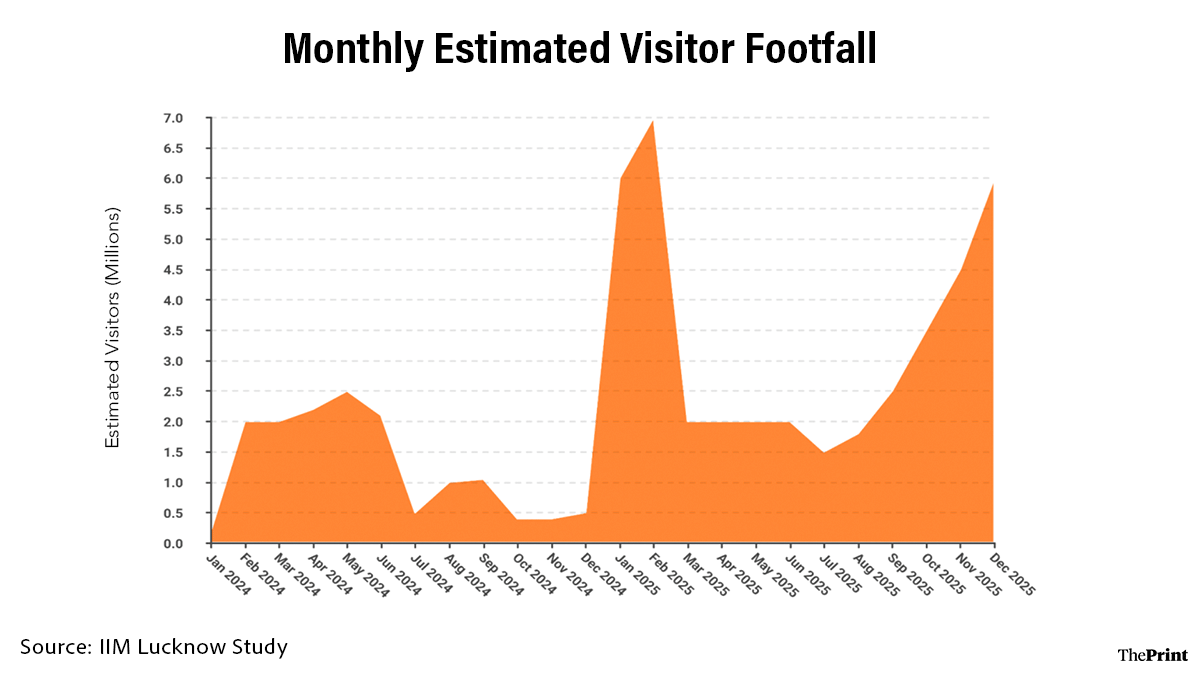
He added that the increasing inflow of devotees from states such as Andhra Pradesh, Tamil Nadu, Karnataka and Kerala reflects the temple’s widening national appeal. According to him, this expanding geographical spread of visitors is playing a crucial role in boosting Ayodhya’s local economy by driving demand for transport, accommodation, food services and retail trade.
“This rise in interest from southern states is significantly contributing to the district’s economic activity. Apart from that, many youths who were working outstations came back to Ayodhya to start their own businesses,” Saddikuti noted, highlighting how pilgrimage tourism is reshaping Ayodhya’s economic profile.
Also Read: From Ayodhya, Modi signals outreach to marginalised groups, thrust on shedding ‘slave mentality’
Hospitality boost
The study further suggests that in the hospitality sector in Ayodhya, the number of hotel rooms has increased from around 3,500-4,000 in 2020 to over 5,000 by 2025. With pilgrim inflow continuing to rise, projections suggest the city may require up to 12,500 rooms by 2031 to meet demand.
Alongside hotels, a new accommodation segment has emerged, with 1,136 registered homestay units now operating in the city, helping bridge the capacity gap.
The food and retail sector has witnessed equally dramatic growth. The number of restaurants has surged from around 200 to nearly 2,000, reflecting heightened consumption activity driven by tourism.
In the banking and trade sector, bank branches have expanded from 15 to around 60, signalling greater financial activity and formalisation of businesses. Meanwhile, clothing and jewellery shops have multiplied several times over, benefiting from higher footfall and rising purchasing power linked to the tourism boom, the report adds.
Homecoming
The study also points to a notable pattern of reverse migration, where workers who previously moved to larger urban centres have returned to Ayodhya to capitalise on growing opportunities. Jobs in construction, hospitality, transport, retail and tourism services have increased, easing pressure on metropolitan job markets while strengthening the regional labour pool.
The temple’s construction has catalysed extensive infrastructure investment. Authorities have spent over Rs 2,150 crore on related development projects, including improvements in roads, transportation hubs and public utilities. These projects aim to support both tourism growth and long-term urban planning.
As per the study, the transport services have expanded dramatically to meet rising mobility needs. The number of rickshaw operators increased from approximately 500 to 17,000 vehicles, reflecting the growing demand for local commuting within temple and city outskirts.
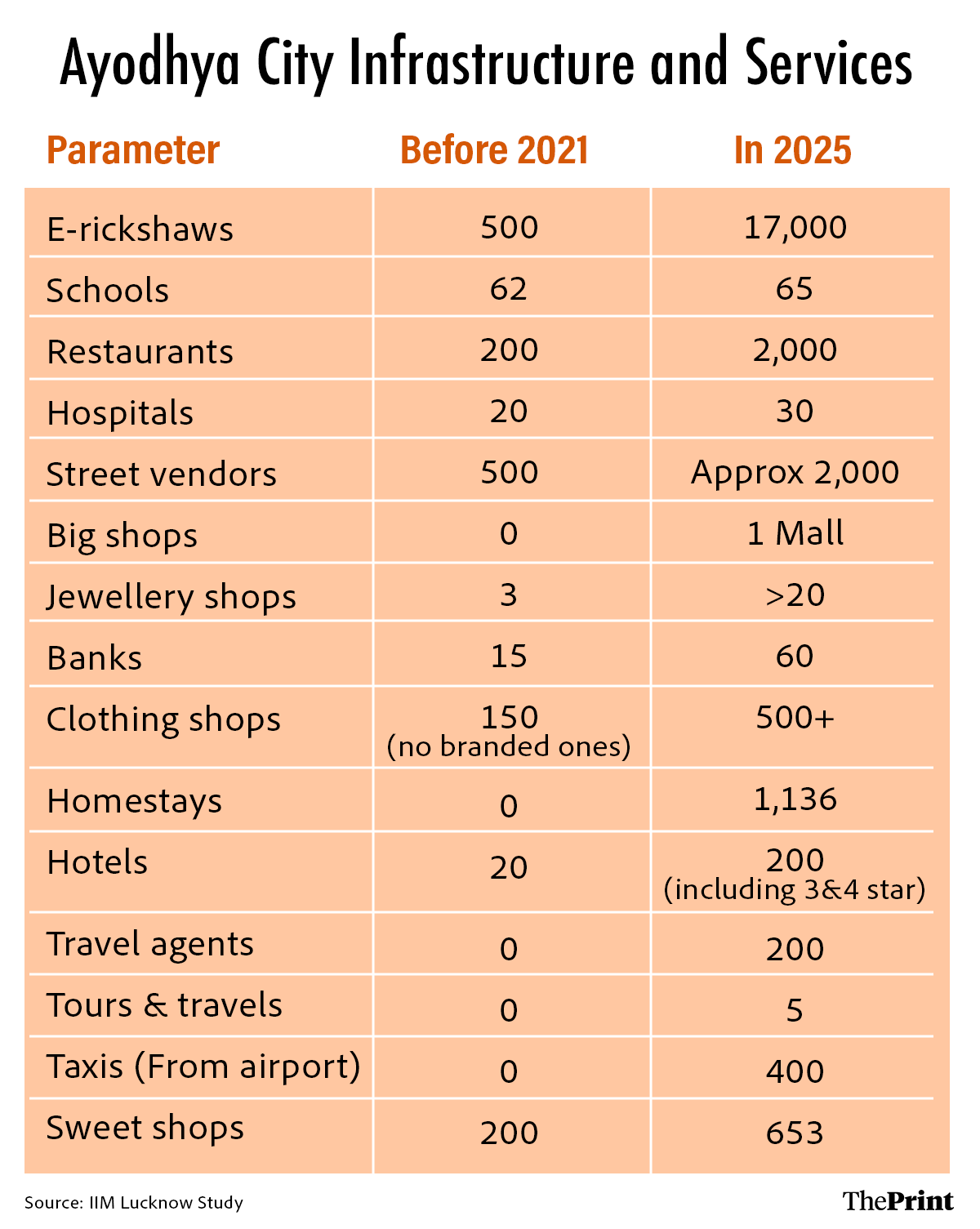
Taxi services, tour operators and bus services connecting Ayodhya with major cities have also expanded. The study particularly notes growing visitor inflow from southern states, including Andhra Pradesh, Tamil Nadu, Karnataka and Kerala, suggesting that Ayodhya’s appeal has broadened geographically.
The study concludes that the Ram Mandir has acted as a catalytic asset, transforming Ayodhya from a relatively modest pilgrimage town into a high-intensity religious tourism hub. The economic gains are visible across hospitality, transport, retail, banking and employment sectors.
However, the report also underscores the need for sustained planning, regulatory frameworks and environmental safeguards to ensure long-term sustainability. Managing peak crowd flows, preserving heritage, ensuring equitable growth and preventing speculative overexpansion remain policy challenges.
(Edited by Ajeet Tiwari)
Also Read: There’s a lot of South in Ayodhya Ram temple. Modi trying to take BJP to Southern India