









Lucknow: The Uttar Pradesh Cabinet has approved new rules for providing additional benefits in state government recruitment exams to candidates who have worked under the Chief Minister’s Fellowship Programme, which allows youngsters to study the impact of government policies and aid implementation.
Under the new rules, CM Fellows will be eligible for age relaxation and additional marks in recruitment exams conducted by the Uttar Pradesh Public Service Commission (UPPSC) and the UP Subordinate Services Selection Commission (UPSSSC).
Currently, the maximum age limit varies category-wise, but it cannot go beyond 40.
CM Fellows who have completed one year will get a one-year age-relaxation, while those with two and three years of fellowship will get a relaxation of two and three years, respectively.
They will also get extra marks in exams. For exams of 100 marks, candidates will get 1, 2 or 3 extra marks depending on whether they have served one, two or three years. In exams of 500 marks, the weightage will be 2, 4 and 6 marks, and in exams of 1,000 marks, it will be 2.5, 5 and 7.5 marks.
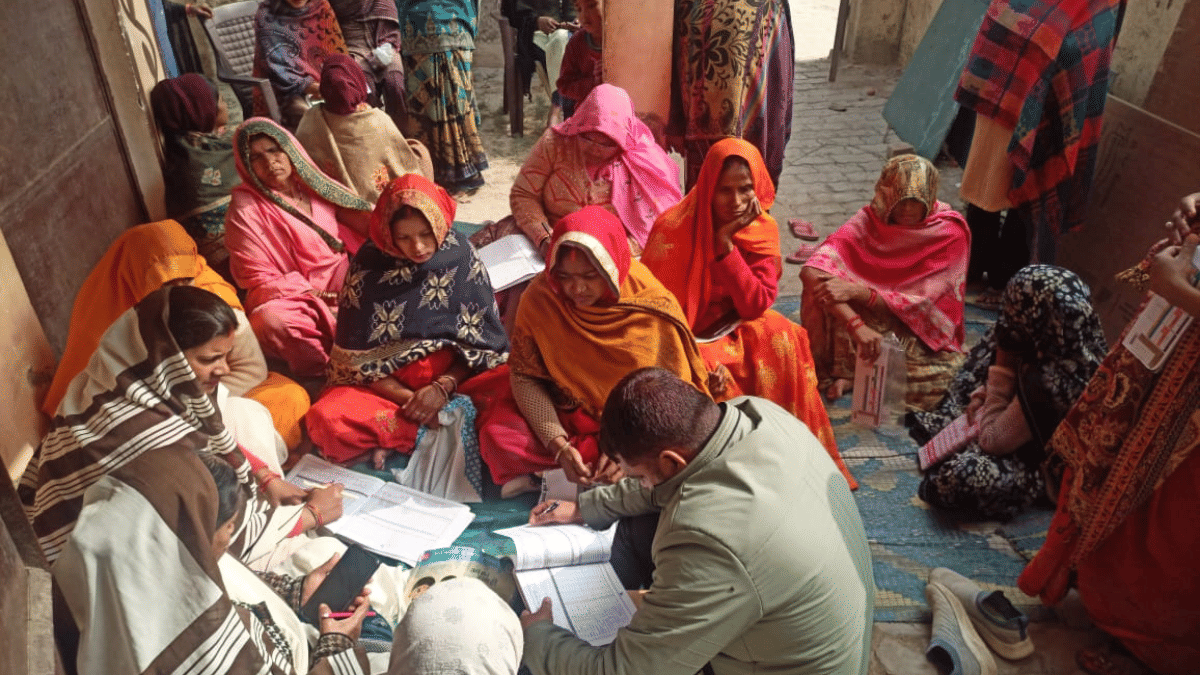
According to functionaries in the CMO, Yogi Adityanath personally monitors the fellowship.
Also Read: Why BJP is worried about SIR in Uttar Pradesh
How CM fellows work
The Chief Minister’s Fellowship Programme was launched in 2022. Under this scheme, young researchers are appointed to help the government study the impact of its policies and identify implementation gaps in underdeveloped administrative blocks.
These researchers conduct surveys, study government schemes, collect data, and suggest solutions to improve the implementation of programmes. Initially, they work in 108 blocks and 100 town areas identified by the state government.
Data accessed by ThePrint shows 515 CM Fellows are currently working in the state. This includes 108 in the planning department, 122 in industrial development, 100 in urban development, 160 in the MSME department, and 25 in tourism.
Rajesh Kumar, a CM Fellow posted in Kaushambi district, told ThePrint that the government had given them responsibility for five sectors: health and nutrition, education, agriculture, social development, and rural development.
They track around 50 development indicators in these five sectors in the block allotted to them. They work closely with government departments, monitoring schemes, providing feedback and doing innovative work for the local people.
In one case, they provided four devices, using funds from the gram panchayat, for the public in Kaushambi block: a baby weighing machine, an infantometer, an adult weighing machine, and a stadiometer for children. Before this, the villagers of this block did not have these facilities, Rajesh said.
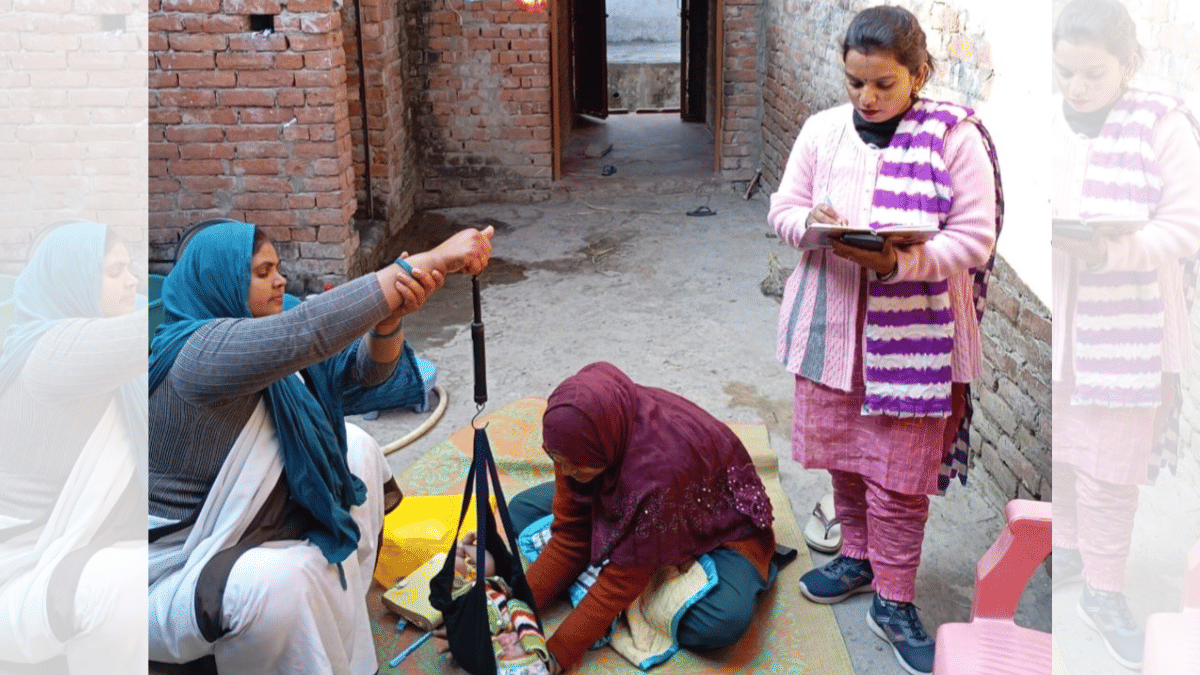
He added that they have renovated all 207 Anganwadi centres in Kaushambi block under the Kayakalp initiative, which includes wall painting, new matting and better electrification facilities.
“Our main focus is gap analysis. For example, if we find any issue in the education sector, we first inform the block-level education officer and then the Basic Shiksha Adhikari (BSA). If the problem is still not resolved, we raise it with officials at the state level,” Rajesh said.
Another CM Fellow posted in Manjhanpur block of Kaushambi district, Soumya Awasthi, told ThePrint that the work gave them good exposure, as they interacted with officials ranging from the local level to top state authorities.
She said that as severe malnutrition (SAM) was common in the block, they spoke with parents of the affected children and made them aware of vaccination and health-related issues. Last month, they helped some SAM children get admitted to hospitals and also counselled their parents.
Apart from this, they also ran a programme for high-risk pregnancy (HRP) women and counselled their husbands. This initiative helped many families take pregnant women to hospitals on time.
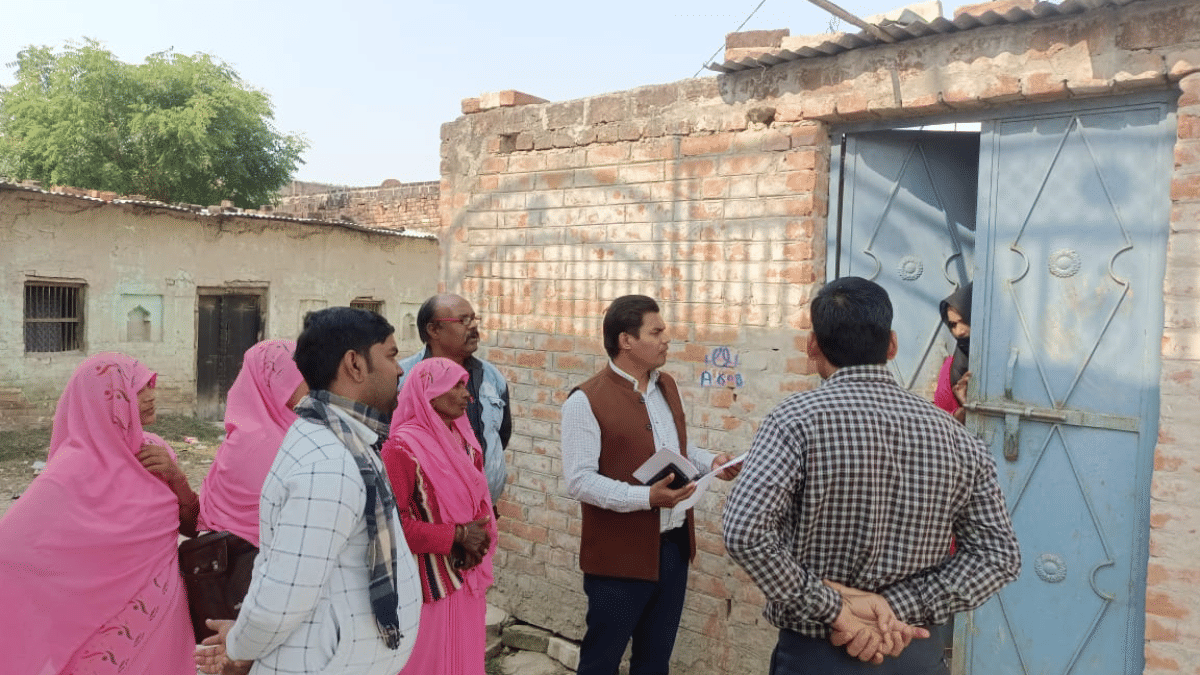
ThePrint has learnt that CM Fellows receive a monthly stipend of Rs 40,000 and a digital tablet. They are also provided with accommodation in the allotted development block as far as possible.
The fellowship is for one year and can be extended by up to two years. During their tenure, the researchers work under the district magistrate and the chief development officer.
The minimum education qualification for applying for the fellowship is graduation. Candidates must have at least 60 percent marks in their graduation and should be comfortable with reading, writing and speaking Hindi. Basic computer knowledge is also required.
According to government officials, candidates with Ph.D and M.Tech degrees have also enrolled as CM Fellows.
According to Yogi Adityanath, the programme is encouraging young people to work with the government as CM Fellows. It not only enhances their practical knowledge but also helps them pursue government services.
“At present, there are over 500 CM Fellows, but after this announcement, more candidates are expected to apply. We have not yet decided how many fellowship seats will be increased, but there will definitely be some additions,” a senior government official told ThePrint.
“As of now, their fresh ideas, technical knowledge and enthusiasm are helping in better implementation of schemes and in planning future policies,” the official added.
(Edited by Sugita Katyal)
Also Read: BJP-RSS gameplan for UP takes shape after marathon meetings in Lucknow. Yogi at centre of it