





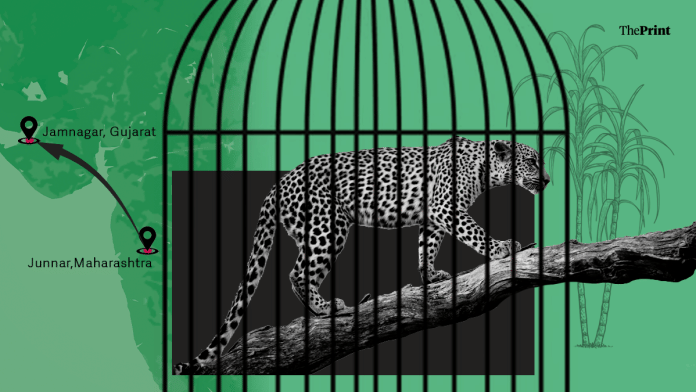



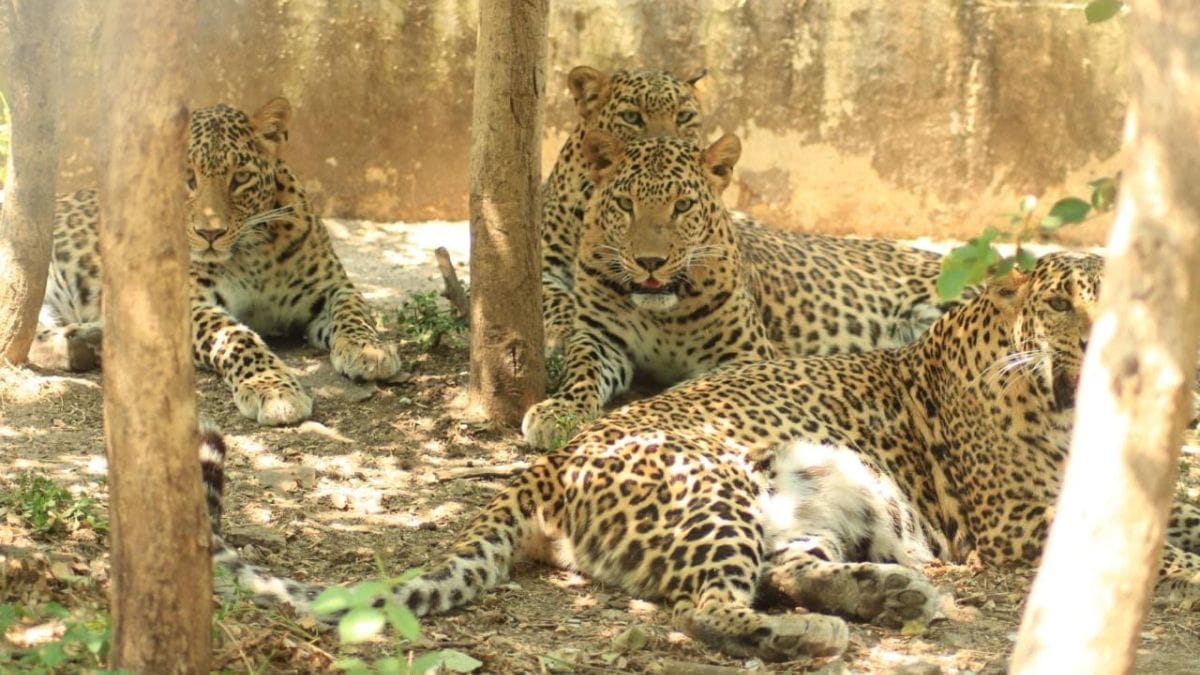
Mumbai: The Maharashtra government has captured scores of leopards after a spate of deaths in human-animal conflict, and is now scrambling to find space to house the big cats, leaving many of them confined to cages for months, ThePrint has learnt.
This uptick in human-leopard conflict is believed to be rooted in a unique situation in western Maharashtra’s sugarcane districts such as Pune, Nashik and Ahilyanagar, where leopards are breeding and living in sugarcane fields. The tall, thick stalks provide the perfect protective cover for these elusive cats, especially cubs when the mother is on the search for food.
Forest officials told ThePrint that 108 leopards from Junnar in Pune division were taken into captivity because they were close to rural settlements and were considered a threat. In the past six months, they said, the number of incidents involving leopards straying into human settlements and attacking villagers was 20, with six fatalities.
Environmentalists feel this raises questions about the proportionality of the state’s response, especially since the room to keep these solitary animals is limited to around 120-130 across the state.
Similar capture drives like the one in Junnar took place in other districts, including Ahilyanagar (formerly Ahmednagar), from where 21 big cats were captured.
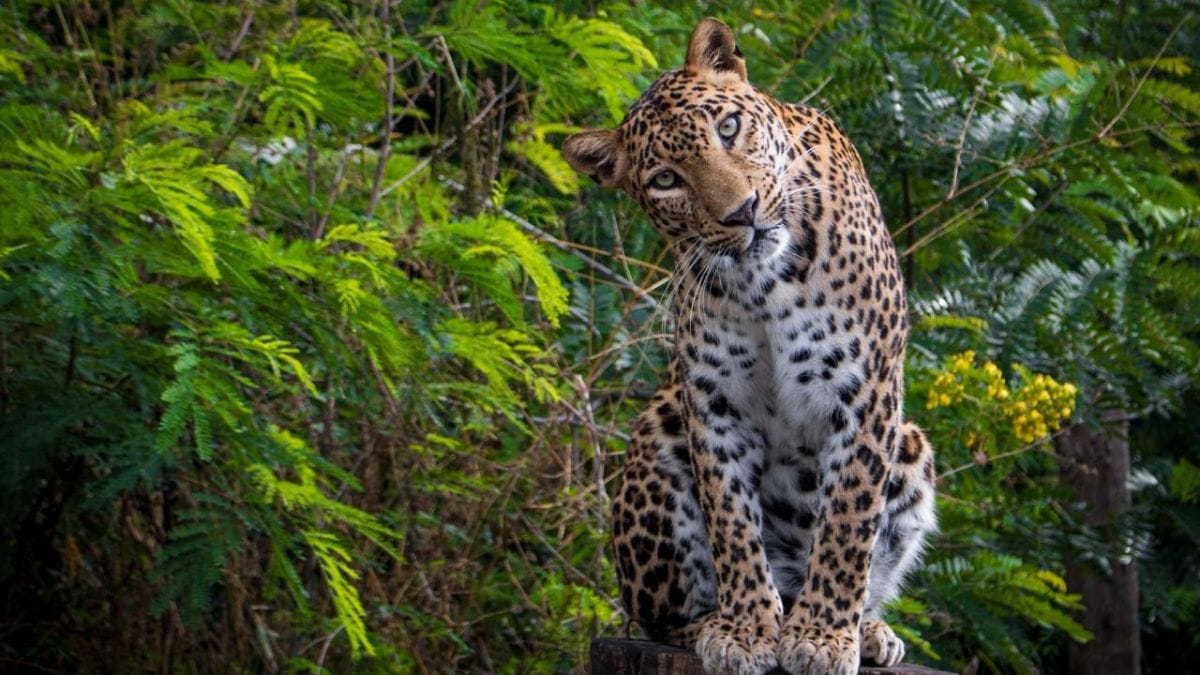
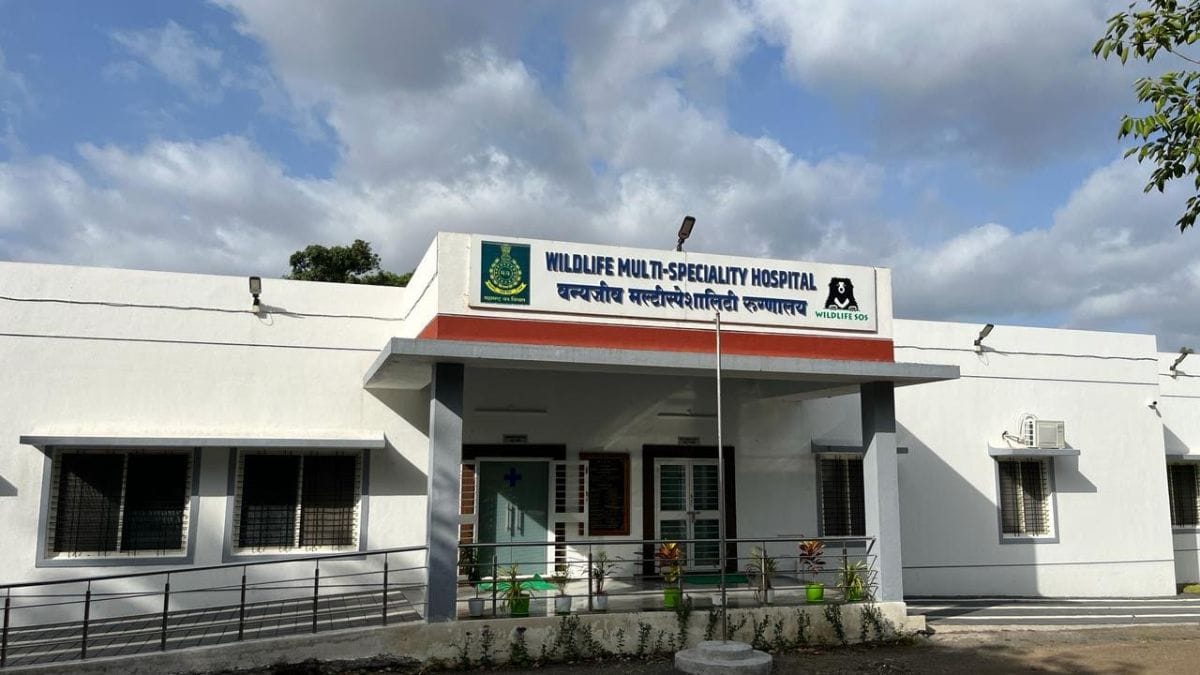
Captured leopards are kept at three facilities—Manikdoh Leopard Rescue Centre in Junnar forest range, Sanjay Gandhi National Park in Mumbai, and Balasaheb Thackeray Gorewada International Zoological Park in Nagpur.
A Divisional Forest Officer (DFO) on the condition of anonymity said leopards have been captured mainly from Pune, Nashik and Ahilyanagar, “where conflict was high”.
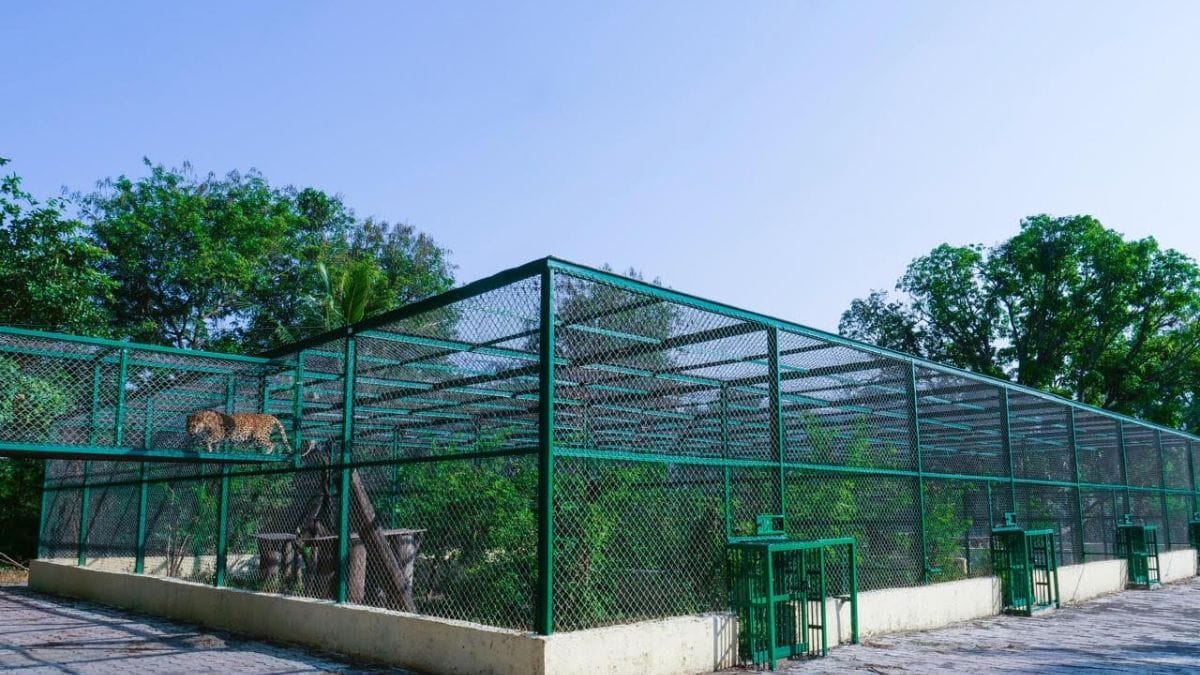
With space running out, the forest department started relocating the captured leopards from at least once centre—Manikdoh—to Reliance Foundation’s ‘Vantara: Global Wildlife Rescue and Conservation Centre’ in Gujarat’s Jamnagar. The first batch of 20 big cats was dispatched there on 8 March, and the plan is to shift 30 more to the facility.
Pradeep Chavan, Range Officer at Junnar Forest Division, confirmed the capture drive and the relocations. “Before sending 20 leopards to Vantara, Manikdoh had a total of 110 leopards (at the facility). The overall capacity of Manikdoh is 94,” Chavan said, adding that the centre has no place to accommodate more leopards for now.
A third forest department official in Ahilyanagar told ThePrint 21 leopards considered dangerous were captured and kept in transport cages in forest nurseries for three months because the region doesn’t have its own rescue centre for the big cat. “We had to keep them there because we were unable to transport them anywhere. We don’t have cages either, so we kept them in the cages that we used to capture them. None of them had died.”
Purported photos and videos of these captured leopards sparked outrage on social media.
21 leopards have been imprisoned in different cages in the forest department nursery in Vadgaon Sawtal, Parner taluka, Ahilyanagar district for the past 3 months. The leopards are in a dying state. There is no movement. Due to the cramped space, constant congestion, hot cages in pic.twitter.com/dWn4TIUwt1
— Malini (@neetsmiss) March 2, 2026
These 21 leopards were let back into the wild earlier this month after uproar about their captivity conditions, the official quoted above confirmed.
He added, “We rescued leopards last year, but were only able to send two of them to the Manikdoh centre, since they were already at max capacity. We need more rescue centres in the state with bigger capacity.”
Asked why leopards in such numbers are being captured, Chavan said the aim is to provide the “leopards with food that is not available to them” and “try to make them more social with humans”.
Leopards are inherently shy animals and don’t like to be heard or seen. If they are coming out in the open and attacking humans, it is because they seem to be left with no choice, he said, adding: “We are trying to make them more social with humans so that when we release them and they inevitably trace their origin back to settlements, they don’t cause harm.”
Chavan further said: “At the moment, the villagers are scared and angry. To calm both the leopards and people, we will have to keep them (leopards) here, but we do not ideally wish to keep them in captivity forever.”
Activists argued that capturing wild animals in large numbers cannot be the solution to human-wildlife conflict. According to forest officials, there are about 100-150 leopards in the sugarcane fields of Junnar.
“Relocating them from cages and centres to bigger centres is merely a temporary solution. This is not a long-term viable option. These animals have the tendency to come back into human settlements over the years when food runs scarce in the wild. There should be mitigation efforts to make sure that there is a wildlife (habitat) for them to return to,” said Dr Prashant Deshmukh, head of Human Wildlife Interface Management at the Wildlife Conservation Trust-India.
On Wednesday, the Maharashtra government passed the Wildlife Protection (Maharashtra Amendment) Bill, 2026. The state government maintained it would not lead to hunting of wildlife including leopards.
Forest Minister Ganesh Naik said the amendment pertains to provisions under Section 12 of the Wildlife (Protection Act). Section 12 gives the Chief Wildlife Warden the power to grant permits allowing the hunting of wild animals for purposes such as research, scientific management for population control, etc.
During the debate, Naik said the Bill does not propose to downgrade leopards from Schedule I to Schedule II of the Wildlife (Protection) Act, 1972—a move that would lower the level of legal protection accorded to the species.
However, Naik had told the assembly last week that the state indeed had plans to reclassify the leopard.
The Bill was passed by voice vote. The forest minister said that it will remain subject to the approval of the Centre.
During the debate, Shiv Sena (UBT) leader Aaditya Thackeray urged the government to send the Bill to a select committee for scrutiny. There was no scientific evidence to suggest that reclassifying the leopard would address the conflict, he said. Thackeray also pushed for the setting up of a “leopard management programme”.
In the State Assembly today, I received the following assurances from the Hon’ble Minister of @MahaForest
• Leopards will NOT be proposed to be moved into schedule 2 from schedule 1 of the Wildlife Protection Act, 1972
• NO license/ permit would be given to kill leopards.… https://t.co/LrMQRMDiqc
— Aaditya Thackeray (@AUThackeray) March 18, 2026
Maharashtra Additional Chief Secretary (Forest) Milind Mhaiskar and Forest Minister Ganesh Naik did not respond to requests for comment via calls and texts on the captured leopards, and any future relocation plans.
A Vantara spokesperson told ThePrint the status and progress updates of the leopards will be given via their social media campaign.
Also Read: Fight for clean air must continue, says MC Mehta as SC closes 40-year-old case
What is the law?
The DFO quoted above said under the Wildlife (Protection) Act, there are two reasons permitted for capture. “Threat to human life and disease beyond recovery, for example, blindness or physical deformities. The SOP under the Act states that captured animals must be left back to the place from which they were captured, unless they cannot be returned due to deformities or lack of space in the region.”
For leopards, rehabilitation into the wild can be more complicated, he added.
“Leopards cannot be sent back into the wild in another region because they tend to find their way back and while doing so, they may cause harm to themselves and others. If the region runs out of wild spaces, it leads to conflicts. Therefore, they are sentenced to life in captivity by the Chief Wildlife Warden (CWLW). The 50 leopards being sent to Vantara from Manikdoh are not all (considered) dangerous. A few of them may be with deformities,” he added.
The DFO said that if an animal under ‘Schedule I’ is considered dangerous to humans, it can be hunted only with the CWLW’s permission. Under Schedule II, even a deputy conservator of forest can grant permission to hunt the animal.
He also highlighted the use of ‘hunting’ in both schedules. Under Schedule I, it is stipulated ‘don’t shoot first’. “Only under circumstances where it is not possible to catch the animal can it be shot. This is not there in Schedule II.”
Leopards & conflict in Maharashtra
As sugarcane farming flourished over the past two decades, the unique topography of the western Maharashtra belt proved to be an ideal home for leopards.
The recent attacks have sparked fear in these sugarcane districts, where the fractured woodlands make it easier for leopards approaching human habitation to go undetected. It is not uncommon for farmers to discover leopard cubs in these fields.
In November last year, minister Naik had issued a rare ‘shoot-on-sight’ order for a suspected man-eater after a 13-year-old kid was killed in Pune’s Shirur taluka. The leopard thought to be behind the attack was eventually shot and killed. In the same month, a leopard had wandered into a residential area in Nashik city. Before forest officials were able to apprehend the wild cat, nine people were injured amid a five-operation to capture the big cat. ThePrint had covered these incidents in a ground report.
According to the latest census in 2022, the DFO said, Maharashtra recorded 1,980 leopards. The next census is expected this year. A central government report from 2024 ranked Maharashtra second in the number of leopards, 1,985, in 2022, a 17 percent increase from 1,690 in 2018.
While a batch of leopards had been sent to Vantara, more will be relocated, Naik had said last week. “Forest departments of other states have also made requests for leopards. Once the Centre approves, the leopards will be sent to them.”
Debadityo Sinha, Lead at the Climate and Ecosystem team at Vidhi Centre for Legal Policy, told ThePrint: “Wildlife is a concurrent subject. That means the central government enacts the law, and states implement it. States can have their own rules, but they cannot go beyond what the central legislation provides. They can only request the central government to consider amendments.”
Sinha, who conducts research on the intersection of conservation science and environmental law, said protection of wildlife was the primary objective of WPA.
“If leopards are to be reduced from Schedule I to Schedule II, the state would have to provide sufficient reasons to justify the move—has the species overpopulated or is it no longer threatened? Do we have scientific research to support such a claim? Is an increase in leopard population a problem across the country? What if habitat destruction or disturbance in certain areas is forcing them to move closer to human settlements? We need reliable scientific justification before arriving at any conclusion,” he said.
Sinha questioned whether the intent of downgrading the protection status of leopards is to declare the big cat ‘vermin’ and shoot them. It would be a “step backward” because it encourages “killing of a population” instead of “scientific management of a problem”, he added.
Relocation to Vantara
The 20 leopards—10 male and an equal number of female cats—that were sent from Junnar to Vantara were carried in transport vehicles after they strayed into villages, forest officials said.
The Jamnagar centre has made several social media posts on the transportation and relocation of the leopards.
“Today, we are receiving 20 leopards from the region of Junnar, a place where there is an intense amount of human-leopard conflict. For these animals, it’s more than just a relocation,” a speaker who was described as a veterinarian is heard saying in an 8 March video posted on Instagram.
View this post on Instagram
“Their new homes have been filled with plantations like sugarcane to make sure that they are familiar with their surroundings. Each leopard will have a safe space to recover and move freely and dedicated caregivers who will support them through this transition. So, these leopards may have some veterinary complications and our team here is fully prepared to handle these situations,” he said.
View this post on Instagram
In another post, Vantara said it had offered support to the forest department at the request of the state government by “providing long-term care for around 50 leopards”.
“Capture alone is not a long-term solution, especially when translocation efforts have not succeeded. Meaningful progress lies in helping communities co-exist with leopards, improving monitoring and surveillance systems, using AI-enabled tools to protect human life and exploring ideas such as sterilisation pilots for population control,” it said in a subsequent post.
Vantara, run by billionaire Mukesh Ambani’s son Anant Ambani, is home to hundreds of wild animals, including tigers and elephants. The Jamnagar centre was at the heart of allegations by wildlife activists and environmentalists, who had alleged that imports of animals by it were in violation of wildlife protection norms.
The matter had reached the Supreme Court, which set up an inquiry that eventually concluded last year that Vantara did not violate any regulatory compliances. The Reliance Foundation has repeatedly denied all accusations.
Asked whether the relocation of the 50 (including the ones yet to be sent) leopards to Vantara was permanent, the DFO said, “Once we have more capacity, we will bring the leopards back from there.”
The ‘alternative’ method
Activists say relocation cannot be a permanent solution to a conflict that is decades in the making.
Deshmukh of Wildlife Conservation Trust-India said an alternative would be to “first study their population density of leopards and the drivers that bring them closer to human settlements”.
“Scarcity of food is a supposed reason but we need to understand if the leopards are coming closer to human settlements or the humans have moved closer to the wild,” he added.
(Edited by Prerna Madan and Sugita Katyal)
Also Read: Why NGT refused to ‘interfere’ in Rs 81,000 cr Great Nicobar project ‘in larger public interest’