





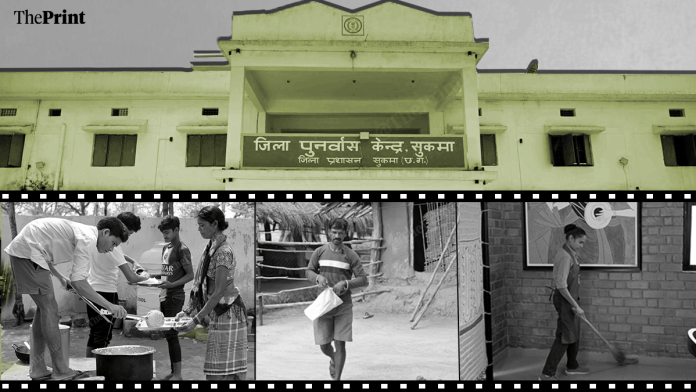



Sumka/Bijapur/Jagdalpur (Chhattisgarh): “This is certainly better than what we were doing in the past. Here, we have our freedom and are driven by our choice,” Pagni says on a Monday afternoon during a break from work at Jagdalpur’s Pandum Cafe.
Sundays are hectic at the cafe, a joint venture between the Bastar Police and the cafe brand Nukkad known for having former Maoists and victims of the Left Wing Extremism (LWE) among its staff.
A native of Narayanpur district, Pagni was associated with the banned outfit for a decade before her surrender in 2016. As part of the initiative to help her join the mainstream, the government sent her for training in hospitality services at the Bastar Police rehabilitation centre.
Pagni has been working at Pandum Cafe since its inauguration by Chhattisgarh Chief Minister Vishnu Deo Sai, in November last year. Work starts at 10 am in the morning. She gets a break in the afternoon. The 35-year-old earns Rs 9,000 at the end of the month.
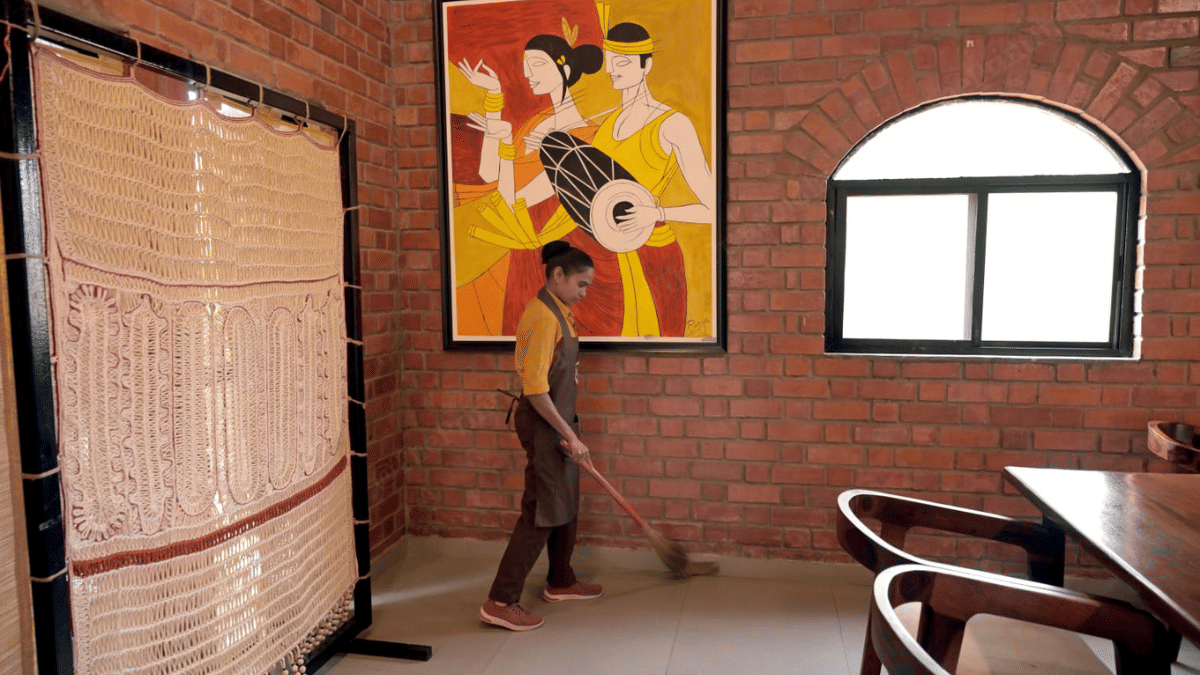
Tupesh Chandrakar, the co-founder of the Nukkad, says that the cafe is run on a profit-sharing model under which the Bastar Police has a 15 percent stake in profits. “There are 20 staff of which seven are surrendered Maoists, and five are victims of the violence,” Chandrakar tells ThePrint, adding that the surrendered Maoists have taken their work well.
The Chhattisgarh government and the Ministry of Home Affairs (MHA) have identified the rehabilitation and reintegration of the surrendered cadres as one of the cornerstones for the long-term solution to LWE. As part of the strategy, the government has introduced the ‘Puna Margem’ (Path to Rehabilitation) policy for those who surrendered in districts under the Bastar division.
New lease of life
Saturdays, in general, are non-working days for government offices, but not at the Maoist cell in the Sukma district police headquarters. More than two dozen surrendered cadres have assembled to submit personal details including biometrics, before leaving for their homes.
One of them is Markam Pujje, who completed training in the hospitality and livelihood sector at the Rural Self-Employment Training Institutes (RSETIs).
An initiative of the Ministry of Rural Development (MoRD), RSETIs have played a major role in the rehabilitation of surrendered Maoists in several districts in Bastar. The institutes collaborate with banks to provide free, residential, and entrepreneurship-oriented training.
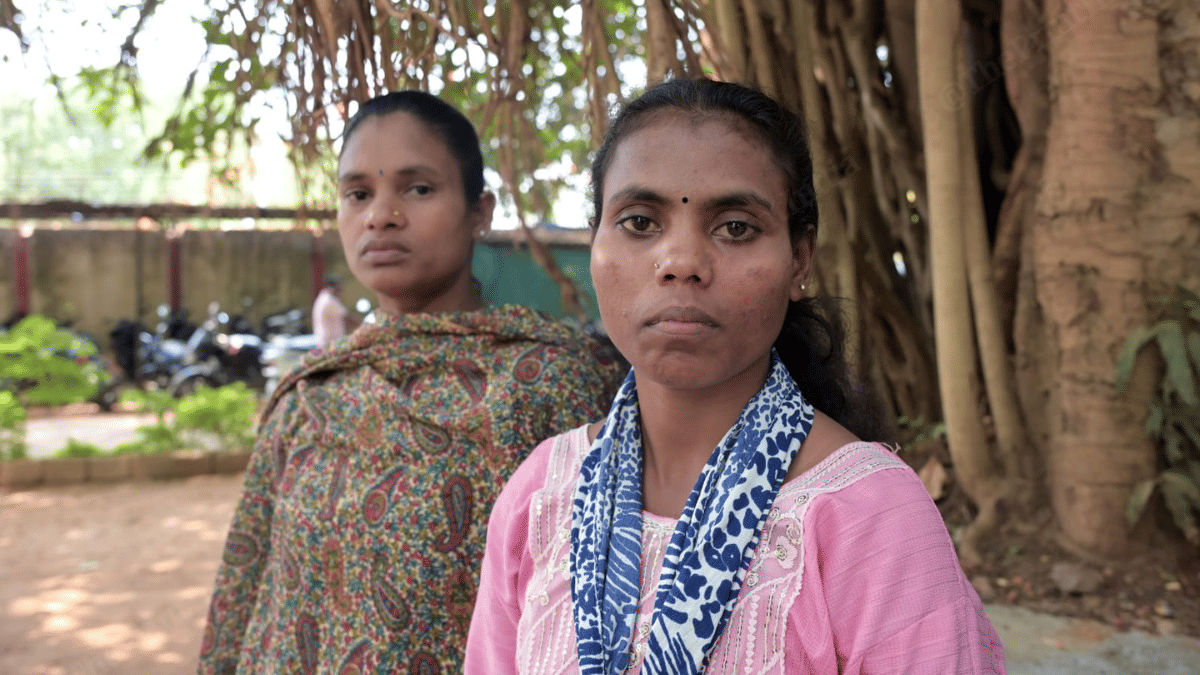
“I have been trained here, and I have been hired as an assistant to a local doctor in Sukma. I have joined work,” Pujje says, adding that she is aspiring to make a career out of the trade she learned during her rehabilitation.
Pujje was an area committee member (ACM) in the region, before she surrendered last year before the Sukma SP Kiran Chavan and was later admitted at the district rehabilitation centre. The two-storey building situated metres away from the Sukma district police headquarters houses an average of more than 150 such inmates.
Mornings are spent in ‘classes’ where she and others are imparted basic training in stitching and hospitality services. Five women share a room at the centre.
“I do not want to go back to the village,” Pujje says, adding that her parents were no more and had no connection with her remaining relatives.
Keshav Markam stands out among more than two dozen surrendered cadres at a RSETI in Sukma, which runs in collaboration with the State Bank of India. Many fellow surrendered cadres agree that he is the best speaker among them. In a freshly painted room, they watch a YouTube tutorial video on the foundational elements of poultry farming.
Markam is one of the 108 cadres who surrendered in Jagdalpur on 8 February. “Before this class on poultry farming, we were trained in goat farming,” he says, adding that he did not sign up for the construction worker training because he did not want to pursue a career in that trade.
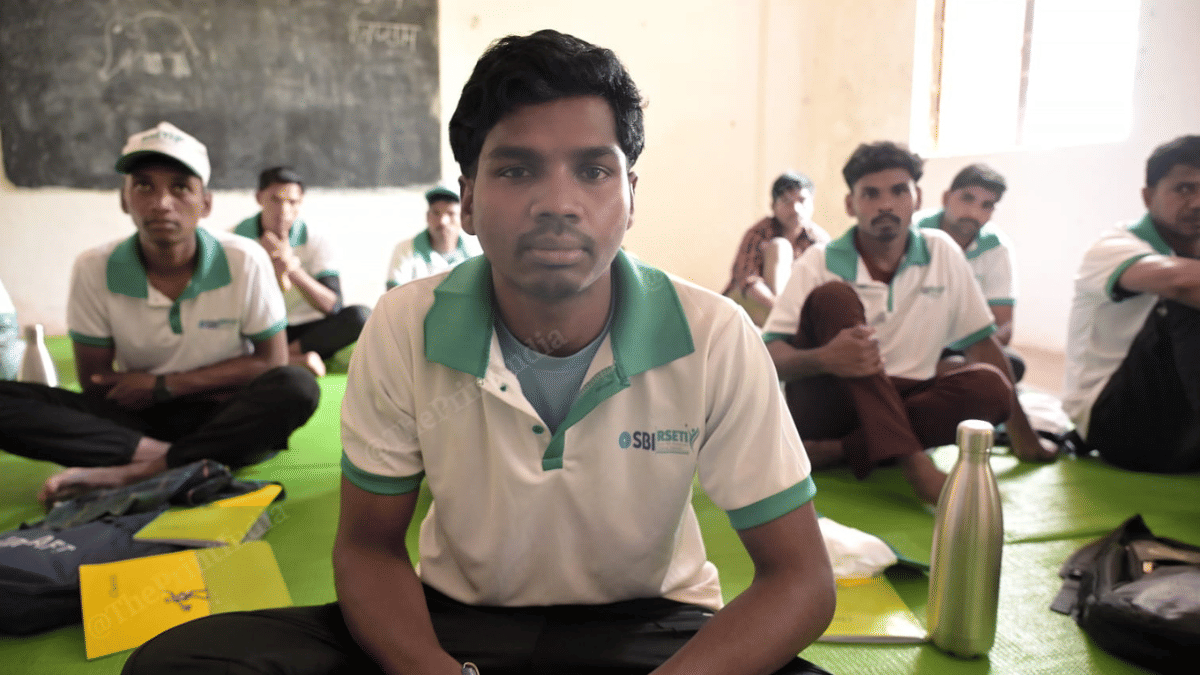
Asked about his LWE association, Markam says that he was lured by the Maoist commanders in the name of saving “jal, jangal and jameen (water resources, forests and land) and their tribal identity”.
“I was in class 10th in 2015 and had gone back to the village for summer vacation when party people came and started asking us to fight for our resources,” Markam says. “‘What will you do with education? It’s time we should fight for our cause,’ they said.”
He served in Battalion Number One of the People’s Liberation Guerrilla Army (PLGA), the armed wing of the CPI (Maoist), led by the now slain central committee member Madvi Hidma.
“I am not going back to them anymore. I have old parents, and my elder brother lives in Andhra (Pradesh). I will start my new life back home.”
Escape, wait & aspirations
Markam’s comrade in the first battalion of the PLGA, Madvi Mukka had a completely different set of events, though.
As the security forces intensified crackdown in the entire Dandkaranya region spread across Maharashtra, Madhya Pradesh, and Chhattisgarh, the senior Maoist leaders reportedly fled and took shelter at the Karregutta hills. These hills are spread in a rugged area stretching 60 km long and 5-20 km wide, located between Chhattisgarh’s Bijapur and Telangana’s Mulugu district.
Brimming with confidence after successes against several Maoist leaders, the forces decided to clear the hills as well, which remained their last uncharted territory until last year.
The operation launched by the District Reserve Guard (DRG) of the Chhattisgarh Police and the Commando Battalion for Resolute Action of the Central Reserve Police Force lasted nearly 21 days, leading to the elimination of 31 Maoist cadres. The senior cadres, however, slipped away to other parts of the region.
An area committee member of the outfit which he joined in 2019, Mukka knew several key identification details with his fellow villager and dreaded commander Madvi Hidma. Both belong to the village of Puvarti on the Bijapur-Sukma border.
Mukka said he descended from the hills and ran away to his house, located just adjacent to Hidma’s house, which his mother had abandoned in the wake of intense media glare and scrutiny.
He surrendered in April and returned home in December, his elder brother Madvi Deva tells ThePrint, stepping in for his brother’s lack of fluency in Hindi.
He recalls that Mukka had fled and returned home in April. “He came home saying a big encounter was underway, and he was starving for days. He said he would have been killed if he had not escaped the hills,” Deva tells ThePrint, sitting alongside Mukka, while their fowls feed about in the vicinity.
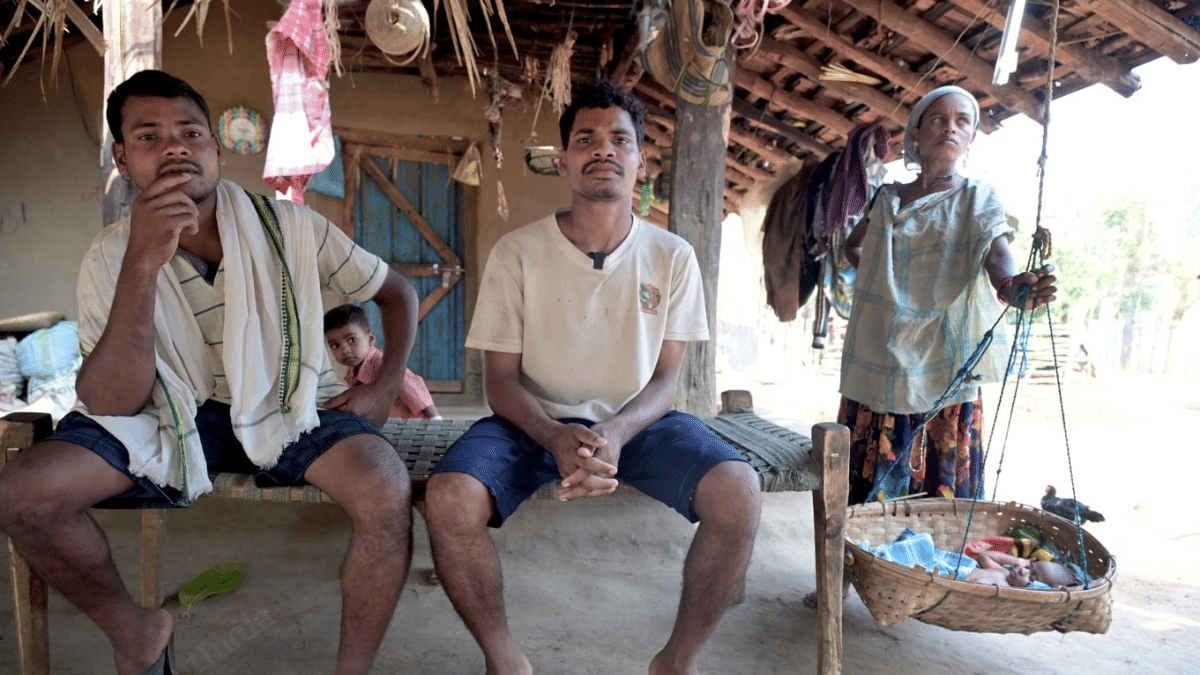
Of the four brothers in the family, two were Maoists. The other brother, Madvi Munga, did not survive. “Our elder brother was killed in an encounter in Telangana. His body was kept in Bhadrachalam hospital, and we cremated him here,” Deva says.
Surrender has not guaranteed safety for Mukka as well. “In December, two from the party and another two from the militia came searching for him. They tried to harm him, but we raised our voice, forcing them to flee,” Deva tells ThePrint, sitting inside their hut.
“We have been living in fear for the last few months. Although the party is finished, one attack on any given day will end his life.”
Mahua flowers are at the core of the daily life routine for the tribals in Bastar, and the fact is no different from the surrendered Maoists from the region as well. Mukka and his brothers help their mother in farming and collect Mahua flowers every morning. A relatively new tractor parked outside their hut provides a window into their aspirations and outlook of their future.
Mukka is yet to receive the reward money that the government promises to every Maoist cadre who opts to surrender. It is not clear what the exact reward amount the Chhattisgarh Police had placed on his head, but an ACM-level cadre generally has a bounty of Rs 5 lakh, which is given to the cadre after their surrender.
“Now all cadres, even senior ones, are surrendering along with their weapons and taking away the reward money from the government. He (Mukka) ran away from the outfit, and we are yet to get any reward,” Deva says
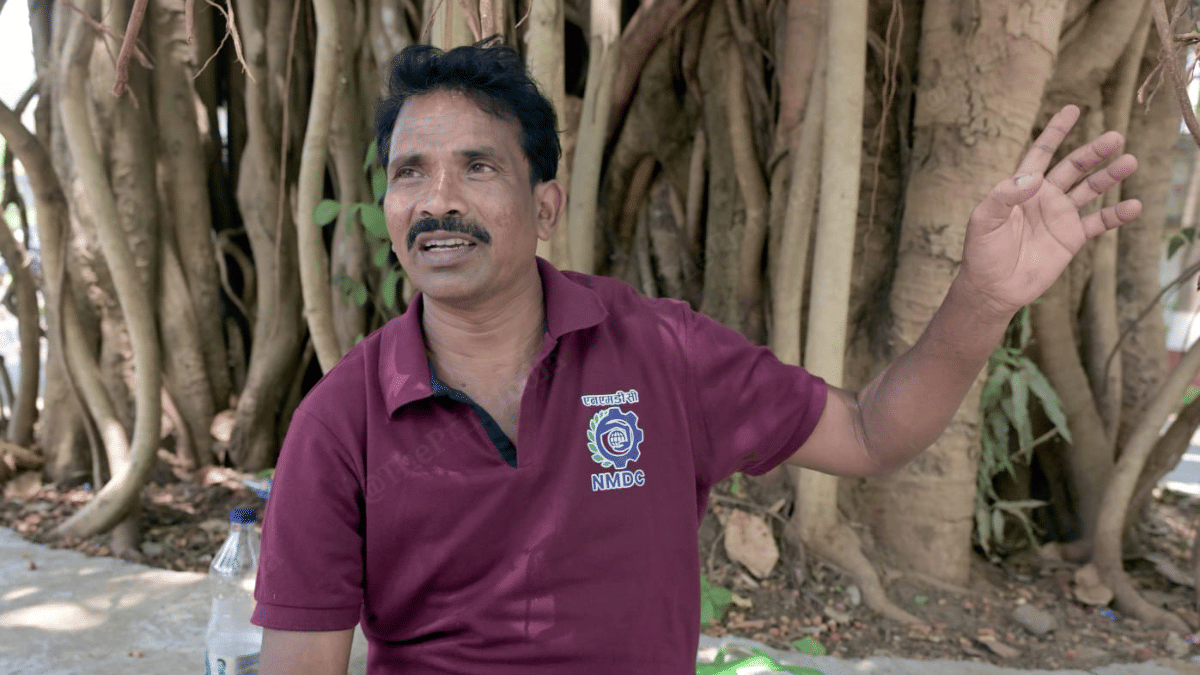
At the Sukma police headquarters, Dirdo Vijjal is anxious thinking about his livelihood and the funds to construct a house. The former Darbha division in-charge, who went by nom de guerre Jailal, had a reward amount of Rs 25 lakh,
The Naxal cell, he says, had informed him about a three-year lock-in period. “It would have been better if I got the money now. It would have helped me construct a house and manage the finances of the family.”
The government had handed Rs 50,000 at the time of surrender, followed by another tranche of Rs 40,000 for the construction of a house, he tells ThePrint.
Asked about the timeline for the reward amount to be sanctioned in the bank accounts of the surrendered cadres, Bastar Range Inspector General (IG) of Police, Sundar Raj Patiilingam, says that the disbursement of the funds follows a well-established procedure, which takes into account factors like rank, role, and the years with the Maoist outfit.
“The process for the disbursement of the reward amount is a well-established one,” he tells ThePrint, adding that first, a district-level committee collects all information about each and every cadre from their own interrogation, followed by their independent corroboration.
“The SP then puts up a proposal that goes through further analysis before its final submission to the state-level committee, headed by Additional Director General (ADG), Operations, whose nod is a must.”
Senior police officials said that the timeline ranges from three to six months for disbursing the reward amount into the newly opened bank account of an individual Maoist cadre. However, the three-year timeline that Dirdo Vijjal emphasised is a government policy decision, under which all reward amounts will be deposited as fixed deposits with a three-year lock-in period, they explain.
ADG Vivekanand Sinha, who heads the state committee overseeing the disbursement of the reward amount, says the move to introduce a lock-in period is a “check and balance”, allowing the administration to monitor the rehabilitation and reintegration of the Maoist cadres back into society.
“Considering the huge number of surrendered cadres with the rewards, quick disbursal with no lock-in can lead to a situation where a lot of funds can fall into the hands of people not keen to give up on the violent ideology. The reward mechanism can well be misutilised for purposes contrary to the intended objectives.”
Sinha says that once the lock-in period is over, the SP will approve the disbursal form for each cadre, thereby enabling the former Maoist cadres to get funds in their accounts.
Both IG and the ADG assert that the government’s policy is flexible, with room to allow premature withdrawals of a portion of the reward amount for “special circumstances” such as marriage or construction of house.
34-year-old Ransai aspires to buy a four-wheeler with the reward money he received from the government. “Mai char chakka kharidunga (I will buy a four-wheeler of my choice), and will run it in the area to earn money,” he tells ThePrint, in broken Hindi, outside his hut in the village.
Asked if he had got his documents made, the former commander of Platoon number 24 in the PLGA says: “I also received a Rs 8 lakh reward last month.”
Ransai had married a fellow comrade but lost her in an encounter in 2024. He lives with his elder brother at his ancestral house in Bedre village under Sukma’s Jagargunda police station.
He had joined the outfit in 2001 and worked in the entire Dandkaranya region as well as in Odisha until his surrender last year. “I had an AK-47 till 2010,” Ransai said, when asked about his weapons, adding that he was part of the operations in the Sukma’s Minpa area that led to the killing of 17 security forces, including 12 from the DRG, in 2020.
After offering a window into his past and the experiences that shaped him, Ransai left for his farmland to collect Mahua flowers.
Also Read:Basavaraju, Sonu, Devuji: How Maoist top leadership was whittled down after Amit Shah set deadline
Salwa Judum trauma
At the Bijapur rehabilitation centre, Ramesh Soyam is undergoing skill development training, including construction work, months after surrendering in October last year. He is among the 100-plus surrendered Maoist cadres at the Punarvas Kendra of Bijapur district.
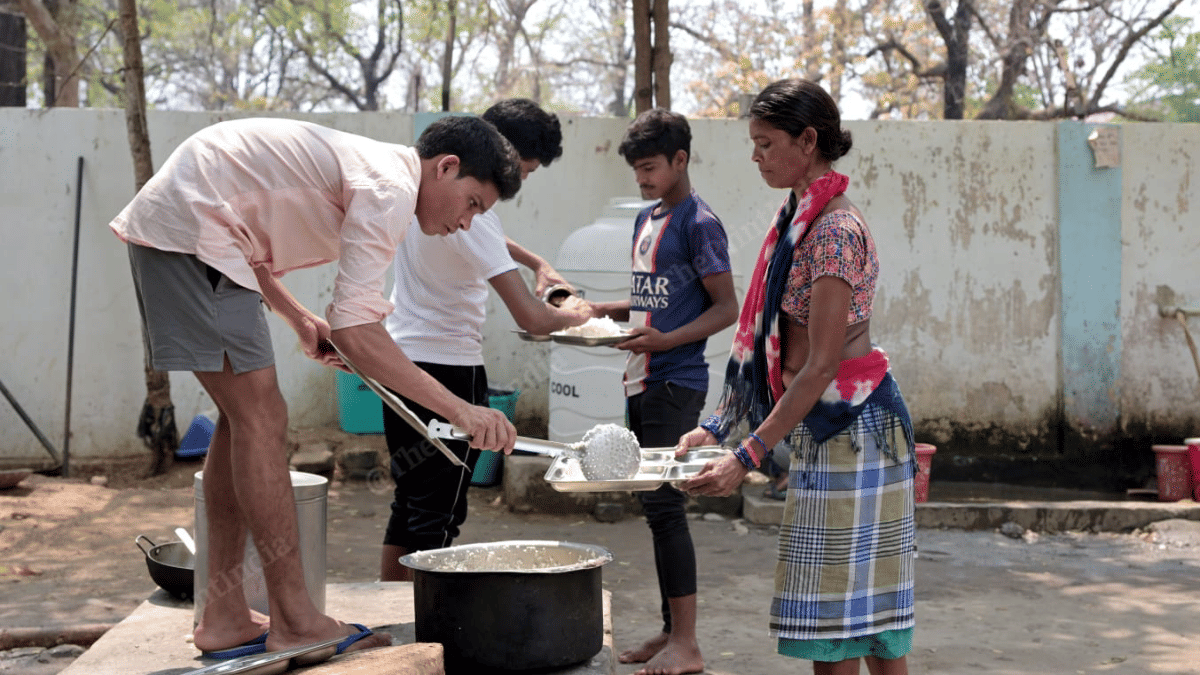
Soyam joined the outfit in 2021, 16 years after events that shaped his pathway as a youth. “My uncle was chased and killed by villagers during the Salwa Judum. We were all called Naxalites, and our houses were burnt,” Soyam says, adding that he had seen it all with his own eyes.
Started in 2005 as a state-sponsored vigilante movement to take on the LWE, the Salwa Judum movement was declared illegal by the Supreme Court in 2011.
The events were too traumatic for a three-year-old Soyam back then. His document states that he was born in 2002, but he is unsure of his birth year. Yet, the baggage of experience and wounds he carries suggests that he is mature beyond his years.
“I never forgot the scenes during the Salwa Judum when my uncle was chased, killed and dumped into the drain. I could never recover from those memories,” Soyam says at the rehab centre.
He surrendered only at the call of the party leaders, who warned of extreme danger to his life. These days, he spends his time undergoing skill development training at the Bijapur rehabilitation centre and waiting to go back home. “The situation in the village has improved, my family has told me,” he further says.
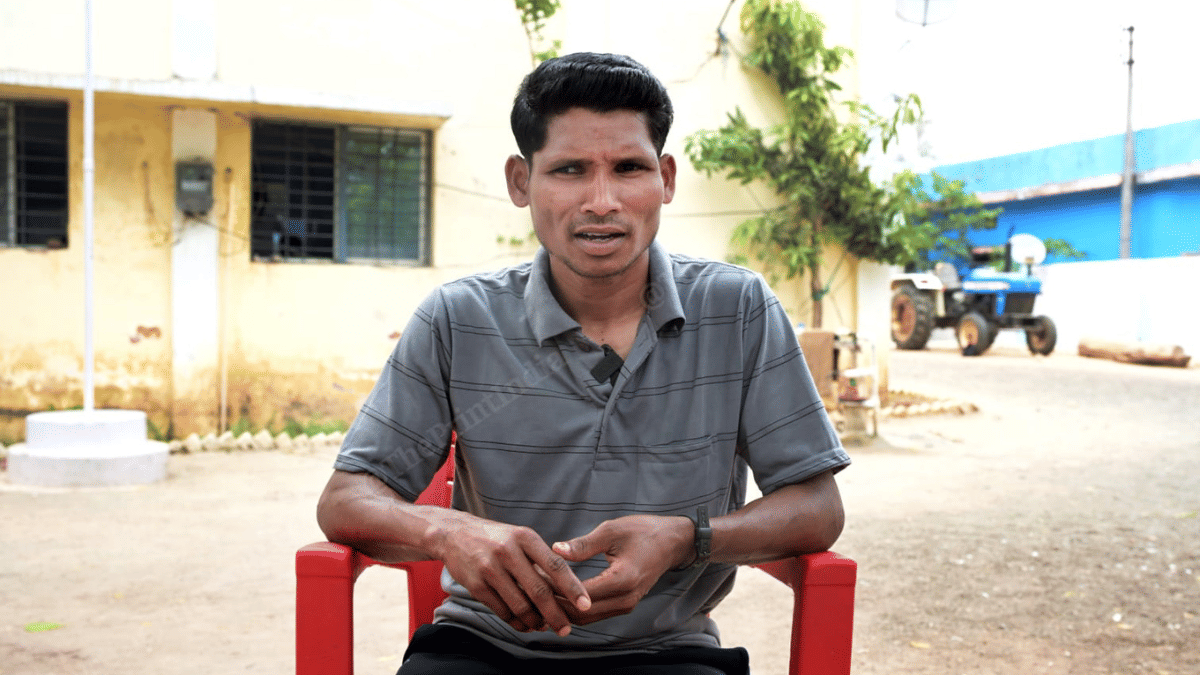
His comrade Buddha Mohanda has similar views. Belonging to the Kondey village in Bijapur, the 34-year-old is married to a fellow comrade and the couple surrendered together in November last year.
“We learnt raj mistri’s (masonry) skills for construction works. We attended daily classes for one month,” he says, adding that they would be sent home by 15 April.
Mohanda says he gave away arms after realising that it was not possible to realise the goals and objectives such as the protection of ‘jal, jungle, jameen’.
The decision to surrender, he concedes, was primarily driven by the increasing penetration in the deeper areas and relentless operations by security forces.
“Operations increased rapidly from January last year, forcing us to realise that our goals cannot be achieved,” he says, adding that he would have continued with the party if the situation were like that of the previous decades, and operations were not relentless.
The Class VIII dropout says his inclination towards the Maoist movement began in the aftermath of the Salwa Judum movement.
“The Salwa Judum movement started when I was a student, and my entire village was burnt by the people in favour of the movement. It affected me badly. I saw with my own eyes the entire village getting burnt and all of us, including me, a student, called Naxalites,” Mohanda recalls.
The fight for ‘jal, jungle, jameen’ was not wrong, he says.
(Edited by Tony Rai)
Also Read:‘Military dominance, immunity to change’: Ex-Maoist leader Venugopal on why the movement fell apart