





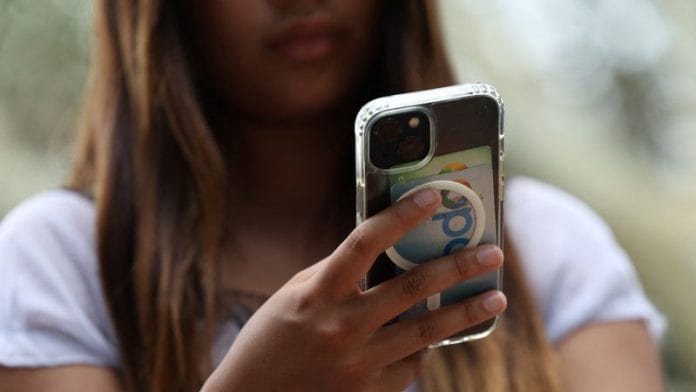



Hyderabad: The Andhra Pradesh government is considering a ban on social media use for children under 16, drawing from a legislation introduced by Australia and making it the first Indian state to consider such restrictions as concerns grow over the impact of digital platforms on mental health.
State IT Minister Nara Lokesh, speaking on the sidelines of the World Economic Forum in Davos, told Bloomberg News that Andhra Pradesh was studying Australia’s recent under-16 social media ban and examining the need for strong legal safeguards.
“As a state, we are studying Australia’s under-16 law, and yes, I believe we need to create a strong legal enactment,” he said, adding: “Youngsters below a certain age should not be on such platforms, as they do not fully understand the content they are exposed to.”
TDP national spokesperson Deepak Reddy, in a post on X, highlighted past instances of online bullying and harassment, saying that children below a certain age are “not emotionally mature enough to comprehend the negative and harmful content that is freely available online”. He said the state was focussed on creating a safer digital environment for children under 16.
VIDEO | On Andhra Pradesh government mulling a ban on access to social media for children below 16 years in the state, Telugu Desam Party (TDP) National Spokesperson Deepak Reddy said, "Minister Nara Lokesh ji has rightly highlighted the serious concerns surrounding the impact of… pic.twitter.com/aGFu7Az2hw
— Press Trust of India (@PTI_News) January 22, 2026
The proposal comes as India grapples with the effects of widespread internet access among its young population. The country has over one billion mobile internet connections—the highest in the world—and its youth population aged 15-29 comprises over a quarter of its 1.4 billion people. Multiple studies have warned of rising mental health risks linked to excessive smartphone and social media use among young people.
The issue attracted judicial attention too. The Madras High Court last month suggested that the Centre explore passing Australia-like legislation banning social media use for children under 16. A bench comprising justices G Jayachandran and K.K. Ramakrishnan made the observation while disposing of a public interest litigation.
“Union of India may explore the possibility of passing legislation like Australia. Till such legislation is passed, the authorities concerned shall accelerate their awareness campaign more effectively,” the court said, urging state and central commissions to draw up and implement an action plan.
Also Read: 4.7 million accounts blocked after Australia banned social media for children under-16
However, parents have expressed concerns about a ban.
Anupa Shekhar, a Hyderabad-based parent of a 16-year-old son and a 12-year-old daughter, both athletes, argued for moderation rather than outright prohibition.
“I wouldn’t say my children are not on social media at all, but anything given in moderation is definitely good. Kids today have more rationale than we did. If we educate them on how to use social media responsibly, there is nothing wrong with it. If we become too restrictive, they may find other ways without our awareness,” she said.
Shekhar said supervised access with boundaries and guidance would help children make better choices.
Supriya, director of a metabolic health company and mother of an 11-year-old son, echoed similar concerns.
“Having parental controls on it is good, but totally banning it is counter-productive. Imagine you have stopped a young kid from using or doing something at growing stages, when you open the floodgates at 16, they do not know how to safely utilise the newly attained freedom. The parents wouldn’t have much say in it after suddenly receiving freedom. It all can also go bad,” she said.
Digital policy experts also urged caution. Dona Mathew, associated with the Digital Futures Lab, warned against rushed legislation.
“Bans must be carefully thought through and grounded in strong legal foundations. Consultation with child rights experts is essential,” she said.
Mathew noted that social media platforms also serve as important sources of information for young people, particularly on topics like mental health and sexual health, which may not be easily accessible offline in India.
“This raises the question of whether regulation should focus on content rather than the user,” she said.
Mathew pointed out that Australia’s law places the onus on platforms rather than parents or children, potentially affecting revenue from targeted advertising. But, she flagged possible legal conflicts in India, particularly with age verification mechanisms, given restrictions under the Digital Personal Data Protection Act on profiling and processing children’s data.
Australia’s ban, which came into left last month, is the first of its kind across the world. Children under-16 cannot use major services such as TikTok, X, Facebook, Instagram, YouTube, Snapchat and Threats. Kids below 16 cannot set up new accounts and their existing profiles were deactivated.
On implementation of a ban in a state, instead of a nationwide prohibition like in Australia, Mathew explained that it would most likely involve identification of a user’s IP address.
“But, again, things like VPN can be used to get past such bans,” she said.
Companies also take up a blanket approach to policies, rather than one adapted to specific states.
“Social media companies might push back if they have to develop state-specific compliance frameworks. Legally, a state might have to tweak the IT law at the state level to enforce such a ban and set up a monitoring system for enforcement,” she said.
(Edited by Prerna Madan)