









Asia’s governments will have to stretch their budgets or risk unleashing an inflation shock as the deepening conflict in the Middle East pushes oil prices past $100 a barrel.
That could raise new credit risks for emerging markets, warned Fitch Ratings, as higher oil prices bloat subsidy and import bills and disrupt remittances, tourism and investment flows. It tagged India and the Philippines as among the most at risk, with net fossil fuel imports exceeding 3% of their gross domestic product.
“The region is at the epicenter of the energy security shock, and faces potential stagflation if disruptions persist,” said Nomura Holdings Inc. economist Sonal Varma. “The next month could be make or break.”
Asia will likely rely on its fiscal policy for the first line of defense, through a mix of higher subsidies to consumers and transport operators, as well as cuts to fuel excise taxes or import tariffs on crude oil and refined products. More fiscal spending on subsidies could force cuts elsewhere, she added.
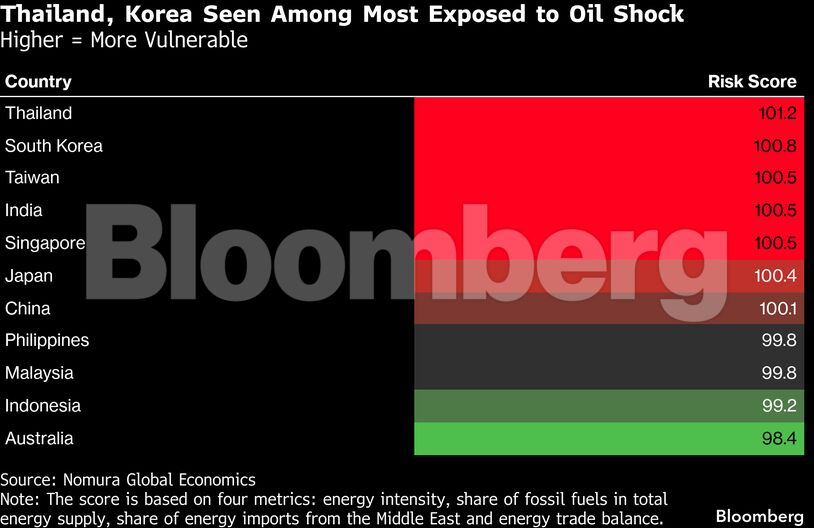
Asian economies are the most reliant on crude passing through the Strait of Hormuz, leaving many exposed to energy shortages and price spikes. Public debt burdens were already elevated in the run up to the Middle East war, meaning governments have limited fiscal space to absorb new shocks.
But the cost of inaction could be just as damaging, with inflation set to accelerate sharply and dampen consumer spending that’s crucial to driving economic growth. Central banks across developing Asia are facing a sudden shift in their policy outlook, with markets betting they may have to delay their easing cycles, if not abandon them entirely.
The Indian rupee, Indonesian rupiah and Philippine peso all fell to record lows versus the US dollar on Monday. Emerging Asia bonds were swept along by the global selloff, as investors priced in more hawkish views for regional central banks. Indonesia’s 2-year yield jumped by 14 basis points, while a similar-dated Thai yield rose by 10 basis points.
Read more: Stagflation Trades Sweep Markets as Trump Signals Widening War
While analysts point out that the severity of the economic blow will depend on how long the conflict and resulting oil price surge goes on, some governments are already taking action to buffer their economies.
Vietnam plans to remove import tariffs on fuel and said crude oil not yet committed for export must be sold to local refineries. Meanwhile, the Philippines is considering emergency powers to suspend fuel taxes, warning that April inflation could come in at its highest level in three years.
Malaysia said it would try to hold the subsidized price of the country’s most popular fuel for the next two months even as oil prices surge. Neighboring Indonesia pledged to do the same, especially as millions of people prepare to travel back to their hometowns to celebrate the Muslim fasting month of Ramadan.
That means Indonesia will likely need to cut back spending for other projects. Its worst-case scenario estimates that an average of $92 per barrel this year would widen the fiscal deficit to 3.6% of GDP, well above the legal limit of 3%. Southeast Asia’s largest economy has already had its credit rating outlook downgraded by both Moody’s and Fitch.
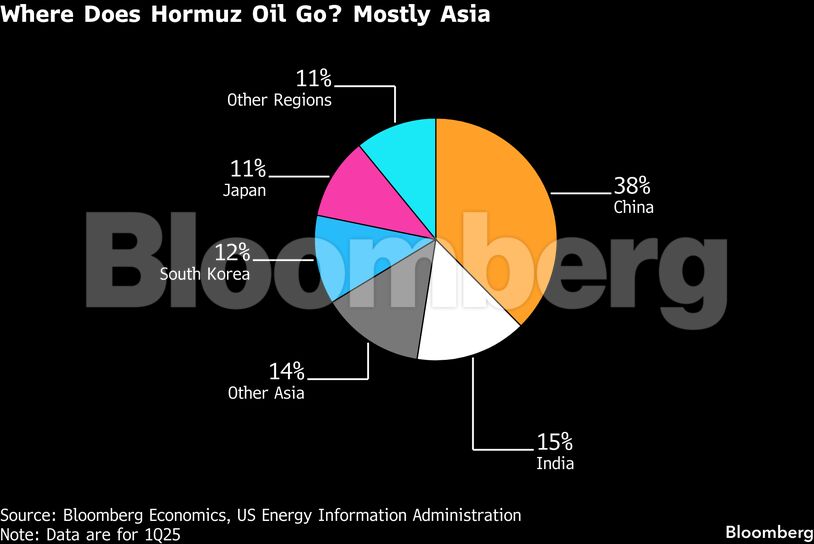
Emerging market and developing economies — including many in Asia — face tougher fiscal challenges despite often having lower debt ratios. Their policy options and funding access are more limited and their budgets are already stretched just to keep basic services running.
According to Fitch, the strain is most acute in countries with thin financing buffers or wide current account deficits, such as Pakistan, and in economies that subsidize fuel. Tourism and remittance flows from the Gulf — a critical source of foreign inflows for South Asia — also face disruption risks.
In India, which imports nearly 90% of its oil needs, a $1 sustained increase in crude prices could widen the trade deficit by as much as $1.5 billion annually, according to IndusInd Bank Ltd.
“The potential impact of a prolonged conflict on India will be felt through multiple channels,” said Gaurav Kapur, the bank’s chief economist. “Inflation and investor confidence can adversely impact the otherwise strong growth momentum and stable financial system.”
Kapur estimates that a 10% sustained increase in oil prices, over $84-$85, could push inflation higher by 30 basis points and weaken growth by around 15 basis points. The government can mitigate the impact somewhat by reducing excise duties and taxes on petrol and diesel, he said.
As for Asia’s bigger economies, Japan is bracing for the risk of stagflation as the costlier crude, coupled with a weak yen, adds to its fuel imports bill at a time when economic activity remains sluggish. China, the single biggest user of oil that passes through the Strait of Hormuz, has vast oil stockpiles that should help it manage the supply interruption, analysts said.