





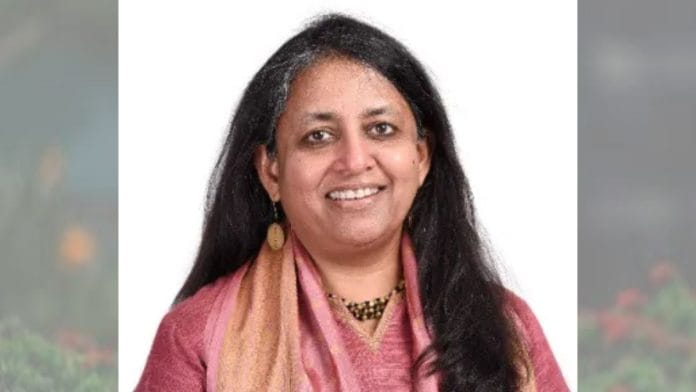


New Delhi: Innovative medicines often reach Indian patients five to six years after they are approved in major global markets, a gap that India should aim to shrink to 12-18 months, Pfizer India Managing Director and Country President Meenakshi Nevatia said Monday.
Speaking at the 16th Mindmine Summit in New Delhi, Nevatia said delays in access can have serious consequences for patients with life-threatening conditions and argued that India’s regulatory system should allow faster introduction of therapies already approved in highly regulated markets.
“We have been having extensive discussions on how to accelerate the launch of innovative therapies in India. The idea is that once a treatment has been approved in major or highly regulated markets, we should be able to bring it to India much faster and conduct the necessary local studies in parallel,” she said.
Her remarks come at a time India’s drug regulator has moved to accelerate approvals. Speaking at the India Pharma 2026 summit in April this year, Drug Controller General of India (DCGI) Dr Rajeev Singh Raghuvanshi had said that the Central Drugs Standard Control Organisation (CDSCO) had reduced approval timelines by more than half.
According to Raghuvanshi, clinical trial applications are now approved within 120-135 days, while marketing authorisations are typically cleared in 130-150 days, compared with timelines that previously stretched into years. “This is a huge change from where we were,” he had said, adding that no application exceeded the 150-day mark during 2025.
The reforms build on a policy change introduced in August 2024, when the DCGI waived local clinical trial requirements for certain drugs already approved in the US, UK, Japan, Australia, Canada and the European Union. The exemption applies to orphan drugs, gene and cell therapies, treatments developed during pandemics, medicines for special defence purposes, and drugs offering significant therapeutic advances over existing options.
Joining the discussion on Monday, pulmonologist and former director of the All India Institute of Medical Sciences, New Delhi, Dr Randeep Guleria, said India still needs a more agile regulatory framework, particularly for therapies that could save lives. “Sometimes a new molecule that wants to come to India could be life-saving,” Guleria said. “The regulatory process itself takes many, many months.”
The theme of the panel, titled ‘Tech, Touch, Trust: Can Indian Healthcare Hold All Three?’, was the closing session of the summit and focused on balancing innovation with affordability, access and patient trust.
Experts linked the trust deficit in Indian healthcare to the financial burden borne by patients. According to the latest National Health Accounts estimates for 2022-23, out-of-pocket spending accounted for 43.4 per cent of India’s total health expenditure, down from 64.2 per cent a decade earlier. Indians spent more than Rs 1.6 lakh crore on medicines alone during 2022-23, making drugs one of the largest components of household healthcare spending.
Addressing concerns around drug prices, Nevatia challenged the perception that multinational pharmaceutical companies are always more expensive. “Once we go generic, the generics are often more expensive than big pharma, but that’s never discussed,” she said.
The discussion also focused on the potential of artificial intelligence to expand healthcare access in underserved regions. Aseem Garg, founder of DCDC Kidney Care, a network of over 250 centres specialising in dialysis care and kidney-related services, said AI-enabled tools could help extend specialist expertise into Tier II and Tier III cities, where shortages remain acute.
Panelists also called for stronger collaboration between academia and industry. Guleria argued that embedding industry partnerships within academic institutions could help convert scientific research into products that reach patients more quickly, with pharmaceutical companies providing funding and institutions contributing scientific expertise.
(Edited by Nardeep Singh Dahiya)
Also Read: Frozen price caps, soaring platinum cost cause shortage of 2 key chemotherapy drugs in India