


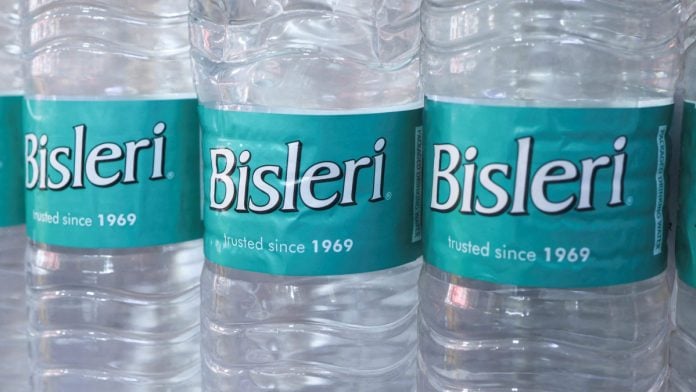
New Delhi: Bisleri International is facing a second prosecution by the Food Safety and Standards Authority of India (FSSAI), this time after a packaged drinking water sample from its West Bengal plant tested positive for coliform bacteria, sources told ThePrint Friday. Both the primary and referral laboratories confirmed the finding.
The sample was collected in July this year from the company’s plant in Telipara village, Jalpaiguri district. It belonged to batch PB 201, manufactured on 20 July, 2026 and marked for use by 19 January, 2027. FSSAI prohibited the sale of the batch on 12 August, and has now sanctioned prosecution against Bisleri International Pvt Ltd, the sources said.
“It is confirmed that coliform was found in both the primary and the referral tests. Coliform makes the water unsafe,” a source told ThePrint. The source confirmed the details, but said they would not be issued as an official regulator statement for now.
This is the second time in a single week that FSSAI has sanctioned prosecution against Bisleri International Pvt Ltd, a leading player in the packaged drinking water sector in the country.
The action follows a similar case announced by the regulator Sunday, involving a sample from the company’s Goa plant that also failed laboratory testing.
ThePrint has reached out to Bisleri International for a response to the findings and prosecution. This report will be updated when a response is received.
Coliforms are a group of bacteria commonly used as indicators of contamination. While not all coliform bacteria are harmful, their presence in packaged drinking water can point to contamination or lapses in treatment, bottling or handling.
Contamination can occur through source water, inadequate disinfection, unclean bottling equipment, bottles or caps, storage tanks, or leaks in water and sewage systems.
The presence of coliforms does not establish that disease-causing organisms are present. However, contaminated water can carry pathogens that cause illnesses, such as diarrhoea, vomiting, abdominal cramps and fever, for children, older people and those with weakened immunity at greater risk. No illness linked to the batch has been reported so far.
Second case in a week
The latest action comes days after FSSAI announced prosecution over a sample from Bisleri’s Goa facility, collected on 30 September, 2025. That sample was declared unsafe under the Food Safety and Standards Act, 2006 for exceeding prescribed bromate limits. After Bisleri appealed, a referral laboratory also declared it unsafe, citing polynuclear aromatic hydrocarbons (PAHs), according to the regulator.
Bisleri has disputed the Goa findings, saying its water is safe. It said the matter concerned one batch from 14 months ago at one of its 143 plants. The company said an independent test at an FSSAI-approved laboratory had found bromate levels within permissible limits, and that it had not received the prosecution notice. It said it would cooperate with FSSAI.
On Monday, Bisleri International reiterated that its products were safe for consumption and said it would cooperate with the regulator.
Nationwide sampling
The cases come amid a wider surveillance exercise covering packaged water brands, large and small, across the country. Sampling, which has been under way for several months and was recently stepped up, is being carried out mainly by state food safety authorities, alongside FSSAI offices, sources told ThePrint.
FSSAI CEO Rajit Punhani told news agency ANI that laboratory results would take “at least a month or two”, and that there was “no particular reason” for the focus on water. He said the regulator was earlier focusing on dairy, meat, eggs, cereals, energy drinks and sugary drinks.
Punhani said the enforcement exercise was aimed at ensuring compliance with food safety norms, and not creating panic. The regulator is also preparing to inspect packaging materials used for food products.
FSSAI has also asked state food commissioners and regional directors to intensify surveillance, inspections and sampling of packaged and mineral water, and take action against violators. This year, it has stepped up enforcement against food businesses, e-commerce companies, and manufacturers of energy drinks and alcoholic beverages.
Also Read: As Bisleri comes under FSSAI scanner, survey shows 98% Indians treat water for drinking