







New Delhi: The Delhi High Court Wednesday issued notice to the Centre and the Indian Council of Medical Research (ICMR), asking for real time data on reported adverse events following human papillomavirus (HPV) vaccination, after a petition questioned the vaccine rollout, informed consent and safety monitoring.
HPV is a common sexually transmitted infection that can cause cervical cancer if certain high-risk strains persist in the body.
Calling it a “very important issue”, a division bench of Chief Justice Devendra Kumar Upadhyaya and Justice Tejas Karia said that it was not questioning the government’s intentions but the issue that concerns all adolescent girls.
“We have to tread a very cautious path,” the bench said.
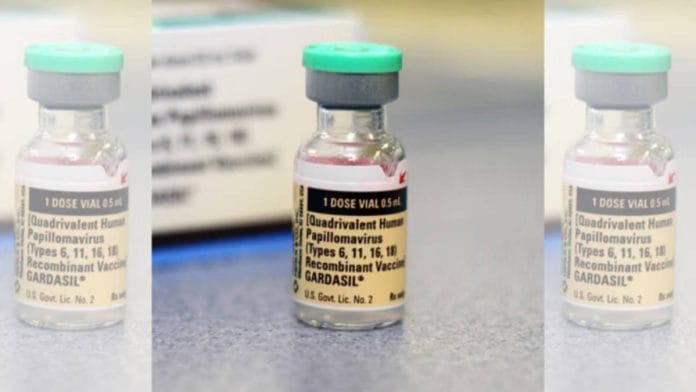
The court was hearing a petition filed by Delhi-based senior gynaecologist Dr Sujata Mittal and fitness entrepreneur Jitendra Chouksey, challenging the rollout of US drugmaker Merck’s Gardasil-4 vaccine under the Universal Immunisation Programme (UIP).
Cervical cancer remains one of the most prevalent cancers among women in India. To reduce the burden, the Centre launched a nationwide HPV vaccination campaign on 28 February this year, targeting around 1.2 crore girls aged 14 years. More than 52.1 lakh girls had been vaccinated as of 15 July.
The government has maintained that the vaccine is safe and effective, and that India’s single-dose Gardasil-4 programme follows recommendations of the World Health Organization (WHO) and the National Technical Advisory Group on Immunization (NTAGI).
HPV vaccines are part of national immunisation programmes in 160 countries.
The petition sought a pause on the vaccination programme until the government places scientific evidence supporting the rollout in the public domain, ensures informed parental consent and strengthens vaccine safety monitoring. The petition alleges the vaccine is being administered “without proper informed consent or prior approval from parents”.
According to Dr Mittal, there is a total lack of transparency around adverse event reporting and safety issues.
“Papers are being published on the effectiveness of the vaccine, but the safety profile and adverse events reporting system are not being talked about at all,” she told ThePrint after the hearing Wednesday.
The HPV vaccine is currently voluntary and is being given as part of a nationwide campaign. It is still not formally included in the UIP.
“Since the rollout is moving ahead, we are concerned about the children who have already taken the vaccine without informed parental consent. We feel there is a need for creating a compensation mechanism for people who may suffer serious adverse events following vaccination, according to reported incidents from Madhya Pradesh and Bihar,” Rohit Kumar, the petitioner’s lawyer, told ThePrint.
Petitioners’ argument
The petition alleges that the nationwide programme has been launched “without any credible data with respect to the efficacy of the vaccine and the actual requirement of the population”, raising concerns over “consent, safety, scientific basis, and public health priorities”.
It cites the case of a 14-year-old girl from Tamil Nadu who allegedly developed neurological symptoms days after receiving the vaccine, apart from other reported adverse events from Bihar and Gwalior.
The petitioners argue that India’s vaccine safety monitoring system needs closer scrutiny.
The petition has cited a 2013 parliamentary standing committee report, which found “grave irregularities” in earlier HPV vaccine demonstration projects, including lapses in informed consent, and refers to Merck’s June 2026 settlement of Gardasil litigation in the US.
The petition further argues that cervical cancer rates in India had already been declining before the HPV vaccination programme and says greater emphasis should be placed on screening women.
Dr Mittal said vaccination should not come at the cost of expanding cervical cancer screening, particularly in rural areas where HPV-DNA testing facilities remain limited.
“Screening in these areas is the most important thing,” she added.
She also questioned the design of earlier clinical trials, saying the comparison group received an aluminium-containing injection instead of a simple saltwater placebo, which she argued made it harder to compare side effects.
Dr Mittal said she and her team had offered to independently monitor girls vaccinated under the programme. “Let some non-profits do some pharmacovigilance,” she asserted.
Dr Mittal also questioned India’s vaccine safety monitoring system, saying there is no publicly accessible, real-time database for tracking adverse events following immunisation.
According to her, only periodic reports of serious cases reviewed by the National Adverse Events Following Immunization (AEFI) committee are available publicly, making it difficult to independently assess vaccine safety.
The AEFI committee is an expert panel responsible for monitoring, investigating, and determining the causality of untoward medical occurrences that happen after vaccination.
(Edited by Nida Fatima Siddiqui)
Also Read: Cervarix to Cervavac: A look at cervical cancer vaccines available in India & how much they cost