





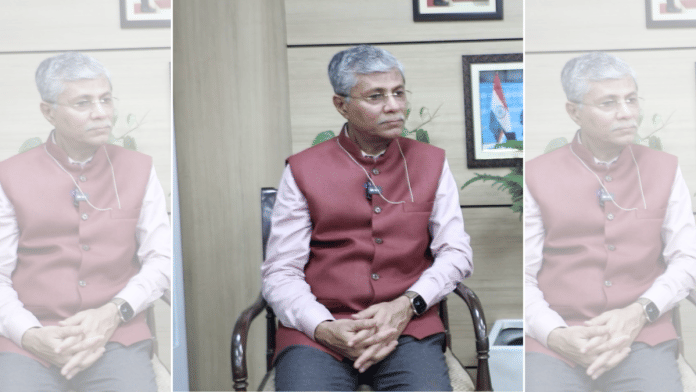



New Delhi: The Ministry of Ayush has flagged over 65,000 misleading advertisements that claimed cures for various diseases over the past eight years under the Drugs and Magic Remedies (Objectionable Advertisements) Act, 1954, Ayush secretary Vaidya Rajesh Kotecha has said.
“We’ve largely been able to manage misleading ads in the print media, but electronic media becomes a storm…,” he said in an interview with ThePrint Thursday. These cases, the secretary said, were reported through the peripheral centres, which were tasked with identifying and reporting such advertisements.
The 1954 Act prohibits claims of curing certain diseases. For instance, advertisements cannot claim to cure cancer, diabetes, epilepsy, blindness, and over 50 diseases listed in the Act.
Once such advertisements are identified, Kotecha said, “We refer it to the state licensing authority to immediately take action, and they notify these advertisers to stop it.”
The comments come as the ministry prepares to expand traditional medicine initiatives following a 10 percent increase in budgetary allocation from Rs 3,992.90 crore in the last fiscal to Rs 4,408 crore.
Kotecha said the fresh funding will support new Ayurveda institutions, research collaborations, and the strengthening of the pharmacovigilance mechanisms.
He added that more than 3,000 side effects of Ayush medicines have been recorded since 2018, and none of them were fatal, and most were auto-reversible within a day or two.
Adverse Drug Reactions (ADRs) are a significant concern for Ayurvedic medicine. This could be due to irrational use, contamination by heavy metals, or adulteration.
Kotecha explained that Ayush drugs are regulated under the provisions of the Drugs and Cosmetics Act, 1940 and the Rules framed thereunder. In the case of Ayurveda, Siddha, and Unani (ASU) drugs, there are two broad categories, including classical formulations and patent or proprietary medicines.
The requirements for the grant of a manufacturing licence for ASU drugs are prescribed under Rule 158B of the Drugs Rules, 1945. These include compliance with prescribed standards relating to safety, quality, and proof of efficacy.
For Homoeopathic medicines, the regulatory framework for grant of manufacturing licences is laid down under Rules 85A to 85I of the Rules.
“Manufacturing licences for Ayush drugs are granted by the State Licensing Authorities appointed by the State/UT Governments, in accordance with these provisions. At the policy level, we are working towards strengthening the regulatory framework that ensures quality, safety and clinical validation of Ayush drugs,” he said.
Developing high-end evidence
The Ayush ministry is simultaneously expanding research collaborations with major institutions such as All India Institute of Medical Sciences (AIIMS), Indian Institute of Science (IISc), and Indian Institute of Technology-Delhi (IIT-Delhi), as well as the Indian Council of Medical Research (ICMR).
According to Kotecha, these partnerships focus on generating “high-end evidence” for traditional medicine through scientific studies and clinical trials. Several large trials are currently planned or underway on conditions including anaemia, osteoarthritis and polycystic ovary syndrome (PCOS).
“We are working with ICMR on multi-site clinical trials. Evidence generation is one of the biggest priorities for the ministry,” he said.
The ministry also plans to establish three new All India Institutes of Ayurveda, though the locations are yet to be finalised.
“We are in consultation and we have a lot of demand from the states. There are certain criteria that we are fixing, and then we will be evaluating them. Maybe in two weeks, it will be decided,” he said.
Employment prospects
India has 7,51,768 registered Ayush practitioners, the government told Parliament in April 2025. As of December 2024, the country had 886 undergraduate and 251 postgraduate colleges, with an annual intake of 59,643 UG students and 7,450 PG students in Ayush streams.
As for employment prospects, the secretary said that career opportunities for Ayush graduates extend beyond clinical practice.
“First of all, we want our students to come out of this idea that they can only practice in this domain,” Kotecha said, adding that there was a huge opportunity across sectors.”
He pointed to areas such as medicinal plant cultivation, research, teaching, industry and startups, including companies developing digital tools for traditional medicine.
“There are opportunities in industry setup, manufacturing, practice, service in government and the public system — a lot of opportunities,” he said, adding that competent graduates are often recruited quickly.
“It is becoming difficult to get good Ayurvedic doctors for many such tasks because there are so many opportunities.”
He also said free trade agreements (FTAs) with countries including New Zealand and Australia, as well as discussions with the European Union, include provisions on traditional medicine, which could allow Indian-qualified practitioners to work abroad.
(Edited by Tony Rai)