





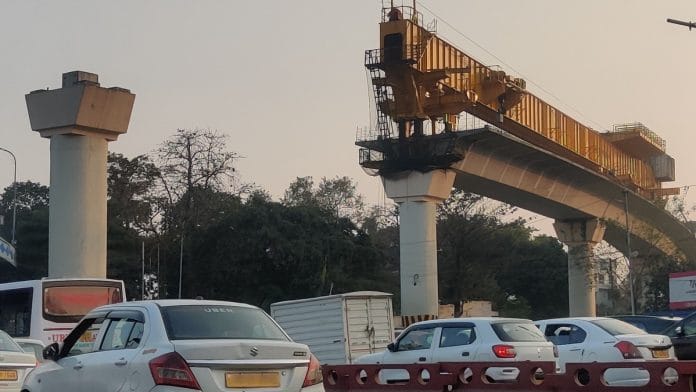



Kolkata: In September last year, during one of Kolkata’s spells of intense rain, Adrija, 23, stood knee-deep in water, trying to cross a road that had been dug up and left unfinished. Traffic had stalled, buses were stuck and shoes were useless. By the time she reached the Metro station — clothes damp, bag heavy with SIR forms — the platform was already packed. The train did not arrive on time. No announcement explained why.
“After crossing water, mud and broken roads, we finally reach the Metro and just sit there waiting for a train that may or may not come,” she said.
A booth-level officer (BLO), Adrija depends on public transport to commute across the city daily. For years, the Kolkata Metro was the one system she trusted; it was predictable, fast and affordable. That trust has eroded.
“There was a time when I never had to think about planning my life around the Metro,” she said. “It was the easiest part of my day, the one certainty I could fully depend on . I can’t say that anymore.”
Across Kolkata, this experience has become routine. Digging is everywhere. In residential neighbourhoods, office districts, even the city’s most carefully maintained public spaces.
Roads are opened and left unfinished, barricades shift but rarely disappear, and Metro work bleeds into everyday life without a clear end point. For years now, construction has been a condition that the residents simply live with as Kolkata Metro officials say there is still no definite update on progress.
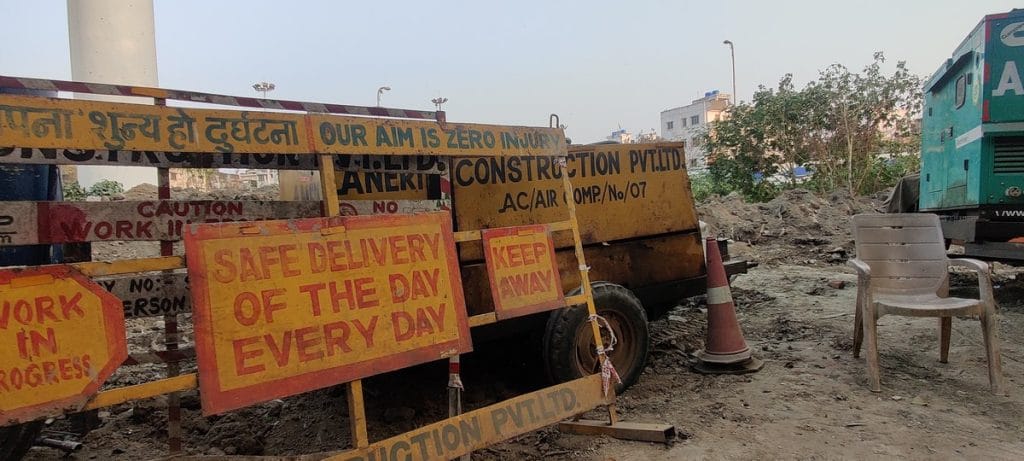
In December 2025, the Union government placed the blame squarely on the Mamata Banerjee-led state government, listing missing links, pending clearances, and land disputes across four Metro corridors in Kolkata.
Kolkata’s Metro was once India’s first mover. Now it’s India’s laggard. It has become a metaphor for how an old city trying to keep up with the times builds: ambitious on paper, hesitant on ground, and perpetually caught between intention and execution.
Somnath Dasgupta, former editor of The Telegraph (Online), said the delays are being passed down the generations and progress is far from sight.
“Generation X took pride in the Blue Line, India’s first Metro line. Millennials enjoyed the air-conditioning and imported rakes. Gen Z is enjoying bits and pieces of the new lines, but they will turn grey before Gen Alpha enjoys a full network,” he added.
Also Read: Rise and fall of India’s BRTS. ‘World-class’ solution that made problems worse
From national envy to everyday delay
There was a time when Kolkata’s Metro symbolised something else entirely. When Mile Sur Mera Tumhara aired on national television in 1988, a brief shot of a Metro train passing through the city became the envy of the country — a glimpse of modern India underground. It showed football champ PK Banerjee exiting a Metro coach. It was, as many later said, a moment that captured ‘what Bengal thinks today’.
Kolkata did not just have a Metro; it had the Metro.
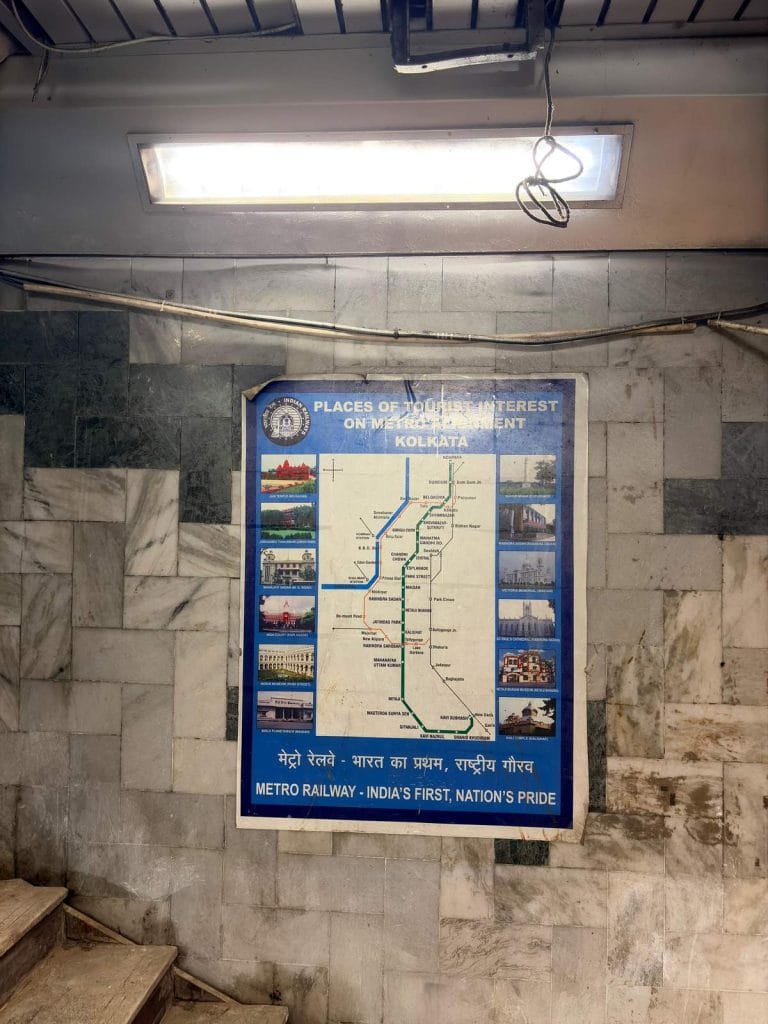
That early confidence was shaped by engineering and ideology. Planned in the late 1960s and early 1970s with technical assistance from Soviet and East German experts, Kolkata’s Metro reflected a time when underground rail was imagined as civic architecture. Stations were designed as public spaces, with mosaic murals, heavy pillars, and subdued lighting, based on the Soviet idea of “palaces for the people”.
Somehow the feeling is that Kolkata is the least priority and least funded of all metros
-Jawhar Sircar, former Rajya Sabha member
That aesthetic endured. The system’s evolution did not.
Decades later, the disruptions in Kolkata Metro have come to mirror the city itself — caught between past and present, heritage and modernity, political caution and urban necessity. Kolkata’s struggle is no longer just about delayed trains or incomplete tunnels, but about the resistance of an old, dense city to the demands of a contemporary metro.
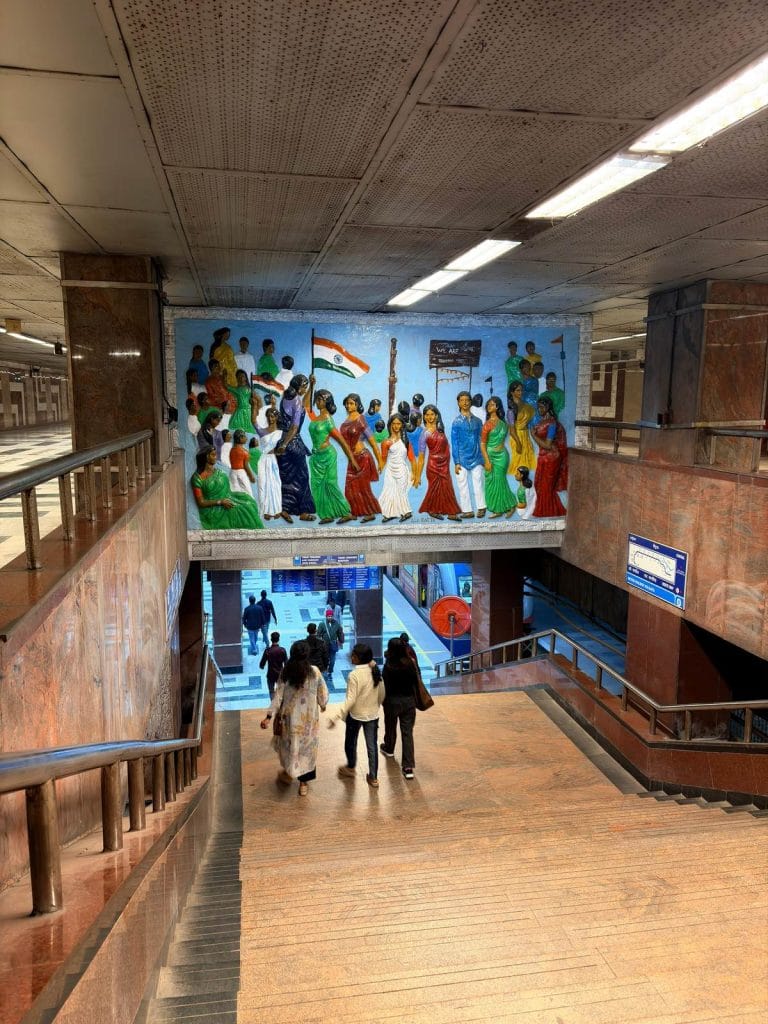
Until a few years back, non-air-conditioned rakes still ran on busy corridors. Basic upgrades like modern fare gates, surveillance systems, and accessibility features arrived slowly.
Across India, cities that once looked to Kolkata with awe — from Lucknow and Kanpur to Nagpur, Indore and Bhopal — now boast expanding Metro networks of their own, despite modest ridership or financial returns. Metro rail has become the latest urban aspiration, a proof of ambition and political delivery, as well as a marker of arrival for smaller cities. And yet, the city that built it first is still struggling to finish what it began.
The Kolkata Metro’s deadlocks reflect a city that once led the country — as a colonial capital, an intellectual hub, a political laboratory — but now struggles to convert history into momentum, or ambition into jobs, constrained by politics, drift and a shrinking economic base that offers too few reasons to move forward quickly.
“Somehow the feeling is that Kolkata is the least priority and least funded of all metros,” said Jawhar Sircar, retired IAS officer and former Rajya Sabha MP.
A fragmented network
Unlike other cities, Kolkata did not expand its Metro as a network. It expanded in fragments.
Delhi’s Metro network today stretches close to 400 km. Kolkata has a system of around 74 km built over four decades. Another 29 km has been under construction for years, and 22 km more was approved long ago. The gap is not merely one of scale, but of planning and execution.
Except for the first Metro line, almost every other corridor in Kolkata is being built in sections — a stretch here, a stretch there — without planning for obvious hurdles like encroachments or clearances
-Somnath Dasgupta
Union railway minister Ashwini Vaishnaw told Parliament last month that of the 52 km currently under construction, around 20 km remains stuck, largely due to delays in land handover and clearances. Budget allocations have risen sharply over the years, but coordination with the state government continues to slow progress.
Except for the original north-south corridor, now called the Blue Line, almost every subsequent Metro line in Kolkata has been built in parts.
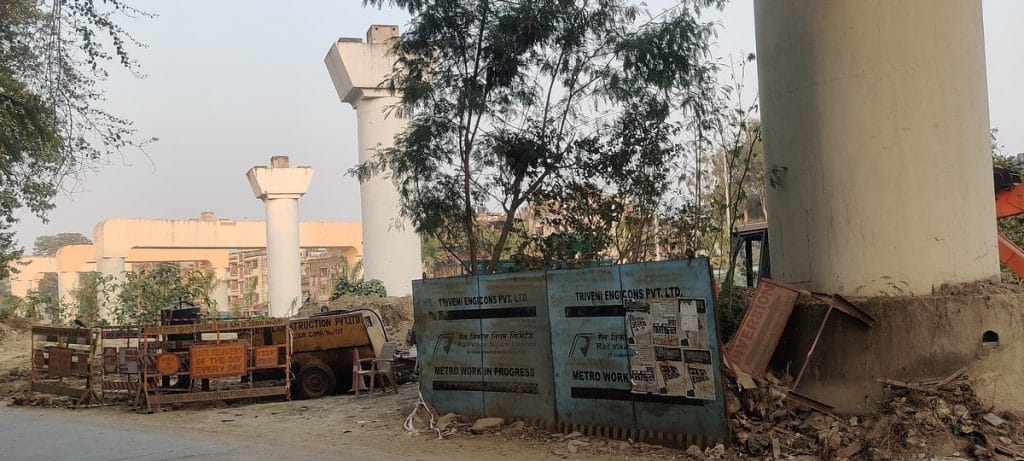
Described as “phases”, these are isolated stretches opened without completing the full corridor. Work often begins before obvious hurdles — encroachments, traffic management, or inter-agency clearances — are resolved, ensuring delays are baked into the project from the start.
“Except for the first Metro line, almost every other corridor in Kolkata is being built in sections — a stretch here, a stretch there — without planning for obvious hurdles like encroachments or clearances,” said Somnath Dasgupta.
Metro’s many faultlines
On a weekday afternoon in congested Bowbazar in north Kolkata, the street looks much like it always has — narrow lanes, ageing buildings, shop shutters rattling open and shut. But beneath some of the city’s oldest buildings runs a completed Metro tunnel, part of the East-West corridor meant to transform the city’s transport spine. Many of these structures predate modern construction codes. Over the years, since construction began in 2019, residents have reported cracks in houses and multiple collapses, triggering evacuations and protests.
Another century-old building collapsed in December. Metro engineers said tunnelling had been completed and that they were not responsible for any recent damage. For residents, these assurances don’t mean much. They blame the years of construction that have shaken the foundations of their homes.
Down south, another deadlock has commuters in a chokehold.
The Orange Line, meant to connect New Garia with the airport, is in limbo. A crucial 366-metre gap at Chingrighata, on the Eastern Metropolitan Bypass, has remained unfinished since February 2025 because police permission for traffic blocks — for just two weekends — has not been forthcoming. This single gap has stalled the line linking south Kolkata to the airport. Only a small portion of the nearly 30-km corridor is underground.
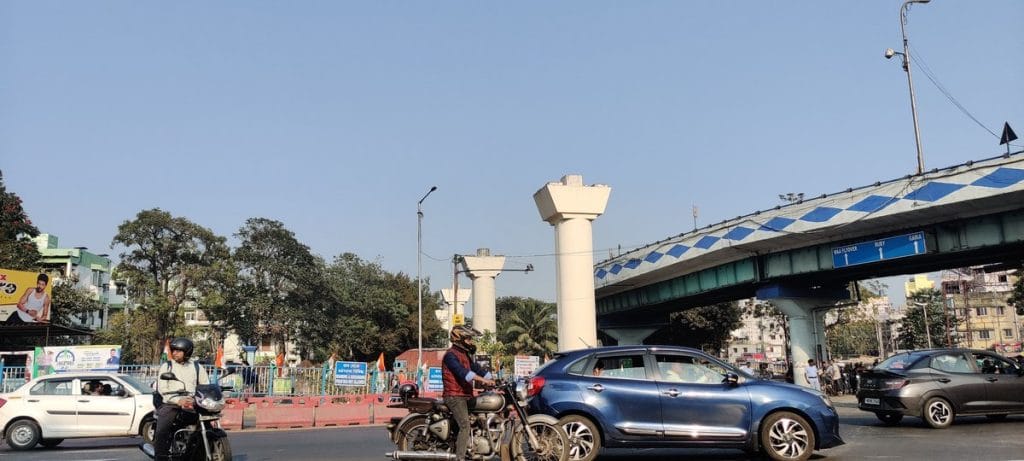
The work is stalled, the pollution persists, and traffic doesn’t budge an inch unless a minister’s convoy passes through the connector.
Ironically, the airport line was cleared as early as 2010-11, when Mamata Banerjee was Union railway minister, but construction began years later.
For Anuj Dayal, principal executive director of the Delhi Metro Rail Corporation, Delhi’s success lay less in engineering brilliance than in institutional design. There was unified backing from Centre and state, which allowed decisions on land, funding, and clearances to move quickly.
For older, denser cities like Kolkata, Dayal’s advice is straightforward: “direct alignment with all stakeholders is a must.”
Living with the Metro
The Kolkata Metro has engulfed Adrija’s life in ways she’d never anticipated. She wakes up daily to construction noise, ongoing for months, just a few metres from her house. She has to go to the farthest corner of her home to answer phone calls to evade the constant hum.
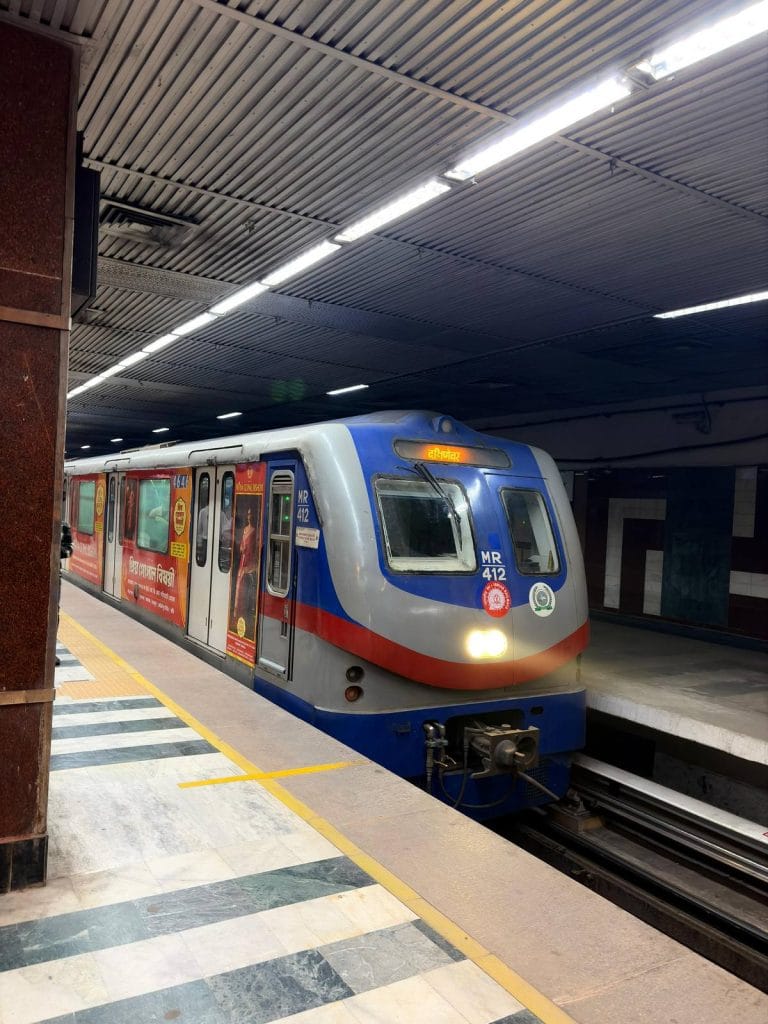
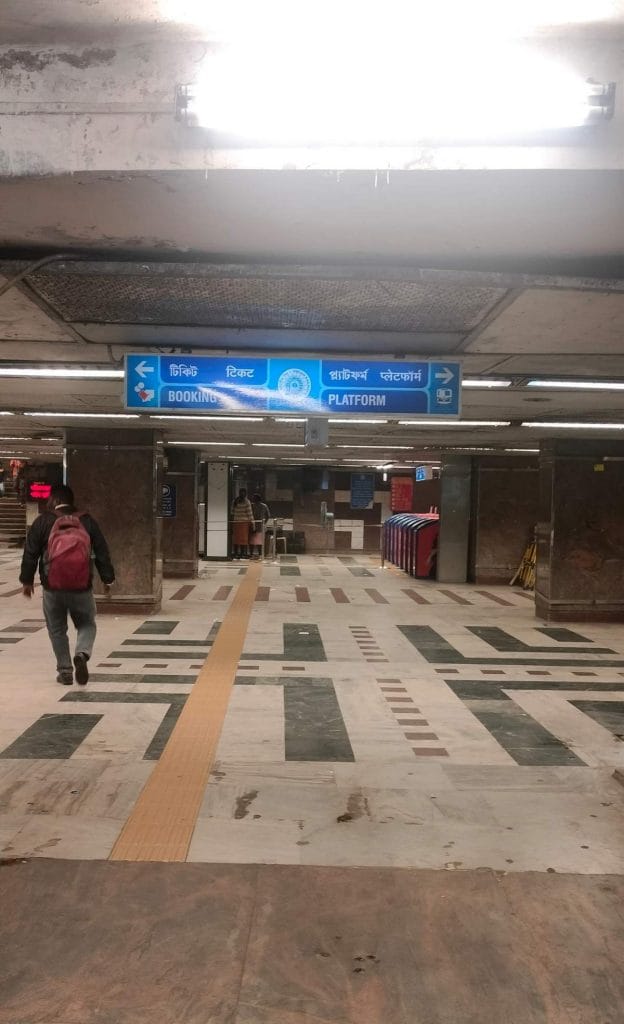
She works near the Writer’s Building and once relied entirely on the Kolkata Metro to move across the city. Today, she factors in 20- to 30-minute delays for trips of just two stations. Digital screens that once displayed arrival times no longer function reliably. Trains show up late, or not at all.
“One day during Durga Puja, we waited even though arrival time showed on the screen,” she said. “The train never came. That was the first time I hesitated to take the Metro at night.”
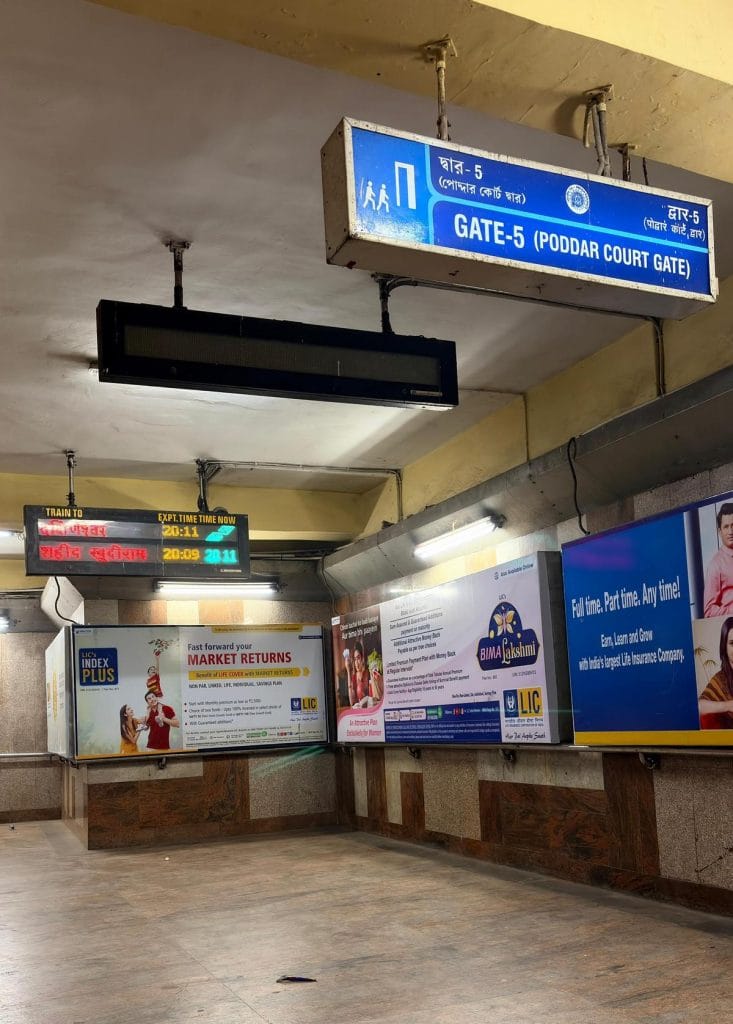
Overcrowding has worsened. Platforms fill up as trains arrive less frequently. At times, Adrija has exited stations and taken bike taxis instead, unsure if she could board safely with an injured foot amid the rush.
Naming confusion adds another layer of frustration.
“Many stations are named after personalities without any area reference,” she said. “Even people who live here get confused.”
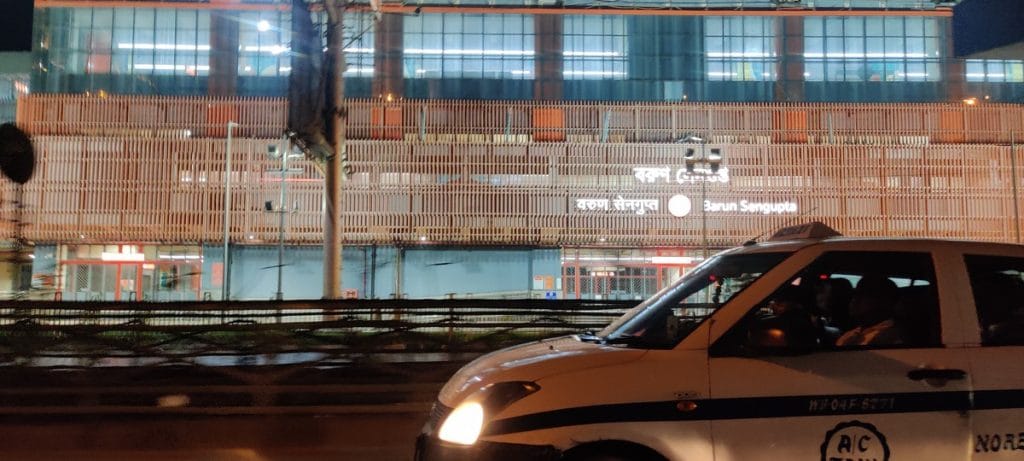
On the original Blue Line, a few stations were named after personalities, but the signboards included the locality, and announcements inside the train linked the name to the area—such as Kavi Nazrul for Garia Bazar. For newer stations, the area name has been dropped, and there’s no clarifying announcement either.
Sircar echoed this concern, saying that passengers are fed up with stations being named after public figures— Shahid Khudiram, Hemanta Mukhopadhyay, Mahanayak Uttam Kumar.
“This is an infliction on people that must be corrected immediately by adding the place names to each such station,” he said.
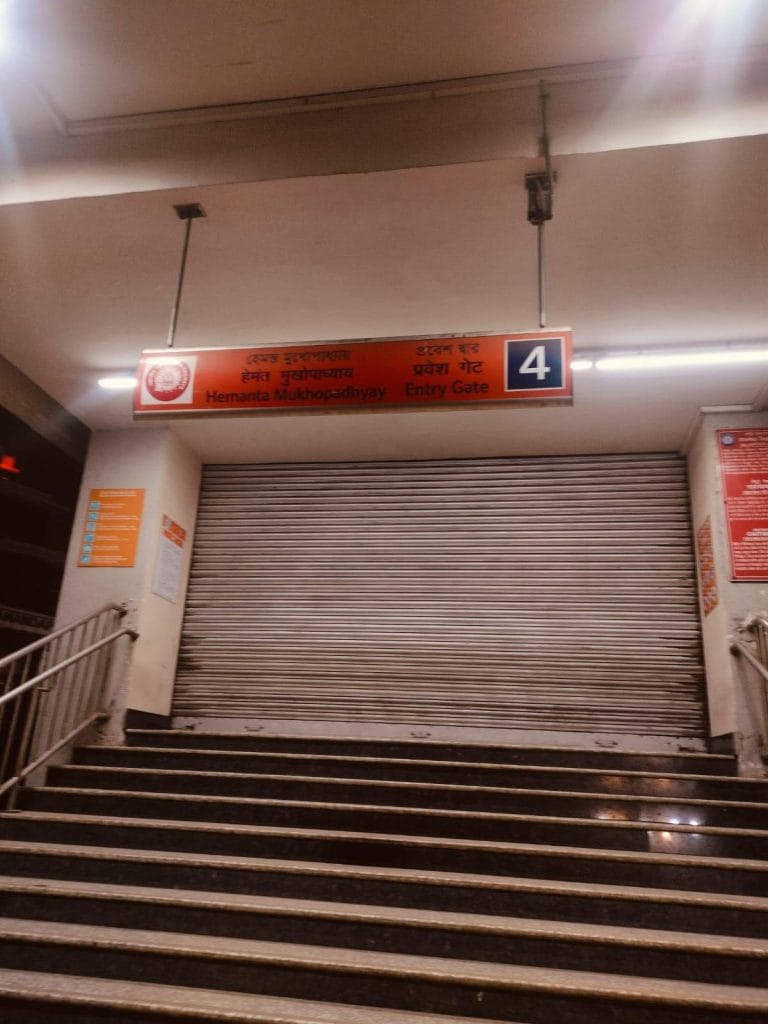
For Medhasree Talapatra, an assistant professor at BR Ambedkar College, who has watched Kolkata Metro construction since she was in school, the delay seems endless.
“Work on the EM Bypass Metro started when I was in school. That was in 2009. This is 2026,” she said. “Even now, the line is incomplete. It makes you wonder whether it will be finished in the next decade at all.”
Missing links, familiar problems
Nowhere is Kolkata Metro’s problem clearer than at the places it ‘almost’ reaches.
At the southern edge of the city, Joka remains disconnected from Kolkata’s core despite years of construction. In the north, extensions beyond Dakshineshwar and toward Barasat are stalled due to land acquisition issues, encroachments, and utility shifting.
At Esplanade, one of the city’s busiest transit crossroads — where buses, offices, markets, and government buildings converge — construction has been held up by 528 unauthorised shops at Dr BC Roy Market that must be temporarily relocated. Alternative shops have been built, but the shift has been pending for over three years.
For those whose livelihoods sit on the margins of construction zones, uncertainty cuts deeper.
“I’ve been here for 15 years,” said a hawker who sells snacks near the Esplanade site. “They say we will be shifted, then nothing happens. Business goes down because customers can’t reach us. If they move us, we don’t know where we’ll land.”
A 2007 Calcutta High Court judgment directed that buses be shifted away from Esplanade to protect the Victoria Memorial, years before the East-West and Joka lines were even conceived. Implementing that order today would cripple a major multimodal hub without reducing pollution, since buses would still have to enter Esplanade to pick up passengers.
Work on the EM Bypass Metro started when I was in school. That was in 2009. This is 2026,” she said. “Even now, the line is incomplete. It makes you wonder whether it will be finished in the next decade at all
-Medhasree Talapatra, Kolkata resident
Biswajit Das, professor at Maharaja Manindra Chandra College and political analyst, called the delays “fundamentally political” and argued that without coordination between the Centre and the state, Kolkata risks lagging behind other Indian cities where Metro systems are expanding rapidly.
“If the city’s pace increases, the economy will change, work culture will change, and opportunities for exchange will grow,” he added.
Kolkata Metro Rail Corporation officials did not respond to ThePrint’s queries over messages about timelines for resolving the deadlocks.
Two ideas of public interest
If Bowbazar exposed the engineering risks of the Kolkata Metro, the Maidan has exposed its moral fault lines.
Maidan, spread across the heart of Kolkata and directly opposite the Victoria Memorial, is an uninterrupted green expanse in an otherwise congested urban core. For decades, it has functioned as Kolkata’s commons — a place for recreation, protest, sport, and respite in a city short on breathing room.
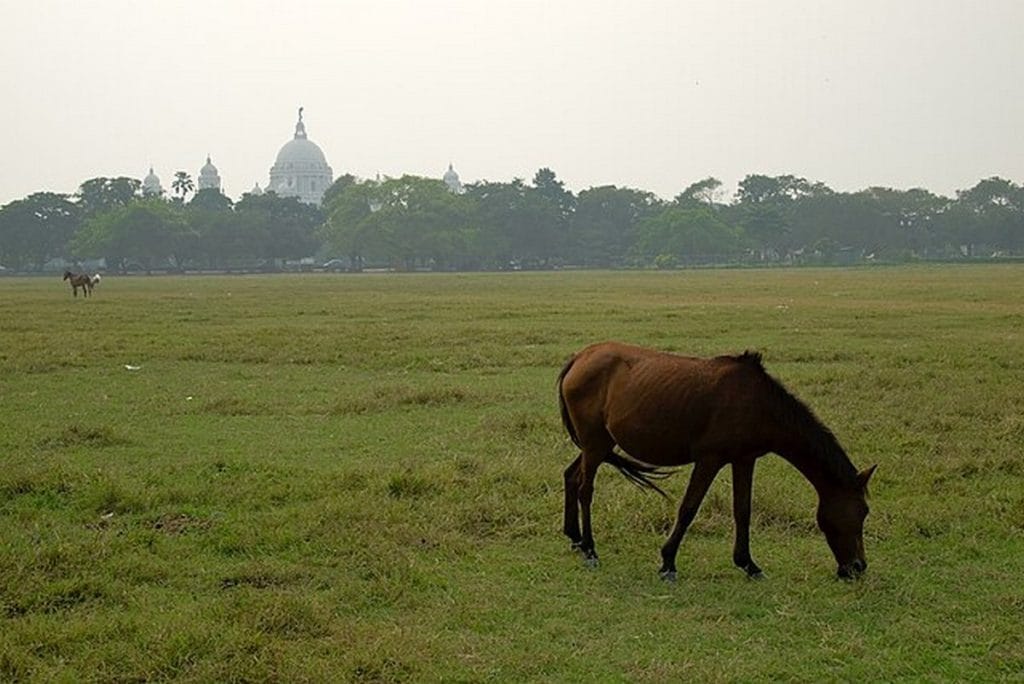
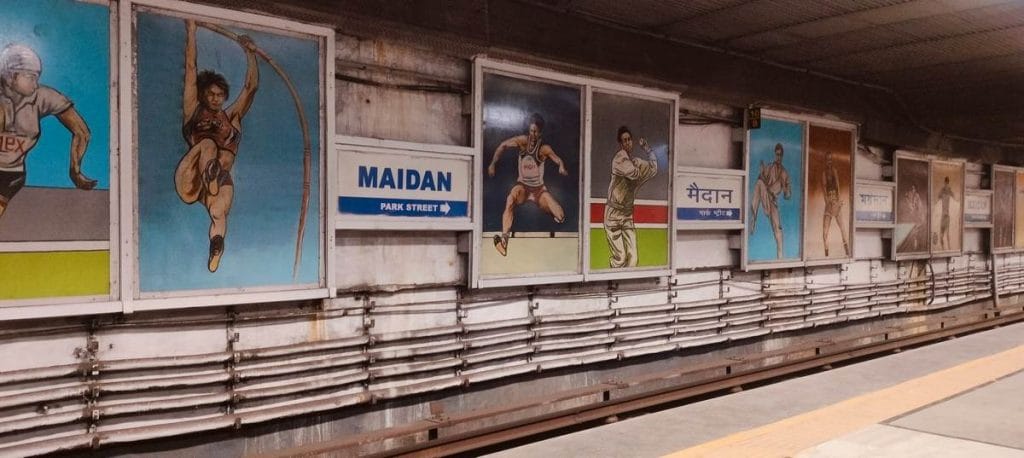
It is also not untouched by the Metro. A station already exists at Maidan, connecting the area to the network.
The current flashpoint is the Metro Rail Corporation’s push for another Metro station cutting through the Maidan, a move that would involve the felling or transplantation of about 900 trees, many of them decades, even centuries, old.
“We are not opposing the Metro,” said Pradeep Kakkar, one of the activists challenging the alignment. “What we are opposing is the casual way in which the city’s commons are being treated. The Maidan is not just open land, it is social space, environmental space, cultural space. You cannot assume that because it is large, it is expendable.”
Banani Kakkar, another activist in the case, was more blunt. “You cannot chop off the crown of a centuries-old tree and call it transplantation,” she said. “These trees are not furniture. You are permanently altering the lungs of the city.”
For now, judicial intervention has essentially put the project on hold. In October 2024, the Supreme Court directed that no felling or transplantation could take place in the Maidan without permission from the Centre’s empowered committee.
Also Read: Kala Academy was Goa’s cultural heart until Rs 75 cr govt renovation. ‘It is a tragedy’
A city in waiting
For daily commuters, Kolkata Metro’s delays translate into constant recalibration. Office hours are planned around buffer time. Missed trains mean missed meetings.
Metro Railway officials maintain that upgrades are underway. SS Kannan, Chief Public Relations Officer, said the system is undergoing continuous rehabilitation.
“We are planning to upgrade the existing infrastructure for passenger safety with improved services like better AFC gates and AI-based CCTV systems,” he said.
For commuters, such improvements are entirely theoretical. Adrija now leaves home earlier than she once did, carrying hundreds of forms for fieldwork, unsure if the train will complete its journey or terminate midway.
“Earlier, I knew there would be a Metro every five minutes,” she said. “Now it’s a guessing game.”
The barricades remain. Roads stay dug up. Stations stay shut. Deadlines shift again. And the city, well-practised by now, continues to wait.
(Edited by Asavari Singh)
I vaguely recall that it took 10 ten years to build one kilometre of track for the older metro in Kolkata. It is foolish to expect something good from West Bengal, the state ruined with communismn and corruption.