





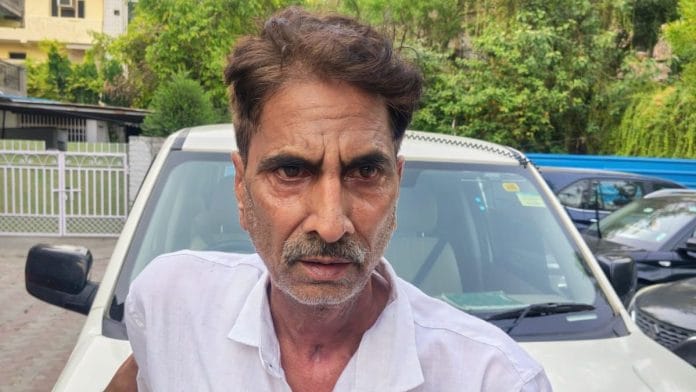


Loni, Ghaziabad: Flaunting a skull cap and a white-and-green chequered gamcha around his neck, Saleem Wastik spent years recording anti-Islam videos from a cramped office in Ghaziabad’s Loni for a few thousand followers online. But last month, when the Uttar Pradesh Police arrived to arrest him in a three-decade-old murder case, neighbours started dissecting the self-styled “ex-Muslim” influencer’s audacious fraud that rattled police hierarchies and embarrassed the very Hindu organisations that once backed him.
Many residents in Alvi Nagar had long despised 54-year-old Saleem for publicly mocking Islam while profiting from it on YouTube. Some argued with him openly while others stopped speaking to him altogether. Yet few, they now claim, knew that the man they knew as “Saleem Wastik” was Mohammad Saleem Khan — an absconding convict sentenced to life imprisonment for the abduction and murder of a Delhi teenager 31 years ago.
As police took him away, neighbours gathered outside shuttered shops whispering his real name — a name many insist they had never heard before.
“He was insulting our Nabi (prophet) and making money out of it. But after he got arrested for almost a three-decade murder case. We understood why he did what he did,” said Mahboob, his neighbour. “But that doesn’t excuse his behaviour. He is a Kafir.”
On 25 April, police arrested Khan in connection with the 1995 abduction and murder of 13-year-old Sandeep Bansal, son of a Delhi-based cement trader. Investigators allege Saleem, a former Maulvi, was arrested two years later with an associate and absconded after securing interim bail in 2000. He then fabricated his death in official records and resurfaced years later as ‘Saleem Wastik’ — an anti-Islam crusader on a mission to “expose” the religion online.
His videos — often titled “Ex Muslim Exposing Islam” — regularly targeted Islamic practices and attempted to provoke outrage. In one video that garnered over 94,000 views, Saleem warned Hindus against eating at roadside establishments during the annual Hindu pilgrimage Kanwar Yatra.
“They (Shia Muslims) spit in the food or smear underarm sweat in the food,” he claimed.
His arrest has since unsettled both the locality that ostracised him and the Hindu leaders who visited him after he survived a stabbing attack earlier this year, exposing the double life of a man who allegedly reinvented himself through outrage, religion and social media.
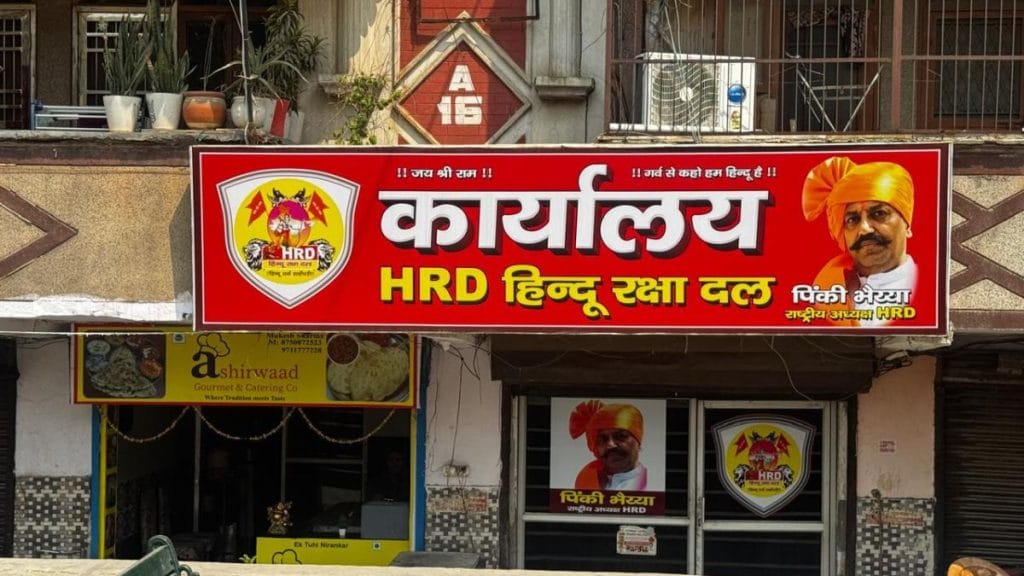
For Hindu Raksha Dal, which rallied behind Saleem after the attack, the revelation felt like a betrayal. Yet the organisation still attempts to separate Saleem’s past from the identity he later built online.
“We are deeply affected by the fact that he killed a Hindu boy. But what he did was when he was a Muslim. Now, as an ex-Muslim, he had repented and was speaking against his religion,” said HRD National President Pinky Chaudhary. “From now on, we will carry out proper background checks before extending support to someone.”
From Waqf to Wastik
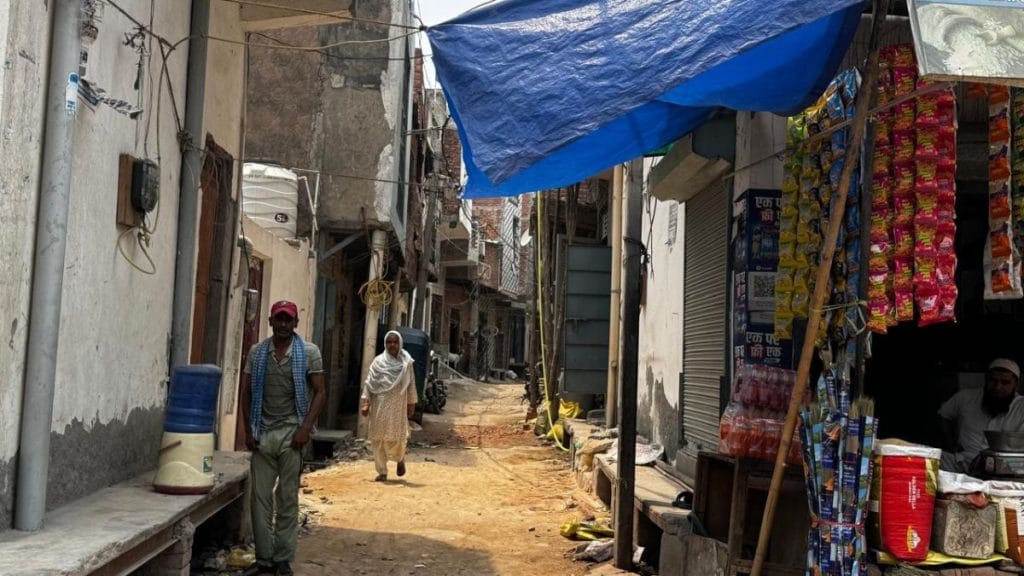
In the fetid bylanes of Alvi Nagar, earlier known as Nasbandi colony, where sewage water has spilled over broken roads, half a dozen men gather at a clothing shop to discuss the rise and fall of Saleem. Everyone appears to possess a fragment of his story.
“After his videos went viral. He started behaving very rudely,” one neighbour said. He was interrupted mid-sentence.
“How long can you abuse your religion?” another snapped. “Now look, he is behind bars.”
Saleem once ran a lace shop on rent in the same neighbourhood. Residents say he lived inside the cramped space and initially recorded many of his videos there.
But before his social media turn, Saleem worked at the Waqf board as a Maulvi, residents say. In one of his video interviews, he claimed he had also worked at a shrine in Ambala.
“That’s where atheism was born in me,” he said in one of his interviews. “I began telling people that a shrine is just a grave covered with cement and plaster. It reached the Waqf Board and they dismissed me.”
As his videos gained traction online, residents say both his behaviour and finances changed rapidly.
The once-withdrawn Saleem, often mocked in the neighbourhood for making anti-Islam videos while living among Muslims, began carrying himself differently.
Neighbours claim Saleem began earning nearly Rs 80,000 a month through YouTube. He bought a plot in Ashok Nagar and opened an office. That office now remains shuttered.
At his brother-in-law’s home in Loni, relatives insist they repeatedly tried persuading him to stop making the videos before eventually severing ties.
“He was fine until four years ago. Then something changed. As if some jinn entered him. He started making these videos. We faced a lot of backlash,” Saleem’s sister-in-law said. “Everyday we would make him understand but he won’t listen.”
Soon, Saleem’s wife and son also stopped living with him after repeated fights.
His son, Usman, was pursuing Jamaat education at a madrasa while his father continued uploading videos attacking Islam.
“When his wife tried to make him understand, he asked her to divorce him,” his sister-in-law said.
The family claims they no longer know the whereabouts of his wife and son.
Also Read: Who is Nazia Elahi, now making anti-Muslim speeches in ‘Hindu Dharam’ tour
The men who backed him
As Saleem’s videos spread online, he began attracting attention far beyond Loni’s narrow lanes.
Residents recall men associated with Hindu organisations regularly visiting his office, often arriving draped in saffron gamchhas.
“They would sit with him for hours. The entire market would watch,” said the owner of a clothing shop nearby.
Months ago, the tone around Saleem online was celebratory.
“You are a hero,” read one comment posted under his videos.
That support intensified after 27 February this year, when two men entered Saleem’s office in Loni and stabbed him multiple times in the neck and abdomen, allegedly attempting to slit his throat.
Hindu organisations condemned the attack. While Saleem recovered in hospital, Delhi minister Kapil Mishra and Loni MLA Nand Kishor Gurjar visited him publicly in a show of support.
Soon after, the UP Police killed the two accused in the attack in separate encounters in March.
Weeks later, however, the narrative around Saleem collapsed after his arrest.
“He has fooled Hindus, not Muslims,” read one comment posted after news of his arrest surfaced.
But the Hindu groups like HRD are not too bothered. After Saleem’s arrest, Pinky Chaudhary released a video comparing him to UP Chief Minister Yogi Adityanath.
“I don’t care about what he did in the past. There are stories about Yogiji and Amit Shah too,” he said. “I will support anyone who works for Sanatan.”
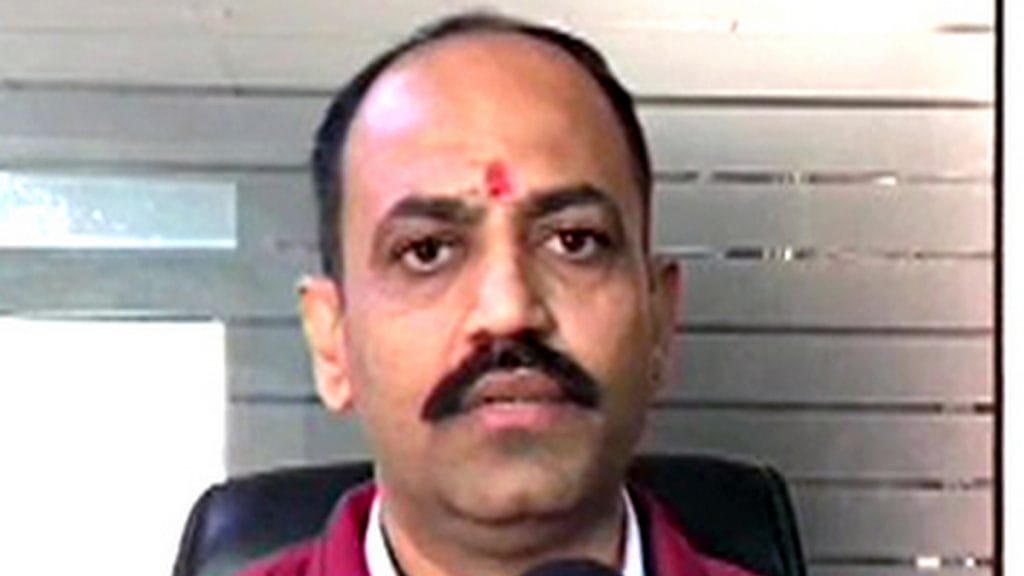
Chasing a dead man
It began, as many investigations do, with a case which seemed already closed. Two months ago, inspector Robin Tyagi, posted with the Anti Robbing and Snatching cell of Delhi’s Crime Branch, was handed the case of a parole jumper: Mohammad Saleem Khan.
On paper, there was nothing to chase. The earlier investigation had already declared the then 23-year-old dead. But Tyagi, 40, was not convinced.
He travelled to Nanupura village in Uttar Pradesh’s Shamli district to piece together Saleem’s past. The village offered conflicting accounts. Some residents said he had died years ago. Others claimed that he had served his prison sentence and was living near Delhi.
This contradiction nagged Tyagi. Unlike earlier investigators who ticked the “deceased” box and moved on, Tyagi kept returning to Shamli and gained the trust of villagers.
Eventually, one villager told him that Saleem was not dead at all. He was alive, living in Loni under a new identity — Saleem Wastik.
“It was the first proper lead. But it was not enough to arrest Saleem Wastik. We needed proof that he was the same man,” Tyagi said.
The investigation then led Tyagi to dusty court records from the 1990s.
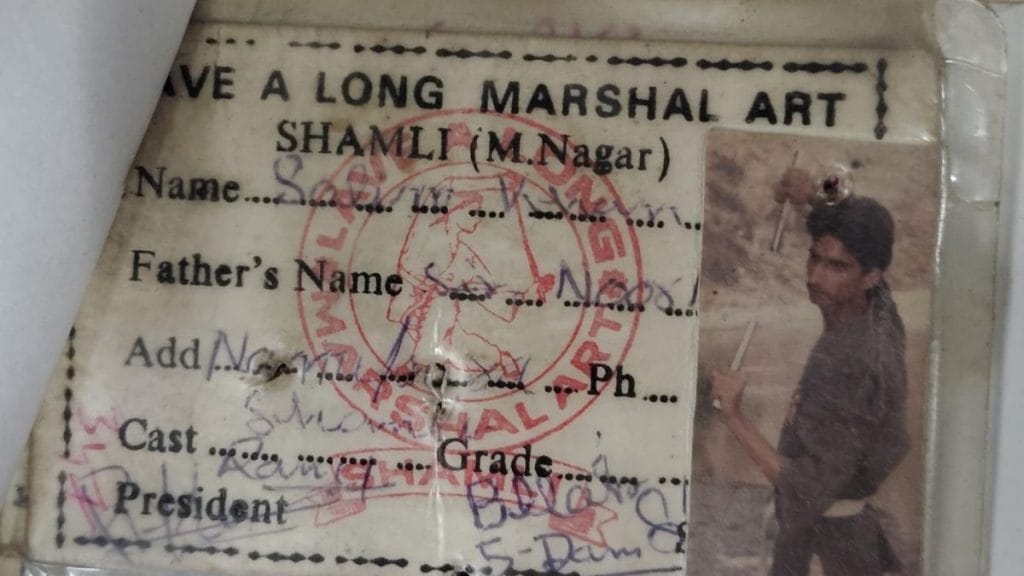
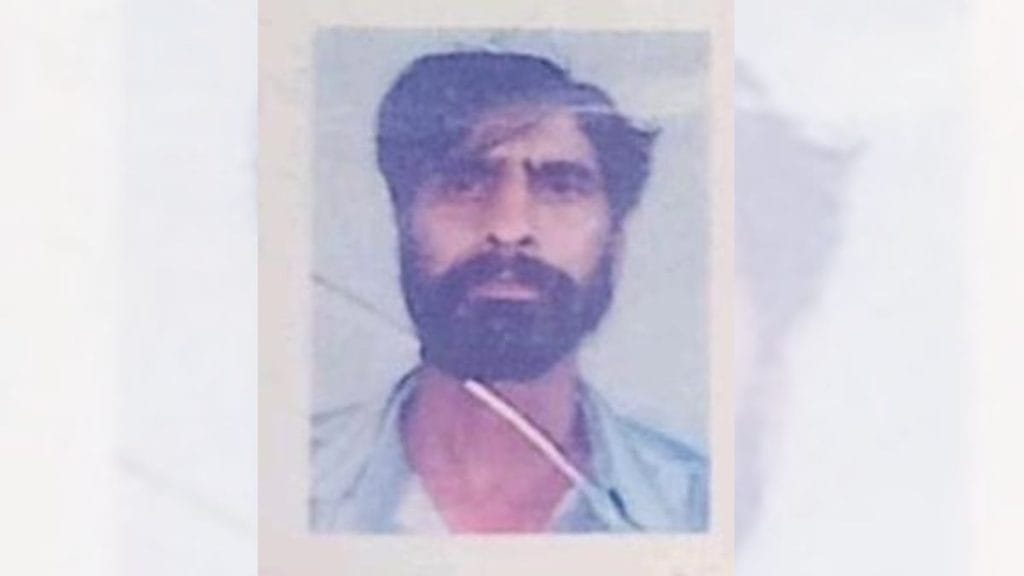
An old passport-sized photograph submitted during the original case became the first breakthrough. Officers compared it with Saleem’s YouTube videos. The faces matched. The second breakthrough came through fingerprints.
“In those days, there was no provision for photographs in the dossier, but there were fingerprints. The first thing we did after arrest was to match fingerprints,” said Tyagi.
Police also found that the wife’s name mentioned in Saleem’s old bail application matched details linked to Saleem.
When the police barged into his house in Loni, Saleem was recovering from his recent stabbing attack.
According to Tyagi, Saleem initially denied being the same man. It went on for half-an-hour.
“Then we started showing evidence. The court files, the passport-sized photograph, and the bail application. We also asked for fingertips to demonstrate,” Tygai said.
Eventually, Saleem gave in.
“Jo kaam kiya hai woh bhugatna toh padega. (I will have to face consequences for the crimes I have committed),” he murmured.
As police started escorting a handcuffed Saleem through the lanes, neighbours started whispering.
“We couldn’t decipher exactly what went wrong until we got to know through the media the next day,” said Masood, a local.
Then, he paused.
“That’s when my belief in god deepened,” he said. “Because god exists, Saleem is behind bars.”
(Edited by Stela Dey)