





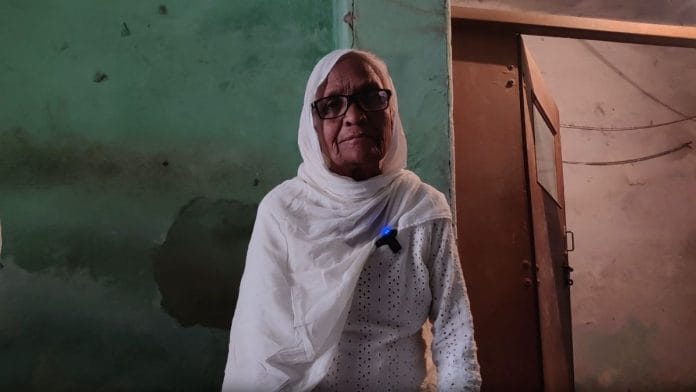



Tonk (Rajasthan): Shakuran Bano did not really want a blanket that day. She went anyway because another villager prodded her. But the resident of Kareda Buzurg village in Rajasthan’s Tonk district went to BJP leader Sukhbir Singh Jaunapuria’s relief distribution drive only to return home humiliated and empty-handed. She now finds herself at the centre of a larger political controversy about the BJP’s relationship with India’s Muslims.
It has also left a lingering communal aftertaste in a village where religion was rarely discussed in everyday life. The routine blanket distribution on 22 February turned into a public sorting of loyalty – of who is “ours”, who is not, and who gets to access relief when politics decides the terms. It also flies in the face of Prime Minister Narendra Modi’s ‘Sabka Saath Sabka Vikas’ governance slogan.
On Tuesday, the former BJP MP singled out Muslim women from a group of around 30 he had called to distribute blankets. After asking one woman her name and learning she was Muslim, Jaunapuria asked her and other Muslim women sitting nearby to move aside, saying he would not give blankets to “those who abuse Modi.”
“I didn’t want any blanket. But there was no need for this humiliation,” said Bano, who is in her 60s. She is also puzzled by the BJP leader’s accusations.
“Why would I abuse Modi? When did he hear me abuse him?” she said, still trying to make sense of the incident. “It was humiliating. He simply said he will not give blankets to Muslims.”
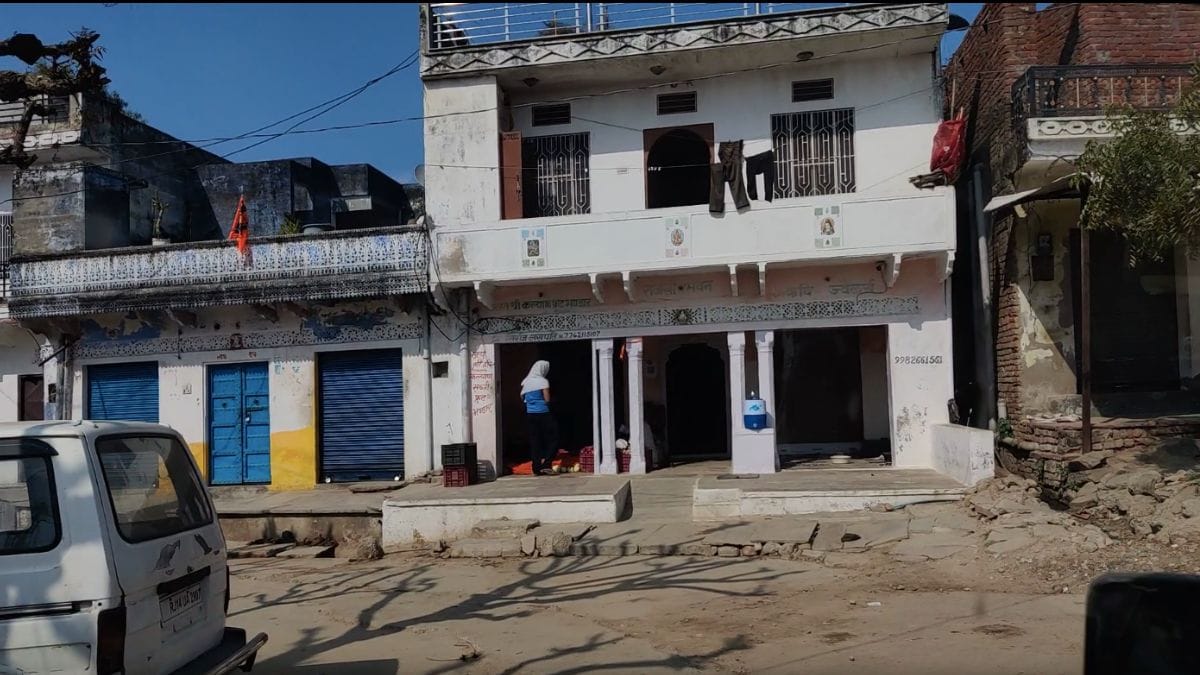
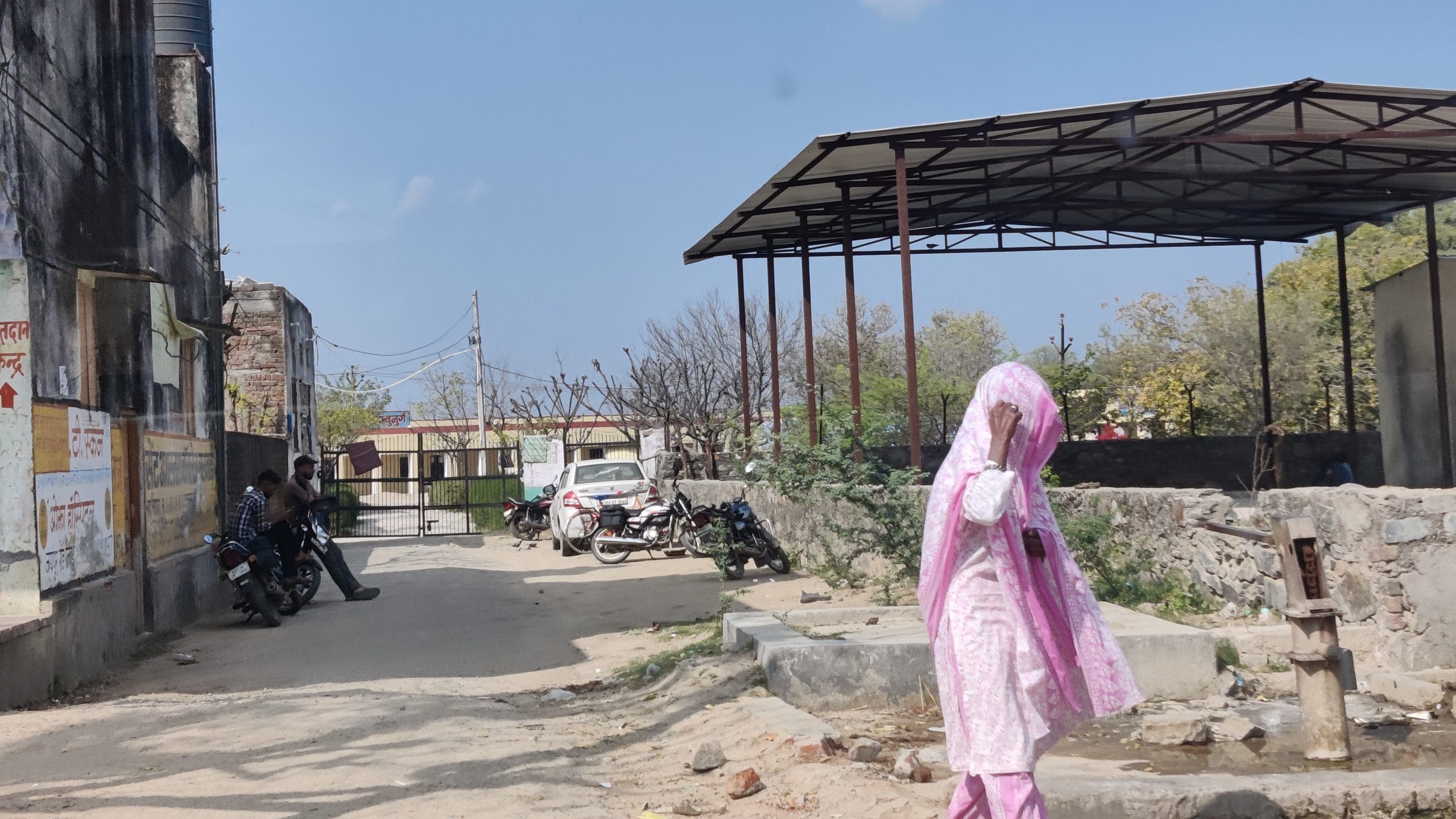
Nearly 70 km from Jaipur, Kareda Buzurg is a village of around 2,000-3,000 people where most families farm small plots and young men travel to the city for work. It struggles with basic infrastructure — uneven roads, patchy sanitation, and limited employment.
While caste slips easily into conversation, religion, villagers insisted, was not a daily fault line.
But after Tuesday, something has changed.
“It has made things awkward,” said Zakir Khan, a local resident. “Earlier, we didn’t think like this. Now we have to be wary.”
Also read: Communal riots help parties like BJP. But not for the obvious reasons
The pushback from Hindus
Badrilal Jaat was working in his mustard field when he heard a commotion. Villagers were asking the BJP leader why the women had been separated along religious lines.
“If you had to take the blankets back, why did you give it anyway?” villagers asked him.
One of the elders of the village, Jaat has since gone over several times to assure Bano that everything is fine and she has the village’s support.
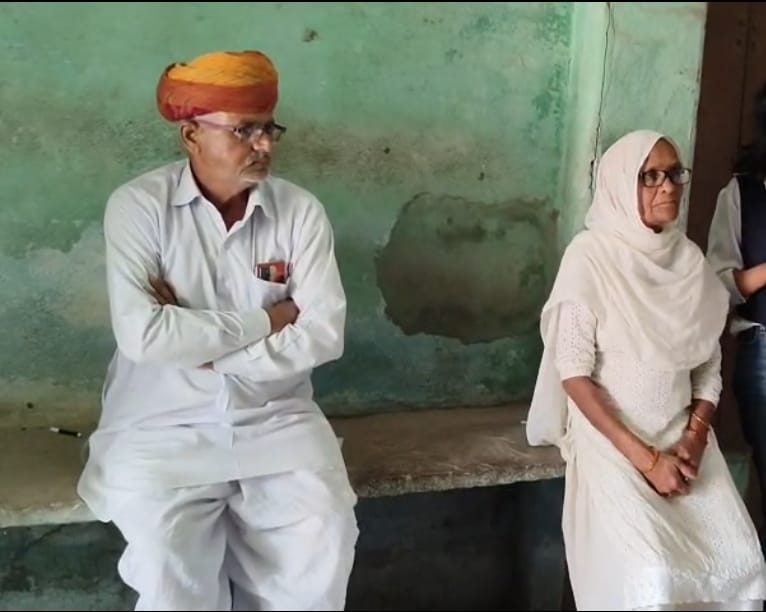
“There is no discord between Hindus and Muslims in our village, never happened in generations. When an outside person comes and tries to sow such seeds, we have to come forward to protest,” he said.
There was no police deployment and no complaint filed. Villagers burned effigies of Jaunapuria later that day and shouted slogans of “Jaunapuria murdabad”, but no violence followed. A claim circulating on social media that Hindu women had returned their blankets in protest turned out to be false.
Later that evening, Mahboob Diwan Chopdar, the president of Rajasthan Pradesh Congress Committee (minority department), arrived with a set of blankets and had Bano distribute them among Hindu and Muslim women.
Bano lives in a bare-brick house she rents for Rs 1,000 a month. She shares it with her blacksmith son, daughter-in-law and grandchildren. Her husband died around six years ago. Her other son and daughter live in nearby towns.
“I made her go to the distribution drive because she is very poor. She doesn’t have much to her name,” said Sunil Doraya, a neighbour and content creator who uploaded the viral video of the BJP leader excluding Muslim women.
Several leaders, including Tonk MLA Sachin Pilot, criticised Jaunapuria.
“Depriving a poor, needy woman of a blanket and insulting her is extremely reprehensible and unfortunate. Discrimination based on religion and caste is not only morally wrong but also a violation of constitutional rights,” Pilot tweeted in Hindi.
Mohsin Rasheed Tonk, the state in-charge of Rajasthan Muslim Alliance and close to Congress leader Ashok Gehlot, described Jaunapuria’s action as political messaging ahead of Prime Minister Narendra Modi’s scheduled visit to Ajmer on 28 February.
“This is all drama. After losing elections, what do you do? You consolidate. But this incident was just for attention. He got his virality on social media,” Rasheed said, wondering if Jaunapuria prohibits Muslims from eating at a daily community kitchen he runs in a hospital.
Also read: It’s too much to hope for BJP to give up Mandir-Masjid or for Indians to say enough is enough
BJP leader unmoved
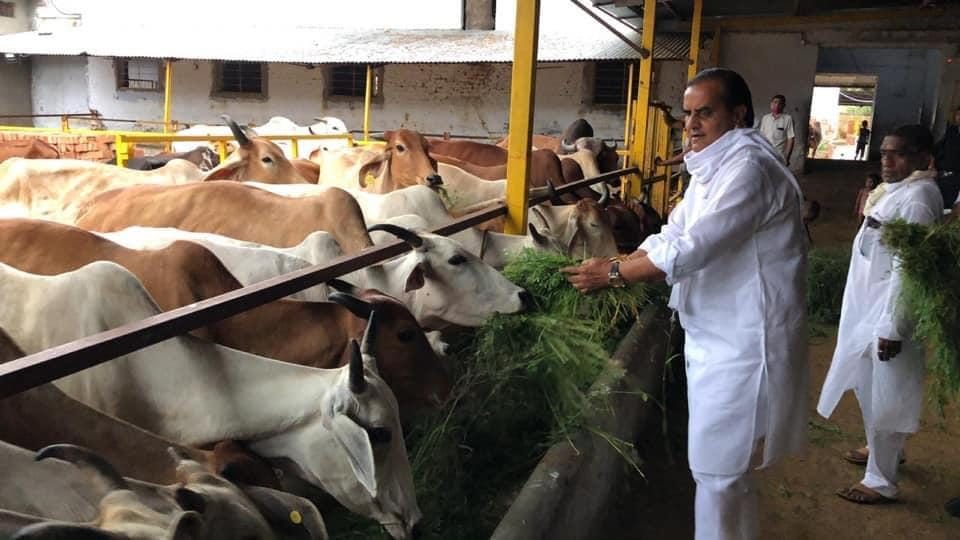
For the former Tonk-Sawai Madhopur MP, public distribution events are not new. With a business base in Gurugram, he retains influence despite his defeat to Congress’ Harish Chandra Meena in the 2024 Lok Sabha elections. During the Covid-19 pandemic, Jaunapuria had made headlines by claiming that sitting in mud and blowing conch shells would boost immunity and help the body fight the coronavirus.
Speaking to ThePrint on Thursday, he stood his ground on separating Muslim women during the distribution drive.
“They always wear a burqa, but this time these women wore salwar-kameez to get the blankets,” he said. “These people were taking blankets meant for us and our people. I could have given them after our people received theirs but why should I? They abuse Modi, never vote for him.”
He also argued that minority women overwhelmingly support the Congress.
“They are all Congress. All minority women are Congress. The whole country knows. I am a BJP worker, wouldn’t I know?” he said.
This isn’t the first instance of a BJP leader making welfare or charity conditional on supporting Modi or voting for the BJP.
Former Union minister Maneka Gandhi, during the 2019 Lok Sabha election campaign in Uttar Pradesh’s Sultanpur, had reportedly said that Muslims would not get jobs if they did not vote for her.
In October last year, ahead of the 2025 Bihar Assembly elections, Union minister Giriraj singh, at a rally in Arwal district, called those who do not vote for the BJP despite receiving welfare “namak haram” (ungrateful).
In December, during campaigning in Roing, Arunachal Pradesh, Rural Development and Panchayati Raj Minister Ojing Tasing said, “The panchayat segments where the BJP candidates lose will not get any scheme. As the Panchayati Raj Minister, I mean what I say.”
Jaunapuria also alleged the video had been circulated by Congress supporters. He had himself uploaded a video from the event on his social media, though the ending was edited out.
He also dismissed allegations of discrimination at the community kitchen, saying people from all communities eat there.
“I have videos to show that everyone eats there,” he said. “Congress people keep doing this. They try to fool the CM in Vidhan Sabha and say a lot of things against the Prime Minister.”
He said he visited the village the next day and that the situation there was “fine.”
Farmers and dreamers
For residents of Kareda Buzurg, however, the incident didn’t disrupt social peace but has birthed a new conversation about religious identities that was previously considered unnecessary by villagers.
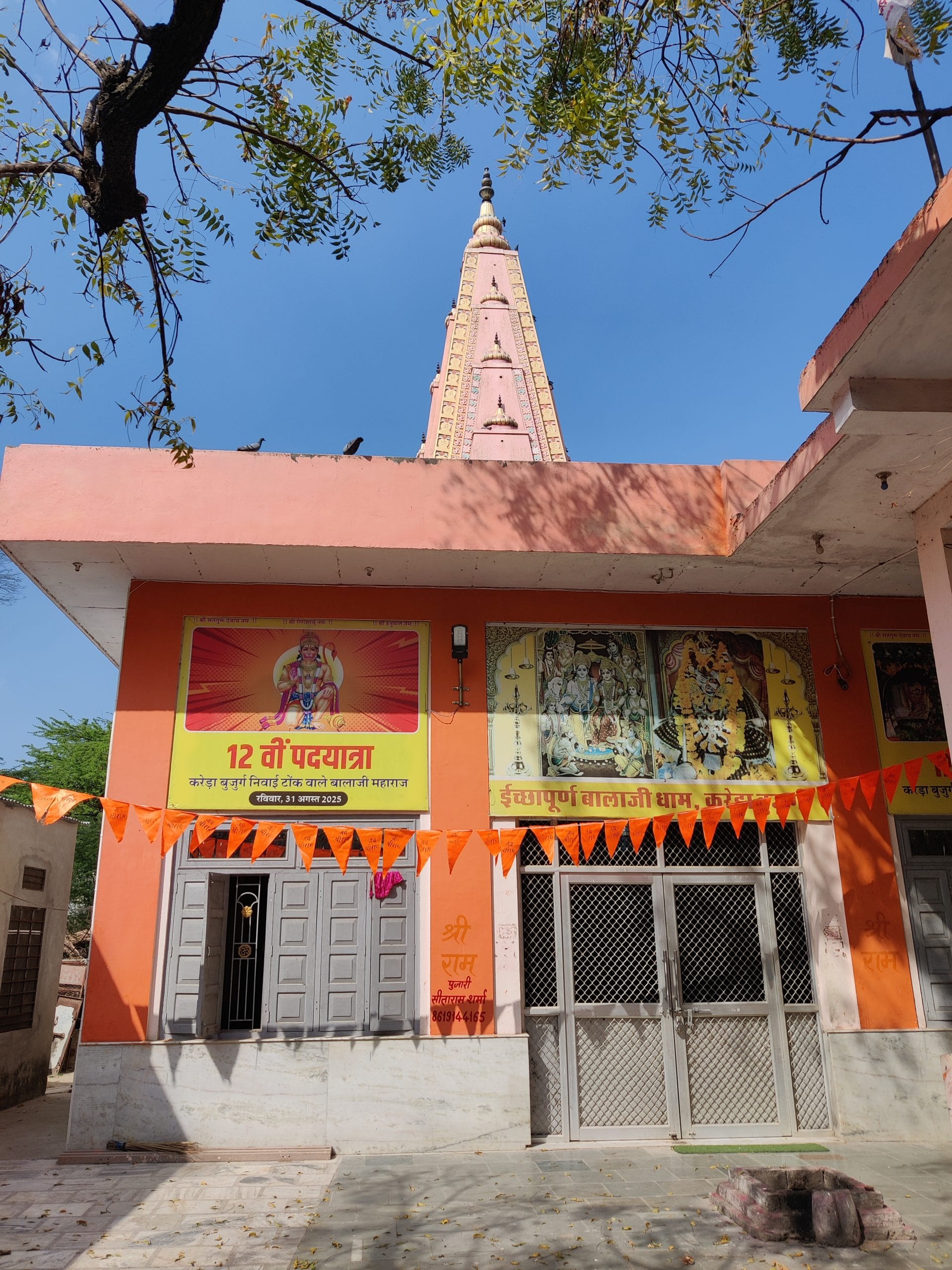
Kareda Buzurg is not a village that speaks easily in communal binaries. Hindu and Muslim families attend each other’s weddings and festivals. They share water sources and markets, and daily life overlaps in ways that rarely invite scrutiny.
“Even the DJ plays in front of the masjid in our village,” Jaat said, noting how incidents that often become flash points elsewhere don’t cause trouble in this village.
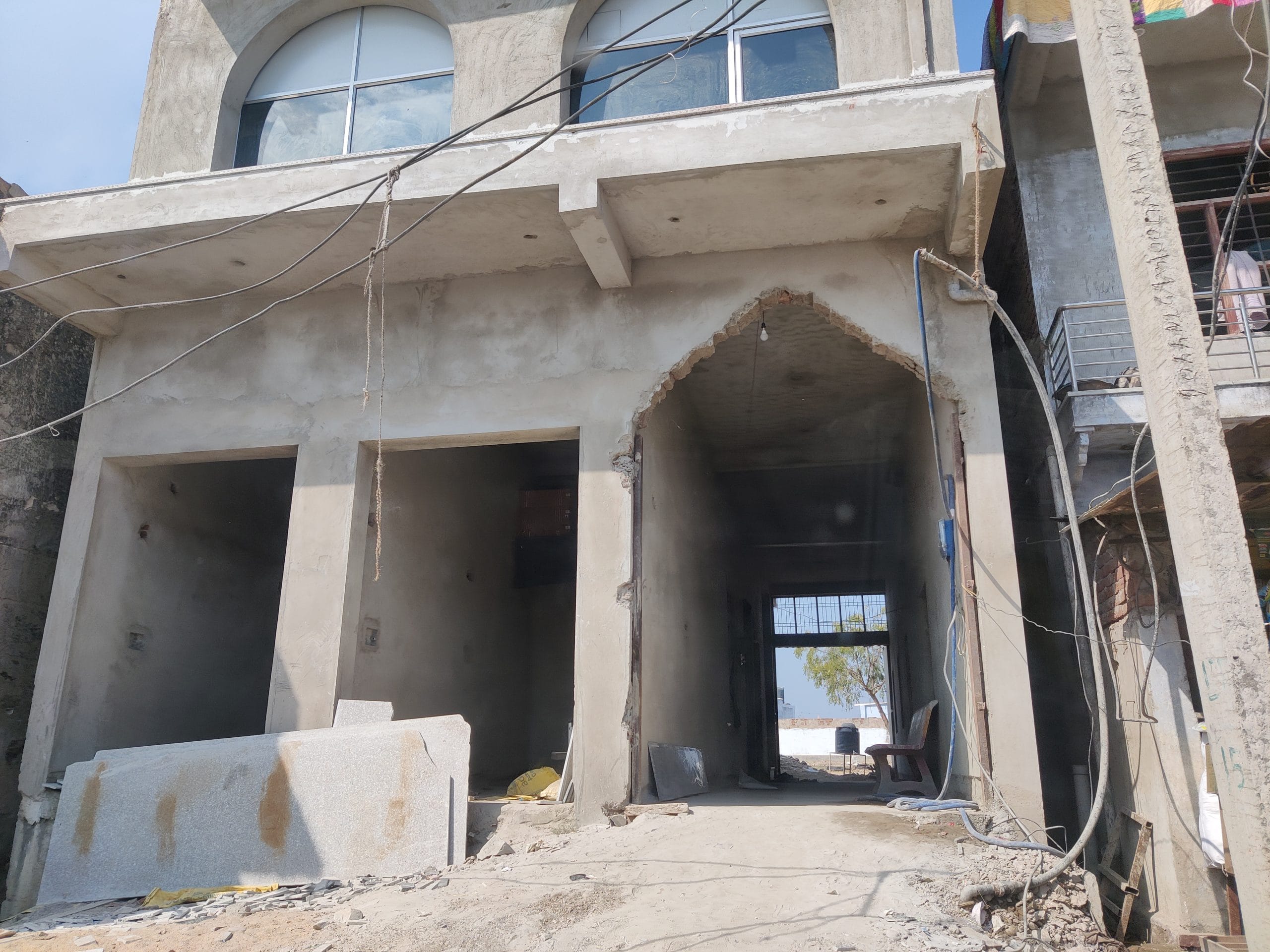
Most residents are farmers who work in the fields from sunrise to dusk. But its youth speak differently. Some travel to Jaipur for work and return with plans to improve drainage, roads and opportunities at home.
“It’s incidents like these we want to protest against,” said 28-year-old Ramesh Meena, who hopes to become sarpanch before he turns 30. “If we want the village to move forward, this kind of thing shouldn’t happen.”
By the next day, daily life had resumed. Farmers returned to the fields and children went to school. The mosque loudspeaker and temple bells continued their routines.
No Hindu woman returned her blanket in protest. No Muslim family reported threats.
Shakuran Bano shrugged when asked if she was angry.
“There is no point. I have lived here my whole life. The Hindus and we live like brothers and sisters. People like Jaunapuria can only insult us, what else will he do?”
(Edited by Prashant Dixit)