



Gurugram: Twenty-two-year-old Kaushal Joshi had spent months resisting his parents’ push toward an MBA. Two years in a classroom, chasing a conventional corporate career — that wasn’t for him.
Then, scrolling Instagram one evening, he stopped on a reel of a man bungee-jumping off a bridge. “What MBA lesson is this supposed to teach us?” the man in the video asked, seconds before he jumped.
For Joshi, that was exactly the point. The reel was advertising a new MBA-equivalent programme built around travel and on-ground business experience rather than lecture halls — an alternative to the conventional MBA his parents had been urging him toward.
“I knew when I first saw that reel that this was what I wanted to do. Typical classroom education doesn’t excite me. But travelling while studying and learning from the field seemed like such a great idea,” said Joshi, who has since completed the six-month post-graduate programme, PGP Bharat.
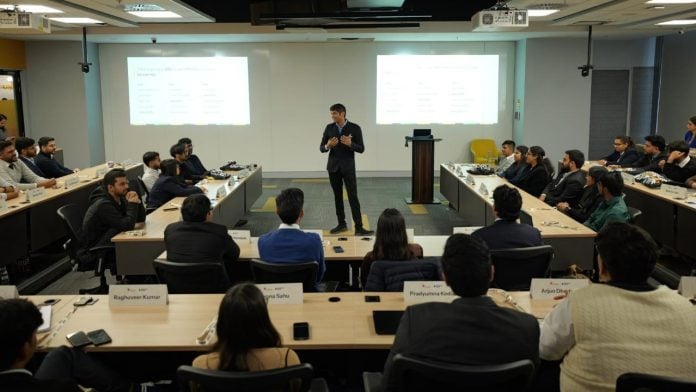
The great Indian MBA, long considered the safest bet for a stable career, is being reimagined. At Masters’ Union, a Gurugram-based business school, the traditional two-year classroom degree has been compressed into six months certificate course, with lecture hours replaced, in part, by travel, business immersions and fieldwork.
“I really think the future of learning is based on exposure and travel. When you leave the campus and apply on the ground what you learn in class, that’s when the learning truly assimilates,” said Pratham Mittal, founder of Masters’ Union.
Demand for management education in India remains strong. International applications to graduate management programmes in India rose 26 per cent in 2025, according to the Graduate Management Admission Council. Nearly 2.95 lakh candidates registered for CAT, the country’s largest MBA entrance exam. But what students want out of the degree is changing, and some business schools are responding by building more industry-linked, experiential learning into their programmes.
Hult International Business School lets MBA students rotate between campuses in London, Dubai, New York and Singapore, and runs city seminars built around live projects and company visits. Dartmouth’s Tuck School of Business sends students overseas on faculty-led Global Insight Expeditions to study markets on the ground. In India, IIM Sirmaur’s MBA in Tourism, Travel and Hospitality Management is taught across India and Mauritius, built around fieldwork, study tours and live industry projects.
PGP Bharat is Masters’ Union’s pitch into this space: a six-month ‘MBA’ priced at Rs 21 lakh, divided into three parts — an initial stretch of classroom and practical learning; an eight-week journey across more than 20 Indian cities for business and cultural immersion; and a closing phase where students build their own ventures. Admission requires an application, an aptitude test and an interview on the candidate’s goals.
“For students entering with little or no work experience, these experiences give them a first-hand sense of what it actually takes to run a business. For those with experience, it’s a chance to challenge their assumptions and notice nuances they may have missed. Since management is an applied degree preparing students to make decisions, this can improve both perspective and interpretation,” said Niharika Vohra, professor of organisational behaviour at IIM Ahmedabad, who studies immersive, experiential learning in entrepreneurship.
But taking students into the field, she cautioned, is only half the job.
“Just creating the experience is not enough. Faculty have to curate it — nudge students to observe, ask questions, reflect on what they have seen, and give them the tools to abstract and conceptualise the experience. That’s what makes the learning stick,” Vohra said.
Inside Cyber Park
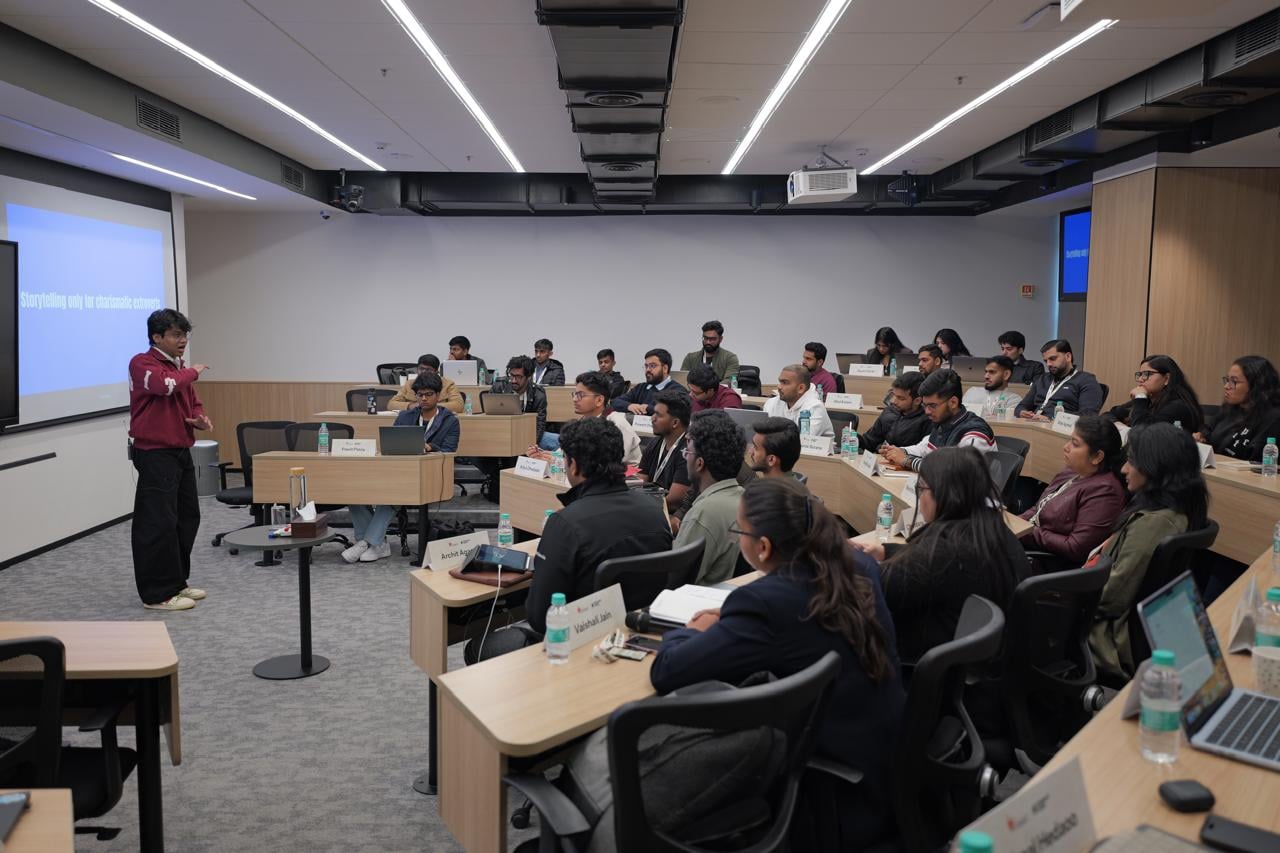
Cyber Park in Gurugram looks, from outside, like any other stretch of the city’s corporate sprawl — glass towers, office logos, the hum of a business district. Inside, Masters’ Union occupies four floors. On his first walk through the campus, Joshi saw open floor plans, large screens running through student ventures and past projects, a display that gave those arriving for orientation a clear idea about what lay ahead.
“It was like a trailer of a film that we were supposed to enter,” Joshi recalled.
This contrast between what students expected an MBA to look like and what PGP Bharat placed in front of them ran through the entire programme. Nowhere was this difference more evident than on the day a batch went from a luxury car dealership straight into the narrow lanes of Dharavi.
“It was like putting us in situations we would never put ourselves in on our own. An entrepreneur should know all this,” Joshi said.
He remembers ducking into a Dharavi lane barely wide enough for one person, where fabric was being cut, sewing machines stitched jeans, and workers moved between units to keep production going without a break. Homes, children playing a few streets away, tile- and soap-making units sharing storage space because there wasn’t room for each business to have its own — commerce and daily life stacked on top of each other in a way no case study back at Cyber Park could have shown him.
“I saw men and women working, kids were playing just a few streets away, and that’s when I realised how businesses here operate alongside everyday life,” Joshi said. “They are doing so much with so little resources. Dharavi was a big opener for me.
The students didn’t just watch. They asked how raw material came in, how work was organised, how entrepreneurs managed withlimited space and resources.
That first campus visit came after an orientation at Gurugram’s Lemon Tree hotel, where 50 students had been put up, meeting each other for the first time before an early swing through Mercedes-Benz, Lenskart and Chandni Chowk.
“It was all very well planned. Before any trip, the PGP Bharat team gives us the history of the organisation, so we can understand the place better. The great thing about this course was that they chose the people wisely — everyone was really good,” said Joshi.
Once classes began, the days stretched long — orientation week ran roughly 9 am to 5 or 7 pm; once the regular programme kicked in, sessions often ran from 9 am to 9 pm. One of Joshi’s first classes was a session with Manoj Kohli, the former Airtel CEO, on the emerging economy of Uttar Pradesh — why companies were choosing to invest in the state over other markets, and what its per-capita income, infrastructure push and startup support looked like on the ground. Another session, taught by Bhupesh Manoharan, dealt with marketing and consumer behaviour: building a go-to-market strategy, conducting market research. A separate set of sessions on product management looked at how a product manager thinks, how technology shapes a product, and how tools like AI and Claude Code are changing how products get built.
Classroom sessions, then, weren’t simply a prelude to the travel — they often ran for hours before students were taken out to test those ideas against the real world, and the contrast couldn’t be starker: a luxury car business one day, Dharavi’s recycling economythe next.
By the end of the course, students had to do more than observe. One pitched a business built around gravy premixes to a panel of investors and won first prize; she has continued working on the startup since.
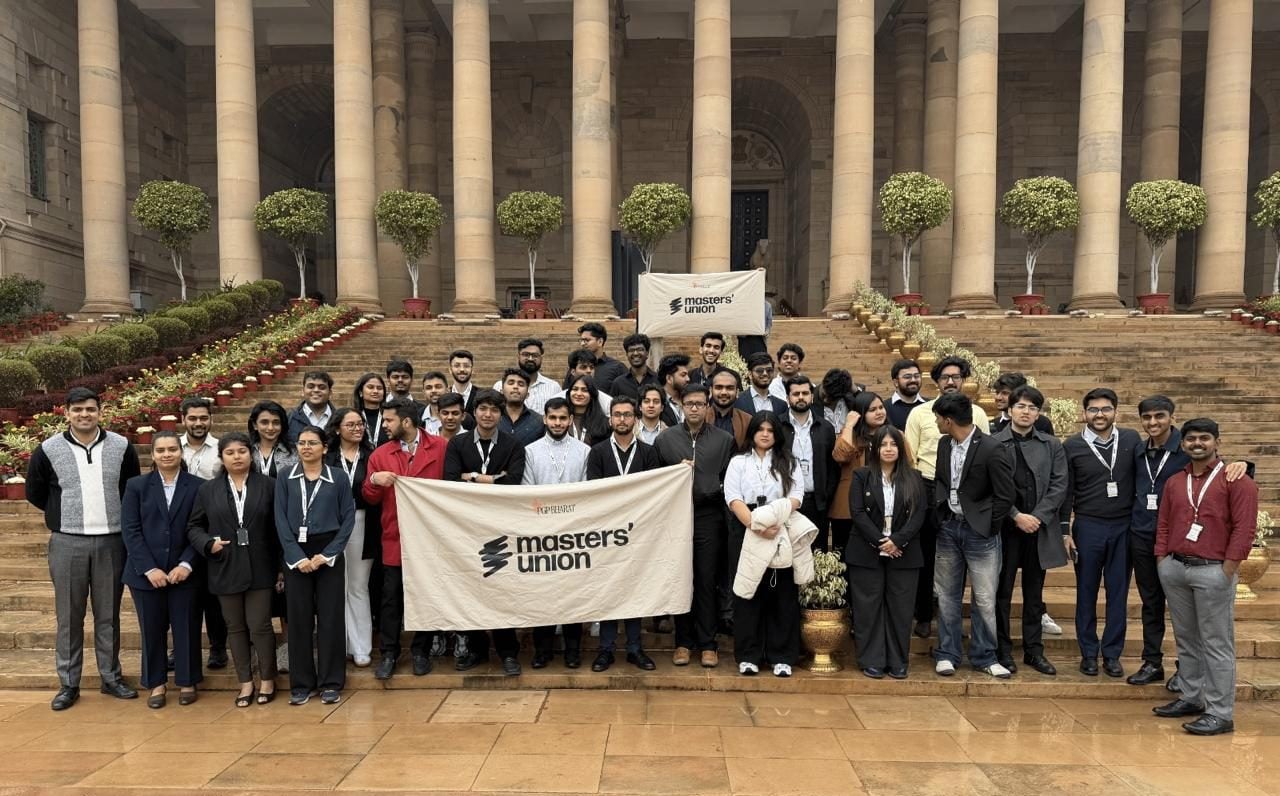
Over those eight weeks, Joshi moved between factories, ports, businesses, startups and local communities: Adani Ports, Adani Solar and Wilmar’s refinery in Mundra and Ahmedabad, the Amul dairy factory, and in Mumbai, Godrej Industries and the Mumbai Dabbawalas. Masters’ Union says the immersion covered more than 20 cities and included interactions with CXOs and entrepreneurs alongside consultancy challenges.
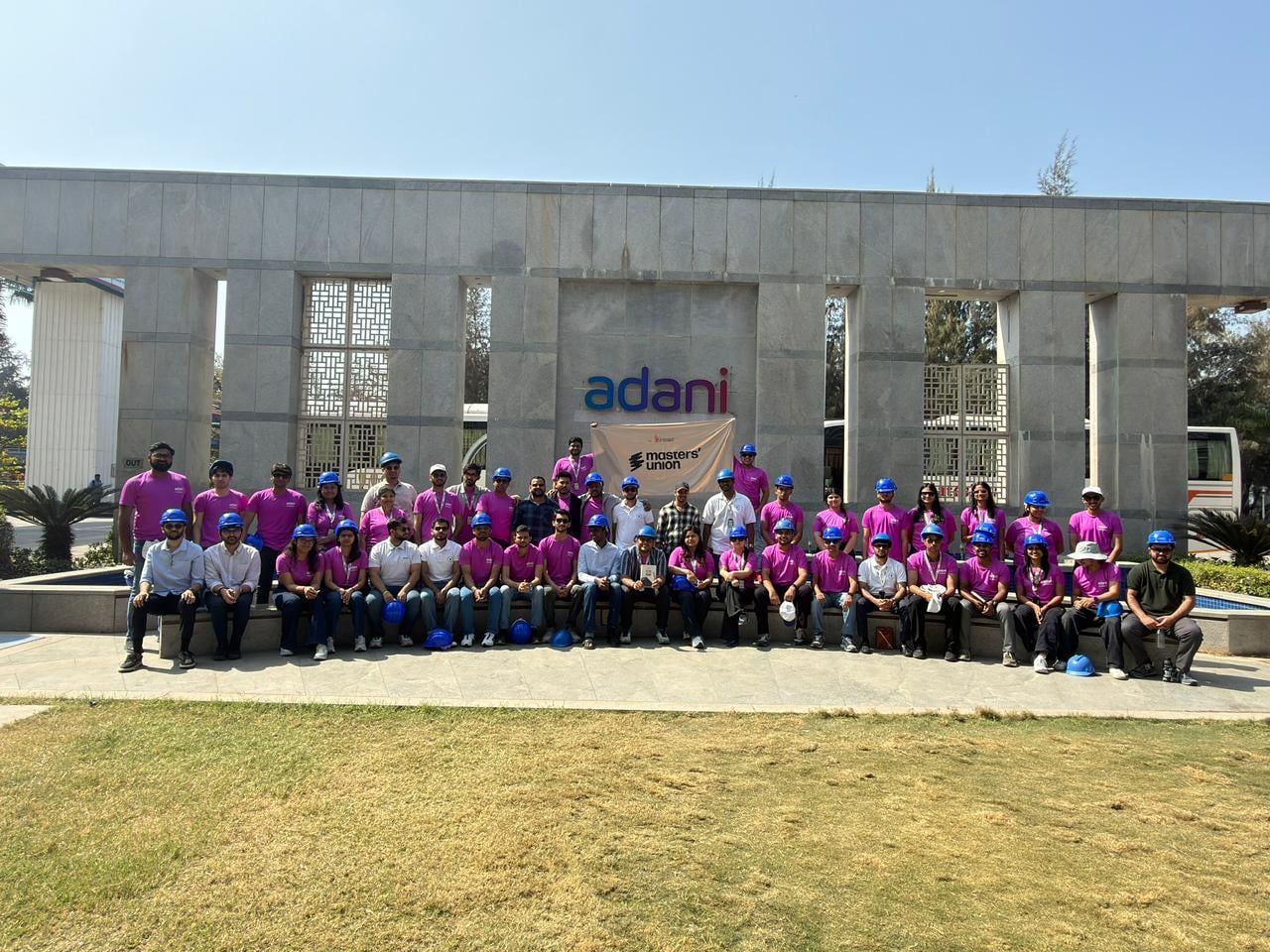
“The diversity was amazing. One day we are at the Amul factory or Mundra Port, talking to managing directors and getting ideas and advice on how businesses are built. The next day, we are on the ground, interacting with people who are actually doing the work. So we get to experience everything from the bottom to the top,” Joshi said.
At Rs 21 lakh for six months, PGP Bharat’s fee sits close to what some of the country’s top IIMs charge for a full two-year MBA, even though the two are fundamentally different ventures. Students here are paying not just for classroom instruction but for travel, industry exposure, networking and a shot at building something of their own. The programme also arrives as Masters’ Union itself scales up: the Haryana Assembly recently passed a Bill clearing the way for a Masters’ Union University in Gurugram.
The first PGP Bharat cohort had 50 students, drawn from a far wider applicant pool than the institute anticipated, including candidates as old as 56, 50 and 48, even though the eligibility age group was set at 21 to 35. It has since since been narrowed to 21–27.
“Initially, we also had people aged 35 getting admission, but we realised there was a huge difference in expectations and what a 21-year-old and a 35-year-old wanted from the programme. It was majorly smooth but we narrowed the age to impart better learing in the targeted group,” said Shikhar Mahajan, Associate Director, New Initiatives and Programme Head, PGP Bharat.
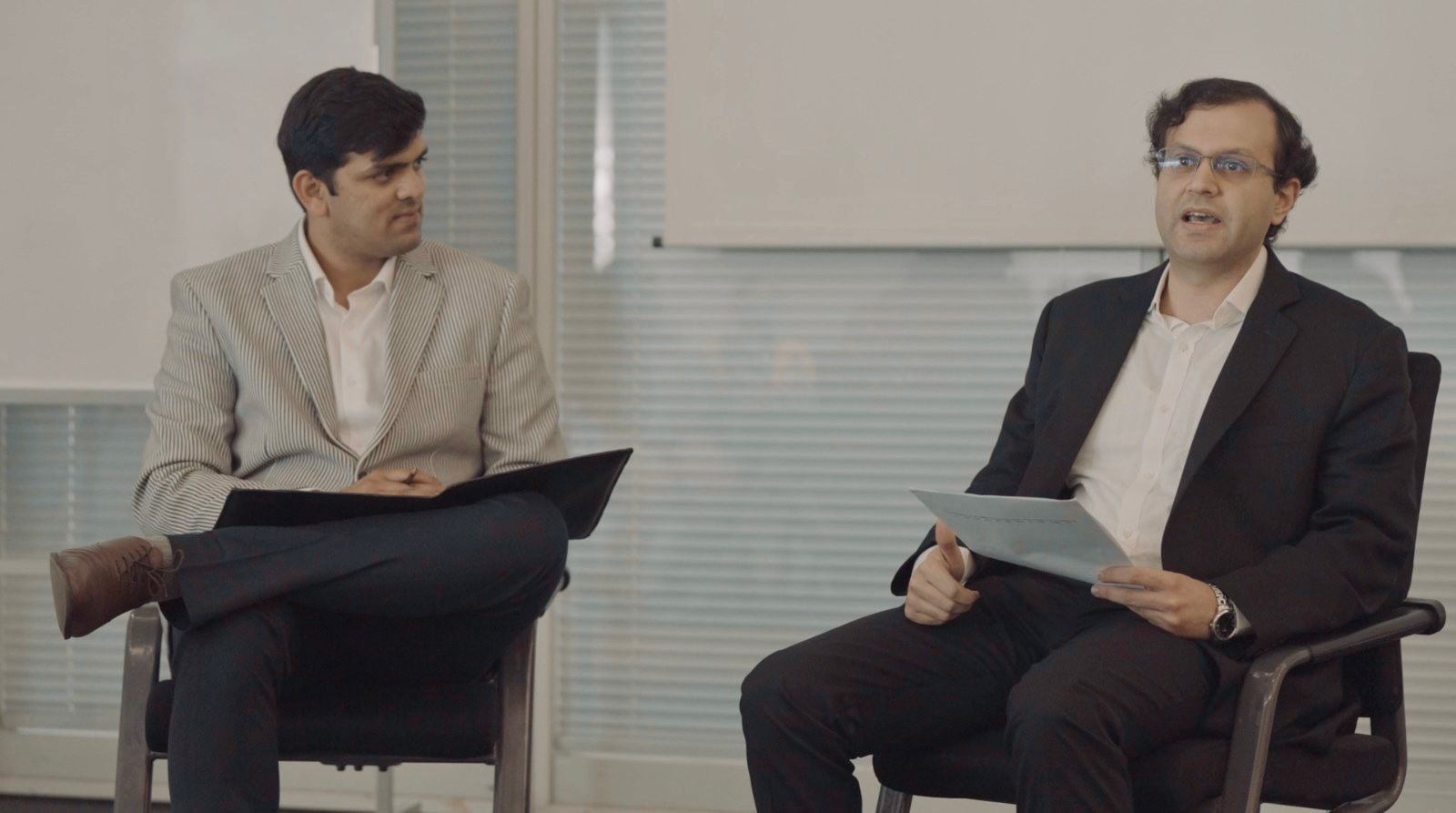
Where the idea came from
It all began with the Adani Group.
The idea for PGP Bharat didn’t begin in a classroom. It began at a port.
A few years before the programme launched, Pratham Mittal visited Adani Group’s Mundra Port in Gujarat and found a business ecosystem running like a live case study: cargo ships unloading Australian coal, the adjoining Adani Power plant burning it for electricity, Wilmar’s refinery processing oil, trucks and trains hauling it out across the country.
“When I went to Mundra port, I saw tens of ships coming in on a daily basis, these huge cranes coming and picking up those containers, putting them down. I got to see how trading happens and how businesses are much more than an office. That’s when I thought that travelling and learning about business would be a good idea,” Mittal said.
“I felt business,” he wrote later in a LinkedIn post, announcing PGP Bharat and recalling that visit — an experience, he said, that taught him more about Indian business than any course, documentary or podcast had.
“Factories, ports, mandis, stockyards — they’re loud, chaotic, alive and full of lessons. These are the real classrooms,” Mittal said.
A whirlwind tour
For Archit Agarwal, 23, the pitch landed at the right moment. He came from a business family and wanted to see how businesses outside his own worked — the ideas, the growth, the execution. He had a seat waiting at the Indian School of Business for July 2026; he enrolled in PGP Bharat in January instead.
“I needed the on-ground experience, and that’s why I joined the course. I saw the reel on my socials and decided that I had to experience it,” said Agarwal, who is now studying family business management at ISB Hyderabad. His batch got to interact with Ronnie Screwvala, an entrepreneur, businessman and film producer, and Burjis Godrej, a key owner and leader within the Godrej Group. While Godrej’s advice to the students was to ‘not let anyone crush your ideas’, Screwvala told them how to sustain in business when one business goes down.
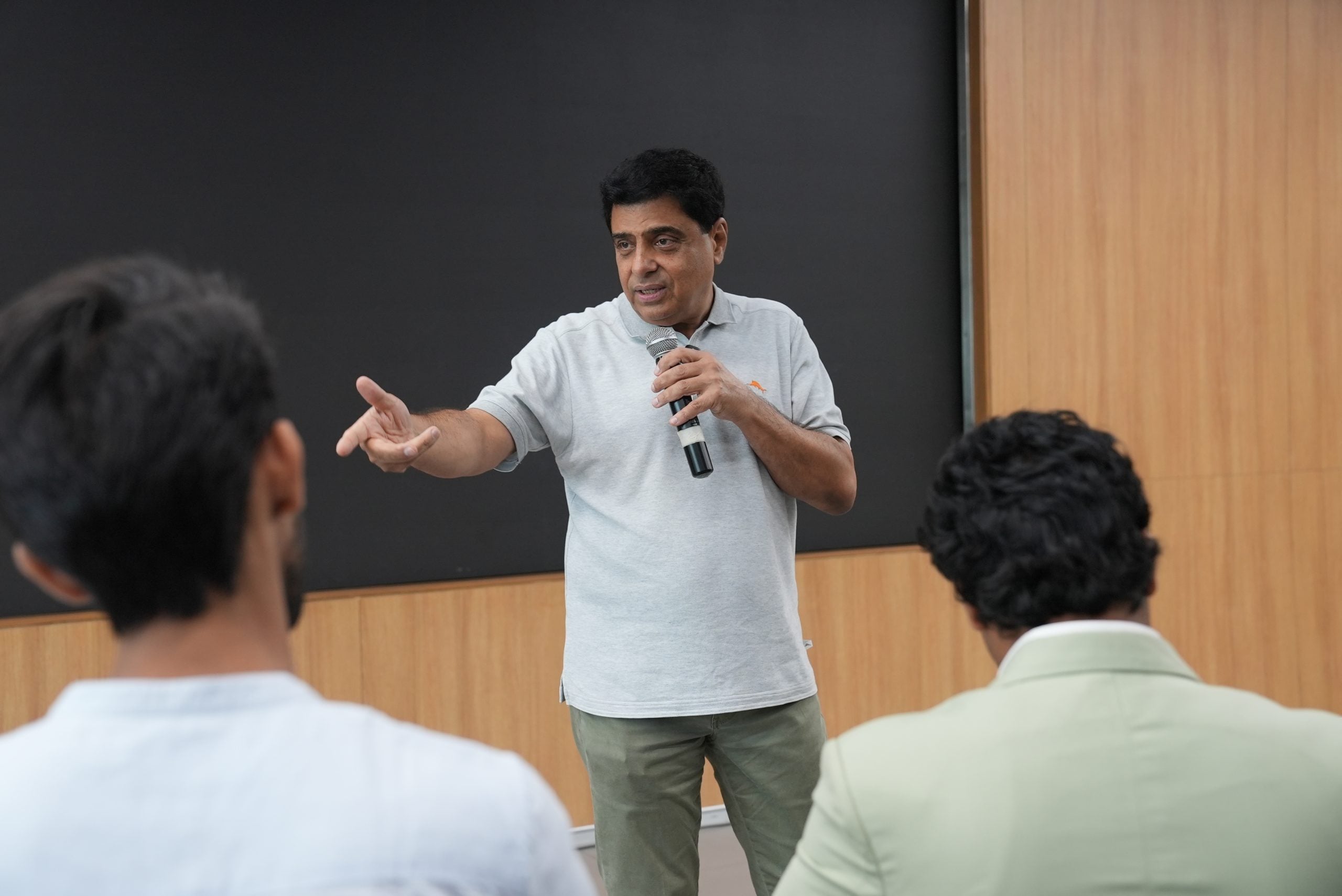
“I got to learn great things from them,” said Agarwal, who did his graduation from Kelley School of Business in the US and returned to India in 2025 to join his family business.
His first real test came in Chandni Chowk, where the brief was simple: walk into the market, find a shopkeeper, and get him on camera talking about his business.
Agarwal, whose own family runs a masala business, picked a dry-fruit seller rather than the more obvious saree or suit trader. Getting him to talk proved harder than expected.
“They just sent us into the market and gave us instructions to make a video, but those shopkeepers didn’t know us. Many refused to talk to us at first. It was very difficult to make them understand what we were doing,” Agarwal said. The first time he pointed his phone at a shopkeeper, the man clammed up.
“He was doing his work, and for him we were like a food vlogger who is just there for views. We had to tell them we are learning business and today you are our teacher; it took a lot of convincing, but we were able to get a few on board,” Agarwal said.
Eventually, the students got shopkeepers talking — where they sourced their goods, how they thought about their business. For Agarwal, it was the opening act of a journey that would take him from a Chandni Chowk market stall to some of the country’s largest companies.
At RSVP, the Mumbai production house, students got a look at the business behind film production, along with Swadesh, the NGO tied to the company — how it engages communities as partners rather than simply handing out money, Agarwal said, and how a whole system gets designed around that. A company representative named Sohail walked them through RSVP’s sports sponsorships — chess, kabaddi — down to where the players’ kits are made, how the sponsorships are structured, and how players are promoted on social media.
At IndoBeers, what stuck with Agarwal was watching how BroCode — a wine-based drink — is packaged and marketed to look and feel like beer, sold in beer-style bottles. For him, it was a clean example of how positioning shapes how a product is perceived by consumers.
At Meesho’s Bengaluru office, the students went deep into the company’s focus on Tier-2, Tier-3 and Tier-4 cities, at a level of granularity — sellers running a business off a single sewing machine — that most companies chasing Tier-1 consumers never bother with.
“They talked about top-of-mind awareness. When you see something, you immediately remember a particular brand. Meesho is trying to do something similar — to create a space for Meesho in the user’s mind. That was one of the themes I really enjoyed,” Agarwal said. The company also walked them through how it judges whether its marketing is working: click-through rates first, and eventually whether that translates into people spending more on the platform.
Infosys, in Bengaluru, was a different kind of visit — students were driven through the company’s township and spoke to a vice-president about AI infrastructure and how Infosys trains people to work together across teams.
Then came Khavda, in Gujarat, where scale itself became the lesson. At Adani’s renewable energy site, solar panels ran to the horizon, wind turbines scattered across the landscape.
“Wherever the eyes could see, there were solar panels and [turbines]. It was a once-in-a-lifetime experience. I would never have gone to Khavda on my own,” Agarwal said. “It was five times the size of Paris. It was almost as big as Bombay.”
Adani plans 45 GW of renewable capacity by 2029, with the company aiming to account for 30 per cent of that itself. But for Agarwal, the site’s location mattered as much as its size.
“The craziest part was that this wasn’t in the middle of the desert. We were right on the border of Pakistan, heavily guarded by the BSF,” he said.
Agarwal isn’t new to travel. He has covered half the US and more than 20 countries, including Germany, France, Italy, the UK and Poland, as a tourist. But he is clear that PGP Bharat’s version of travel was nothing like that.
“It was not a holiday at all. We had to do assignments, we used to get briefs about the history of the company or factory — how Godrej started as a lock-making company and is now six different businesses, making hair colour, air fresheners, household products, and real estate. We got to ask questions about their R&D — they have the biggest R&D [in the sector] — I got the most memorable questions award,” Agarwal said.
Mittal, for his part, said the perception that PGP Bharat amounts to an extended educational holiday is one of the misconceptions he has run into most often.
“People see the travel and the experiences and sometimes think it is a holiday. But it is not a holiday. It is very hectic and very intense,” Mittal said.
For Joshi, the six months eventually circled back to the reel that started it all.
“How can I leave a mark on the world? Unless I get out there first and see it,” the words read on screen, as Mittal moves in the video from markets and shops to factories, mines and businesses, asking people how they learnt what they know.
“I think that line has stayed with me. Whenever I have doubts about what I want to do or where I want to go, I remember that unless I get out there and see the world, I will never know what I want to change or what mark I want to leave,” Joshi said.
(Edited by Prashant Dixit)
You call this ground report 🤣🤣🤣🤣 ground reporting means to expose the weakness and counter narratives and realities of the so called official narrative and claims … Yeh toh PR kar ke aa gayi aapki reporter
Masters union is fraud … It’s evident there’s no criticism of this guy in this article .. it seems the print is desperate to survive
This seems to be a PR article. There is no critical views of MASTERS UNION ??? the reporter didn’t find one student criticizing this private money machine generator of former mithai wala lovely sweets LPU owner’s son … His father is a rajya sabha MP .. this contradiction is not even acknowledged by the reporter nootan ?? An income tax raid on this same guy and then his father flipped to BJP with raghav chaddha … Sote sote reporting kar rahe the .. ya phir paisa khane ke baad ad money leke PR ARTICLE HAI YEH