








Basti: Grief has turned farm labourer Ram Charan (55) into a man of few words. He still works through constant pain in his legs, swallowing medicine and moving forward anyway. But there is one thing that can shatter years of carefully constructed composure.
And it lives in his phone. That’s Homebound, a film made on his son, Amrit Kumar. But he refused to allow himself to see it.
“I won’t survive it. That’s why I don’t even let myself think about it,” he said, as his 14-year-old son Shivam played the downloaded pirated film on his Mi phone a few metres away. Ram Charan kept his distance — smiling less than half now; eyes wet, on the verge of spilling the years of control.
As his son’s story becomes a household Netflix memory, Ram Charan’s life remains frozen in the moment when he received the phone call about Amrit’s death. The family of seven is still reeling from the death of Amrit, the family’s breadwinner, during the Covid crisis, struggling to make sense of the financial and emotional void he left behind. A mother who never lets herself rest, keeping herself endlessly busy with household chores. A father who walks carrying the burden of memory and forgetting. And five children, too young to fully understand the absence of their brother, yet old enough to feel that something has changed irreparably in the family.

The walls of their two-room brick house are bare. Not a single photograph of Amrit hangs. At the doorway, a small portrait of BR Ambedkar signals the only faith that the family of seven has ever known.
When the youngest son played a film scene on the phone — the mother got up and walked away. The only sound left in the room were the long, cold sighs.
The viral photo of the two friends, with one holding the other in his lap, inspired journalist and writer Basharat Peer to write an article, which eventually led to the making of the film.
Homebound centres on two friends, Chandan and Shohaib, whose story is drawn from the real lives of Amrit and Mohammad Saiyub.
“When I finally watched the film, everything was shown so well. I became very emotional seeing the scene where Chandan held Shohaib in his arms, half unconscious. I kept thinking — if only I could have saved my friend, if only I had tried a little harder. But it wasn’t in his fate to survive. Even now, his memories come back, and looking at his photo, I still break down,” Mohammad Saiyub, 24, said over a phone call with ThePrint. He inspired the character of Shoaib in the film.
A different reality
In Devari, a village in Uttar Pradesh’s Basti district, only a handful of people have seen Homebound. Most villagers know only that a film was made about two families from their village. Last November, they were told it would be screened on a large white cloth in the village square. The promise has been deferred once again, now to March 2026.
Many say the film is still unfinished, or perhaps not released at all. Even knowing that the film has reached the Oscars has barely been registered — those distant milestones feel abstract, disconnected from their daily life. Even the village sarpanch had no idea about the film, while one villager who works in Noida downloaded it the day it was released and shared it with a few people in the village.
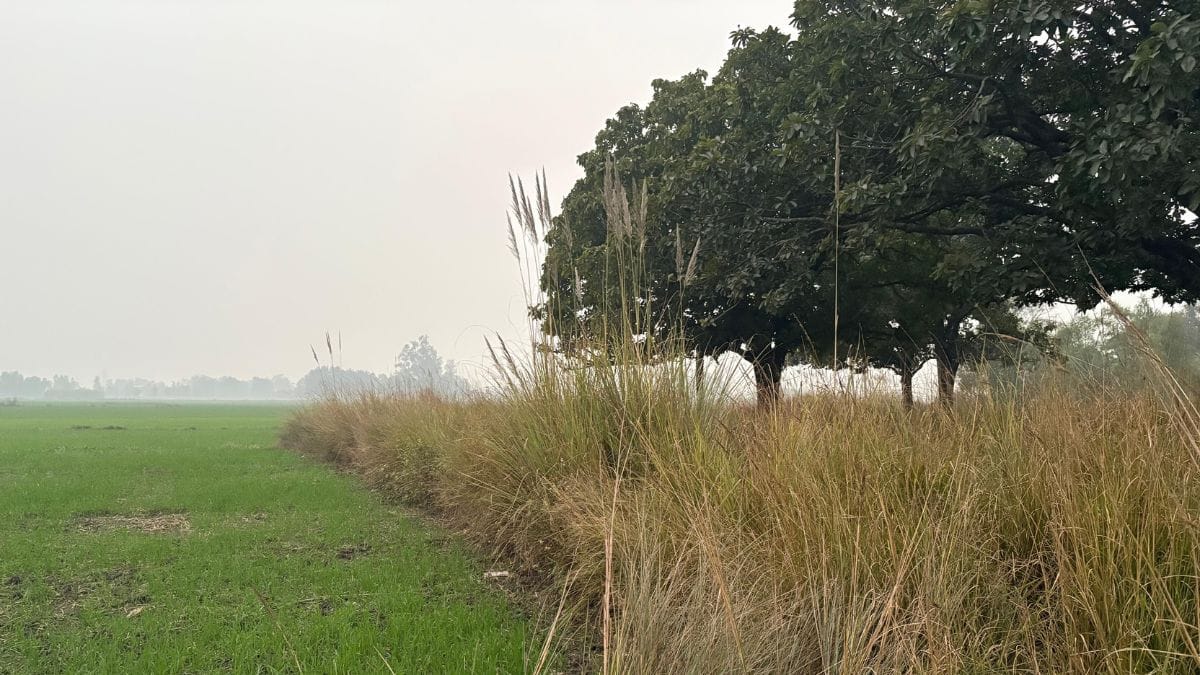
The village, which has roughly 700 residents, mostly Hindu, is a patchwork of brick and mud-and-hay houses. Bamboo groves and sugarcane fields dot the lanes. Farmers mostly grow paddy, wheat, sugarcane, and pulses here. And electricity in the village cuts out three to four times an hour.
Posters of Ishaan Khatter and Ananya Panday’s Closeup ad are plastered around the village — what some might call a clever marketing strategy to gain from the popularity of the film. But it is a lost effort, since most villagers haven’t seen the film.
“These posters have just been up for a while. They were put up a few months ago,” said one villager.
On screen, Chandan and Shohaib are given ambition and possibility — young men preparing for government jobs, dreaming of becoming sipahi, and imagining lives beyond the limits they were born into. The film is hopeful, telling its viewers that wanting more is neither unnatural nor wrong. However, the reality was a bit different.
Amrit and Mohammad Saiyub never prepared for government examinations. Both left school after Class 8 and went on to work in a Surat factory manufacturing cloth and saris.
Saiyub, now working as a construction labourer in Dubai, has not returned home in three years. Thousands of kilometres away from Devari, he watched the film with three friends.
“Amrit and I honoured our friendship with everything we had. Now he’s gone, and a film has been made about us. But the loneliness of his absence never leaves. That ache stays with me, and it always will,” said Saiyub.
‘Something always feels missing’
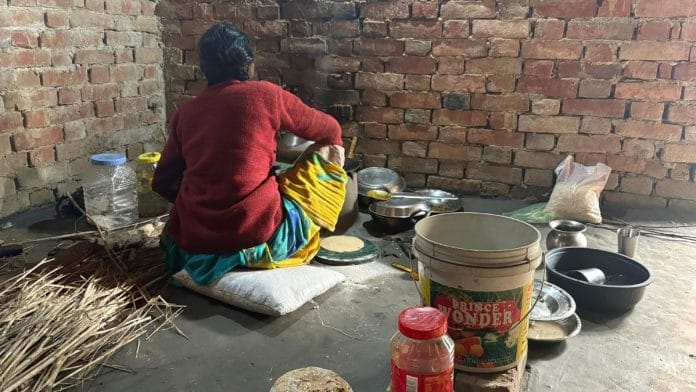
In the chill of a winter morning, Subhavati (40), Amrit’s mother, sat in front of a handmade clay stove, making parathas for her children. The girls had requested them — it was the first day of their winter holidays. Firewood lay stacked beside the small stove. Shivam, her youngest, ate capsicum and matar sabzi with roti, saying, “Zabardast bana hai (This tastes amazing)”, making his mother smile faintly.
The kitchen is a new addition in the small hut built just four months ago, with a hay-and-bamboo roof completed only a week earlier, opposite their home.
Earlier, the kitchen was in one of the rooms inside the house. It now lies unused. The remaining rooms hold little more than a steel drum of flour and a gas stove that is almost never lit.

“We buy the vegetables on credit. And when we have the money, we pay for them,” said Suman, studying in the 8th grade at the nearby government school. She dreams of becoming a police officer someday. “It will help my parents to run the house”.
Her mother hid her grief in constant motion —making cow dung cakes, sweeping the courtyard, and tending to chores that never seemed to end. At 40, Subhavati already looks older, her feet cracked and worn — an image the film would later turn into a defining part of her identity.
“Everything is in place but still something always feels missing,” said Subhavati.
Shivam finds moments of joy in small acts — making reels with his friends. In the reels, he walks to Bhojpuri bangers, wearing sunglasses, occasionally doing a dance step or two. He then runs to show them to his mother, thrilled when she calls him a “hero”.
Ram Charan and Subhavati’s income is precarious. They work as farm labourers for only two to three months each year. They have a cow, whose milk feeds the family, though most of it is sold to neighbours.
“Back in 2003, the government gave us this land. It was barren, and they gave such land to those without property to look after it. After 10 years, official documents have to be made. If everything is fine, the land becomes yours permanently; if not, any local head can take it. Two to four years ago, we asked the local clerk to register it, but they asked for a Rs-40,000 bribe before it could be done,” Ram Charan said.

On that small plot, the government provides them a monthly allowance of Rs 2,000, which he called the only regular income for the family’s expenses.
Ram Charan wakes at 4 am, bathes, lights a diya before a photo of Ambedkar, and is out wandering by 5 am. “No matter the pain in my legs, I can’t sleep, can’t sit still. I’m always moving,” he said.
To keep the household afloat, Ram Charan sent underage Shivam to Surat last year for a month to stay with his elder sister and her in-laws, hoping he would experience life beyond the village and contribute financially. But Shivam wanted to spend more time with his friends in the village and soon returned.
“Bhai doesn’t study anymore. He stopped school after 8th grade. Papa will send him again in January, so he can work and help with expenses,” Suman said.
The patterns in Devari are familiar. Most boys leave school after 8th grade to find labour jobs across India. Shivam’s next-door neighbour works in Noida, another in Mumbai, and one in Surat, while a few others stay back to run small businesses like a SIM card shop. Girls, meanwhile, stay at home, helping their mothers with household chores until the family begins arranging their marriages.
Also read: India is reviving gazetteers minus the colonial lens. Moradabad is leading the way
A study in contrast
Subhavati welcomes her guests with water in steel glasses and a small bowl of gud (jaggery), a winter staple in Uttar Pradesh’s sugarcane belt. The family worked hard, surviving on whatever came their way, until Amrit’s death shattered their balance.
Amrit’s best friend’s house is a study in contrast. Here, visitors are welcomed with a big tray of biscuits, namkeen, dry fruits, and sweets, with water served in tall, clear glasses with fine lined patterns. Saiyub sends between Rs 15,000 and Rs 20,000 home each month.
They live in a joint family. Their section of the house has three unpainted rooms, while Saiyub’s father, 60-year-old Mohammad Unus, spends most of his time lying on a bed out on the veranda.

He has three sons, each earning between Rs 25,000 and 30,000 a month, just enough to keep the family afloat. But Unus himself can barely move. Arthritis has made even shifting in bed painful, and he relies entirely on his wife’s help.
“I’ve been taking Ayurvedic medicine for months. The doctor says I need surgery, but we can’t afford it,” he said, taking his hands closer to the fire for warmth as smoke curled around his face.
Saiyub’s elder brother, Suhail, has spent some years of work and life with the two friends in Surat — cooking together, labouring side by side. Now, he takes painting tenders in the village and nearby areas and travels by his bike. Before this, he had been in Mumbai learning POP work, traveling from city to city as a migrant labourer. Even today, his work comes only in short bursts, never steady.
Suhail hasn’t watched the film yet. “When it comes on YouTube, I’ll show it to the whole family,” he said.
Also read: Kolkata’s Priya Cinema is a bhadralok bastion. Shows Satyajit Ray to Dhurandhar housefull
An ‘ordinary’ friendship
Amrit used to love watching films on his phone, but Saiyub would often stop him. He recalled scolding him sometimes, asking him to focus on the work at hand rather than the screen.
“If he were here today and knew a film had been made about him, he would have been overjoyed,” he said.
Whenever he visits his village, Saiyub always goes to Amrit’s house and Amrit’s mother still calls him “Chunnu.”
Neeraj Ghaywan, the director of Homebound, had spoken to Saiyub at length during the making of the film and “ensured both families were compensated generously, to their satisfaction.”
While the film depicted their friendship as ordinary, one scene — a cricket match among villagers — showed Shoaib being subtly ostracised, made to feel he didn’t belong because of his religion: “Apne logon ke sath jaake khelo, yahan aane ki zarurat nhi hai (Go play with your own people; there’s no need to be here).”
Yet their friendship never seemed extraordinary in the film — just as it had always felt in real life.
Saiyub and Amrit were only four years apart and had practically grown up together. Amrit had left for Surat six years before Saiyub, but whenever he returned home, they would take long walks to the nearby chai shop, talking for hours.
It was only with time and distance that Saiyub could fully articulate what that bond meant. “Before anything else, see the humanity in each other,” he said. “Religion or caste comes later — humanity comes first. If we face life together, it becomes easier.”
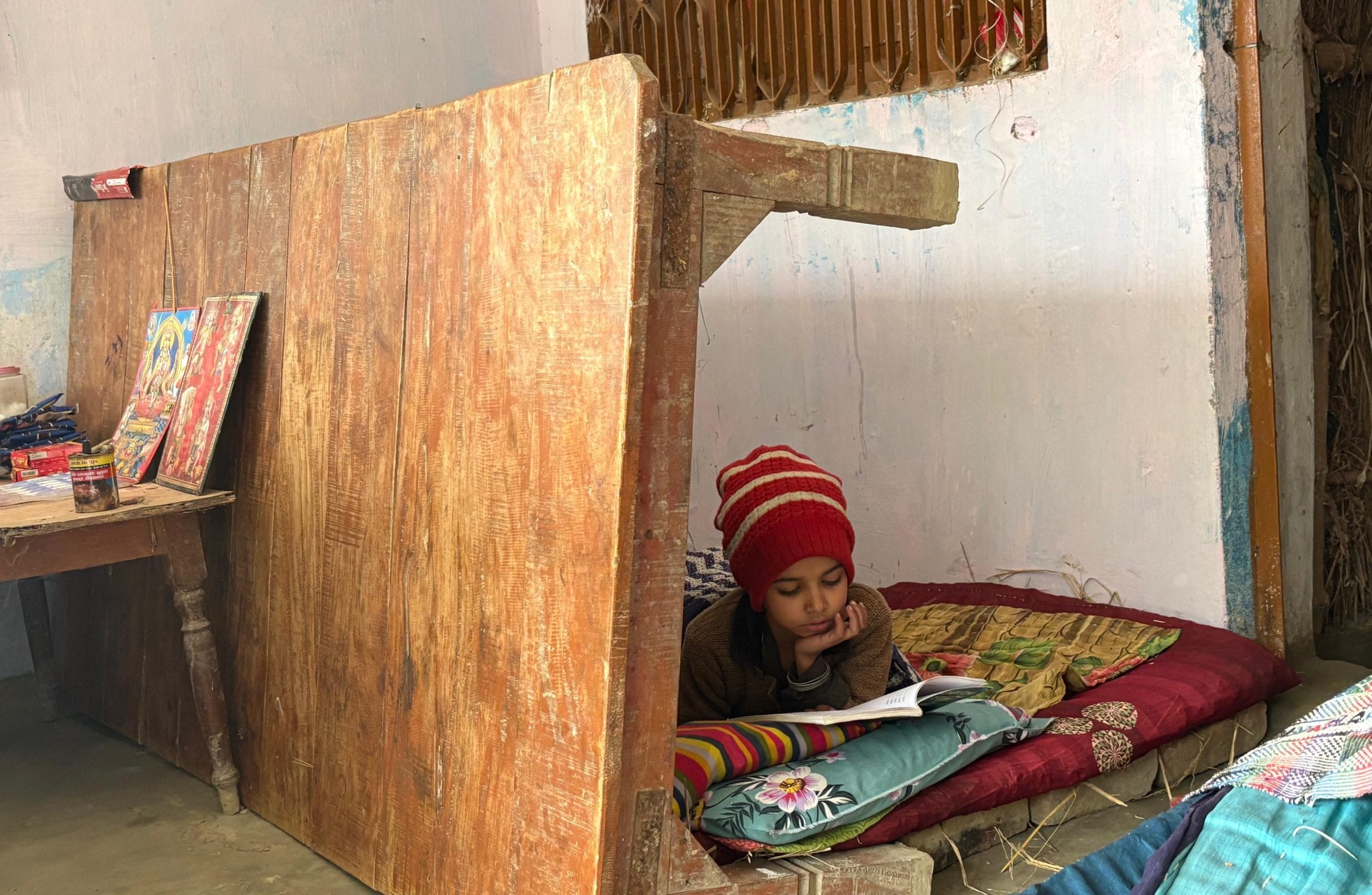
Back at Amrit’s home, a passing reference to the past can break the silence the family now keeps around his death. They no longer speak of him. When they do, Subhavati cannot bear it.
She sat on the front porch, her eyes moist with tears. She wiped them with the edge of her saree again and again. Beside her, her youngest daughter, Shivani (9), read aloud from her Hindi school book, “Jab vo ek kekda upar aane ki koshish karta.”
“When I die, that’s when I’ll be able to forget him,” Subhavati said quietly. “If my son were alive today, he would have earned well. He would have taken such good care of me.”
(Edited by Aamaan Alam Khan)