





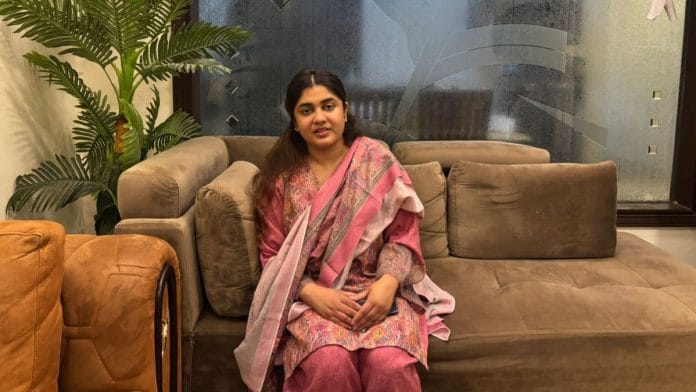



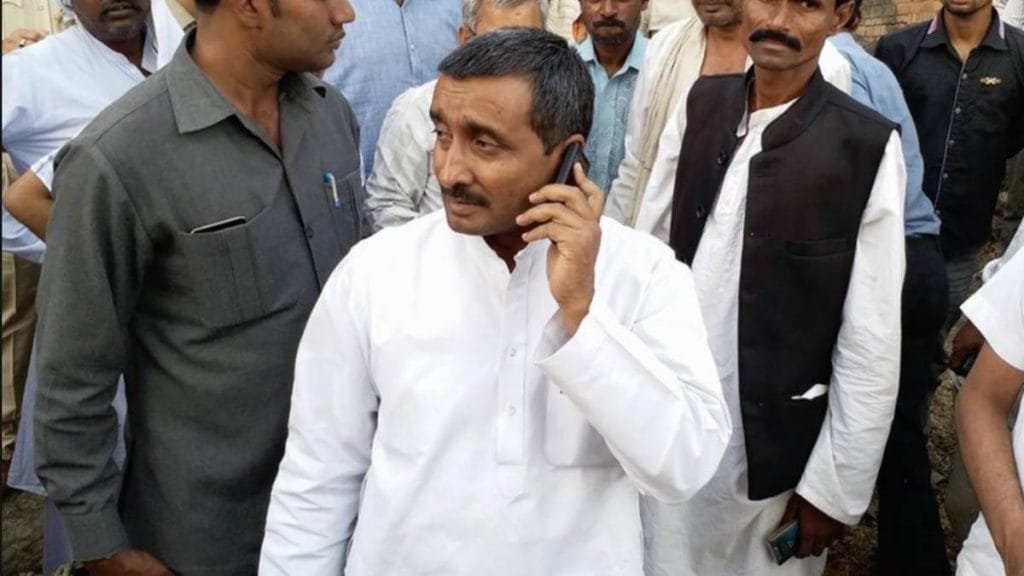
New Delhi: Every morning, before tea or court, Aishwarya Singh Sengar opens X. Abuse comes first — rapist’s daughter, murderer’s family — then, questions she has learnt to stop answering. Since her father and former BJP MLA Kuldeep Singh Sengar’s conviction in the 2017 Unnao rape case, Aishwarya has lived a goldfish life. Back in college, whispers and cautious questions followed her around: “What did your dad do?” Eight years later, Aishwarya — now a lawyer and her father’s fiercest defender — still begins the day checking whether the world has moved on from her surname.
“I am a feminist. I believe in equality,” Aishwarya, 28, said, sitting upright on the sofa in her rented south Delhi accommodation; her father’s case files scattered around the room. In the same breath, she insists on her father’s innocence, then quickly adds, “Let’s leave it to the courts.”
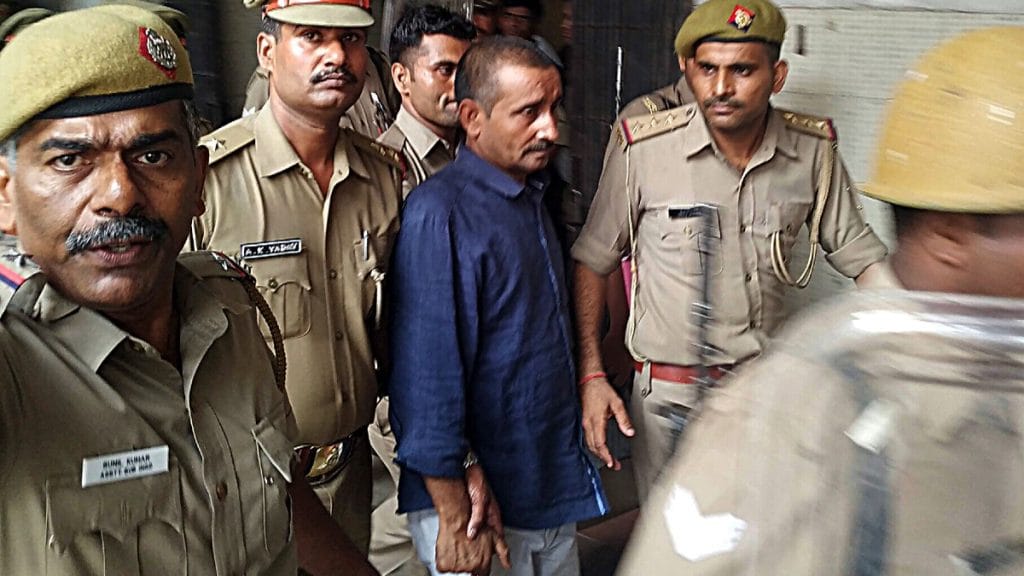
Aishwarya’s father Kuldeep Sengar was convicted in 2019 of rape amid swirling support of family, politicians, and activists, much like other high-profile cases of self-proclaimed godmen Asaram Bapu and Gurmeet Ram Rahim Singh, and the perpetrators of the Kathua gangrape case. His life sentence was suspended on conditional bail by the Delhi High Court over legal loopholes but the Supreme Court stayed the order.
Sengar now has a formidable female defender. His own daughter.
Over the past year, Aishwarya, a Delhi-based lawyer, has deliberately stepped into the spotlight, giving interviews, releasing court documents, questioning the prosecution’s evidence, and consistently referring to the survivor as a “complainant”.
She insists that her intervention is rooted only in law, not emotion. Yet her public campaign focused on alleged inconsistencies in the survivor’s account has found growing support from men’s rights activists and has reopened deep fault lines around power, privilege and credibility in one of India’s most politically charged sexual violence cases. She fights to reclaim her father’s name, and is also trying to salvage a sense of self that, she says, has been flattened by eight years of public suspicion, online hostility and “gaps” in the investigation.
Coming to her rescue is a parallel online world of Reels and YouTube influencers. Their only job is to sow seeds of doubt in the public’s already made-up minds.
Both sides of the Sengar case have women’s indelible pain. One is the Unnao rape survivor, the other is the convict’s daughter’s burden.
“I am scared of the Rs 20 bottle that can ruin my life any day,” the survivor said, referring to acid attacks. “Today jawans are getting killed, cars are getting bombed. How do I know I’m safe?”
Miranda House and isolation
In 2016, Aishwarya arrived in Delhi from Lucknow to study philosophy at Miranda House. North Campus was a world of rickshaw rides, crowded cafes, photocopy shops, and long walks between lecturers. She lived in a small paying guest room in Kamla Nagar, minutes away from her college. Two single beds pushed against a wall, a study table heaped with books, and a small temple tucked in a corner.
In 2017, when the news broke that her father had been arrested on rape charges, Aishwarya says she did not fully understand what had happened.
“I made frantic phone calls to everyone I knew,” she recalled, twiddling her thumbs. “First, the UP police, then the CBI, and then, everything happened very fast.”
What she remembers clearly is how her surroundings changed. The college campus now began to feel unfamiliar. Classmates stared and questions followed her into corridors in classrooms.
Eventually, Aishwarya stopped attending lectures.
“There was no escape,” she said softly. “I didn’t have answers. I didn’t have it in me to face people.”
She began spending most of her time inside her room, scrolling through legal updates, television debates and social media posts, trying to understand events unfolding hundreds of kilometres away.
Days started to look blurry. She isolated herself, didn’t leave her bed, skipped meals, remained glued to her phone, even as returning to Unnao felt impossible, but so did staying in Delhi. Her PG room became her hideout.
Aishwarya never planned to become a lawyer. She was preparing for the civil services.
“My chacha (paternal uncle) was looking at my father’s case, but since he was a Hindi speaker, he wouldn’t understand the English paperwork,” she said. “I took it on myself to understand the complicated terminologies that my family struggled with.”
UPSC manuals were replaced by FIR copies, IPC sections and court orders downloaded from legal websites.
“I used to sit in court and feel, maybe I should understand something. What are the charges? What is the evidence? Why are they denying this?” Aishwarya said.
After her father was convicted in 2019, she enrolled in law.
“I was happy studying philosophy,” she said. “But I needed to know what was happening.”
She missed her UPSC Mains examination that December.
A familiar scenario
Before every court hearing, a familiar scene plays out on Aishwarya’s social media. Old clips of her father, new abuse, screenshots of her earlier interviews edited into reels and pushed back into circulation whenever there is a hearing, and sometimes, the occasional support.
“Your father is a rapist-murderer. You should be ashamed of yourself. Dirty dog,” reads a comment on X, under one of Aishwarya’s posts. Her private Instagram account also has several such remarks tucked away in her message request folder.
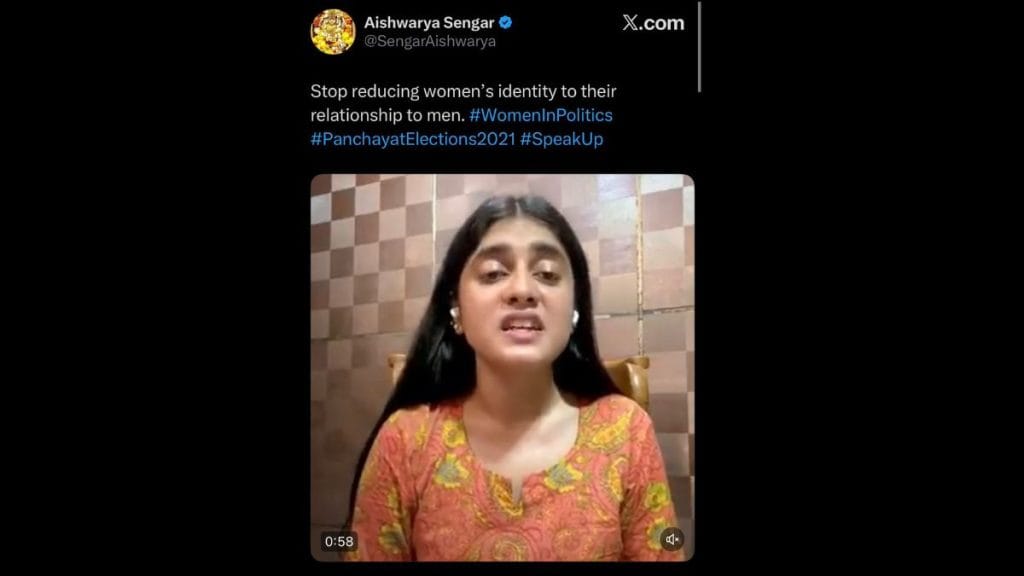
Her profile photo on X is of Goddess Durga, and the quote on her cover photo begins with: “There is strength in numbers.”
All her posts on X are about her father Kuldeep — court orders, arguments, screenshots of legal documents, videos from hearings. There is no attempt to curate a personal life. There is only the case.
“You want to know what people are saying before you step outside,” she said.
On her way to the Delhi High Court, she books an Uber. She avoids the metro. “It’s scary,” she shrugged. She admits she has had to retreat from the online and offline threats, and stalkers sharing her private information online.
As Aishwarya scrolls through legal updates and messages on her way to the court, she sometimes rehearses what she might say if reporters approach her. Over the last year, she has become visible publicly, giving interviews to reporters and TV channels after the survivor went public with her account.
“It was very scary in the beginning,” she said about facing cameras. “I had never done anything like that. But I felt I had to speak. I didn’t want people to later ask me why I stayed silent.”
Her appearances seem measured, and sometimes rehearsed, and stitched together with paperwork and legal language that often courts controversy.
At the court, stares from lawyers are not new for her. The same stares from she was a 19-year-old, still linger.
“They (the stares) disgust me. But this is routine now,” she said. “Everything has become about dates, hearings, and orders.”
Experts say Aishwarya is torn between two identities.
“She has lived two lives. One of them is a lawyer, who is fighting her father’s case. The other is the identity of her father’s daughter, who has been a controversial political figure,” said Rajat Mitra, a clinical psychologist. “It is not contradictory for them. It is not wrong, it is not hypocritical. Their personalities coexist.”
Also Read: Welcome to justice in India. Rules are different for Sengar, Asaram, Akhlaq’s killers
A support base
When the Unnao rape case made headlines, men’s rights activist Deepika Narayan Bharadwaj had demanded the death penalty for Sengar on X. Soon after, Aishwarya emailed her with a tranche of documents and an appeal: that she read them.
Deepika pulls out her phone and scrolls through messages, recalling when she first spoke with Aishwarya. It was August 3, 2019. Their exchanges continued through court dates and personal messages.
“I saw bachcha (Aishwarya) as who she was, not just as Sengar,” she said. “She kept asking how things were going, what the next court date was.”
Deepika believes Sengar is innocent. “After I read ‘facts’ of the case, I understood the fallacies,” she said. Aishwarya has others in her army of supporters, mostly from the Sengar family.
For Antranjay ‘Goldi’ Singh, 24, who grew up with his bade papa (elder uncle) Sengar, and now stays with Aishwarya, words like “Twitter” and “Facebook” became part of the conversation after the case began.
“When the ‘farzi (fake) case’ started, we got to know there is a world beyond Lucknow. We saw people abuse the first time, I saw my sisters cry. Back then, me and my cousins used to respond to every single message, comment on social media posts, but slowly, we stopped because it took a toll on our mental health, and nobody was ready to believe us,” he said.
The law student from Lucknow University, is helping his “mazboot (strong) sister” Aishwarya with the case which he calls a “mistrial”. “He was imprisoned wrongly,” he said.
Then there are other backers from Unnao.
Anand Singh, a CA final year student, was just a year old when Kuldeep Sengar became Unnao Sadar’s MLA back in 2002. Growing up, Singh had seen Kuldeep’s face across all major chokepoints in the city.
“Growing up, we heard a lot about Sengar. We saw headlines from 2017 that said: ‘Kuldeep Singh giraftaar (arrested)’. The town did not believe it,” he said.
“This was the biggest talking point in the city. In Unnao, the sentiment has always been to defend Sengar,” Singh said.
In 2020, Singh joined X, and the first account he followed was Aishwarya’s. He wanted regular updates on the case and all his posts are about Sengar.
“Aishwarya has held this case from the beginning, and today, if they require 50,000 people to protest, we’d be able to gather for them,” he said.
A ‘privileged’ upbringing
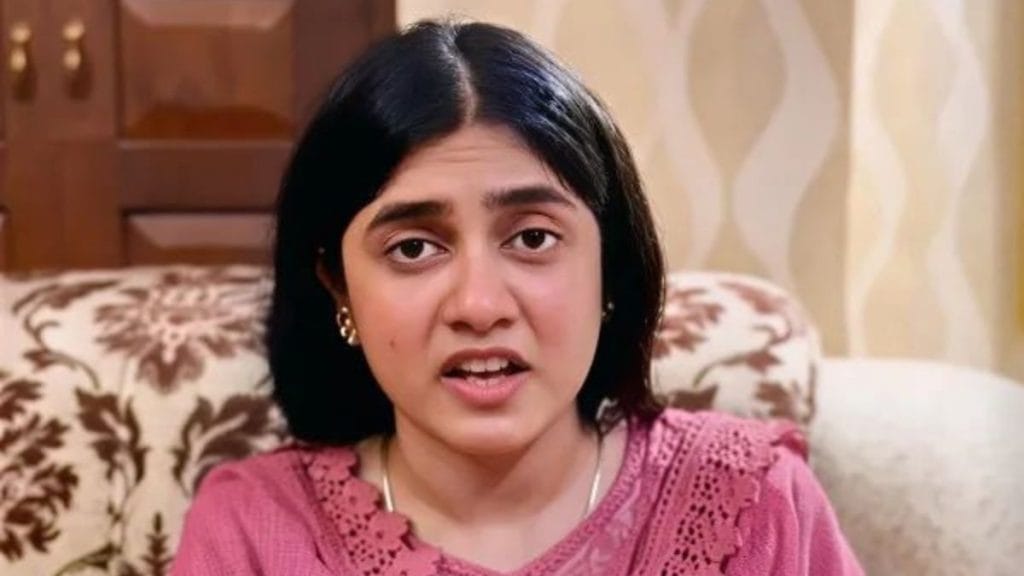
At every family gathering, Aishwarya and her sister Ishita, the “laadlis” of the Sengar household, were asked only one question by Kuldeep Sengar: “What will you become when you grow up?”
The answer was rehearsed. One would be an IAS officer; the other, a doctor.
Both Aishwarya and Ishita grew up in what they describe, a household where there was no gender discrimination — a “privileged” upbringing, with equality.
Aishwarya says her feminist beliefs come from a childhood shaped by strong women, like her grandmother and mother. In her house, women have always had an equal say, especially on education.
She insists “genuine” survivors of sexual assault deserve justice, but maintains that her father’s case is not the same.
“I don’t intend to undermine survivors or dismiss sexual violence, I too have faced harassment online and in the Metro, but this case is different,” she said.
She says her use of the word “complainant” for the survivor reflects legal language, rather than her personal judgement. That choice has become one of the sharpest points of criticism against her. The survivor notices it too.
“She uses words I barely understand,” the survivor said. “But at the end of the day, she is a woman. I fail to understand how she manages to defend it.”
Since the incident, the survivor says she has lived her life in fear. She claims none of the witnesses have any security and everybody has fought the case on their own, and lived a life in fear. “I will fight this case till the end of it,” she confidently said.
For Aishwarya, her feminist principles and her stance for her father do not cancel each other out.
“My loyalty to family and belief in women’s rights exist in separate, but parallel spaces,” she said.
Clinical psychologist Rajat Mitra says such internal tensions are not uncommon.
“There is often a conflict between the socially defined role of a daughter. She is loyal, protective, and an ideological identity shaped by education and exposure,” he said. “But these identities are not necessarily mutually exclusive for the person living them.”
Aishwarya’s ‘gaps’ in the case
Armed with neatly stacked court files and highlighters, Aishwarya readies herself to face questions from journalists on what she claims are “gaps” in the investigation. Most of her interviews revolve around the rape survivor.
“The survivor has changed the timing several times, first it was 2 pm, then 6 pm, and finally 8 pm,” Aishwarya said, pointing to medical and technical “inconsistencies” during proceedings.
Alibis, contradictory call records, even the survivor’s age – Aishwarya’s list of “gaps” goes on.
“The timing recorded in the case is wrong, evidence shows my father was present somewhere else,” she told a reporter. But they grill her, almost immediately.
“And what about the survivor’s father? Relatives and even a lawyer’s death? For you it must be a coincidence?” someone asked.
Also Read: Custodial murder to conditional bail–a timeline of the Unnao rape case
The survivor’s father died in custody in 2019 allegedly after being assaulted by Sengar’s supporters inside Unnao Jail. Sengar’s brother has been jailed for ten years in the case. In July 2019, when case proceedings were on, the survivor was critically injured in a car crash when her vehicle was hit by a truck. Two of her aunts were killed, and her lawyer suffered serious injuries. The CBI later said that it was a deliberate attempt to kill her.
For Aishwarya, the legal chronology is memorised. For the survivor, the aftermath has not ended.
“I have been threatened enough, abused enough, misbehaved with enough, and have seen enough deaths to come to this stage, where I am facing the media and telling my story,” she said.
Aishwarya expresses no grief for the survivor’s family and rejects the label of a “rape defender”. “My stance comes from a place of loyalty and is based on facts and evidence in the case.”
“We have a very good case,” Aishwarya tells a reporter confidently. She keeps circling back to the same, rehearsed lines.
‘Surname feels heavy’
Aishwarya chose law due to her circumstances. But even if the case ends now, she will choose law, and won’t go back to her original dream of UPSC. The courtrooms that were intimidating once, have now become too familiar. Much of her identity is tied to her role as her father’s defender but she wants to be seen as more than that — more than a daughter, a sister, or a lawyer.
“My surname feels too heavy. My identity has been reduced to one label. I am just Kuldeep Singh Sengar’s daughter,” she said.
But on most days, Aishwarya wishes she never had to make that pivot. The case has taken a toll on her mental health. There were days when she did not leave her bed, could not move, could not imagine a normal life.
“I still have days when it feels like too much,” she said. “I don’t want to go to court. I don’t want to read another legal paper. I just want my normal life back.”
The survivor, who has watched Aishwarya’s interviews lamenting about her law journey, has a different takeaway.
“The ‘consequences’ destroyed my life,” she said. “But she became a lawyer. I couldn’t even become a daroga (cop). I couldn’t even get a job. So who is privileged?”
(Edited by Stela Dey)