








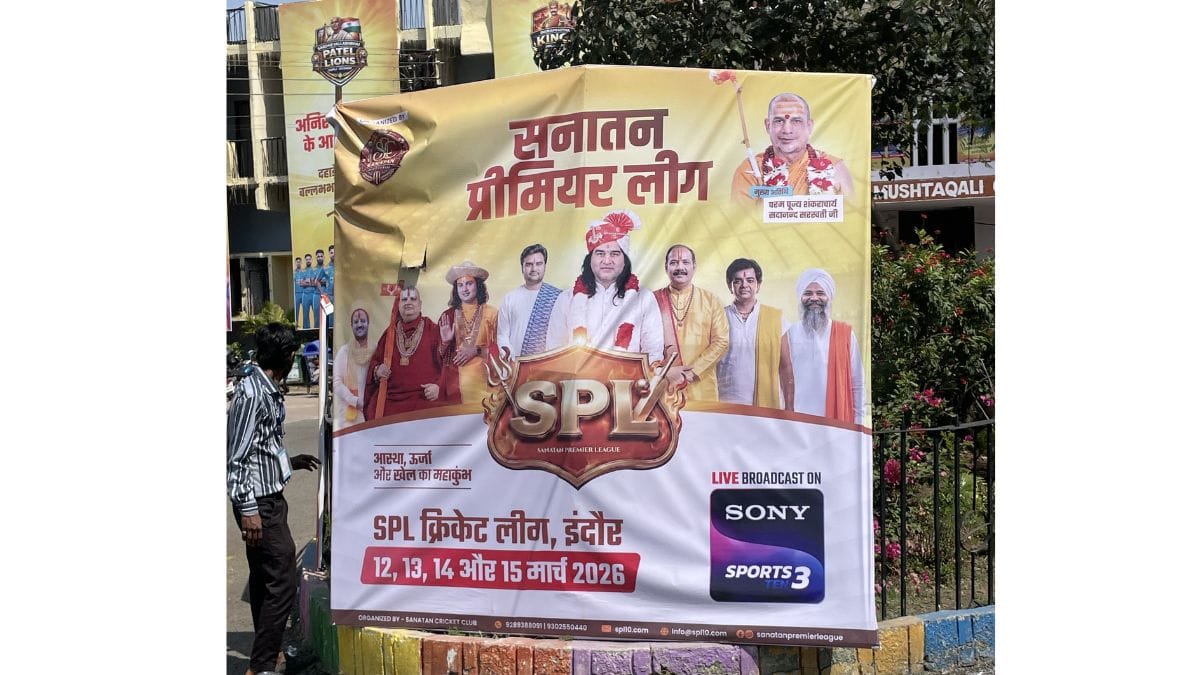
Indore: Cricket in India has been shaped by state associations, private leagues and corporate money. Now, a spiritual leader has entered the field—Instagram’s favourite, Devkinandan Thakur. The Sanatan Premier League is a marriage of two things he holds dear: Cricket and Sanatan values.
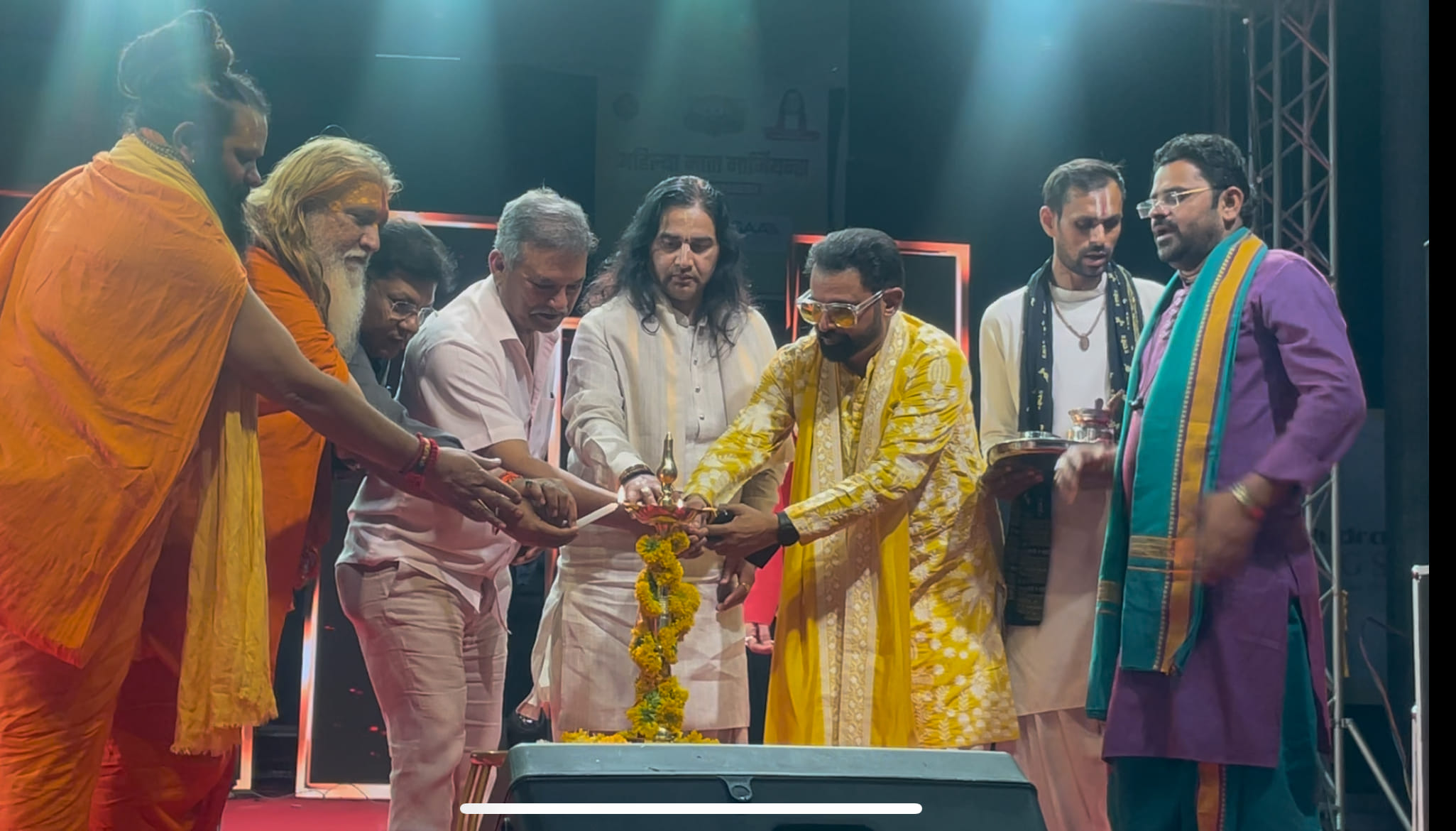
“Who says cricket was invented by the British? Our Krishna ji played it first. It is our game. And now his children will play it too,” Thakur announced at the inauguration of the first edition of SPL on 12 March at Indore’s Jawaharlal Nehru Stadium.
The inauguration was attended by Madan Lal, the league’s commissioner and former India cricketer, and fast bowler Chetan Sharma, who is a commentator for the tournament. Participating players and around 100 curious spectators were also present.
Unlike the glitzy openings commonly associated with tournaments such as the Indian Premier League (IPL), the Sanatan Premier League focused on patriotic themes. Several dance groups from Mumbai staged performances depicting episodes from India’s freedom struggle, including the life and sacrifice of Bhagat Singh, as well as tributes to the bravery and sacrifices of Indian soldiers. Tennis-ball cricket, usually confined to gullies and local grounds, has suddenly found a national stage, with matches being televised live on Sony, hefty prize money on offer, and rewards ranging from cars to motorcycles. In its first edition, SPL is valued at Rs 140 crore, according to Antriksh Rana, founder of Evolve, a wellness and nutrition brand and one of the sponsors of the league.
The SPL is a three-day T10 tennis ball tournament, with each match lasting about 90 minutes.
The eight participating teams draw their identities from historical warriors and freedom fighters—Rani Lakshmibai Strikers representing Uttar Pradesh, Chandra Shekhar Azad Thunders from Uttarakhand, Sardar Vallabhbhai Patel Lions from Gujarat, Maharana Pratap Ranbakure from Rajasthan, Dravid Chola Rockers representing all of south India, Chattarpati Shivaji Warriors Maharashtra and Ahilya Mata Guardians from Madhya Pradesh.
Rajasthan, Maharashtra, Madhya Pradesh and Gujarat made it to the semi finals.
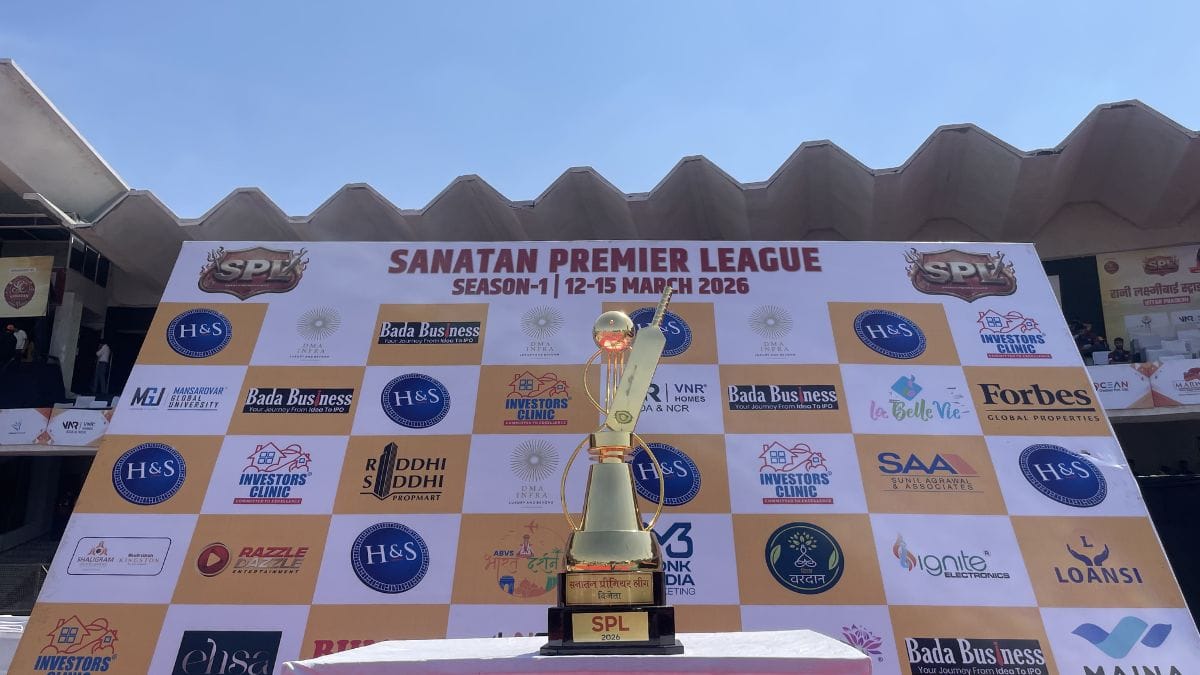
A total of 22 MSME brands of wellness, infrastructure, media entertainment, such as Forbes Global Properties, Aravali Infratech, Loansi, and Evolve, are associated with SPL. Huge banners of SPL and its sponsors are slapped in every nook and corner of the stadium.
Antriksh Rana, who is also the owner of the franchise Sardar Vallabhbhai Patel Lions (SVPL Gujarat), said, “This is just the beginning. It’s just the trailer. The film will come next year.”
He claims that next year onwards, big corporations like Reliance are also going to be associated with SPL.
The buzz of the inaugural edition of SPL was amplified by the presence of big names such as former India cricketers Suresh Raina and Piyush Chawla, wrestler The Great Khali, actor-turned-politician Arun Govil and Rajiv Shukla.
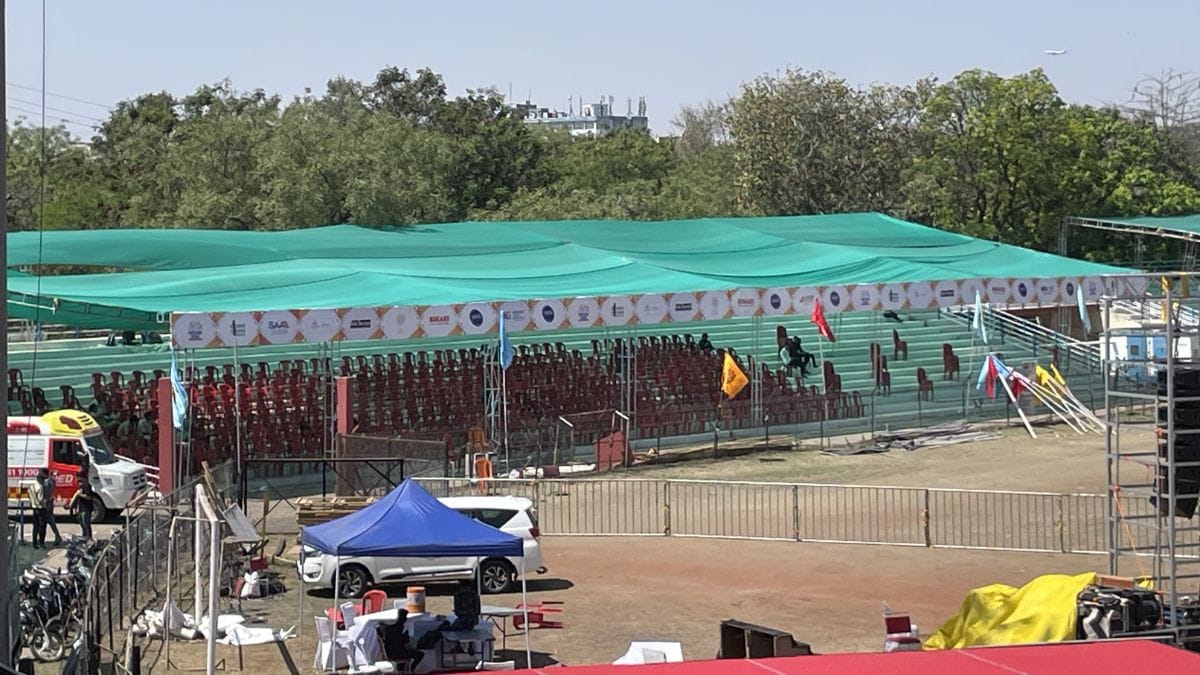
But the stands at the league games, despite free entry, have remained largely empty so far.
Not a league
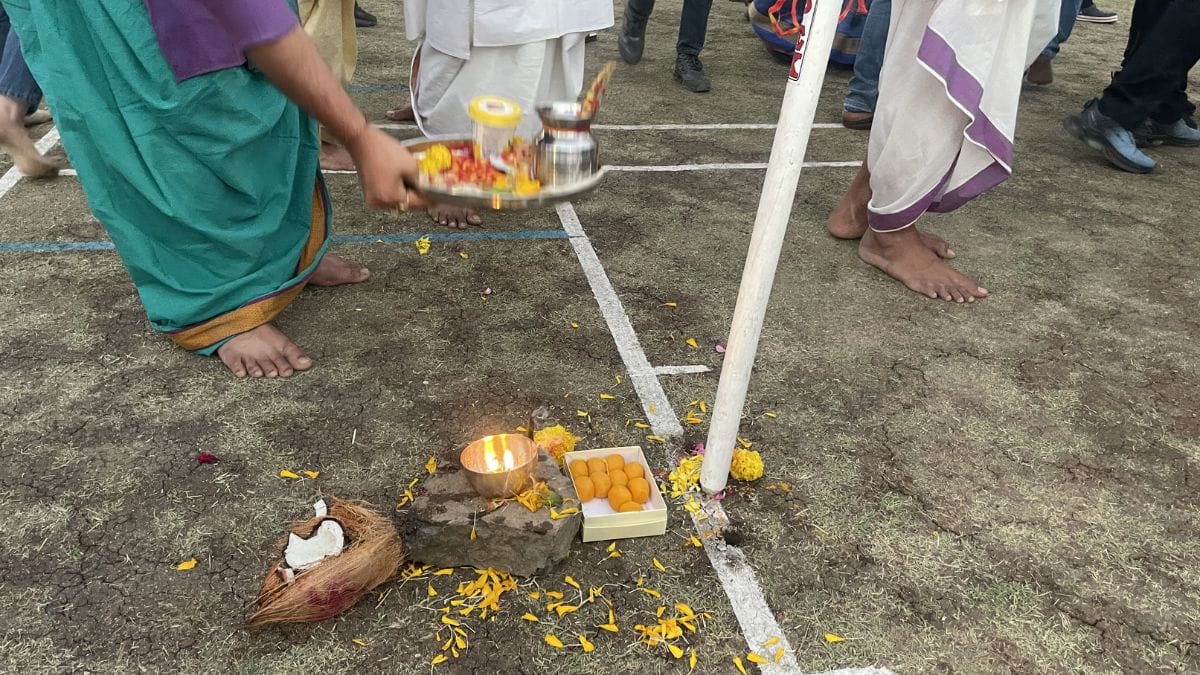
“As a spiritual leader, my role is to provide young people with two things, the right direction and the right platform,” Thakur told ThePrint, after performing a small ritual at the pitch for the SPL’s success.
“I asked the players to make a promise that they would never touch alcohol. My hope is that players emerging from the SPL will go on to play in the Indian Premier League and for India.”
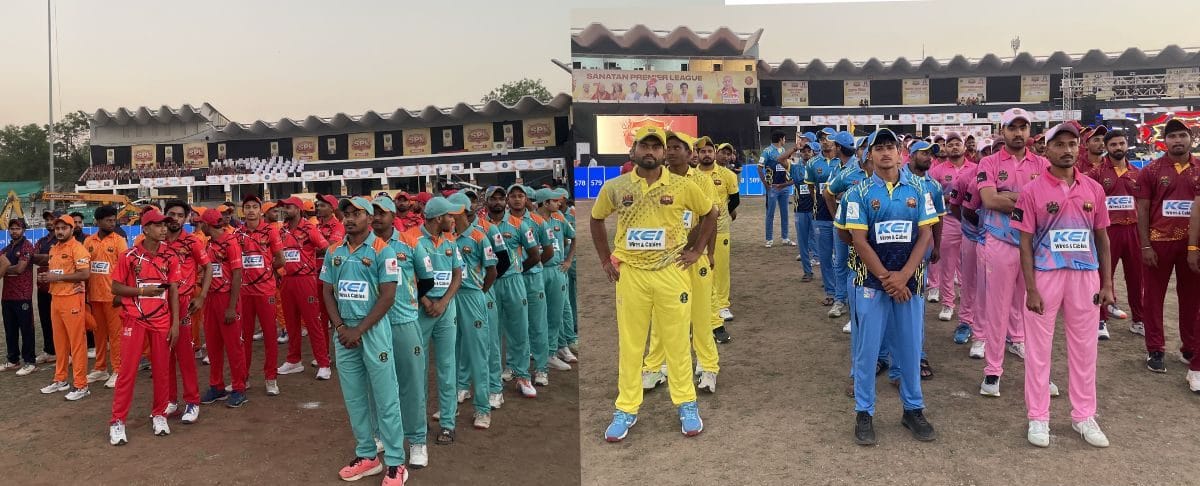
If Thakur is the spiritual force behind the Sanatan Premier League, then a group of well-known spiritual orators and gurus are the ‘poster boys’.
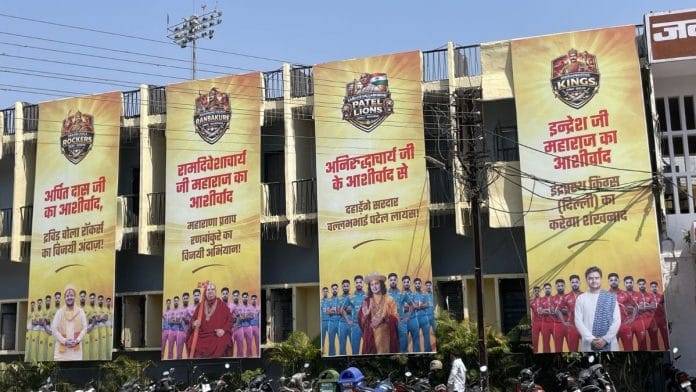
Aniruddhacharya, Sant Trilochan Das, Chinmayanand Bapu, Arpit Das, Ram Dinesh Acharya and Indresh Upadhyay have been positioned as the brand ambassadors of the squads. The big posters stationed outside the stadium feature them at the centre, with AI-generated team backdrops placed behind their images.
Ttheir involvement goes beyond promotions. The gurus are also expected to step onto the field themselves. After the semi-finals and before the final, the schedule sets aside a 90-minute slot for a special exhibition game titled the “Maharaj’s Unity Warm-Up Match,” where the spiritual leaders will try their hand at batting and bowling.
Thakur had already showcased his batting prowess on 13 March, when he took on The Great Khali in a friendly one-on-one match, sending the ball sailing across the ground with a few powerful hits.
Thakur grew nostalgic while describing the league. It was a full-circle moment for him. He recalled how, as a child, he was scolded by his father for buying a black-and-white television set, simply because he wanted to watch cricket.
“I just wanted to watch the game,” he said. “I have seen legends like Kapil Dev and Sachin Tendulkar play. The idea is to inspire youngsters to live by the principles of Sanatan, which emphasises discipline. And discipline is also the pillar of cricket.”
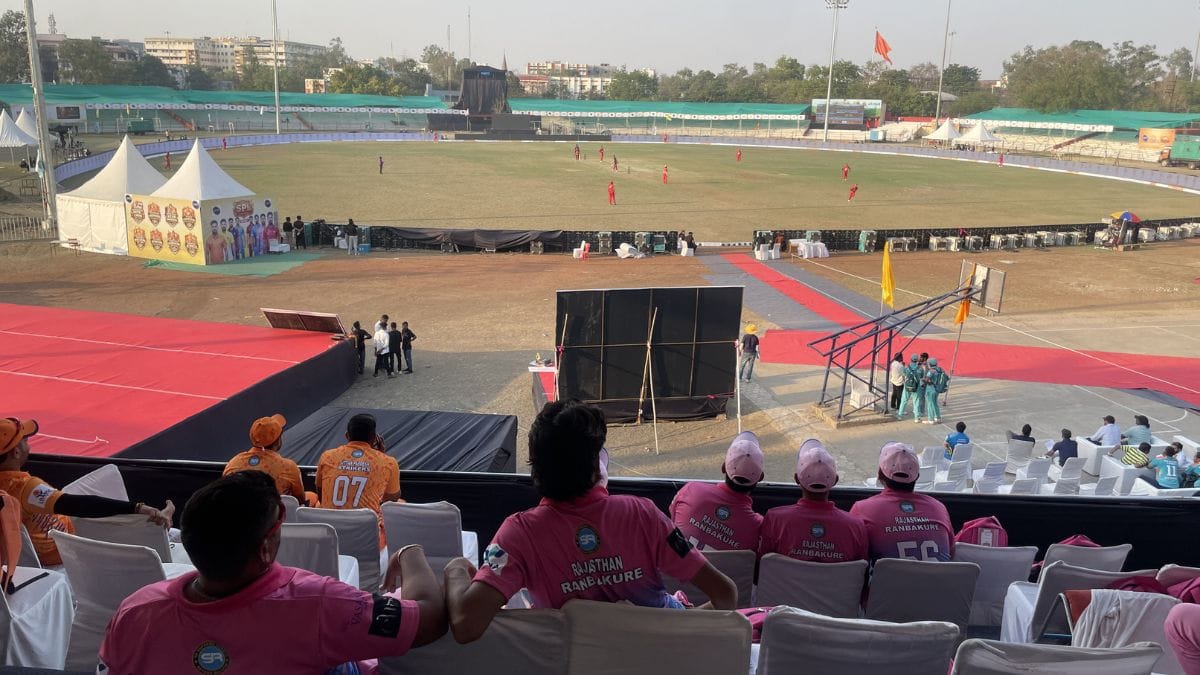
The influence of Sanatan was visible across several aspects of the tournament.
The 120 players competing in the tournament were selected through trials held between 4 and 19 February. All of them are Hindus.
Outside the Jawaharlal Nehru Stadium, opinions on the league’s Hindu-exclusive character were mixed. Lakhan, an auto driver, said he supports Thakur’s idea of creating a platform to guide young cricketers. But he is uneasy about the exclusivity.
“I don’t think it’s accidental. They must have been told to select only Hindus,” he said. “The platform should remain open to everyone. It should be for all.”
“If the league grows bigger, this divide might backfire. The message wouldn’t be right. But in the end, the one who has the money will make the decisions,” he added.
For some players, the emphasis on Sanatan values offers a sense of identity. Twenty-two-year-old Jay Kumar, who represents the Rani Lakshmibai Strikers, said the environment has made him more comfortable expressing his faith.
“Earlier, I was never very comfortable openly talking about visiting temples or having faith in God,” he said. “But here, it feels natural because it forms the base.”
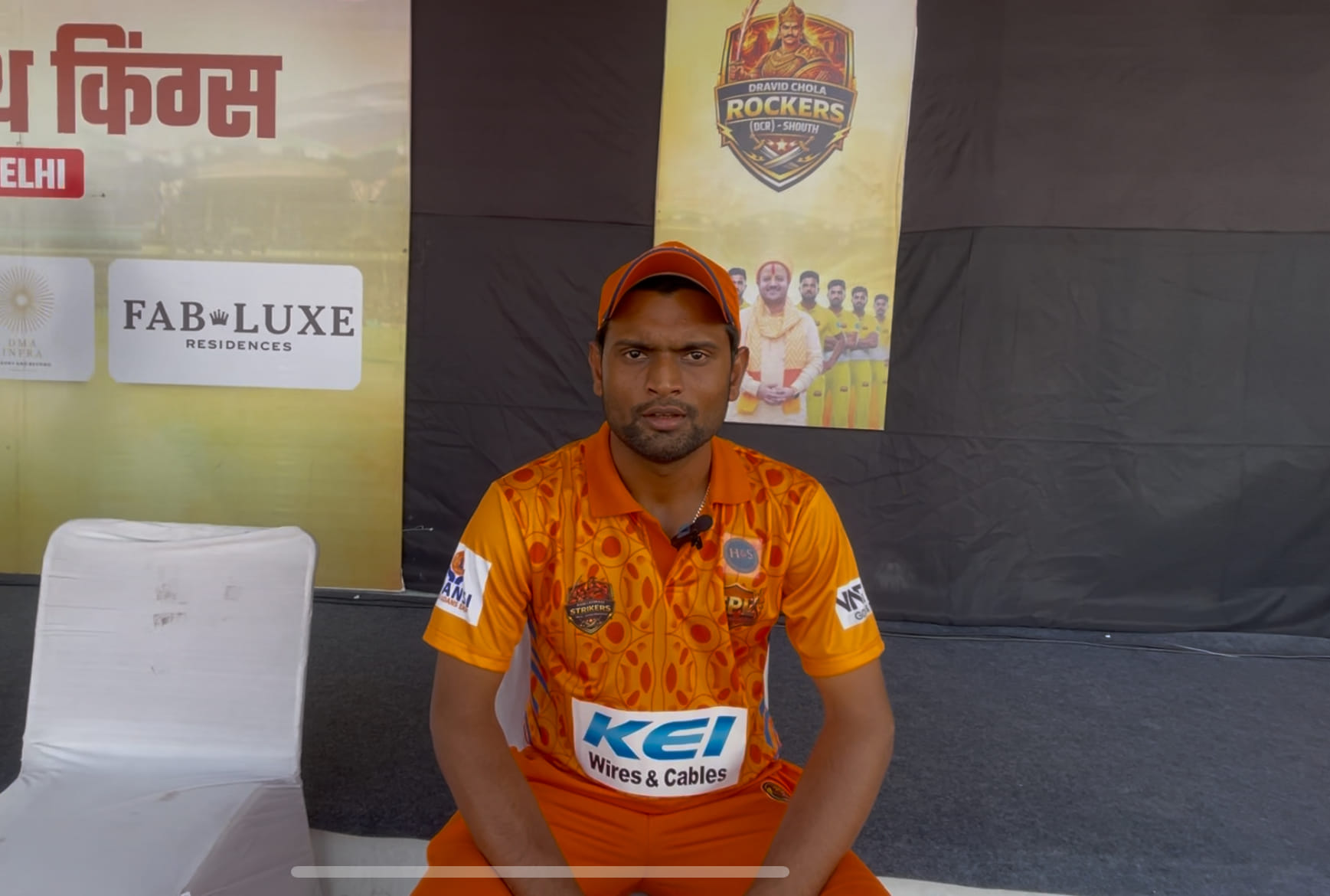
Kumar said the values associated with Sanatan, discipline, humility and respect, can help shape a cricketer both on and off the field. “Sanskaar and Sanatan pride are connected with cricket,” he said.
But for most players, the spiritual or religious framing of the league remains secondary. For them, the focus is firmly on cricket.
“The Sanatan aspect is fine,” said Maharashtra’s Mayank Rajkumar Walia. “But for me, it’s simply another cricket league, bigger and better. At the end of the day, it’s about the game, and we’re grateful that Devkinandan ji thought of creating a platform like this.”
Another pillar of the Sanatan Premier League that has drawn attention is its aggressive social media push. For many players, from Mumbai’s Goregaon to Buxar in Bihar, the first introduction to the league came not through local networks but through Instagram reels and online promotions.
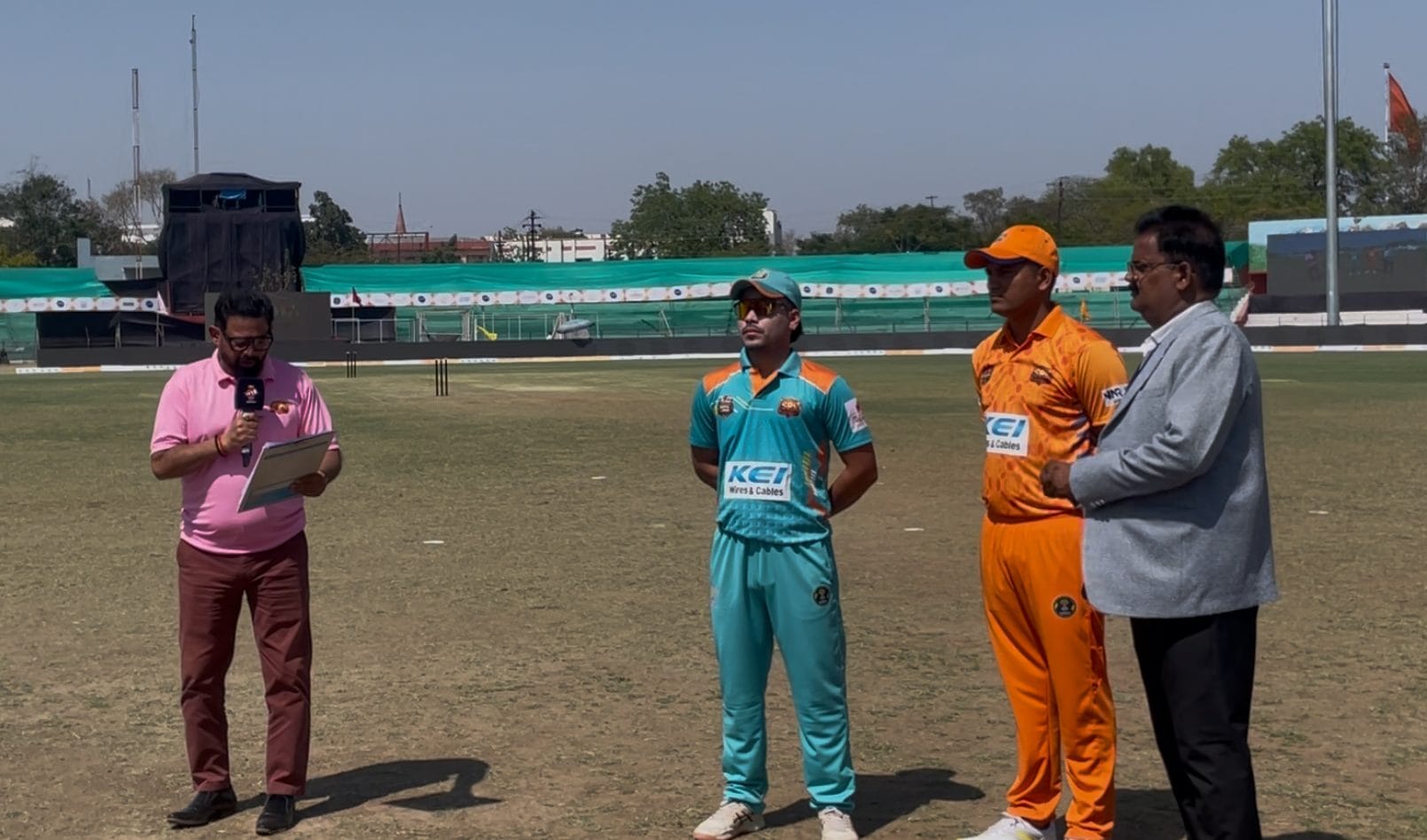
The organisers amplified the buzz with shout-outs from former India cricketers like Suresh Raina, television actors like Aditi Bhatia, and brand collaborations with Deepak Chahar of the Mumbai Indians.
Local influencers from Indore were also roped in to spread the word online. Much of the campaign rode on the popularity of Devkinandan Thakur himself. His personal Instagram page, with nearly two million followers, became a key channel for promotional videos that quickly racked up thousands of views.
Although the league opened registrations for participants aged between 15 and 40, the majority of players eventually selected fell in the 15–24 age bracket. Most of them are pursuing cricket in whatever way they can, training at local academies, juggling small jobs, or playing in local tournaments.
After the tournament, many players say they are waiting to hear what comes next. If the league continues in the coming years, they hope it will give them the motivation and perhaps the sponsorship to invest more seriously in their fitness and training.
“We hope it becomes a year-round activity,” said Kumar. “Most of us haven’t had proper professional training, so it takes a lot of practice to improve. If the league continues, we will prepare ourselves better for the next season.”
Small towns, big dreams
For Chhatrapati Shivaji Warriors fast bowler Himanshu Singh Sobarwal, the numbers are hard to ignore. Back home in Bharatpur, two months of farming bajra and vegetables bring his family roughly Rs 11,000. At the Sanatan Premier League, he earned the same amount in just three days.
“SPL came as a ray of hope that I can play cricket in a professional capacity at a platform where I will be seen, if I perform,” said the 15-year-old. He dreams of following the path carved out by players such as Hardik Pandya.
“It’s not easy for people like us to make it to the big leagues,” Sobarwal added. “There is a lot of favouritism. The entry fees for tournaments are also very high. And, people even pay donations to get a slot in a team. None of this can work for people like me.”
On the field, the teenager let his bowling do the talking. In the opening clash against Dravid Chola Rockers, Sobarwal delivered a remarkable spell. In just two overs, he picked up five wickets.
But the Player of the Match award went to teammate Mayank Rajkumar Walia for his half-century.
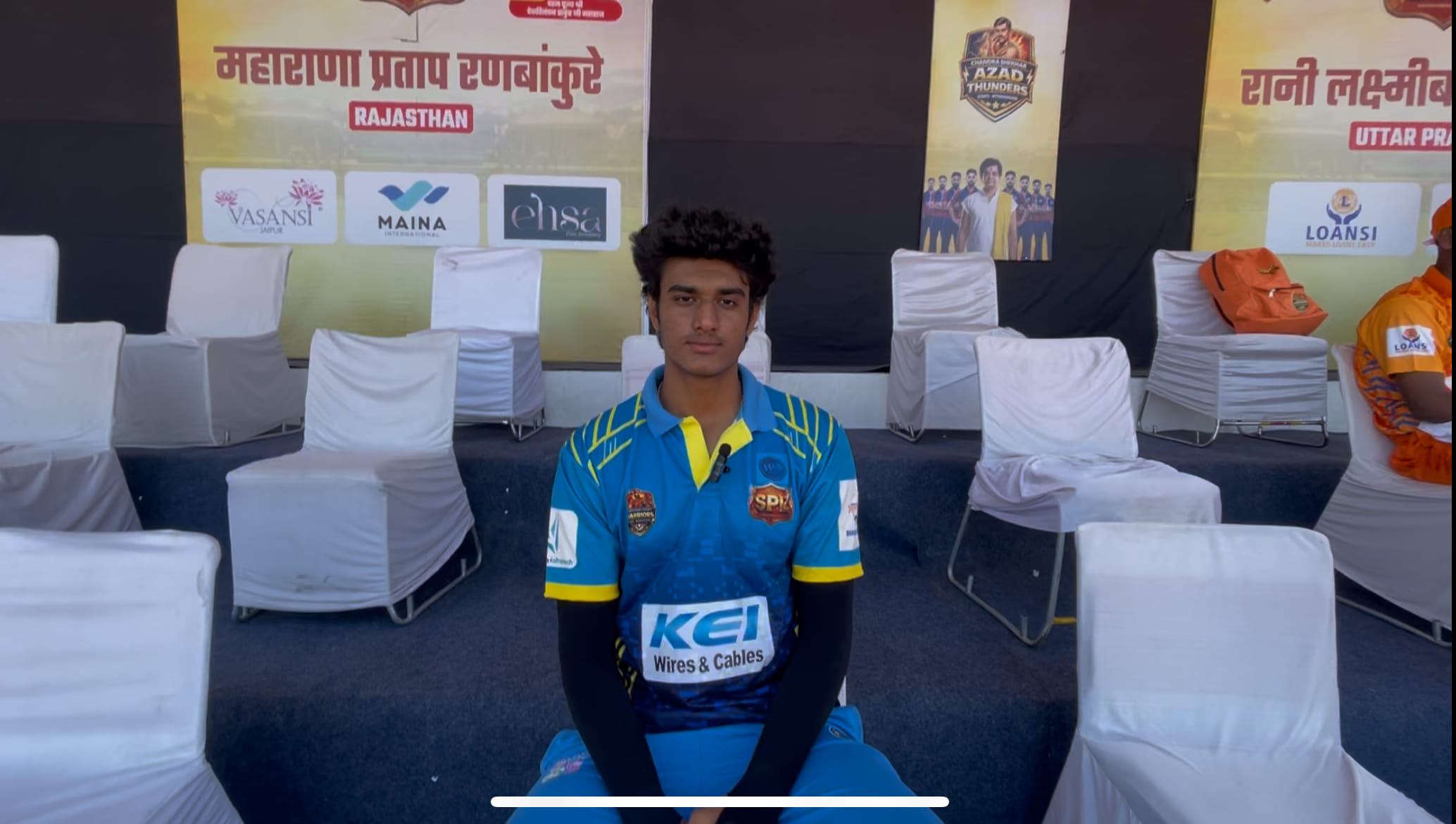
Walia, a full-time nutritionist and professional cricketer from Mumbai’s Goregaon, has previously played tennis-ball cricket in the Indian Street Premier League. But the SPL offers something different. Something more lucrative than a cash prize, kits, paid stay and travel.
“It’s a great opportunity to come on television,” he said. “The boys are especially excited about that. The scale of the tournament adds a layer of seriousness. It doesn’t feel like an ordinary competition. In the coming years, it could become the IPL of tennis-ball cricket.”
Kumar, who plays for Rani Lakshmibai Strikers from Uttar Pradesh, comes from Buxar in Bihar. His family survives on his father’s pension, Rs 22,000 a month.
For months, the 22-year-old tried to balance odd jobs with cricket practice, unsure whether chasing the sport was irresponsible or necessary. Eventually, his father and younger brother offered a simple piece of advice: “Give cricket one wholehearted attempt.”
Soon after, Kumar heard about the SPL trials on Instagram in January.
On 14 February, he travelled to Lucknow to appear for the trials, where nearly 40 players turned up on the first day. Kumar said he has previously played as an all-rounder at the district level and has also featured in a few local leather-ball tournaments. However, here his focus was entirely on fast bowling.
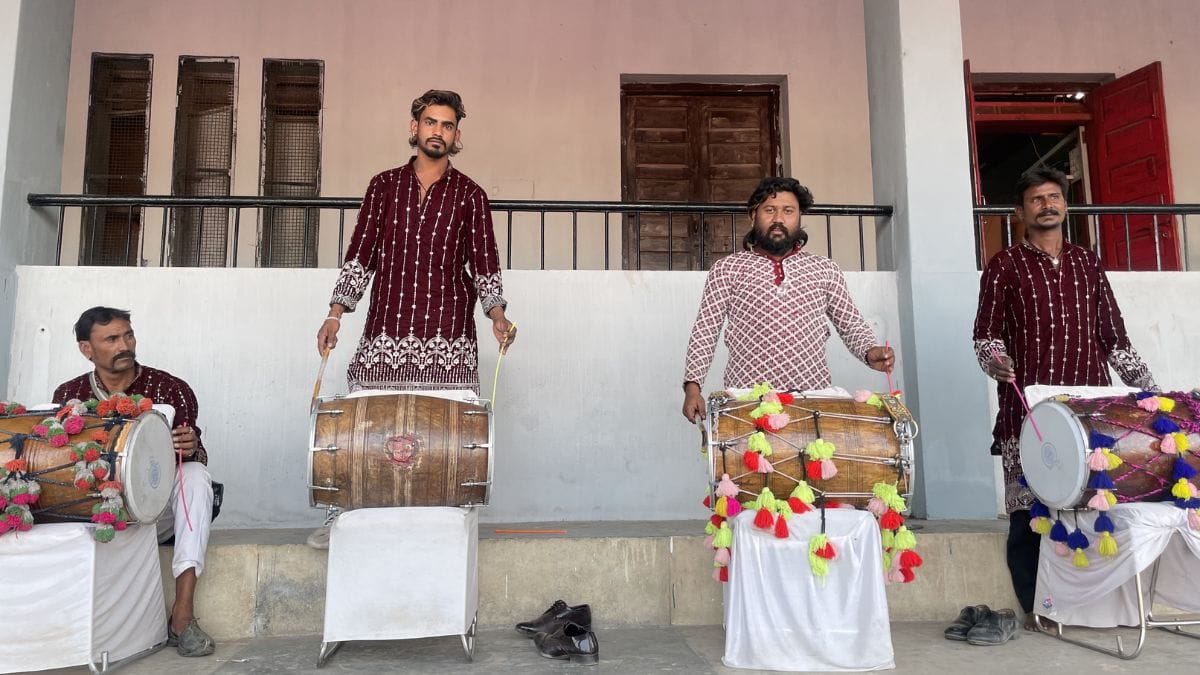
“The coaches of the teams themselves acted as selectors during the trials,” said SPL spokesperson Sumendra Tiwari. With no entry fee charged, the trials attracted a large number of cricketers. While Tiwari could not provide an exact figure, he estimated that around 400 players turned up, of which 120 were selected. Along with Lucknow, the trials took place in Dehradun, Jaipur, Chennai, Delhi, Surat, Indore and Mumbai for two days in each city, from 4 to 19 February.
Also read: Jammu’s power-hitters, Kashmir’s fast bowlers & the Manhas touch. Inside story of J&K’s Ranji glory
SPL gives voice to tennis ball cricket
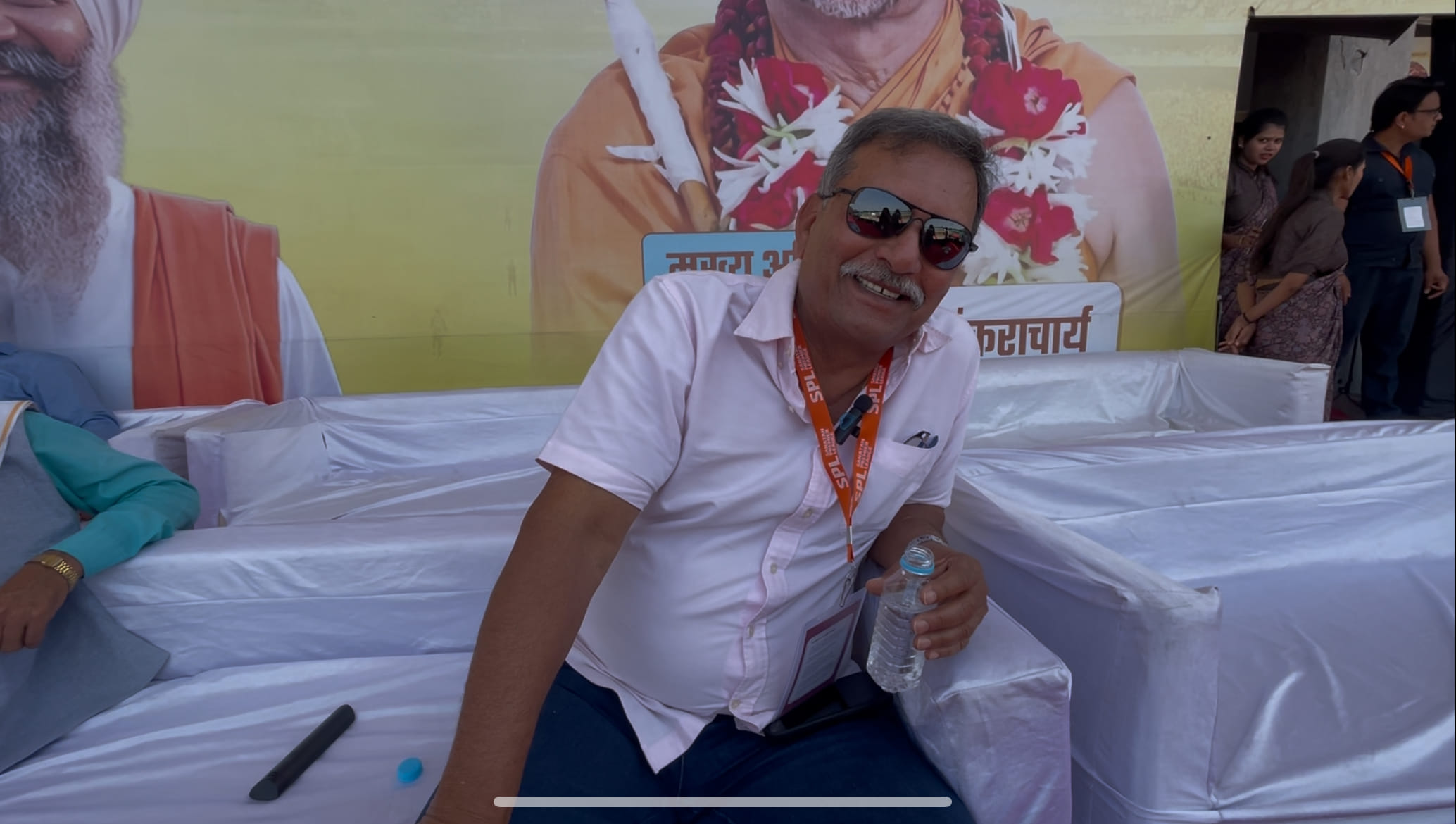
From the VIP box overlooking the ground, former India cricketer Madan Lal followed the matches with quiet attentiveness. Every now and then, he would step down to present the Player of the Match award before returning to his seat. Lal is optimistic about the talent emerging from the Sanatan Premier League.
“I have known Devkinandan ji for years now. I am a professional. When this offer came my way, I saw what kind of people were involved and with SPL; all good people were associated with it,” he said.
The league commissioner added that there is promise, “But it’s still too early to judge. Tennis-ball cricket is difficult to judge.”
Tennis-ball cricket and leather-ball cricket are different not just in equipment but in the very rhythm of the game.
While tennis-ball cricket thrives on improvisation and fearless hitting, leather-ball cricket rewards patience, technique and strategy.
For Kumar, it demands extraordinary precision. “If you make one mistake, you fall behind, and there’s hardly any chance to come back,” he said.
Beyond the players, coaches involved in the league say the tournament represents something they have long waited for, “recognition of tennis ball cricket.”
Kuldeep Singh Jaiswal, coach of Maharana Pratap Ranbakure from Rajasthan, knows the system well. A former Ranji Trophy player and current selector for the Rajasthan senior team, he also served as the main selector for the SPL squads.
The players and coaches were largely mum on the Sanatan aspect of the league and chose to concentrate on the cricket.
Jaiswal said the league has unearthed impressive raw talent, but what excites him even more is the investment and attention now being directed towards tennis-ball cricket.
SPL is being telecast live on YouTube and Sony; it’s a much bigger platform.
Still, Lal said that the tournament’s long-term impact will depend on one thing: continuity. During his own playing days, he too had experienced tennis-ball cricket at the grassroots level. That is why he knows that a single tournament cannot transform the landscape.
“If SPL becomes a one-off event, it won’t have much impact,” he said. “But if they keep organising it year after year, and the players continue to evolve, the league will grow.”
Among the players themselves, there is a strong faith that the league is only the beginning. And, that was evident when Chandra Shekhar Azad Thunders batter Akash Yadav walked away with the Player of the Match award after smashing 30 runs off just 10 balls against Indraprastha Kings on 14 March.
Holding the trophy and grinning widely, he summed up the optimism shared by many in the tournament, “SPL will become the IPL of tennis-ball cricket.”
(Edited by Theres Sudeep)