





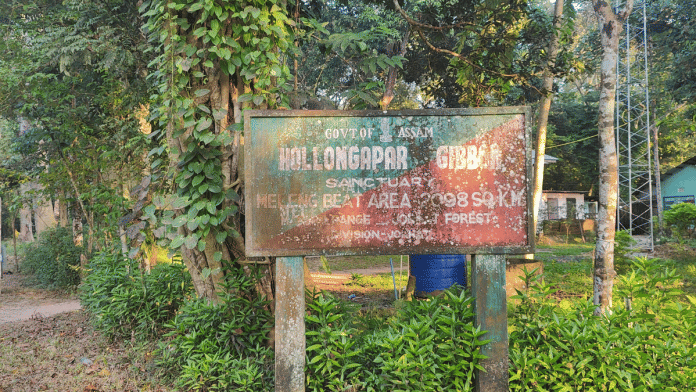



Jorhat/Guwahati: The serene dew-covered dawn is broken with loud, shrill songs in the dense, green forests of Jorhat’s Hollongapar Gibbon Sanctuary in Assam. The western hoolock gibbons — the only non-human ape species in India — are swinging between towering tree branches, creating a cacophony.
This might give an impression of their large presence in the region, but the western hoolock gibbons are in danger.
Scientists estimate that in the last two decades their numbers have fallen drastically from around 100,000 to just about 5,000. There is, however, no official census of the western hoolock gibbons in India yet.
A conservation project led by the Delhi-based conservation organisation, The Habitats Trust (THT), is turning Indian conservation’s attention.
“Currently, most wildlife conservation programmes are focused on bigger animals like tigers and elephants. The western hoolock gibbons have remained ignored to such an extent that we do not even know how many such individuals there are in India right now,” Rushikesh Chavan, Director of THT.
The project, currently underway in northeast India, will not only study the number of gibbons in the country but also examine their genetics, vocalisation patterns, and the reasons for their endangerment — a first-of-its-kind exercise to ever be undertaken for this species anywhere in the world.
The ultimate objective is to use the findings of this extensive study to prepare a comprehensive conservation plan for the western hoolock gibbons.
Also Read: MP’s red-chequered highway takes a page from global playbook. It’s supposed to protect animals
Why save the gibbons?
Jorhat’s gibbon sanctuary is unlike the other wildlife sanctuaries in the country. There are no crowds or ticket counters, and no serpentine queues of safari jeeps anxiously waiting to enter the sanctuary gates.
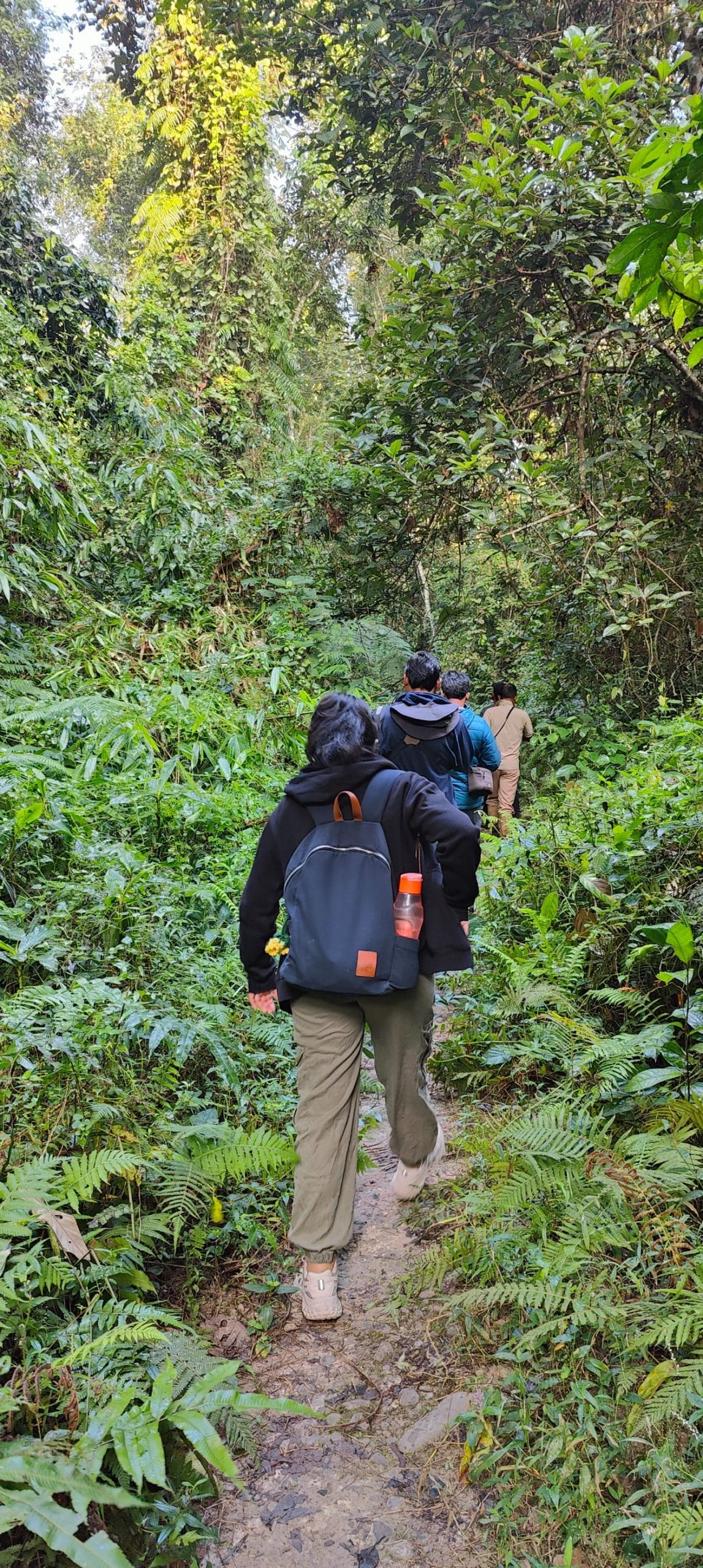
The sanctuary rarely sees visitors—mostly only researchers and wildlife photographers. The terrain isn’t very tourist-friendly either —lined by tall Hollong trees, the tough terrain is filled with prickly grass and slimy leeches.
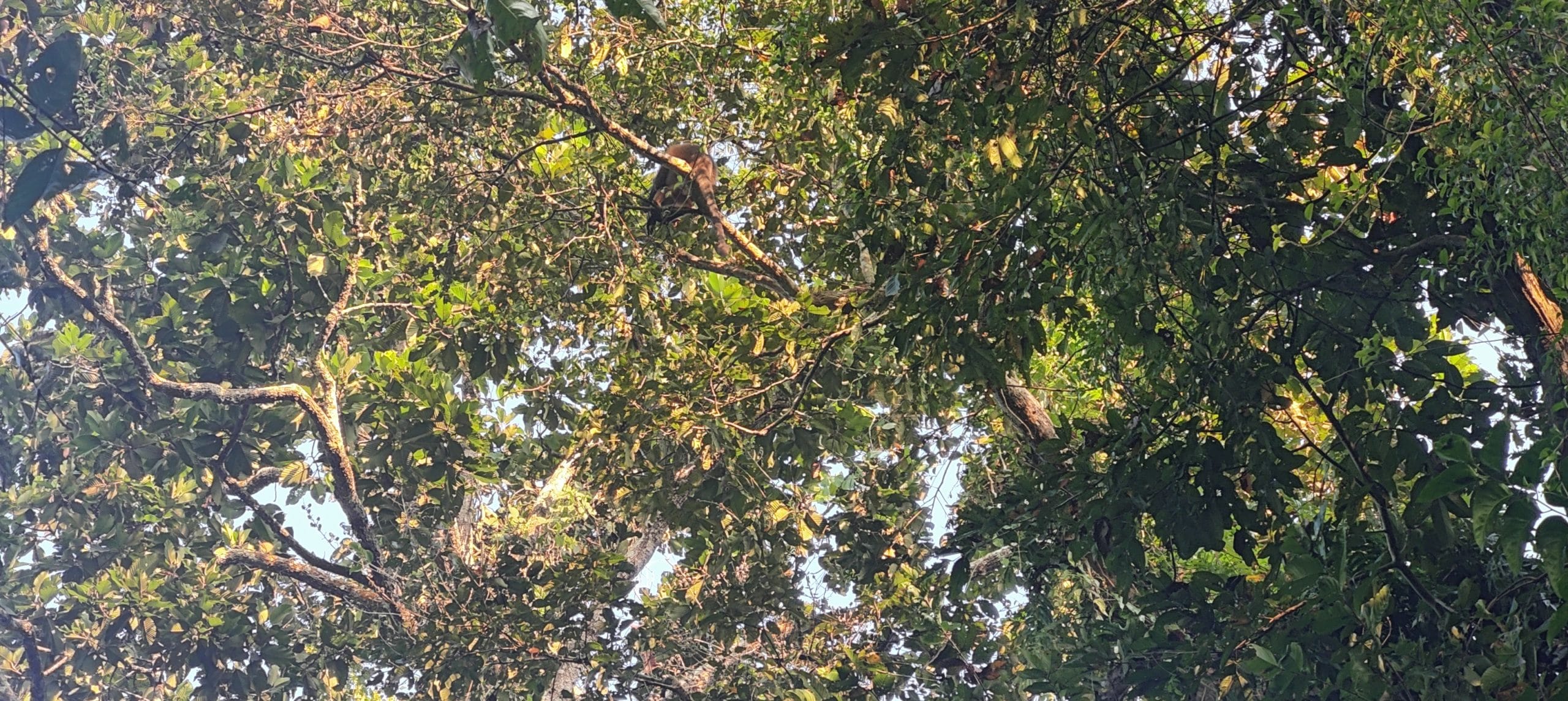
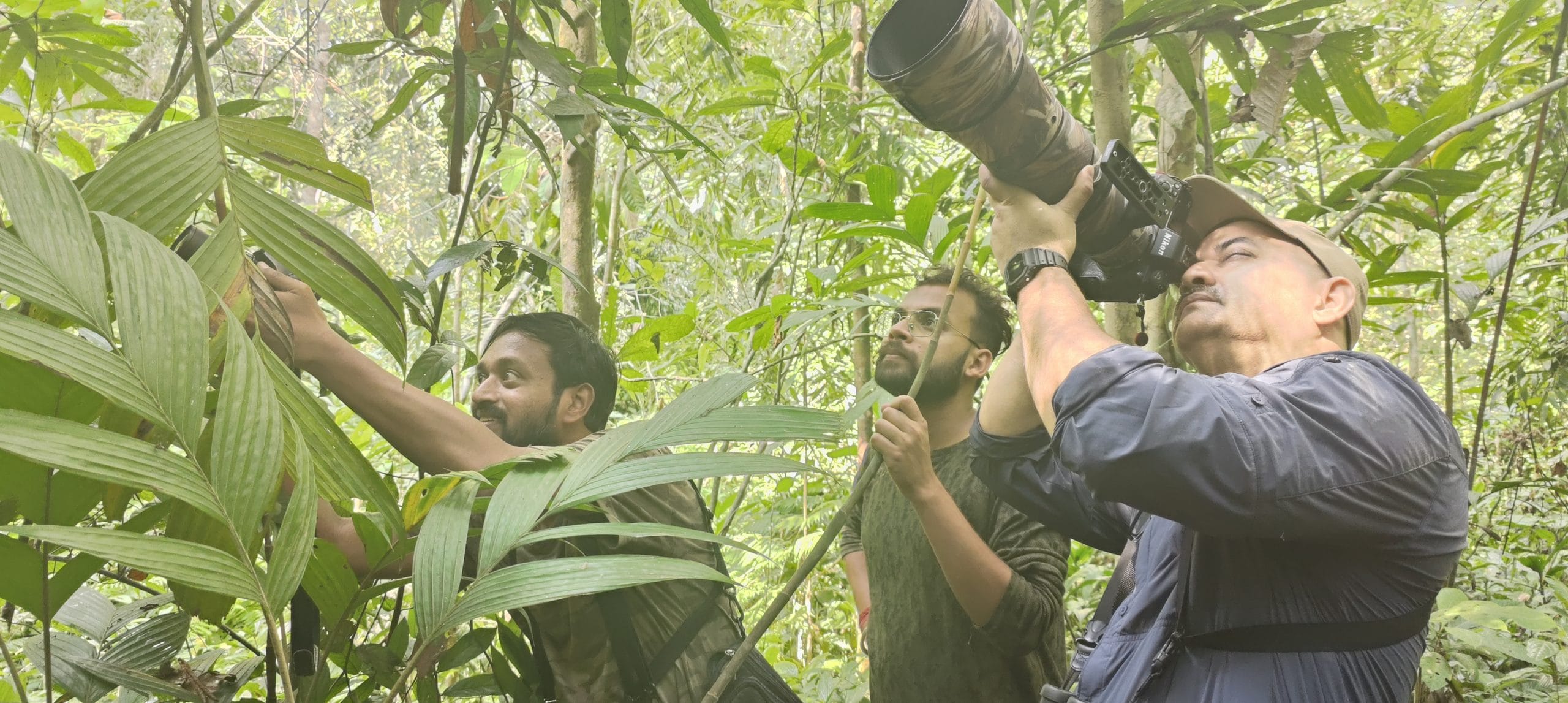
Bengaluru-based conservation scientist Santhosh Pavagada, who is also the programme lead for THT’s Tech for Conservation project, a part of their larger gibbon conservation programme, says that the trick to spotting the elusive gibbon is to keep your eyes focused on the web of branches.
“If they are not making their call, it is very easy to miss them,” Pavagada says as he looks through his binoculars in an attempt to spot a gibbon family.
The western hoolock gibbons are an endangered lesser ape found in Asia, with nearly 80 per cent of its total population worldwide found in northeast India. After India, small populations of this species are found in Bangladesh and Myanmar.
The western hoolock gibbons also feature in the International Union for the Conservation of Nature (IUCN) list of “threatened species” that are facing severe survival threats.
While the continent is also home to the eastern hoolock gibbon, these are usually found in Myanmar and southern China.
Experts say that since the western hoolock gibbon is a restricted-range species and is concentrated largely in India, authorities, NGOs, and research institutes must ensure its conservation on a global scale.
“If they are not protected now and are wiped out from the Indian forests, we will be staring at a possible global risk,” Chavan said.
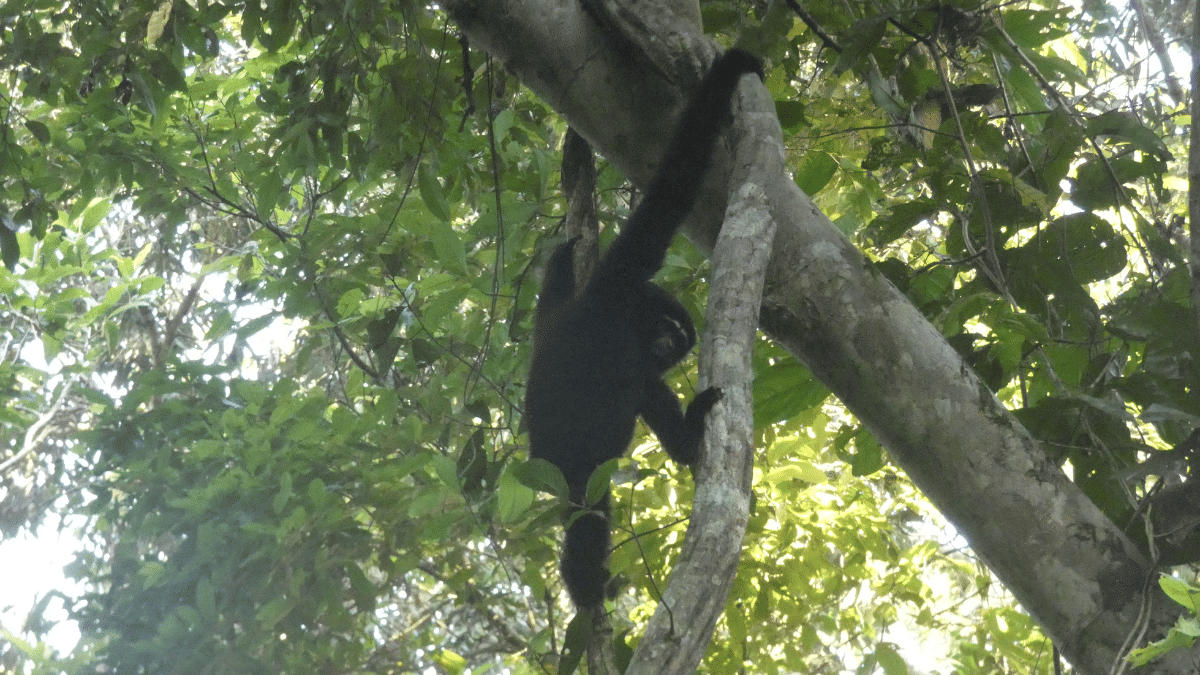
About three feet tall, the males of this species are black, while the females are brown, both with thick, prominent white brows. These primates are usually arboreal and introverted, and establish their presence only through their “calls”.
The “call” — a loud, prolonged noise they make — becomes a mark of their attendance in the wild, but ascertaining their exact number remains difficult.
Divya Vasudev, senior scientist and co-founder of Conservation Initiatives, a Guwahati-based non-profit working to conserve endangered species and ecosystems, said that over the last few decades, scientists estimate that roughly 9 out of 10 gibbons have been killed primarily due to forest loss, fragmentation, and hunting.
“Gibbons are a forest-dependent species, mostly found in high canopies. They rarely ever come down, and if they do, it is because of forest loss,” Vasudev explained.
The gibbons also have a monogamous family setup — one adult male, one adult female and their offspring. As a result, this also makes them particularly vulnerable compared to species with a polygamous family setup, which reproduce at a higher rate and faster.
Vasudev’s colleague, Varun Goswami, also a senior scientist and co-founder of Conservation Initiatives, said that some parts of northeast India have witnessed a near-wipeout of the gibbon population due to hunting. Since they have a distinct call, they are easily spotted by hunters.
Conservationists also said that the western hoolock gibbons are not hunted for their skin or organs, but for their meat. In many parts, they are also captured as pets.
Also Read: Win for ‘sea cows’—IUCN moves to recognise India’s first-of-its-kind Dugong conservation reserve in TN
Tech and genetic studies for conservation
For Pavagada, the last year was spent roaming around the forests of Assam with his laptop and acoustic devices to study the elusive western hoolock gibbons.
He, along with his colleague, Kishore Panaganti, is working on developing tools, including bioacoustics and thermal drones, to ascertain the presence and population size of these primates.

“Traditional tools like camera traps don’t work very well for animals like gibbons because they live high up in the forest canopy. What really gives them away is their call. They vocalise loudly,” Pavagada said.
He explained that because of this limitation, scientists rely on sound instead of visuals to spot them.
“Researchers place audio recorders in the forest and analyse the calls they pick up. To save time, we have developed a machine-learning tool that helps us quickly identify gibbon calls from hours of recordings. We are also experimenting with ways to tell individual gibbons apart by their calls and developing a device to understand where the sound is coming from within the forest,” he added.
The team is also testing thermal drones in hard-to-reach areas. The drones detect the heat signatures of gibbons, allowing them to be spotted even under canopy cover.
Panaganti echoed this challenge of studying gibbons across large forests.
“We have tested a prototype system that visually shows where a call is coming from. You can see it light up in real time as a gibbon calls,” Panaganti said, demonstrating a live visualiser lighting up as it detected gibbon calls.
The THT scientists are also collaborating with Aaranyak, another Guwahati-based conservation NGO recognised by the Department of Science and Technology (DST), to study the genetics of the gibbon population. They are compiling genetic data for gibbons, examining landscape-level genetic structuring, and studying patterns of inbreeding and its impact on the species growth and health.
Using faecal samples, researchers are also assessing the animals’ hormone levels to determine whether closer proximity to human populations or other anthropogenic interventions is the cause of their increased stress levels.
“If you really want to explore the true potential of conservation genetics, we need to see how the populations of animal species are connected, not just in the contemporary context but also historically. That’s how we will be able to find how they are genetically connected,” Udayan Borthakur, director and head of the Wildlife Genetics Laboratory of Aaranyak.
Borthakur, an avid wildlife photographer, sees the gibbon conservation project as an opportunity to bring these often-ignored primates into the limelight. In fact, he is starting from home. Over the weekends and during school holidays, he ensures his children get to witness the gibbons in action.
“Conservation begins with education,” he says.
Also Read: Himachal’s snow leopards are protected by women. Big cat numbers are up
Conservation with the community
These studies, however, are not being conducted in isolation. Researchers involved in the project understand that if these primates are to be protected, local communities and tribes must be brought on board. In many cases, these communities play a dual role as both hunters and protectors.
In northeast India, communities in many parts of Meghalaya and Nagaland traditionally own and manage forest lands.
This means that in many pockets, forests are community property over which state forest departments have limited jurisdiction. This unique dynamic of forest ownership makes community participation in wildlife conservation even more crucial.
Goswami, who has been working with these communities for several years now, says that in many tribes, folksongs and lore mention gibbons and their songs, symbolising how closely these communities have been traditionally associated with the gibbons. Their work involves not only protecting these primates through the latest technology and genetic sciences but also educating others to support the cause. And they are slowly, but surely, winning their trust.
“In many communities, there is a very close cultural affinity with the gibbons. In our interactions, we have found that many tribes have also implemented hunting bans themselves to protect them,” he said.
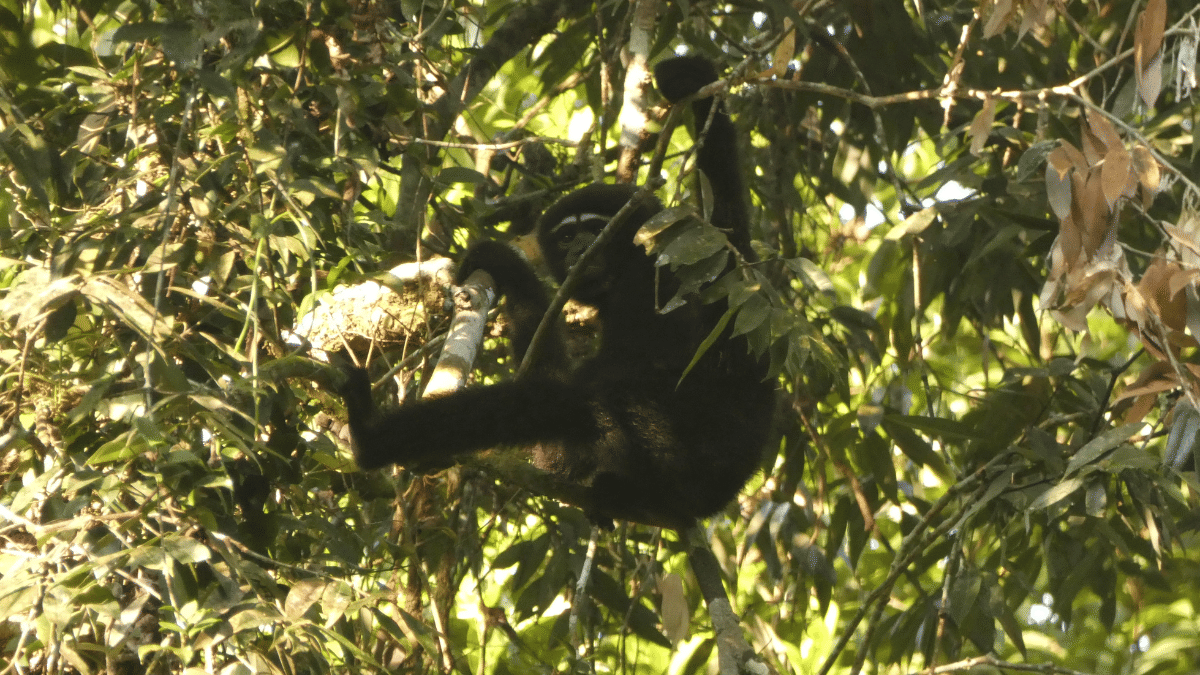
The western hoolock gibbons are deeply entrenched in the northeast’s folklore. In Arunachal Pradesh, among the Idu Mishmi tribe, the gibbons have a religious connection. It is believed that Enjao — one of the twins of the mythical goddess Idu — tested an elixir on the gibbons, which resulted in the primates “howling and dancing,” a behaviour they continue to exhibit.
The tribe believes that anyone who harms the gibbons will attract misfortune, which can only be washed away by a five-day ritual called the genna (restrictions) in the local language. This ritual involves strict restrictions relating to entering one’s house and consuming food prepared by women.
In another Arunachal tribe, the Miju Mishmi, it is believed that within six to 12 months of hunting or eating the meat of a gibbon, the hunter would contract a disease called “nangai”, in which the patient starts behaving like a gibbon. The local belief is that the curse can only be lifted after an elaborate penance — Ngaitamat — is performed by the hunter.
But conservationists say these folktales were created to keep villagers in line and prevent them from harming these animals and their habitats.
The latest conservation project also comes aligned with a similar thought process.
Scientists know that the protection of gibbons will not just be a win for the primate species, but it will also be a win for the forests.
“Gibbons are the champions of the forests. If you protect them, you automatically protect the forests. It’s a win-win,” Chavan says, right when the gibbons start their call — a call to protect the wild.
(Edited by Insha Jalil Waziri)