








Faridabad: At the district court in Faridabad, advocate Satinder Duggal carries two files. One is for his cases. The other is an indictment of his city, which stays tucked inside his leather bag until someone mentions Faridabad. Then, almost by habit, he pulls it out, adjusts his spectacles, and begins to list the problems: erratic electricity, broken roads, crumbling infrastructure, unmanaged waste.
Faridabad is the poor, neglected cousin of the Delhi-NCR suburban story. In stories of shining growth, Gurugram gets talked about as the millennium city and Noida as the first planned suburb. But Faridabad has failed to capture the imagination. Its tragedy is that it is rarely talked about at all, whether for its success or failure.
“I am a resident of Greater Faridabad. But there is nothing ‘great’ about this region. There is no power substation even today, the sewage treatment plants are dysfunctional, and we are still struggling for basic services,” grimaced Duggal, who has lived here for 12 years and is an executive member of the advocacy group Greater Faridabad Association (GREFA).
The silence finally broke on March 1. Faridabad is in the spotlight now. An anonymous account, @RakeshK32229480, posted an expletive-laden critique on X calling Faridabad “the most disgusting place on earth”. He wrote he had moved there as an intern and was shocked by the “horror” of collapsing services and a “corrupt and vile” political and administrative leadership. The post hit 2 million views. Others posted their own complaints. RakeshK claimed he received threat calls, but he hasn’t stopped. He now posts daily updates on potholed roads, overflowing drains, garbage, and waterlogging.
“We celebrate UPSC toppers. This is the service babus provides to the general public. In Meethapur Sector 91 road,” read one post. In another, he wrote that he had been called to the police station and asked to tone down his language.
Just came from ps
Had to bribe to get out of the situation
They told me not to use words like corrupt, paisachor,2000 crores budget in my post i get it
Currently it is raining and this is the condition of the smart City
No road,no street light
No drainage and sewage https://t.co/nXW8lCUuOZ pic.twitter.com/ewup2Hg8oo
— biased indian (@RakeshK32229480) March 19, 2026
From dinner tables to resident welfare meetings in Faridabad, the account has become a talking point. Its daily posts have lent urgency to long-simmering frustrations, pushing RWAs, waste contractors, activists, and even ward councillors to speak more openly about the city’s slide into decrepitude.
‘Rakesh’ told ThePrint that he comes from a tier-3 town in Uttar Pradesh and was “shocked” by what he found in Faridabad.
“The condition of the city is just bad. Back in my hometown, things actually felt more developed than this. Sectors aren’t properly marked and colonies have been ignored for years. In many places, people have to pool their own money just to build roads, put up street lights, manage sewage,” he said. “After my post went viral, I faced some backlash from officials, but it’s fine now, and I’m just continuing my internship.”
Faridabad is in transition. We are dealing with legacy issues. It will take some time, but in a year or two, you will see Faridabad competing with Gurugram
– Dhirendra Khadgata, Faridabad Municipal Commissioner
While Gurugram and Noida have their own urban failures, they are cities buckling under rapid development. Faridabad’s problem is the opposite. It was the NCR’s first industrial hub, and then it got left behind. A 2015 ASSOCHAM study found that over the course of two decades since 1991, Faridabad’s share of total investment attracted by Haryana was below 1 per cent. Gurugram, in the same period, captured 70 per cent.
Every few years a new promise arrives, from Smart City status to expressway connectivity with the Jewar airport. It’s hyped by the district administration as a real-estate hotspot, with a circle rate hike of up to 75 per cent being proposed this month. But residents who bought homes in the last decade expecting a budget-friendly version of Gurugram found that neither builders nor civic authorities delivered basic services.
“We have been to the authorities, submitted our grievances on the CM window, and also pleaded with the builder. But nothing helps,” said lawyer Manish Gupta. He claims that the apartment he bought for Rs 55 lakh in 2015 won’t even fetch Rs 20 lakh now.
Also Read: Sheila Dikshit to Kejriwal, every CM pledged to fix Old Delhi. Now BJP wants NDMC-like teeth
‘Manchester’ to ‘Dharavi’
Once projected as a promising industrial hub of MSMEs, Faridabad was celebrated as the “Manchester of Delhi-NCR” in the 1970s and 1980s. But officials now dismiss that era as a period of unplanned, haphazard industrial development.
Over time, Faridabad receded into a pale shadow of Gurugram. Once known for the New Industrial Town (NIT), Faridabad now only has a sector called NIT. Both Gurugram and Noida have raced ahead in setting up industries and tech companies and attracting a young white-collar workforce.
Faridabad, meanwhile, remained a primarily blue-collar destination. As migrant workers from across India descended for factory work, slums proliferated. Media reports started calling it the Dharavi of North India.
Almost half a century later, Faridabad is still trapped in a cycle where slums and encroachments are cleared, only to rise again and again.
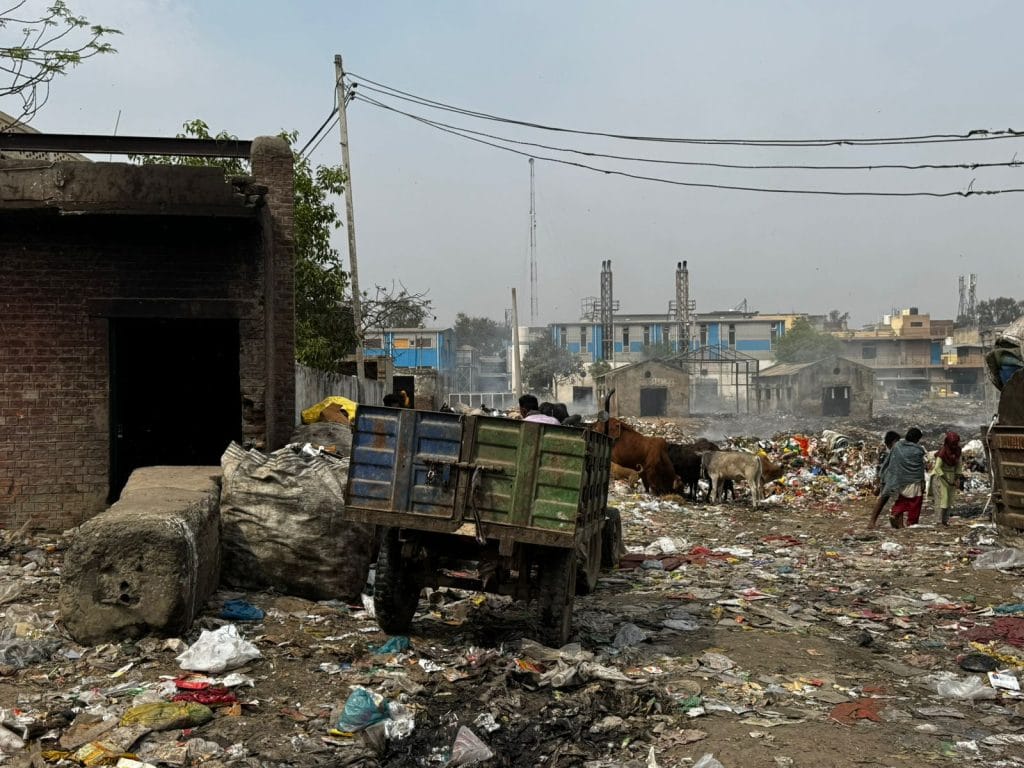
Every few metres, the road gives way to a heap of garbage spilling onto the margins, plastic caught in the branches of trees. Near markets and even hospitals, cows bury their heads in the rot, tugging out scraps as flies swarm. In Sanjay Colony, homes double as factories. In one such cramped room, four men toiled, the rhythmic whirr of two machines seeping into the street. These are small ancillary units making small components such as nuts and bolts.
The mess in Greater Faridabad doesn’t announce itself so loudly. Near the signboard at its entrance, the roads are wider and there’s an impression of order, but it doesn’t take long to run into uncontained garbage and choked drains. Unlike the planned sectors of Noida or the polished DLF stretches in Gurugram, where disorder is tucked away and gloss takes over, here there are fewer glass-fronted buildings and corporate parks to hide behind.
Between 2020 and 2024, the Faridabad Municipal Corporation spent Rs 100 crore on sanitation, but there’s no sign of a makeover. Ward councillors and activists allege a mafia-style system where funds are pocketed by private vendors who deploy their own men, with little or no supervision.
We are not even able to make a ward work. Forget Faridabad
-A proxy ward councillor in Faridabad
In 2023, a CAG report tabled in the Haryana Assembly revived allegations that the Faridabad Municipal Corporation had routed about Rs 183 crore to a single contractor through hundreds of small-ticket bills, with little or no work done. It became known as the ‘Rs 200 crore civic body scam’. The Anti-Corruption Bureau investigated IAS officers and municipal employees and last year charged 200 people.
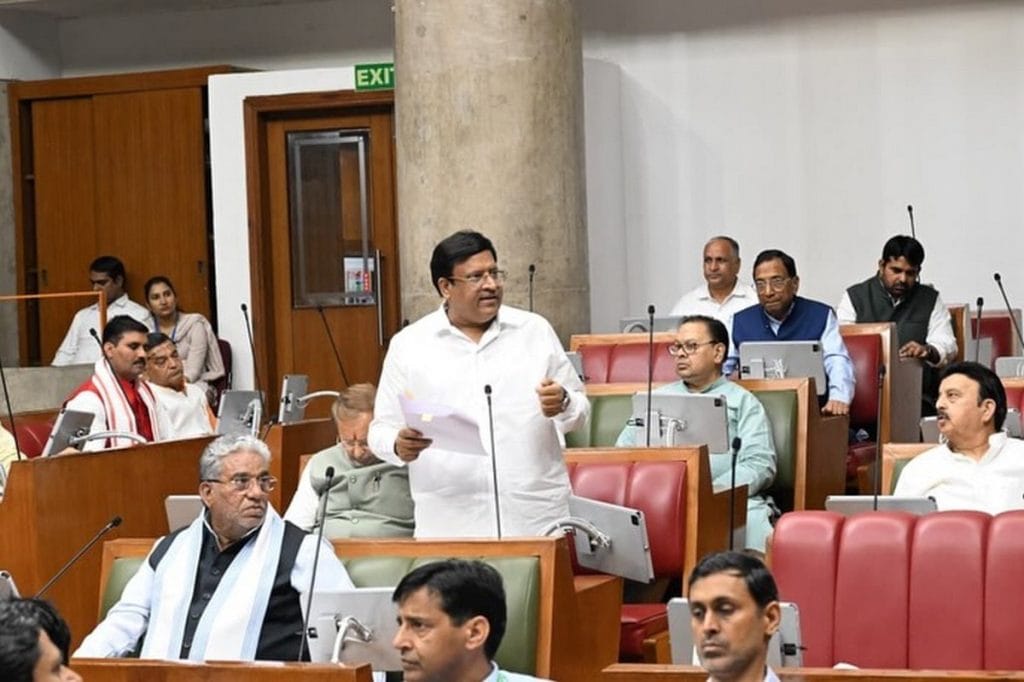
So far, political pledges have not had any lasting effect. In 2024, the election pitch was built squarely around fixing basic infrastructure; BJP MLA Dhanesh Adlakha from Faridabad’s Badkhal promised a civic overhaul within 100 days. Upon being elected, he and Faridabad MLA Vipul Goel launched a blitz of meetings with municipal officials and sewer cleanups. Little changed. In the 2025 municipal elections, the same civic issues dominated again.
Goel, however, insisted that progress is being made.
“We have already fixed many potholes and addressed garbage issues. Whether it is draining rainwater or beautifying parks, work has been done. Door-to-door garbage collection will soon begin in Faridabad. We are also planning waste-to-energy plants. Faridabad is moving ahead and coming out of the shadows of the past,” he said.
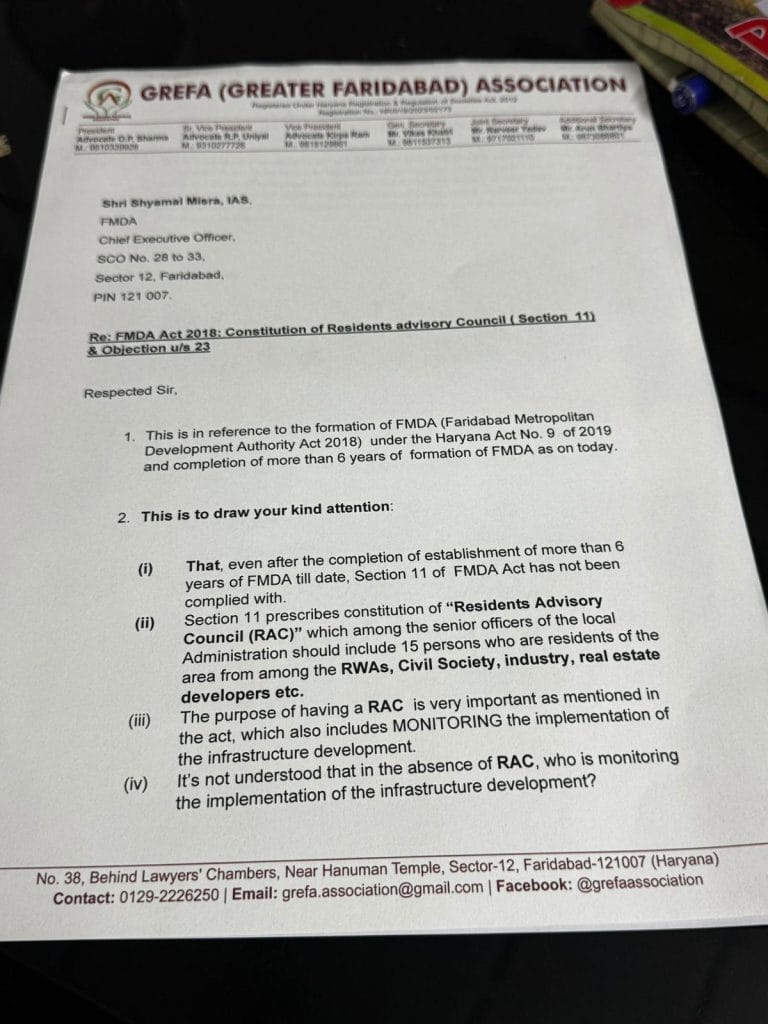
Like Gurugram, Faridabad is split between the old city and its newer extensions. Greater Faridabad was supposed to be the face of a planned future. Instead, it is grappling with some of the worst infrastructure gaps. Residents say repeated appeals to the chief minister, town planners, and municipal officials have yielded little beyond assurances.
“Faridabad is in transition. We are dealing with legacy issues. It will not happen overnight. It will take some time, but in a year or two, you will see Faridabad competing with Gurugram,” said Municipal Commissioner Dhirendra Khadgata. “Faridabad is expanding. Any area which expands has some temporary issues.”
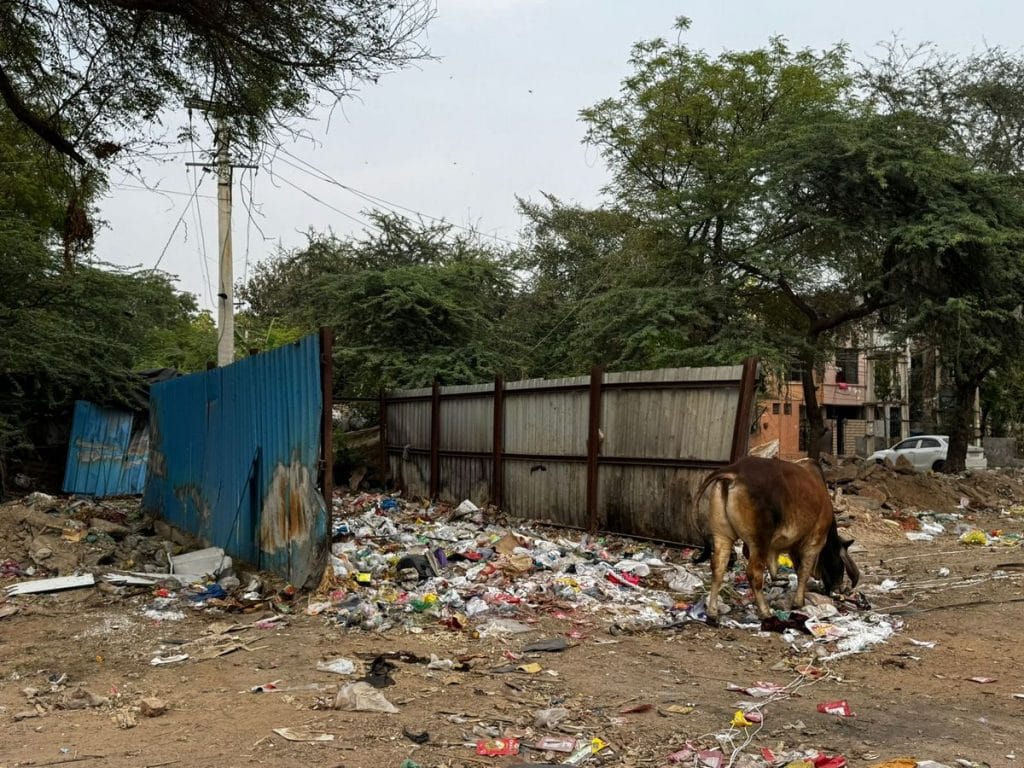
How Faridabad lost its edge
Faridabad and Gurgaon (renamed Gurugram in 2016) were the same district until 1979. And nobody would have bet on Gurgaon. Faridabad had the factories, the railway line to Delhi, fertile land along the Yamuna, and a population that had nearly tripled in the previous decade. Gurgaon was still a rocky hinterland.
Yet over the next decade, Faridabad lost the momentum it had built. A potent mix of political, economic, and institutional factors “conspired to provide tremendous advantages to Gurgaon but not to Faridabad till the mid 2000s,” wrote economists Bibek Debroy and Laveesh Bhandari in a 2009 paper for Stanford’s Center on Democracy, Development, and the Rule of Law.
One was a series of blows to the industries that formed the backbone of Faridabad—a dense web of ancillary factories feeding larger manufacturers. A small-scale industrialist, Pawan Mehtani, who manufactures mop wheels and flap discs, recalls how these units once served companies like Maruti and Hero Honda. A turning point was in 1983, when Maruti set up its first factory in Gurugram. Hero Honda followed over a decade later.
“These manufacturers opened their own ancillary units, and they no longer needed Faridabad,” Mehtani said. “Politicians focused their attention on Gurgaon, and Faridabad was left behind.”
After the Delhi airport corridor opened up, builders like DLF and Unitech followed. Gurugram got a head start for the 21st century with its IT companies and corporate headquarters.
“Gurugram had the first-mover advantage. It was closer to the airport, and when Maruti set up there, things went downhill for Faridabad,” said Virbhan Sharma, president of the IMT Faridabad Industrial Association.
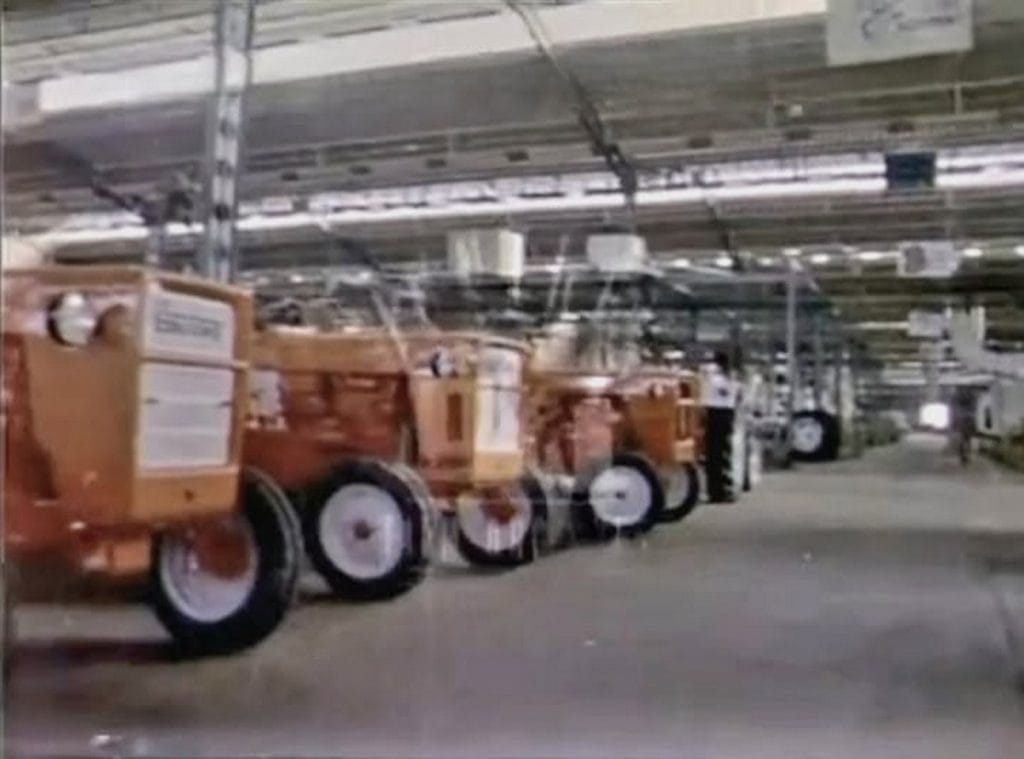
Land was at the bottom of this. In Gurugram, as Debroy and Bhandari note, the political class and private developers like DLF owned large tracts. They had a direct incentive to convert farmland into high-value urban plots. Counterintuitively, Gurugram’s lack of an urban local body in those early decades worked in its favour. With no municipal corporation until 2008, decisions quickly went through the Chief Minister’s office.
Faridabad was the opposite. It already had a municipal corporation, which added layers of bureaucracy and “countervailing checks”. And crucially, the political elite owned little land there.
“Why could Faridabad’s elite, members of a much larger city with a strong manufacturing base, not lobby for greater investments in their city? The answer lies in the differential incentive structure emanating from differential land owning patterns,” noted Debroy and Bhandari. “In Faridabad, those who would have gained the most did not have the wherewithal to push for rapid changes. But in Gurgaon those who owned the land found a willing partner in the political class.”
Gurugram had the first-mover advantage. It was closer to the airport, and when Maruti set up there, things went downhill for Faridabad
-Virbhan Sharma, president of the IMT Faridabad Industrial Association.
The 2015 ASSOCHAM study cited earlier found that Faridabad’s contribution to Haryana’s industrial revenue fell from 29 per cent to 22 per cent between 1991 and 2013. In the same period, Gurgaon’s contribution went from 6 per cent to 19 per cent. Similarly, Faridabad’s share of factory employment in Haryana fell from 45 per cent to 25.5 per cent while Gurugram’s rose from 6 per cent to 32 per cent.
Faridabad is still a major MSME hub in Haryana, with around 19,917 registered units, slightly higher than Gurugram’s 17,752. But the city never generated the level of corporate and IT incomes that drove real estate and infrastructure investment in Gurugram.
“Faridabad is known for its robust engineering goods and auto parts manufacturing base, while Gurugram stands out as a hub for information technology, startups, and electronics,” the Make in Haryana Industrial Policy 2025 states.
But if the Indira Gandhi International Airport helped remake Gurgaon, some in Faridabad are hoping the upcoming Noida International Airport in Jewar will do the same for them. MLA Goel has even called it a “Renaissance moment” for the city.
Approved by the Union cabinet this month, the planned 7.8-km elevated stretch on the greenfield expressway will link the DND-Ballabhgarh bypass to Jewar, cutting travel time and opening a faster cargo route. Investment that once flowed only through Delhi’s airport could now reach Faridabad from the east and boost real-estate demand.
Union Cabinet approved elevated road connecting Jewar Airport to Faridabad (₹3,631 Cr)
🛣️ 7.8 km elevated corridor linking the airport with Delhi–Mumbai Expressway
✔️ Intersects Eastern Peripheral Expressway, Yamuna Expressway & Dedicated Freight Corridor
✔️ Strengthens… pic.twitter.com/hHbmoVdv0I
— Ashwini Vaishnaw (@AshwiniVaishnaw) March 10, 2026
The legacy mess, though, is a long way from being sorted out. Unauthorised, single-room factories have filled gaps left by the formal sector. In the five years up to 2024, over 400 such units were sealed by the Haryana State Pollution Control Board for violating laws and discharging harmful chemicals in drains. Residents say that even after sealing drives, such units pop up elsewhere.
“There is no talk of the future, but only of how to fix the past first,” said Duggal.
Also Read: No other city is like Gurugram—‘so mismanaged, yet so highly spoken of’
The dream that curdled
When Manish Gupta bought a 2BHK in Mulberry County in 2015, he was sold the dream: swimming pool, clubhouse, jacuzzi, landscaped gardens. A seductive promise of a lifestyle like Gurugram’s elite enclaves, but at half the price and less traffic snarls. Faridabad was another Gurugram in the making, he was told.
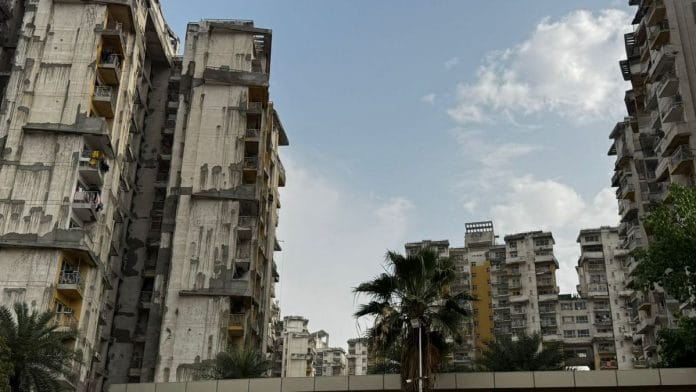
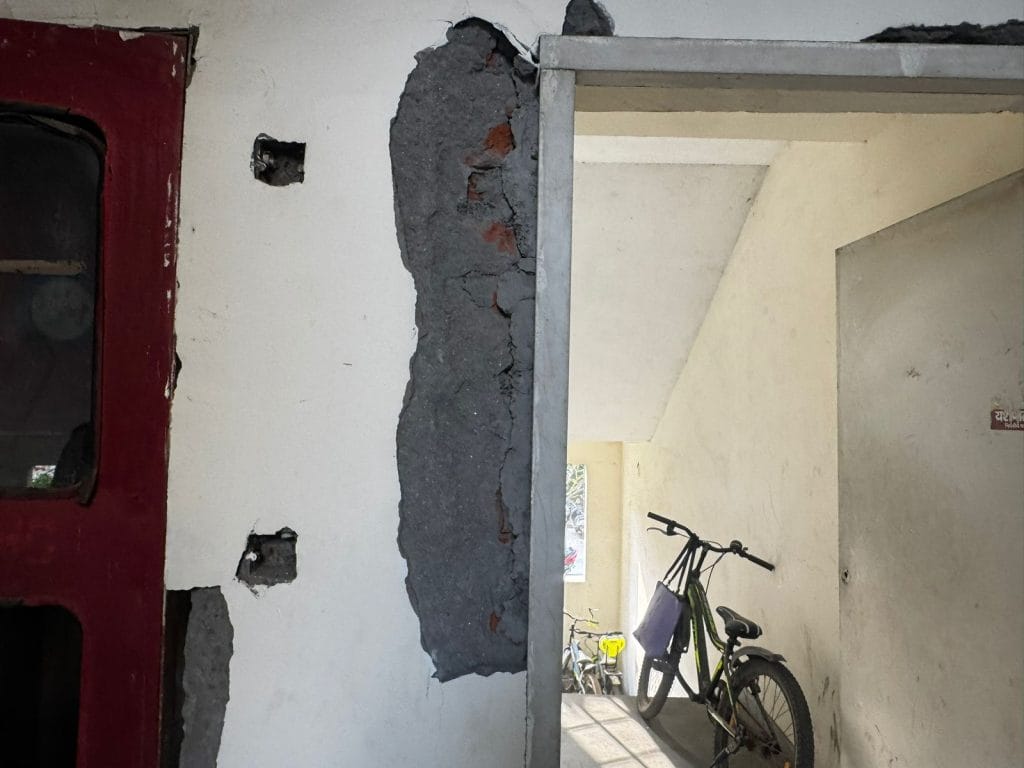
Eleven years later, the basement has no flooring, the walls are peeling, the swimming pool is dry, and the clubhouse stands like a weary ghost. Gupta and other residents are fighting for things far more basic: a functional firefighting system, working lifts, modern sewage disposal.
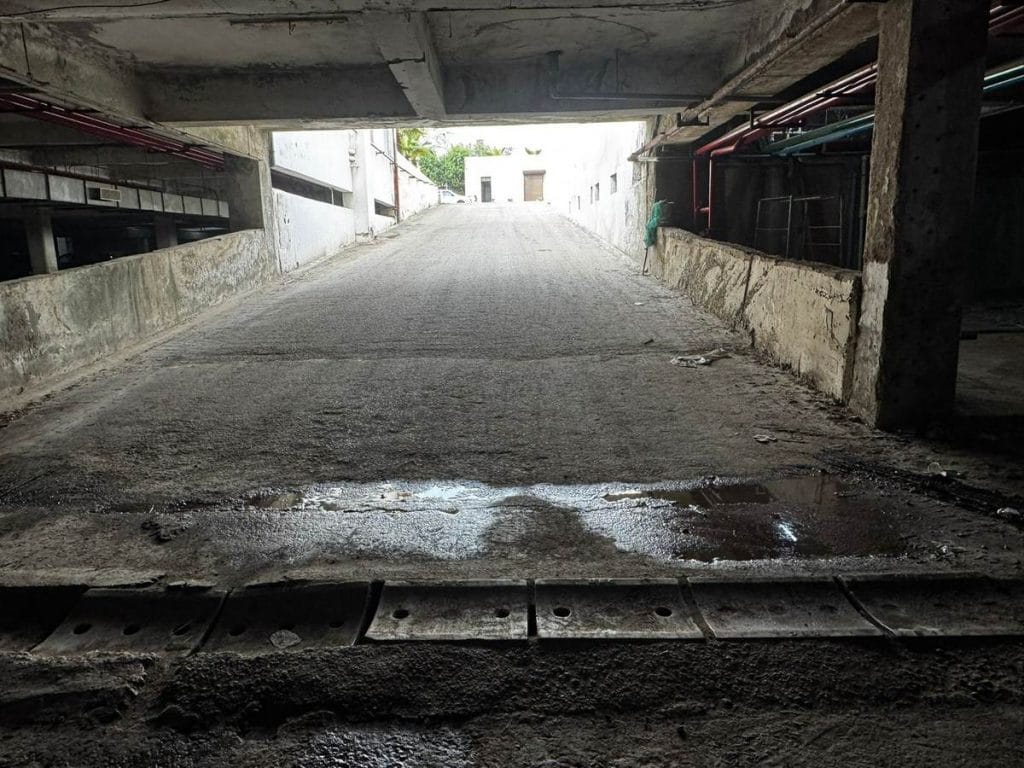
The infrastructure is so shaky that a sewage truck visits twice a day to collect waste, much like in older, unserviced localities. Because the society’s STP is not connected to a main sewer line, waste must be manually transported out. On days the trucks don’t arrive, the basement reeks, forcing residents to park their cars on the street to avoid the stench.
“I pay Rs 4,000 every month as maintenance. Those living in 3BHK flats are paying Rs 6,000. I don’t know where the money goes because it is not utilised to make the complex better,” Gupta said.
I have no choice but to live here. The price has halved, and I have a family to look after
-Manish Gupta, resident of Mulberry County
When he approaches the builder, he is sent to the authorities. When he goes to the authorities, he is sent back to the builder.
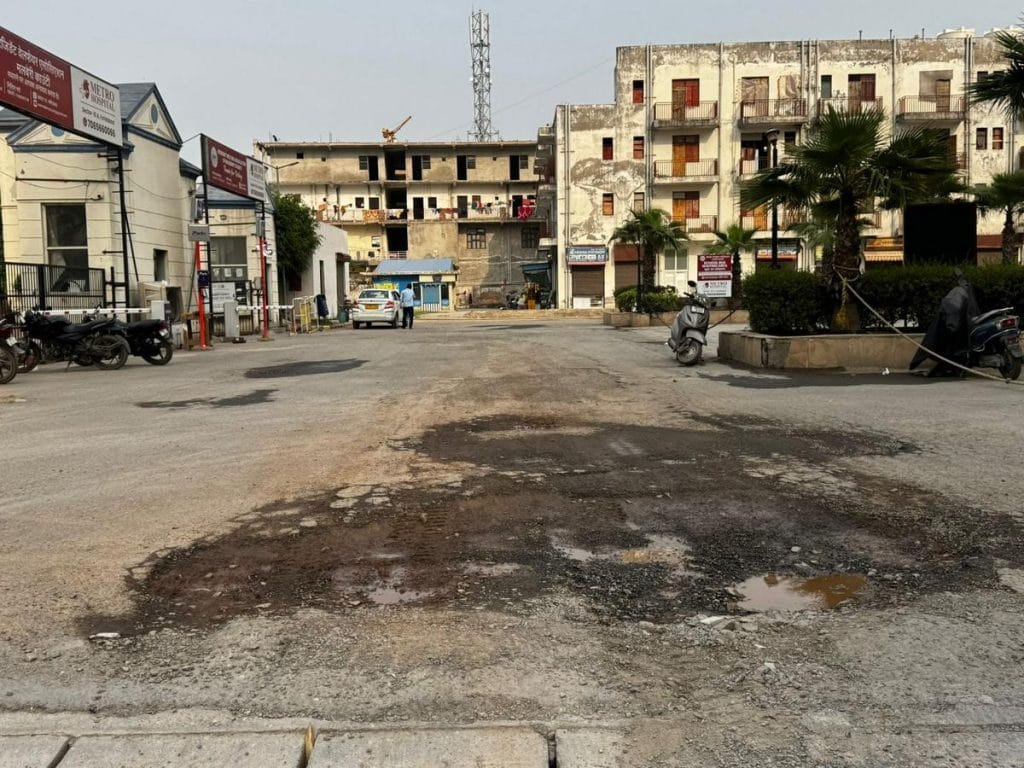
The approach to Mulberry County encapsulates the city’s neglect—a solitary high-rise flanked by slums and a road riddled with potholes.
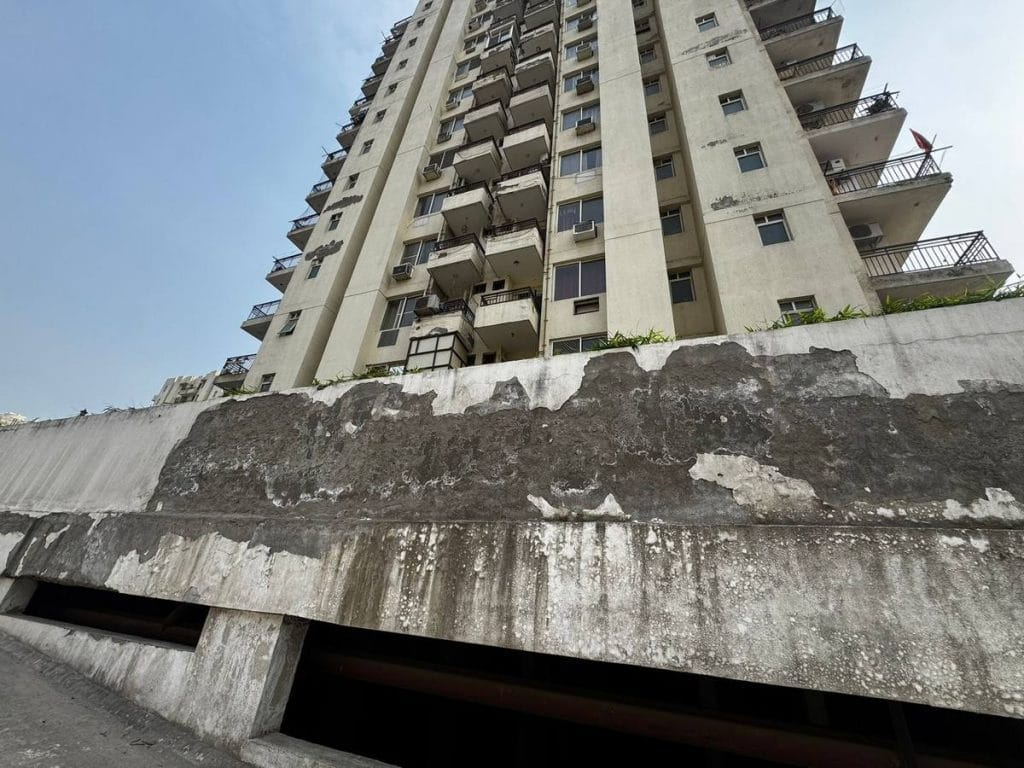
Several other high-rises in Greater Faridabad are grappling with similar sewage and waste management issues too.
“I have no choice but to live here. The price has halved, and I have a family to look after,” Gupta said.
A capped crusader
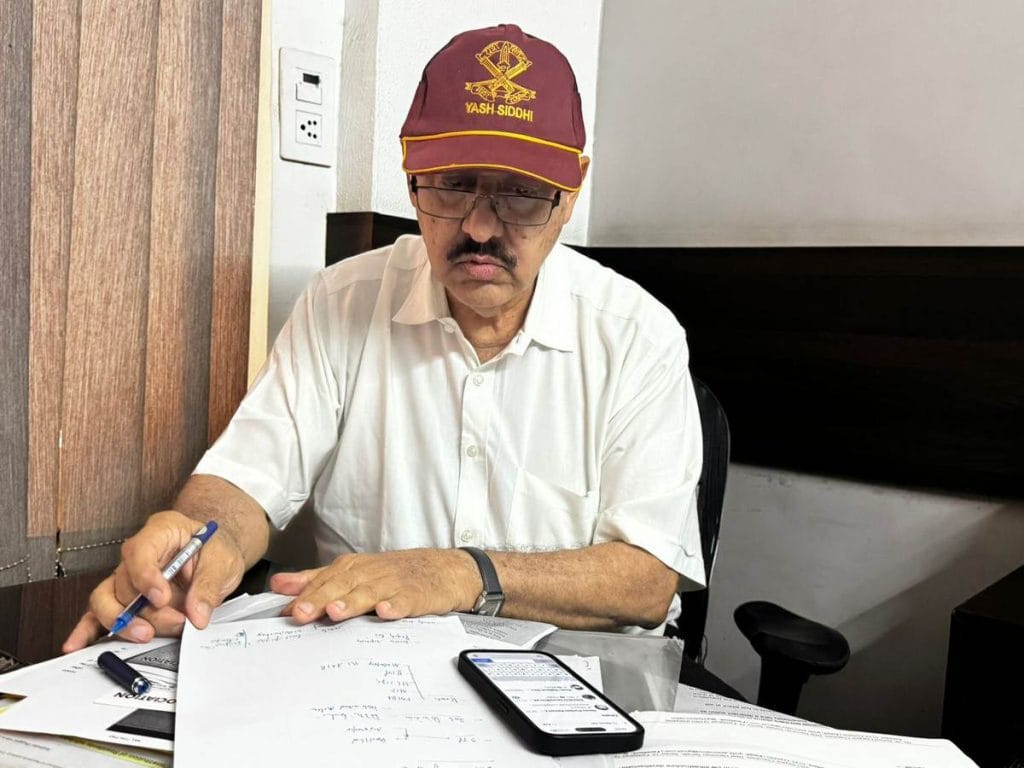
Wearing a red cap with ‘Yash Siddhi’ inscribed in yellow, advocate Satinder Duggal rattles off housing laws from memory in his hoarse, impatient voice. Residents bring him their complaints, while builders and RWAs dodge him.
“He can file a case against us, and then we’re stuck in court for years,” said a real estate agent.
Duggal has emerged as a kind of crusader in Greater Faridabad. From civic neglect to the high-handedness of RWAs, he offers legal advice to whoever comes seeking it.
“Most of the time, I offer help pro bono if the matter is small. But if it’s big, I charge,” he said.
Now he has taken up Mulberry County’s case, pressing the builder to transfer the society to the RWA so the funds can finally be used to make it functional. Duggal has a pointed question, one that has been asked about Gurugram from time to time as well: Why were occupancy certificates granted to high-rises that don’t have basic civic and infrastructure compliance?
“Who is at fault here? Where are the checks? No one from the administration visits to assess the condition of these buildings,” he said. “The builder is supposed to hand over maintenance and operational control to the RWA. But they aren’t. Every month, they receive maintenance money. To them, residents are like ATMs.”
There is complete civic apathy. Basic infrastructure is neglected. There are policing gaps, encroachments, and serious lapses in sewage management. Nobody is checking
-Satinder Duggal, advocate and executive member of GREFA
Under the Real Estate Regulation and Development (RERA) Act, builders are required to hand over control to RWAs within five years. Duggal has been trying to arrange meetings with builders, but they are often cancelled at the last minute. He says the builders are wary of being confronted with the law. He has warned them that the matter could be escalated to HRERA in Panchkula.
Builders claim they don’t trust RWAs, but Duggal argues the real reason is that once RWAs take charge, they can flag construction flaws, question fire safety compliance, and demand audited financial statements. The builders don’t want that kind of scrutiny.
“We’ve sent them draft agreements for the handover, but they keep delaying,” he says. “We’ve approached MLAs to build pressure.”
As an office bearer of the Greater Faridabad Association, he is now trying to extend its reach into Old Faridabad at the request of residents there.
“There is complete civic apathy,” Duggal said. “Basic infrastructure—street lights, roads, dividers—is neglected. There are policing gaps, encroachments, and serious lapses in sewage management. Tankers, often unregistered, are openly drawing sewage water. Nobody is checking.”
In BPTP Resort, Sector 75, there’s a duck pond. Except that the water is filthy and foul-smelling. Because there is no proper sewer connection, wastewater simply collects in the open.
“Children think it’s a pond and tell their friends about it at school. But this used to be an open, uninhabited area. Slowly, the sewage pond came up,” a resident said.
The city is now dotted with such sites. They remind residents of the Noida techie’s fatal fall into a similar pond two months ago.
Duggal has drafted a letter to the Deputy Commissioner, demanding it be placed on the agenda for the next district grievance committee meeting. The subject line: “Inhuman living conditions in government-approved colonies: Non-disposal of sewage, water and human waste in Greater Faridabad.”
A marketplace of waste
When a BJP member was elected ward councillor last March in one of Faridabad’s 64 wards, she campaigned on promises of clean, pucca roads and organised waste management.
A year later, she and her husband—who spoke on the condition of anonymity—find themselves in a constant tussle with their own party’s administration.
In practice, it is her husband who has become the face of the ward. Referred to as a ‘sarpanch pati’, he is a persistent irritant for officials. Almost every other day, he shows up at the Municipal Corporation office with a list of broken bylanes, new encroachments, and mushrooming garbage dumps. The complaints occasionally bring temporary relief, but the problems usually return within days.
“We are not even able to make a ward work. Forget Faridabad,” he said at his office, beneath portraits of Prime Minister Narendra Modi and Haryana Chief Minister Nayab Singh Saini.
He recalled a recent funeral in the neighbourhood, where mourners taking the body to the crematorium had to wade through waterlogged stretches. Muck splashed onto their funeral whites.
“They kept looking at me every time they stepped into those filthy potholes,” he said. “I felt humiliated.”
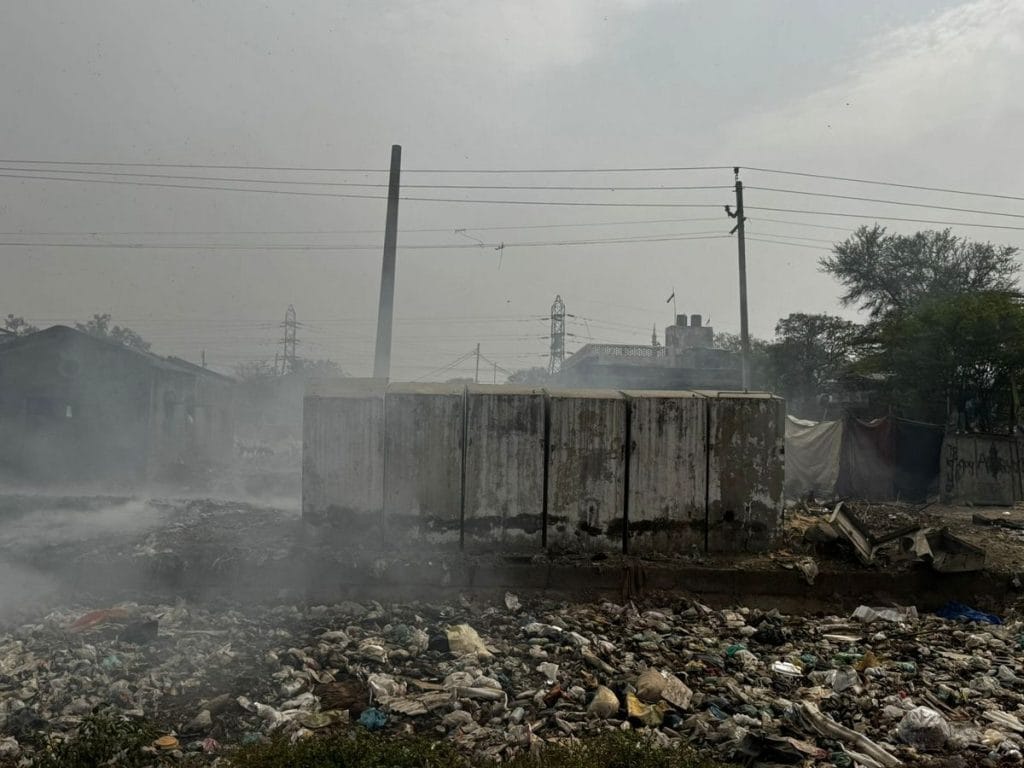
The biggest flashpoint in the ward is the Sector 22 fish market, which has effectively turned into a sprawling dump for over a dozen private waste collection vendors. Every evening, smoke rises in thick plumes as vendors set garbage on fire. Residents say at least five vendors are locked in a battle for control over the scraps.
Slums have risen along the edges, and at one corner stand faded pink Swachh toilets for women. No one has used them in five years.
“Who will cross a dumpyard to use a toilet?” a resident asked. “This placement of toilets itself shows how the Faridabad administration is managing the city.”
I wanted to become a [waste] vendor, but I can’t because I’m not rich. You have to pay hafta to existing vendors and local goons every month, and follow their instructions. Only then can you work
-Raju, Sector 22 resident
Two lanes down, the contrast is jarring. Large bungalows that once housed Faridabad’s industrial elite stand neck to neck. Most of those families have since moved to Greater Faridabad.
The mess at the fish market is the direct result of a vacuum in governance. Until recently, waste collection in Faridabad and Gurugram was contracted to a company called EcoGreen, but the arrangement was troubled from the start. As early as 2017, the Urban Local Bodies department flagged the company for failing to meet basic targets for door-to-door waste collection and recycling.
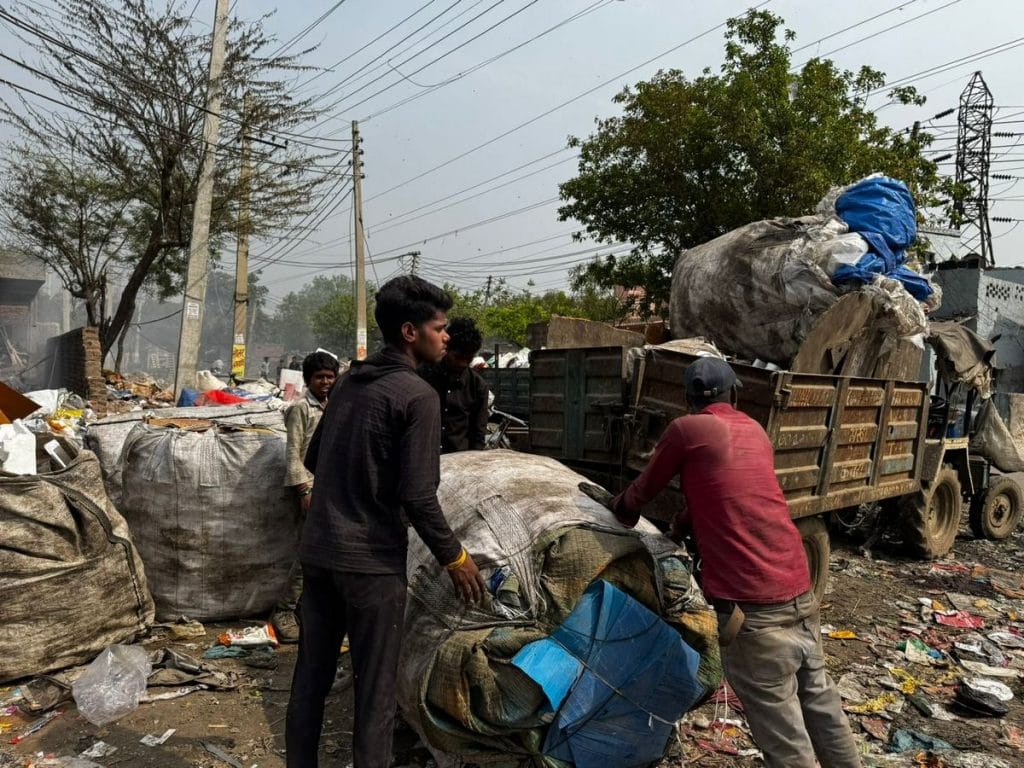
Officials said the Faridabad Municipal Corporation finally terminated the contract between 2023 and 2024. In the absence of a government contractor, a nexus of private vendors has moved in. Not only is waste disposal still dismal, there is a power struggle over who picks trash from which area.
“Waste is money. They sell this waste in the black market,” said a councillor.
Garbage hafta
Raju, in his 40s, once considered entering the waste business but abandoned the idea because the system is just too murky.
“I wanted to become a vendor, but I can’t because I’m not rich,” said Raju, who lives in a two-story house in a bylane of Sector 22. “You have to pay hafta to existing vendors and local goons every month, and follow their instructions. Only then can you work.”
This fierce competition for territory hasn’t translated into efficiency.
“One day the waste is collected—unsegregated—and then for the next few days, the garbage picker is nowhere to be found,” he said.
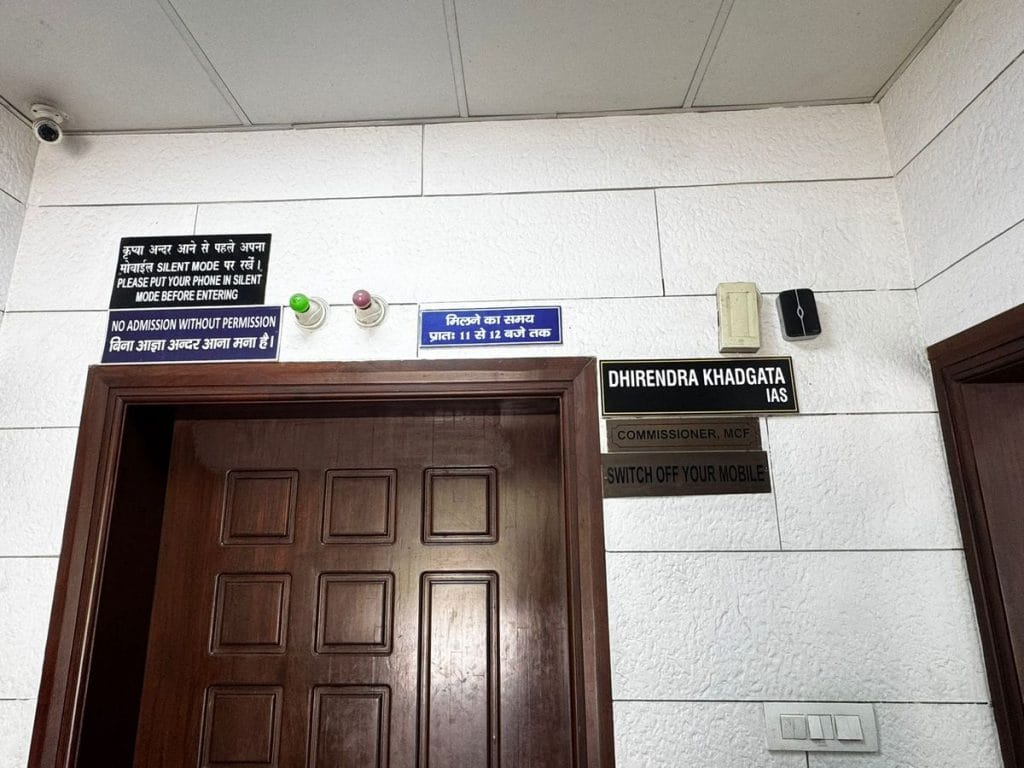
Municipal Commissioner Dhirendra Khadgata acknowledged issues with the current reliance on private vendors but cited Lucknow, which was ranked the third cleanest city in Swachh Survekshan 2024-25, as a model for Faridabad’s future.
“Lucknow wasn’t built in a day. Private vendors are currently handling the work here, but we are bringing a new company on board in the next two to three days,” he said. Khadgata added that the corporation has hired sanitation inspectors and initiated night sweeping in parts of the city.
A municipal corporation employee, speaking anonymously, struck a more resigned note.
“What can we do? Our vehicles pick up waste every day, but it piles up again. Residents also need to take responsibility,” he said.
Also Read: Meet new Noida CEO Krishna Karunesh—Yogi’s man navigating RWAs, builders, buyers
A 10-kilometre sewer
The uncollected waste of Faridabad usually ends up in one of two places: open plots or the city’s longest arterial channel, the Gaunchi drain.
Cutting through Ballabhgarh, Parvatiya Colony, Sector 53, Sector 12, and Sanjay Colony, this 10-kilometre stormwater channel now functions as an open sewer, clogged with plastic and everyday garbage. The drain eventually empties into the Yamuna.
In 2021, a pilot project was launched to clean it under the central government’s ‘Waste to Wealth’ mission. At the time, it was identified as one of Haryana’s most polluted channels, leaking an estimated 1,002 million litres of contaminated water into the river every day. Union Minister Krishan Pal Gurjar called it a “timely step” aligned with PM Modi’s Swachh Bharat Mission. Both the Haryana government and the Faridabad administration were committed to the effort, he said. Four years later, the drain remains choked.
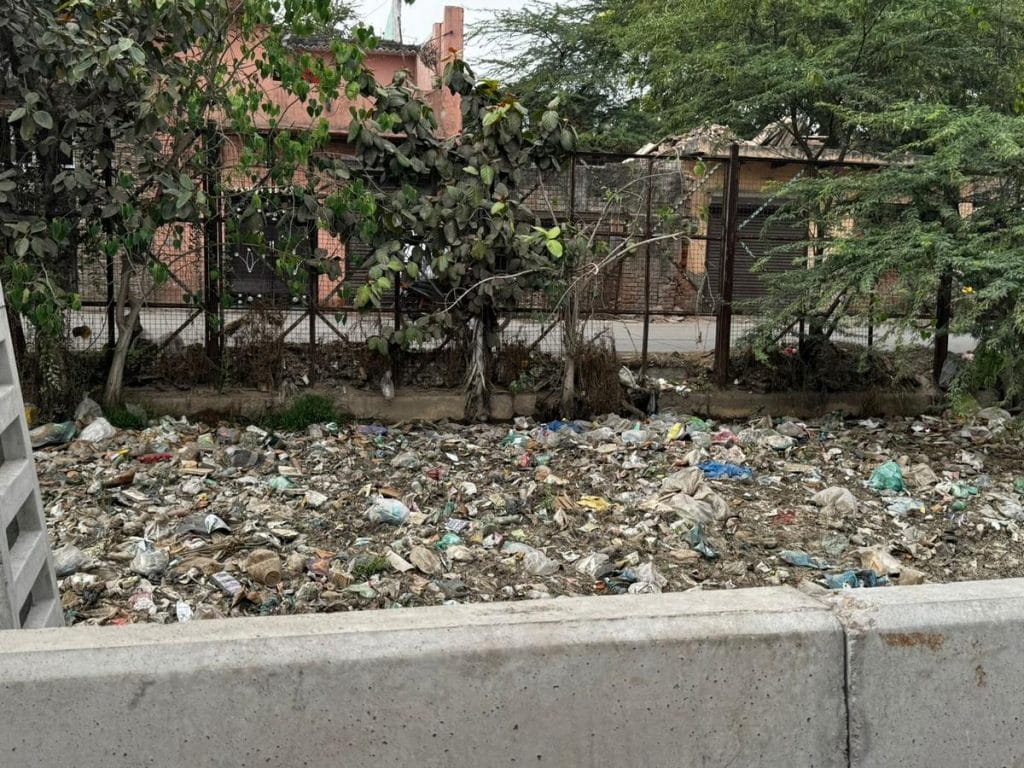
Officials in the Municipal Corporation describe it as a “legacy issue” that they’re working on, though there’s little visible change on the ground.
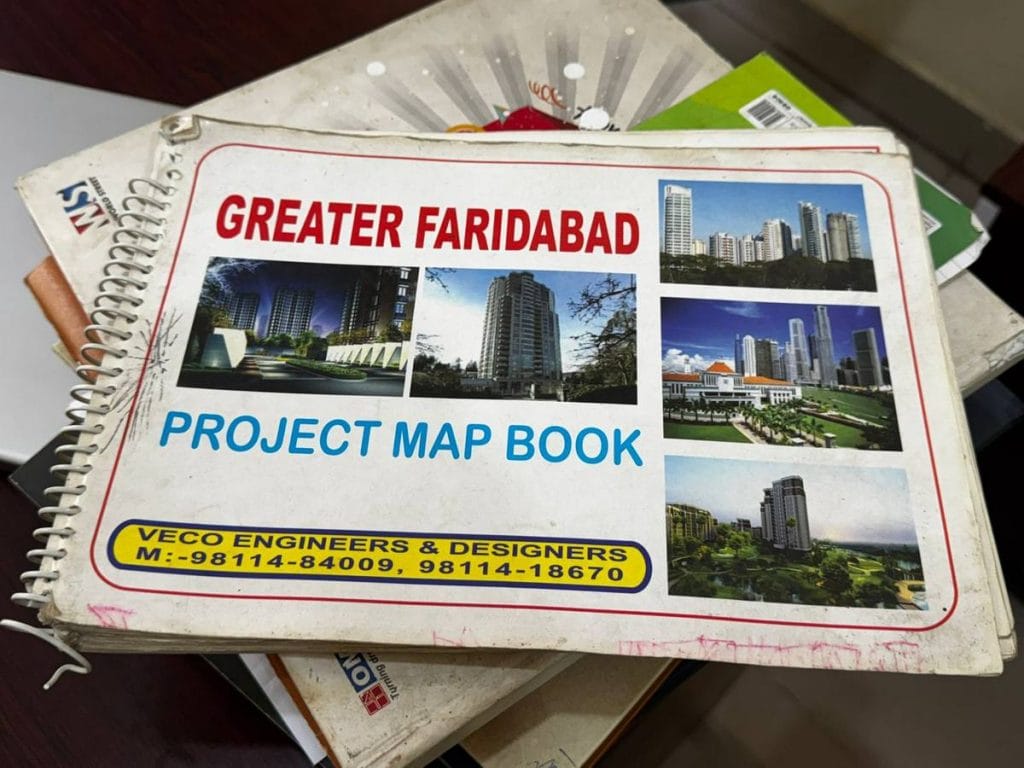
At a real estate office in Greater Faridabad, the walls are covered in somewhat wishful posters of the city — shiny high-rises, trimmed green landscapes, and wide, dustless roads. There is no sign of the open sewage seen in almost every locality.
“Developers built these high-rises only after getting permission. So how is it only their fault?” asked the agent, gesturing at the glossy prints. “Everyone is making money: the authorities, developers, RWAs, agents. Only the residents are suffering.”
For industrialist Pawan Mehtani, the fix is almost a fantasy do-over of the past. He wants to land the same kinds of manufacturers that chose Gurugram decades ago.
“Bring in a Maruti Suzuki, a Honda,” he said. “One big manufacturer to anchor the city again. Only that can pull everything else up.”
For now, though, Duggal’s second file continues to grow thicker.
(Edited by Asavari Singh)