


Forty elderly travellers from South Delhi walk slowly through a Buddhist temple in Bhutan, admiring its intricate frescos and breathing in its quiet spiritual serenity. Minutes later, they step into a restaurant and 68-year-old Raghav Kalra who begins singing his favourite Bollywood song Hai Apna Dil Toh Awara. After all, his fellow travellers are also his neighbours from Saket RWA in Delhi. He knows them well. And then, just like that, another voice joins in with Zindagi Ek Safar Hai Suhana.
Across Delhi-NCR, senior citizens are creating a parallel RWA universe for themselves. They travel in groups to Singapore and Dubai, organise yoga sessions, picnics and that all-Indian favourite antakshari marathons. Along the way they are also a support system for all needs – from fixing a plumbing crisis to gardening tips to park walk conversations to combat loneliness. The senior RWAs have become spaces where people living alone, or feeling isolated even within their families, can find company and a sense of belonging, reconnect with old hobbies, build new friendships and bring a sense of purpose to their lives after retirement.
The retired are pursuing both solace and spice.
Kalra refuses to describe himself as either retired or a senior citizen. He was part of the group’s trip to Thailand last year and joined them again for this year’s Bhutan tour in March.
“Travelling with this group is very different from going on a family holiday. Everyone here has a similar pace and understands what the others need. With families, the younger members often have different ideas. They may want to party till morning, go trekking or explore places spontaneously. We prefer a planned, relaxed trip where we can enjoy the journey without exhausting ourselves,” says Kalra.
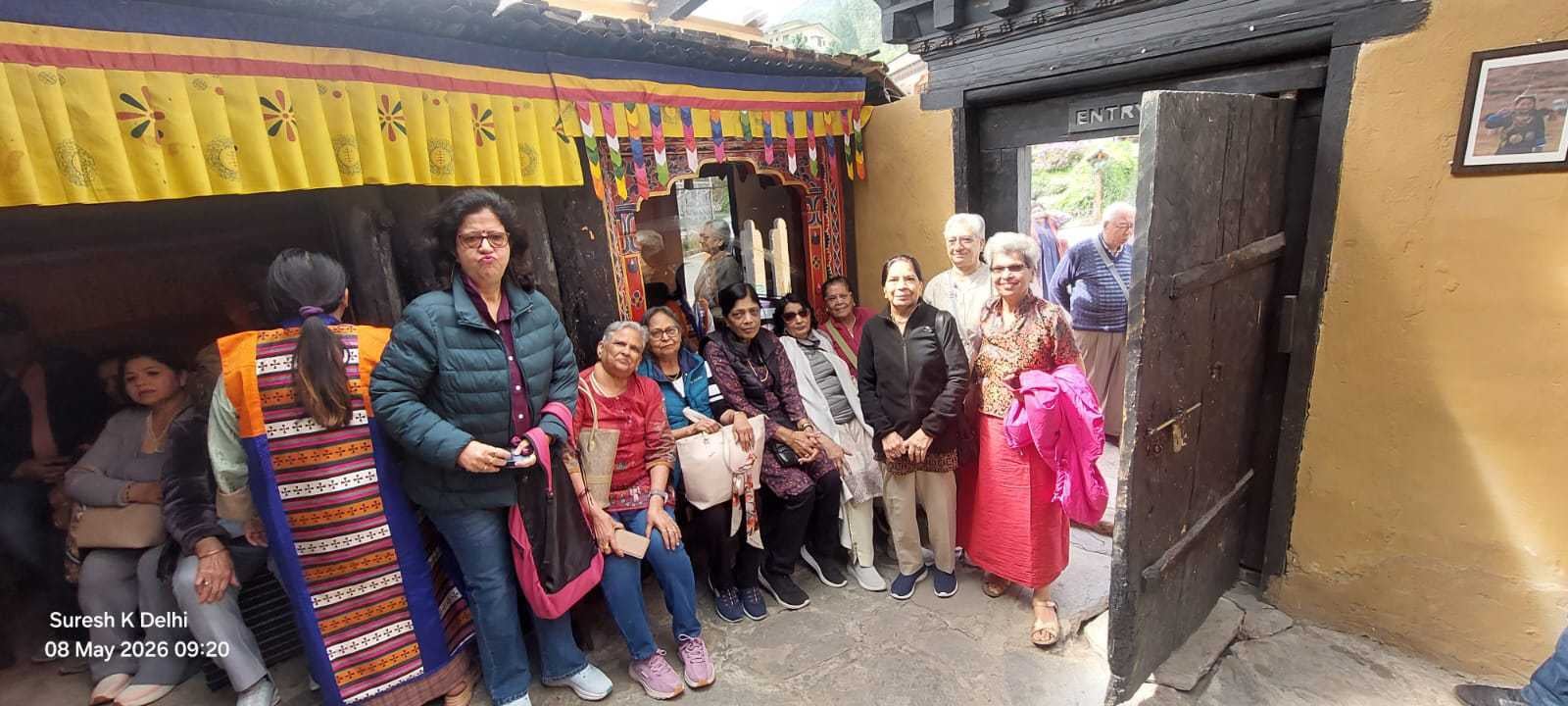
While some RWAs organise monthly or even weekly picnics within their society parks, others are taking senior citizens beyond their neighbourhoods. The Senior Citizen Welfare Association of Saket, for instance, has been organising international trips for elderly residents. But the role of these associations extends well beyond recreation. From arranging essential services and responding to emergencies to offering everyday companionship, RWAs are increasingly taking on responsibilities outside their conventional remit.
“These groups and small gatherings may seem like simple things, but they make a real difference. They are giving the elderly a sense of belonging — a space where they can share what is on their minds, find someone who will listen and a feeling that they are not alone”, said 66-year-old Ajay Sud, president of Press Enclave Residents’ Welfare Association in Saket.
A WhatsApp group of their own
Alongside regular residents’ WhatsApp groups, several RWAs have created separate ones exclusively for those aged 60 and above. These serve as a direct line of communication, allowing elderly residents to seek help, share their thoughts or simply stay in touch. RWA members also use them to share important announcements and information about upcoming activities and gatherings.
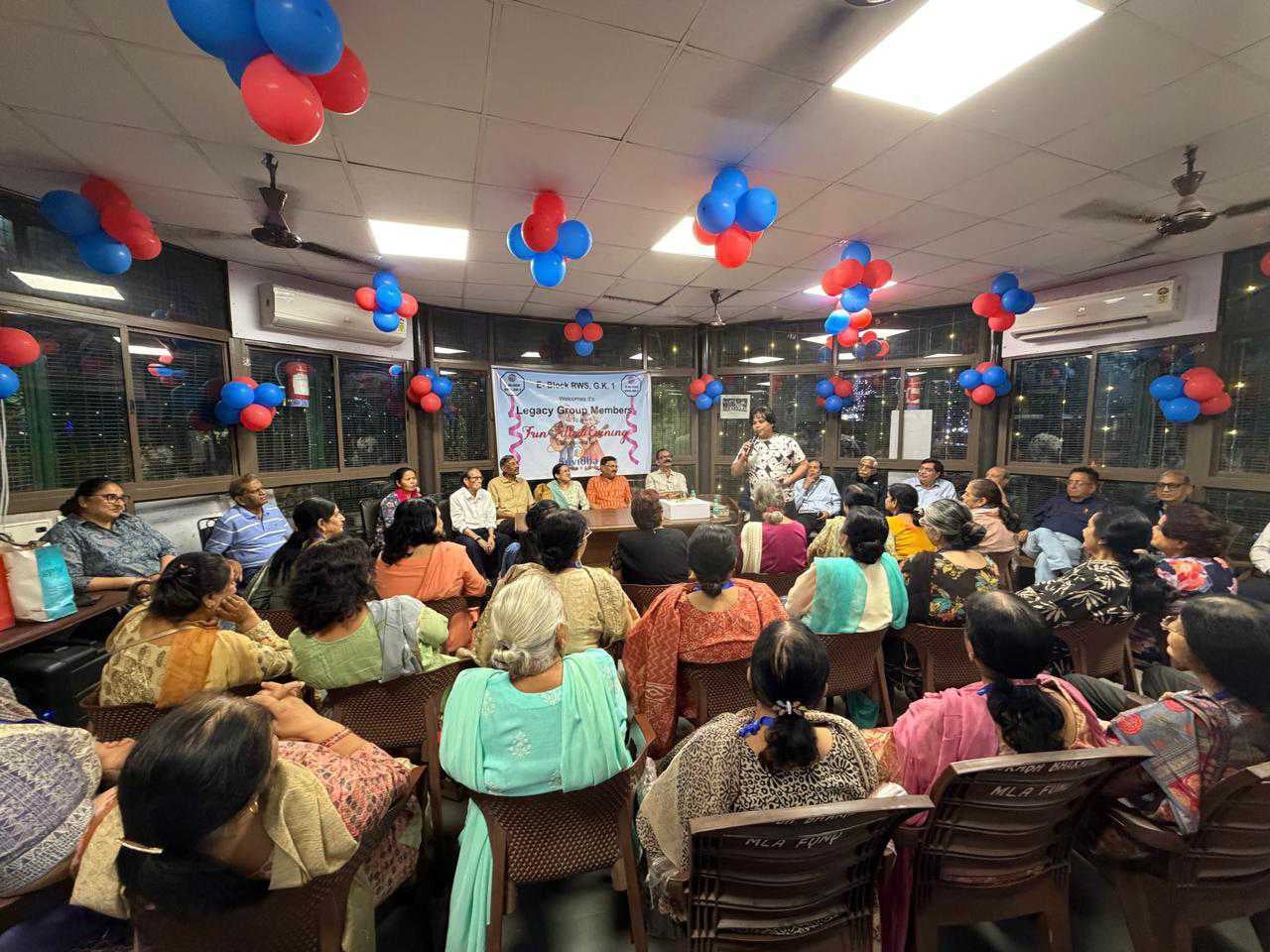
“Hello Legacy group, we are back with an activity today, as we are missing some hustle and bustle in the group,” read a recent message posted in the Legacy group, a WhatsApp group exclusively for residents aged 60 and above in Greater Kailash 1.
The group admin soon announced the activity, inviting members to share a cherished memory from their past. What followed was a flood of nostalgia. Residents revisited their childhoods, college years and memories of growing up in Himachal Pradesh. Some recalled youthful adventures and simpler times, while one member remembered the overwhelming experience of holding and kissing their firstborn child.
“If everyone has a group, why should senior citizens be left out? We wanted to create a dedicated space where their messages would not get lost among hundreds of other conversations and where their concerns could be heard and addressed on priority”, said Rajiv Kakaria, 68, a member of the Greater Kailash 1 RWA. “The group has become a space where senior citizens can talk, share memories, participate in activities, play games and simply enjoy each other’s company. For many, it is a way to feel connected, included and involved in the life of the society.”
But not everyone wants a social circle defined by age. For 87-year-old Hema Raghavan, companionship is as much about interacting with younger people as it is about meeting those her own age.
“I don’t believe in creating separate groups for senior citizens and youngsters. That only ends up isolating people from one another. If elderly people are always sitting together, the conversations can become limited to medicines, health problems and how they spend their days. But when people of different ages come together, there is an exchange. We listen to the younger generation, they listen to us, and both have something to learn from each other,” she says.
A former English professor at Delhi University, Raghavan retired in 2005 but has continued to pursue her interests and keep herself occupied. She says one of the biggest adjustments after retirement is the sudden disappearance of a familiar routine. But she does not see it as a reason to slow down or withdraw from life.
“People often start thinking that once they retire, one chapter of life is over. But I see it as the beginning of another. There is so much to do even at 60, 70 or 80. We have our own interests, hobbies and things we always wanted to pursue. Instead of expecting younger people, who have their own busy lives, to sit with us all the time, we should find things that keep us engaged,” she says.
Since retiring, Raghavan has published 15 books and continues to manage much of her household work herself. Even as she checks the senior citizens’ WhatsApp group on her phone, she questions the need to organise community activities separately for different age groups.
She acknowledges that such initiatives are helpful for the elderly but believes they should not come at the cost of bringing generations together.
“Why should celebrations and community events be limited to one age group? They should be open to everyone. When we start organising everything separately, we end up creating more distance between people. The idea should be to bring generations together, not keep them in separate circles,” she adds.
From yoga sessions to health camps
At 5 am, Lata, 69, is already up and about. By 6 am, often even earlier, she is at the society park, greeting familiar faces and setting out for her morning walk. (Moved up)
Two years ago, however, her mornings were spent largely indoors. Though she lives with her son, daughter-in-law and two grandchildren, having family around did not always mean having someone to talk to or spend time with.
“When we were young, we were busy building our lives and raising our families. Now that we finally have the time, our children are busy with theirs. So, it is better to create our own space, find our own interests and do the things we could never make time for while we were working,” said Lata.
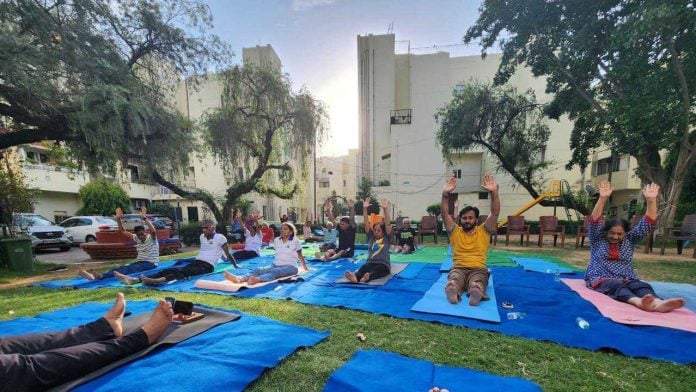
Lata joined the morning yoga sessions organised by Sud to give her day some structure. What began as a way to stay active soon became an opportunity to meet people her own age and bring more social interaction into her mornings.
The sessions begin with warm-up exercises, followed by different yoga activities each day. For residents unable to come to the park, the classes are also streamed online.
“I no longer wake up feeling lonely. I get to meet people, talk, laugh and share things with them. By the time I return home, I already feel like I have made something meaningful out of my day,” said Lata.
But the interaction does not end when the one-hour yoga session is over.
The elderly residents rarely rush back home. Some remain seated on their yoga mats, others take a slow walk around the park, while a few settle down on the benches. Lata talks about her grandson’s latest mischief and how active he has become. She also shares how practising yoga every day has helped her manage her knee pain.
Sitting beside her, other residents discuss their health concerns, exchange recipes and talk about the small lifestyle changes they have made over the years.
“There were always elderly people sitting in different corners of the park, talking among themselves. But there was no collective effort to bring them together and create something that could involve more people and benefit them. We wanted to build a space where they could exercise, interact and feel that they were part of a community,” says Sud.
Since Sud took over as RWA president in 2020, he and his team have introduced knowledge-sharing sessions, CPR and emergency response workshops in collaboration with hospitals and emergency services, free physiotherapy sessions and informal evening gatherings over snacks.
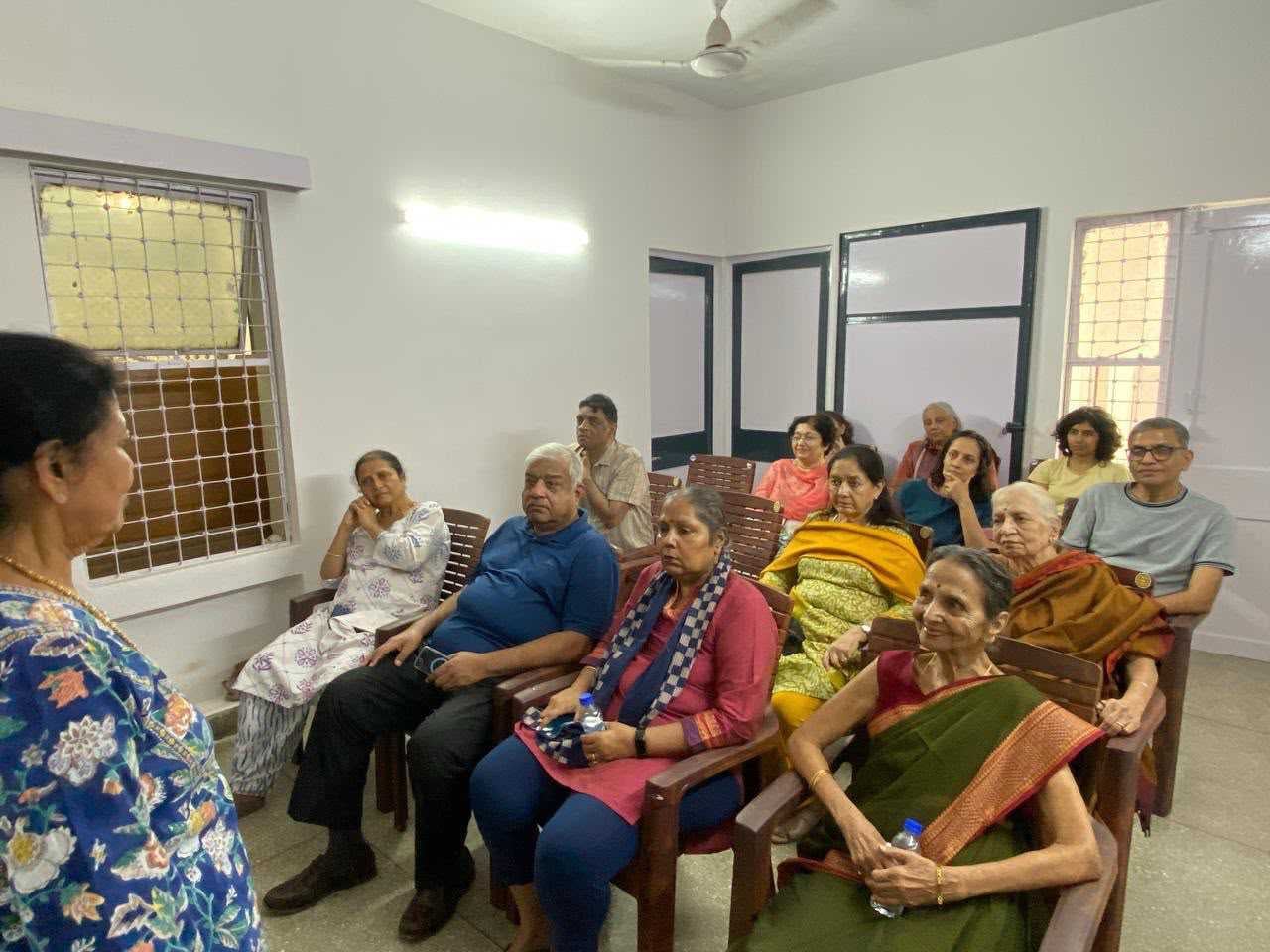
Similar initiatives have taken shape elsewhere in south Delhi. In a society in Greater Kailash, residents’ birthdays are celebrated together on the last Saturday of every month.
In Saket’s N Block, health camps are organised for elderly residents, while in Green Park, RWA members make themselves available to those who need assistance.
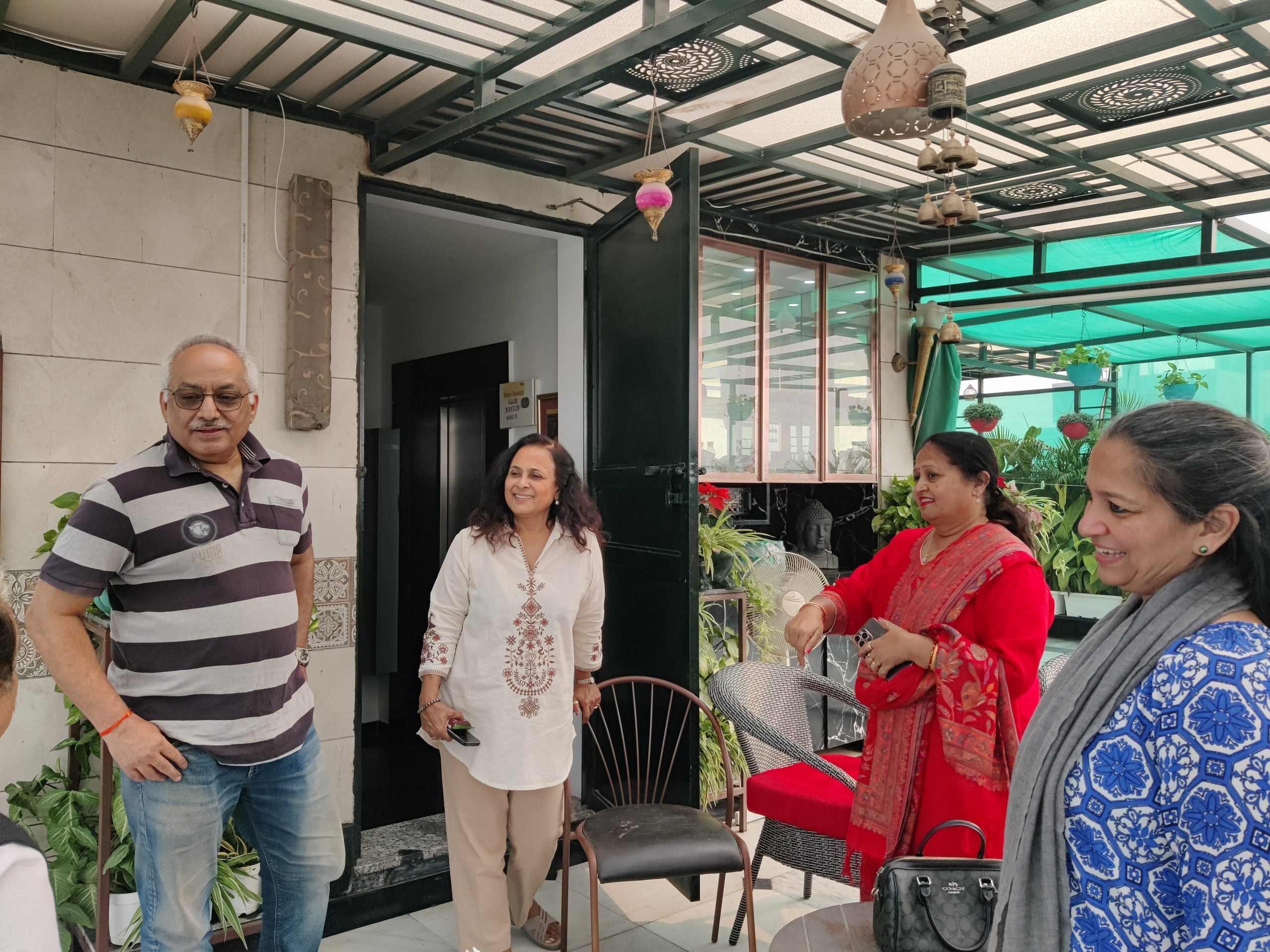
“Several RWAs are doing different things at their own levels. We also meet, discuss our initiatives and learn from one another. These activities are not entirely new, elderly people have always needed such spaces. What was missing was active participation and someone taking the initiative to bring people together. Once that effort began, more people started getting involved,” he adds.
Travel companions after retirement
Sushma Sharma, a Saket resident, missed out on the group’s previous outings and is now eagerly awaiting its next international trip.
“Elderly people living in these colonies have spent their lives working, earning and building a comfortable life. We have our own houses, financial security and families. But after retirement, when children move out for work or studies, loneliness becomes one of the biggest challenges. You may have everything around you, but you still need people to talk to and spend time with,” says Sharma.
The trips are planned and organised by the Senior Citizen Welfare Association of Saket. Responsibilities are divided among the group, with everyone taking up tasks according to their abilities, health and energy levels. With the help of a tour operator, they put together itineraries that take into account the needs of elderly travellers, including shorter walks, relaxed sightseeing schedules, frequent rest stops and enough time to sit together, chat and share stories.
The group includes retired government officials, doctors, engineers and people from various professional backgrounds. Long journeys and leisurely evenings give them time to revisit stories from their younger days, talk about old hobbies, discuss their children and reflect on how life has changed over the years.
“One trip brings together people from so many different professions and walks of life. If there is a medical emergency, we have a doctor among us. We have teachers and people with years of experience in different fields. Everyone brings something to the group, and there is always something to learn from one another,” adds Kalra.
However, getting everyone together for a trip is not always easy. As more senior citizens express interest in joining, coordinating travel plans and accommodating different health requirements have become increasingly demanding.
Surender Kumar, president of the Senior Citizen Welfare Association, says demand often exceeds the number of people the association can accommodate on a trip.
“If we plan a trip for 50 people, nearly 150 may apply. Taking a large group of senior citizens on a trip is not easy to manage. Everyone has different health conditions, dietary requirements and personal preferences. You have to consider all of that before making arrangements,” he says.
The organisers, Kumar points out, are senior citizens themselves, which makes managing large groups of elderly travellers particularly challenging.
Living alone and security concerns
While RWAs are trying to make residential colonies more elderly-friendly, challenges remain beyond the society gates. Neha Puri, president of the Green Park RWA, points to the lack of proper footpaths and safety concerns in public parks and open colonies, which often discourage elderly residents from stepping out.
“Not everyone is comfortable using online delivery services. Most elderly people prefer stepping out, walking to the market and buying things themselves. But even something as basic as walking to the neighbourhood market becomes difficult when there are no proper footpaths,” says Puri.
Puri also highlights the hesitation among some elderly residents to register themselves with the Delhi Police under its Senior Citizen Registration initiative. While the police have provisions for senior citizen welfare and periodic visits to check on their well-being, she says, the regularity of these visits remains a concern.
“There are provisions for police personnel to visit senior citizens, check on their well-being and maintain regular contact with them. But I have rarely seen this happening consistently. There is also a communication gap between residents and the police. Many elderly people are uncomfortable speaking to unfamiliar officers, especially when a different police personnel visits their home each time. This lack of familiarity often adds to their sense of insecurity,” Puri adds.
Avdhesh Aggarwal, 72, shares a similar concern about the perceived security risks of disclosing one’s age and living arrangements, particularly for those living alone.
“Many of us hesitate to register ourselves as senior citizens because we worry that making our age and living arrangements known could expose us to security risks,” said Aggarwal, recalling an incident involving an elderly couple who once lived in his neighbourhood.
He recalls that the police had visited the couple’s home to register them as senior citizens. A few days later, their house was burgled. While the incident does not establish a connection between the registration and the burglary, it has contributed to the apprehensions some elderly residents have about sharing their personal details.
Puri says such fears are particularly common in open colonies, where restricting access can be difficult despite security arrangements.
“Many elderly residents worry that if outsiders become aware that an elderly person lives alone, or that there is no one else at home for most of the day, they could become more vulnerable. For them, security is not just about guards at the gates; it is also about protecting their privacy and ensuring that their living arrangements do not make them easy targets,” she added.
Accessibility is another concern. In Delhi’s many low-rise residential colonies, even climbing a flight of stairs can become an obstacle to independent living. While some residents have installed private lifts, RWAs in areas such as Green Park and Saket are collectively approaching the Municipal Corporation of Delhi (MCD) for approvals to install lifts in their localities.
For Aggarwal, making residential infrastructure elderly-friendly should be treated as a basic requirement rather than an additional facility.
“Ageing should not mean that you have to give up your independence. A person should be able to step out of their house, walk safely, use a lift and reach the neighbourhood market without depending on someone for every small task. Our colonies need to be planned in a way that allows senior citizens to continue living independently,” added Aggarwal.
A buddy system for the elderly
Rakesh Dabas bends over to check the tulip seeds once again in his terrace garden in Saket. At 70, he has created a little corner of his own, filled with red, pink and white roses, flowering plants and different shades of green. For him, the garden is more than a collection of plants. It is a source of comfort and companionship, particularly when his son is away at work and he spends long hours by himself.
Having recently taken over as president of the G Block RWA, Dabas is now thinking of extending that sense of companionship beyond his terrace. One of the first initiatives he wants to introduce is a buddy system for senior citizens in the neighbourhood.
The idea is to pair elderly residents living near one another, encouraging them to visit each other’s homes at least once a week, sit over a cup of tea and check on each other’s well-being.
“I want to create a neighbourhood where no elderly person feels that they are living unnoticed. A weekly visit, a cup of tea or even a simple conversation can make a difference. It will help us know who is doing well, who may need assistance and whether someone has been unwell or has not stepped out for a few days,” said Dabas.
Even before the formal system takes shape, Dabas has become an informal point of support for several residents. His phone frequently rings with requests for help. An elderly woman needs an electrician, another resident needs medicines delivered, while someone else is looking for assistance with a household task.
“Saket has a large population of senior citizens, many of whom live alone while their children are away for work or studies. The buddy system is about building that habit of caring for each other, rather than leaving every elderly person to manage everything on their own,” he adds.
Back in Greater Kailash, Kakaria envisages a similar neighbourhood support system, where elderly residents do not have to make several phone calls to arrange something as basic as getting medicines from a nearby pharmacy.
Government needs to step in
For Kakaria, the growing involvement of RWAs in elderly care reflects a larger shift in India’s traditional family support system. As joint families give way to nuclear households and children move to other cities for work or studies, elderly parents are increasingly left to manage their everyday needs independently. RWAs are stepping in to fill some of that gap.
However, he also points out that there is a limit to what RWAs and resident-led groups can achieve. Most of these initiatives are run by volunteers who have neither the authority nor the resources to address every concern faced by senior citizens.
“This is where the government needs to step in. RWAs can organise meetings, arrange volunteers and help residents with their everyday needs, but they cannot replace a proper support system. When was the last time we saw a major government initiative or a sustained public conversation around the everyday problems of senior citizens?” he asks.
Pointing to countries where senior citizen welfare and assisted-living facilities receive greater institutional attention, Kakaria says India still has considerable ground to cover in building a support system for its ageing population.
“How many properly equipped senior citizen homes do we have? How many trained people can families call during a medical emergency, or simply when an elderly person needs assistance or someone to talk to? It’s high time we start thinking about this,” he says.
“RWAs are working on a lot of small initiatives, but most of their members are senior citizens themselves, with limited resources and no financial support. The government needs to step in. Caring for the elderly cannot be left to a handful of people, it needs to become a larger policy priority,” he adds.
(Edited By Raunaq Lekhi)