



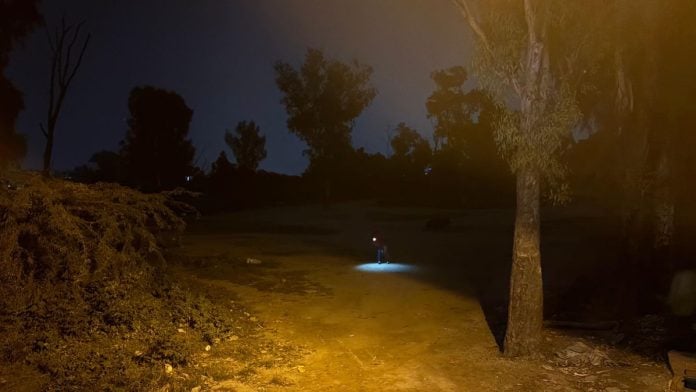
New Delhi: Nobody in the neighbourhood knew that the unidentified, decomposed body found in a field in north Delhi, belonged to a 16-year-old girl who lived a few lanes away. She had been gangraped, police said, and plastered posters across Swaroop Nagar for leads. Within a day, the body was identified by a tattoo on her arm. And almost immediately, some people who didn’t even know that the victim was their neighbour began talking about her — whether she drank, smoked bidis or used drugs.
Her father, a 55-year-old flower seller who lived with her in a one-room dilapidated house in Swaroop Nagar, says he cannot confirm any of it. He remembers his daughter differently: as the child who stayed with him after he separated from his wife, cooked for him, loved BTS, and spent her evenings making garlands to help him earn a living.
“I don’t know whether my daughter did these things or not. I used to leave for work in the morning and return in the evening. I have heard people say that she may have smoked bidis, but I never saw her doing any of this with my own eyes. So I cannot believe what people are saying about her,” he said.
In India, the aftermath of rape can become a second reckoning for the victim — where she went, whom she met, what she wore, whether she drank or smoked, and whether she was considered “good” enough to deserve sympathy or outrage. But a victim’s surname, her socio-economic conditions and even the brutality of the crime can determine whether the outrage intensity holds.
The 2012 Delhi bus gangrape case triggered national outrage and mass protests for months, leading to a change in criminal law. Fourteen years later, a teenager’s alleged gangrape and murder in a neglected neighbourhood barely produced a ripple beyond the initial news cycle. There was no protest in the lanes where she lived, no collective demand for justice — only swirling rumours. In this case, the police have come to her defense.
“She is a juvenile. People will have so many different types of claims. We are adults and we cannot characterise any person: she is doing this, she is doing that, she is into this. We cannot do it unless we have concrete evidence,” Shobhit D Saksena, Deputy Commissioner of Police (DCP) for the Outer North District, said. “So just because some people say this, it doesn’t make that right.”
Her father didn’t even know that his daughter was missing. He assumed that she had gone to her sister or mother’s house in Shalimar Bagh. Then, on 11 September — a day after she went missing — two drunken men came to his door in the dead of the night and told him she was lying dead in the nearby jungle. Limping, he followed them out but turned back when they urged him to go deeper into the forest.
Her body was discovered two days later on 13 September after residents spotted dogs scavenging it. By then, her body was so badly decomposed that even forensics were initially unable to identify the victim’s sex. One of her arms had been severed, and her face was disfigured beyond recognition.
There were no witnesses, no CCTV and police finally traced the crime to a tempo near the field and arrested four people — a 19-year-old man Shivam Ganesh and three boys aged 16 and 17 — in connection with the alleged gangrape and murder. Police say the girl had gone to meet the 17-year-old on the evening of 11 September. He was allegedly accompanied by three friends.
The group allegedly drank inside the tempo. She was then allegedly gangraped by three of the accused and stabbed at least six to eight times, taken to an open field and her body was hidden under leaves.
“Preliminary investigation indicates that three of the suspects sexually assaulted the girl. The fourth has claimed that he did not participate in the rape but was involved in the murder,” said Saksena, adding that they are finalising the chargesheet.
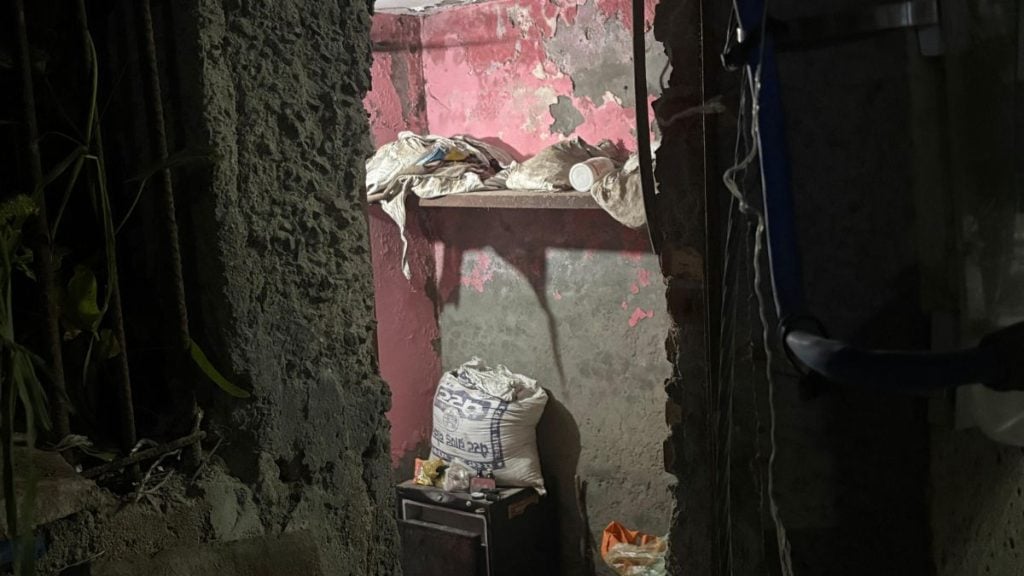
‘Looked out for father’
The victim’s father was an absent dad and a sick man.
He sells flowers in Shalimar Bagh market and has a hernia that makes it difficult for him to walk. He says he earns so little that sometimes he does not even have Rs 500 left at the end of the month. His wife lives separately with their two sons in a jhuggi in Shalimar Bagh.
Of their four daughters, the 16-year-old victim had been living with him in Swaroop Nagar. The rest of them are married.
One neighbour remembers the girl as someone who always looked out for her father.
“She was a good girl. She would play with the children in the lane and, in the evening, make flower garlands to help her father,” said Sunita, a neighbour.
The children who usually played with the girl were much younger, she said. The accused were not among those she normally saw around their house.
For the victim’s father, his daughter’s absence did not immediately seem unusual. She had gone out for days before and returned, he said, so he assumed she would come back this time too.
He said he had little information about the days between her leaving home and her death and didn’t know the accused or their houses.
“I don’t know. We don’t even know where she was taken. I don’t know their names. I don’t know where they live. I don’t even know where they took her,” he said.
Neighbours are worried for his well-being.
“He needs protection. He is alone now, and he has no one to look after him. It is dangerous for him to be here. Who will take care of him?” said a neighbour.
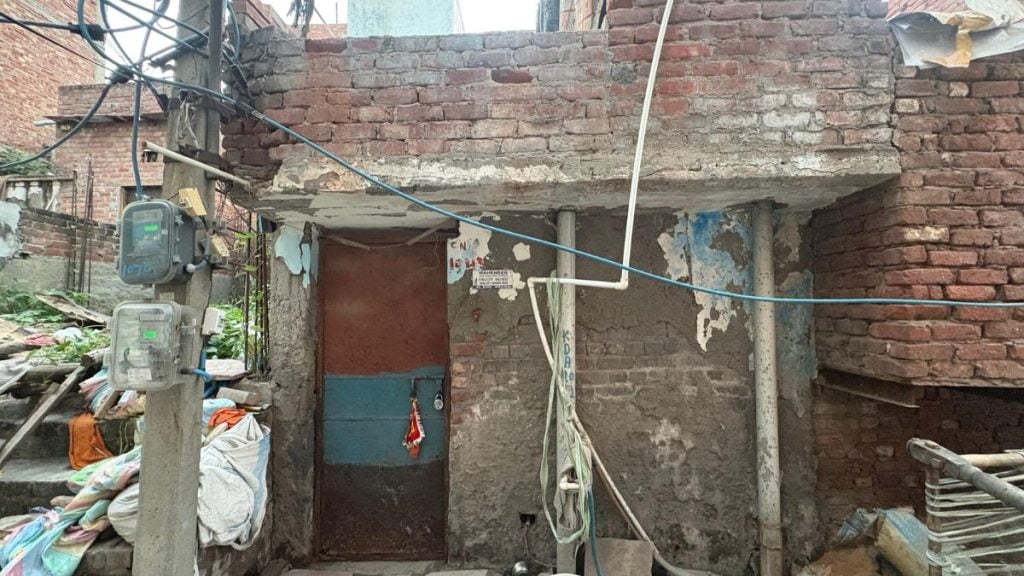
No one knew she was missing
For days, no one in the family or the neighbourhood knew the girl was missing. Many passed by the posters of her decomposed body but couldn’t recognise her.
“If we had known it was her, we would have known that a girl from our own lane had been killed. We had no idea the unidentified girl was from our neighbourhood,” said Sunita, a resident.
Swaroop Nagar is a maze of narrow lanes where people may know those living immediately around them but remain unaware of what happens a few streets away. Even days after the murder, some residents in neighbouring lanes said they had not heard about the case.
For those who did know her, however, her death has changed the way they talk about safety in the area, particularly the safety of girls.
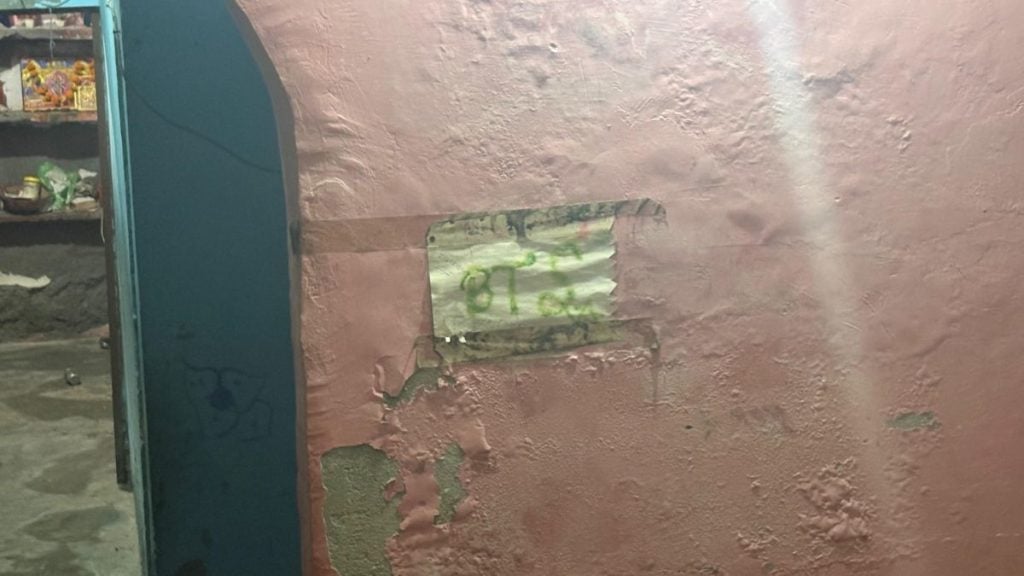
A handful of residents pushed back against the character assassination that the victim’s decision to leave the house could be used to explain what happened to her.
“She was just 16. She was a child. Her father would leave for work in the morning and return at night, and they would eat and go to sleep. Something so serious happened to her, and this could happen to any girl. Why is the girl the first person we blame?” a neighbour, Sarfaraz said.
Another resident said girls in the area were often warned against going out because of the risks they might face. But keeping them indoors is not a solution.
“How long will we keep our daughters inside? They have to step out. They have to study, they have to work, and they have to live their lives. You cannot keep a girl hidden inside the house forever,” Anjali, a resident, said.
The conversations have also turned to the four accused. Sunita said their age should not mean that the seriousness of the allegations was overlooked.
“They may be young, but they should understand that there are consequences. If they are simply allowed to return, what message will that send? They may think they can do something like this because they are minors,” she said.
The police are also seeking to have the three minors tried as adults.
“Given the gravity of the offence, we want to approach the Juvenile Justice Board seeking that the three minors be tried as adults,” DCP Saksena said.
Sunita also pointed to a more everyday concern: Young people drinking and spending time out in the open without much supervision. Residents even said the accused were often spotted smoking hookah in the area.
“Children as young as 14 or 15 could be seen drinking in the area,” she said.
The shock has not settled yet for the victim’s father. He didn’t even look at her body initially. Four days later on Friday, he performed her last rites.
“She was with me till yesterday and all of a sudden, she is no more. Someone killed her with so much cruelty. She was just 16. Someone killed a 16-year-old girl,” he said. “What was her fault? Why should a girl have to pay with her life?” he lamented.
(Edited by Stela Dey)