








Gurugram: A woman stands in the path of a bulldozer in Suncity, a posh Gurugram neighbourhood. She repeatedly asks for an official order as the bulldozer moves in to bring down a pillar of her luxurious two-storey villa and the carefully maintained garden beside it.
After a heated exchange, she is eventually moved aside by personnel deployed on site, and the demolition proceeds.
“I have served this country for so long. And yet, we were given no notice, no warning—nothing. One moment, everything was as it had always been, and the next, it was gone,” said 79-year-old Colonel SP Saini (retired), a resident of Suncity.
Over five days, from 18 to 22 April, similar scenes played out across some of Gurugram’s most affluent neighbourhoods—spaces more accustomed to casual, almost routine rule-bending than actual enforcement.
Their brief encounter with this kind of aggressive action, often reserved for the city’s informal settlements and marginalised colonies, is now a reality that’s hitting home. Lane by lane, JCBs rolled in, tearing through the add-ons that had crept beyond property lines—ramps, guard rooms, curated lawns, kiosks, and other structures edging into public land. Authorities said these had encroached onto the Right-of-Way (RoW) or reflected the creeping commercial use of stilt floors in residential areas. They promise blacklisting architects, too.
“The authorities are demolishing these structures now, but they’re the ones who allowed things to reach this point. This couldn’t have happened if proper checks were done before granting Occupancy Certificates,” said a resident of DLF Phase 3, on the condition of anonymity.
The drive came after a 2 April interim order by the Punjab and Haryana High Court, which put a stay on stilt-plus-four constructions.
The S+4 policy allows construction of four floors above such stilted parking structures on residential plots in existing HSVP sectors, whereas without stilts, only up to three floors are permitted.
In the days that followed, Additional Chief Secretary of Haryana’s Town & Country Planning and Urban Estates Department, Anurag Agarwal, asked departments to clear encroachments and enforce building norms strictly. The order came with a deadline as departments were asked to submit a compliance report by 22 April.
The department moved quickly—rolling out a coordinated drive across multiple locations at the same time. The exercise spanned across DLF Phase 1, South City 1, Palam Vihar, Sushant Lok 2, Uppal Southend, Malibu Town, Ardee City, and Suncity.
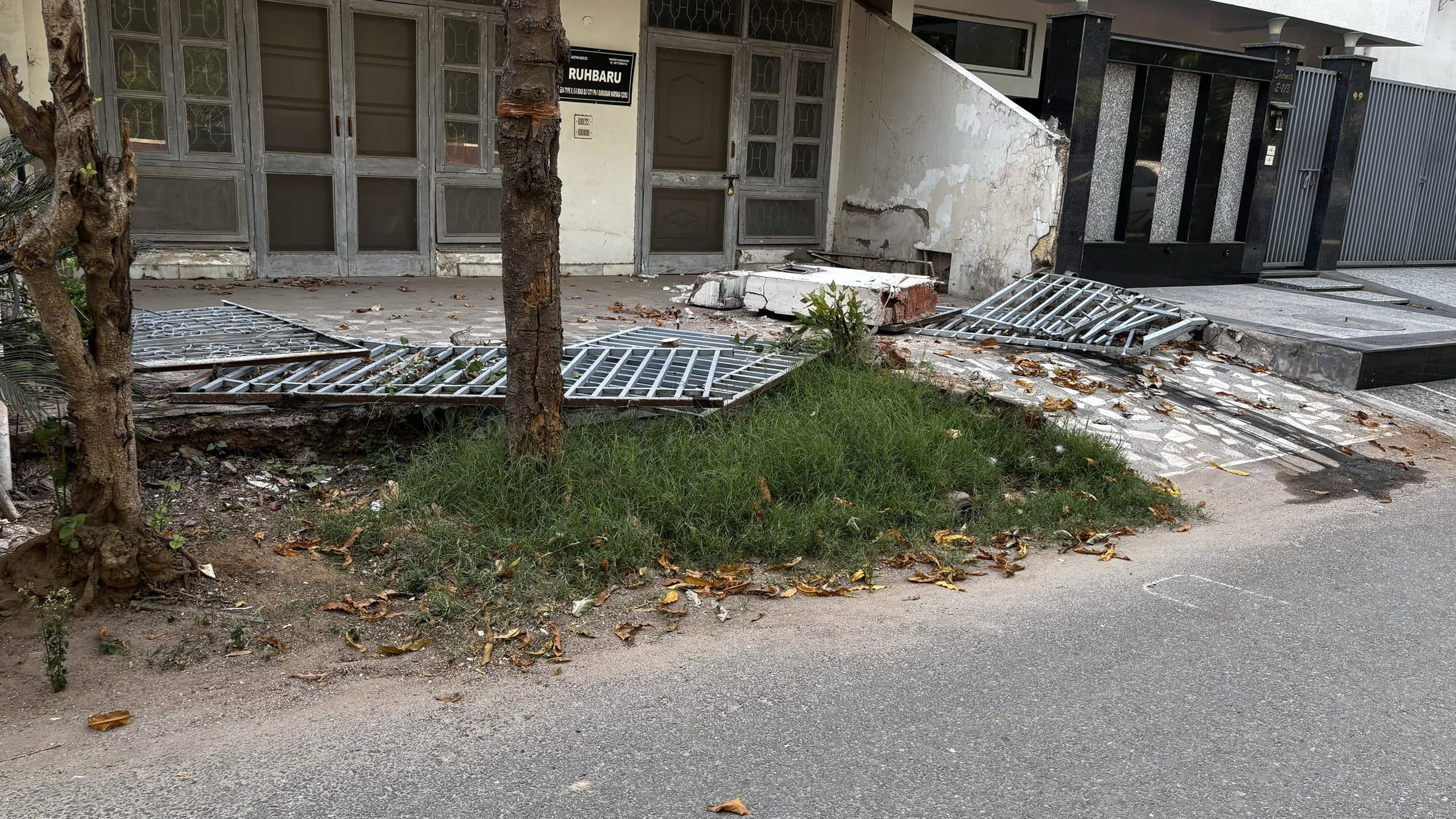
“We are acting in compliance with the High Court’s order. People cannot encroach on government land, I don’t need to serve notices for this,” Amit Madholia, District Town Planner (Enforcement), told ThePrint.
By the final day of the drive, the scale of the operation had come into sharper focus. Madholia said that more than 6,000 houses had been covered over the five-day exercise.
Residents, though, said the drive was anything but orderly. It was carried out without warning, uneven in its execution, and chaotic on the ground. It left behind burst water pipelines and damaged trees.
“There was no clarity on what would be removed, what might be spared, or what could get damaged in the process—it was confusion on the ground,” said a Suncity resident, requesting anonymity.
Also read: India’s urbanisation policy now centres on demolition and displacement, says Aravind Unni
Support on the ground
Not all residents opposed the move.
“What is happening is actually a welcome step. We’ve been fed up with these new residences taking over spaces meant for public use. Civic issues are huge in these posh areas—people just get away with anything,” said Swati, a resident of DLF Phase 1.
On her street, she pointed at homes that had been targeted, explaining what led to the demolitions. Ramps, she said, are meant to sit level with the road, but in many cases rise as high as three metres.
Even where they don’t, they often stretch outward, with covered parking spilling into public space, and sheds, potted plants, small gardens and even guard booths set up beyond the boundary.

A similar pattern runs across Gurugram’s licensed colonies—South City 1, Greenwood City, Palam Vihar, Sushant Lok 1, Mayfield Garden, Nirvana Country, Uppal Southend and Rosewood City.
The earlier mentioned DLF Phase 3 resident alleged that in neighbourhoods like his, home to some of the city’s wealthiest, illegal constructions were long overlooked because of close links between residents and those in positions of power.
His concerns about Occupancy Certificates touch upon a wider scam. A probe is already underway. Gurugram’s Occupation Certificate (OC) scam became a flashpoint when major irregularities were found during a joint raid in Sector 70A by the district town and country planning (DTCP) department and the Chief Minister’s Flying Squad.
Officials inspected 22 residential sites across BPTP Astaire Gardens, Imperial and Green Oaks colonies and found that 14 of the 22 buildings were still under construction despite having been issued OCs.
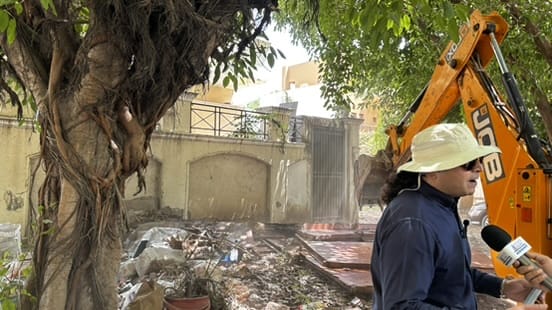
In several cases, the structures barely had any construction beyond the brick walls.
“The structure was built, but some work was pending on them. Some had no railings, doors, or windows installed yet. Following the raids, we have already issued a show-cause notice to the owners and architects. And next month, after their replies, we will decide which architects to blacklist,” Praveen Chauhan, District Town Planner (Planning), Gurugram, told ThePrint.
The authorities have identified 1,500 such cases across the city since mid-2025.
The court notice, coupled with the unfolding OC scam, became the trigger for the sweeping action on the ground, with some areas seeing massive demolitions.
During the first couple of days, officials said around 140 houses in Palam Vihar, Block A, Sector 2 saw action. Fencing was cleared and gardens and other extensions removed from an 18-metre-wide road.
The area witnessed one of the largest sweeps, with over 100 illegal structures taken down—24 guard rooms, 50 boundary wall encroachments, 60 fencing violations, along with gates, tin sheds and even toilets built onto road space.
Around 70 to 75 guard rooms across Palam Vihar, many set up as porta cabins or brick structures, were demolished, while green belt encroachments outside more than 80 houses were also cleared.
In Arjun Marg, the crackdown extended beyond smaller encroachments, with two permanent structures also razed as part of the drive.
Also read: No other city is like Gurugram—‘so mismanaged, yet so highly spoken of’
Selective enforcement?
A resident of Suncity pointed to the house across the street—its ramp had been broken, he said, while an identical structure right opposite remained untouched.
“If this is about rules, then why was one removed and the other left?” he asked.
Similar concerns were raised in parts of Block C, where residents alleged that a stretch, home to some of the area’s most affluent families, including cricketer Virat Kohli’s brother, appeared to have seen little to no action.
Advocate Ritu Bhariok, an advisor with the Federation of Affordable Home Buyers and a resident of Phase 5, said she was surprised by residents alleging foul play.
“You have illegal encroachments spilling onto the roads—you have guard quarters set up on ramps and even on the road, when there is ample space within the property itself,” she said.
Amid anger and relief, there was also a note of scepticism. Several residents said that while the crackdown was visible and swift, they were unsure whether it would lead to lasting enforcement.
Madholia, however, ensures that the drive against encroachments will continue even if the five-day exercise is over. A team of junior engineers will be tasked with the job of monitoring the cleared sites to prevent re-encroachment.
The more lasting impact has been felt elsewhere—by street vendors and small informal workers whose structures, once destroyed, may not return as easily.
At the Arjun Nagar market in Sector 26, Ahtisham Khan stood watching as a bulldozer brought down his juice cart piece by piece. When it was over, he sat down beside the debris.
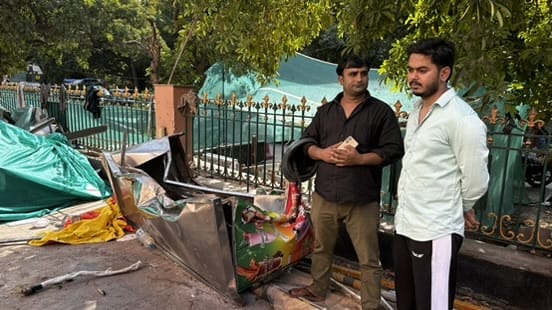
“What am I going to do now? I have five people to look after. My livelihood is gone,” he said.
(Edited by Theres Sudeep)