





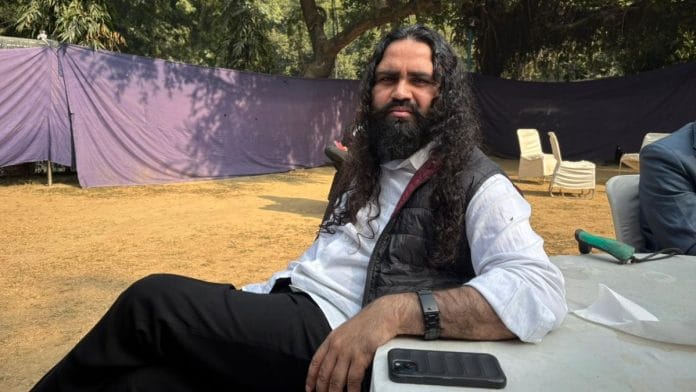



New Delhi: Inside the Delhi High Court, Bhai Preet Singh is easy to spot. Tall and well-built, with waist-long, unshorn curly hair, he is a regular presence — fielding calls, checking documents, and speaking in the clipped language of petitions and property disputes. Not a lawyer, Bhai Preet has spent more than a decade chasing cases in courts that challenge mosques he claims are built on public land. The recent demolition drive at Delhi’s Faiz-e-Ilahi Mosque is what he would call a tangible outcome of his long-running legal campaign.
Calm and methodical, Bhai Preet speaks of land records, encroachments, and the need to “save the country” with urgency.
“That mosque is not on DDA property; it belongs to the Waqf,” Bhai Preet, 37, tells someone on the phone as he settles into a chair inside the court premises. “But we’ll check the papers again.”
A self-described activist who has built a large online following by documenting what he claims are “illegal Islamic structures” on government land, Bhai Preet — whose real name is Preet Sirohi — has become a recurring figure in legal battles over religious property. Like the city he stalks through courtrooms and streets, Bhai Preet lives in contradiction. He speaks the language of swadeshi and national decay, dresses in khadi, and rejects political parties as compromised but builds his campaigns through social media, smartphones, and relentless litigation. Operating outside formal power, Bhai Preet has fashioned himself into a one-man pressure system, converting online tips into court petitions that target mosques and dargahs across Delhi, triggering local unease, counter-allegations of selective targeting, and, increasingly, street-level tension.
The Faiz-e-Ilahi Mosque in Old Delhi is the latest site where that pressure has snapped its bounds. But Bhai Preet is undeterred.
“Masjid gire, kabristan khali ho. Desh sabse pehle ata hai (Let masjids fall, cemeteries empty out. Country comes first),” Bhai Preet said bluntly.
From petition to flashpoint
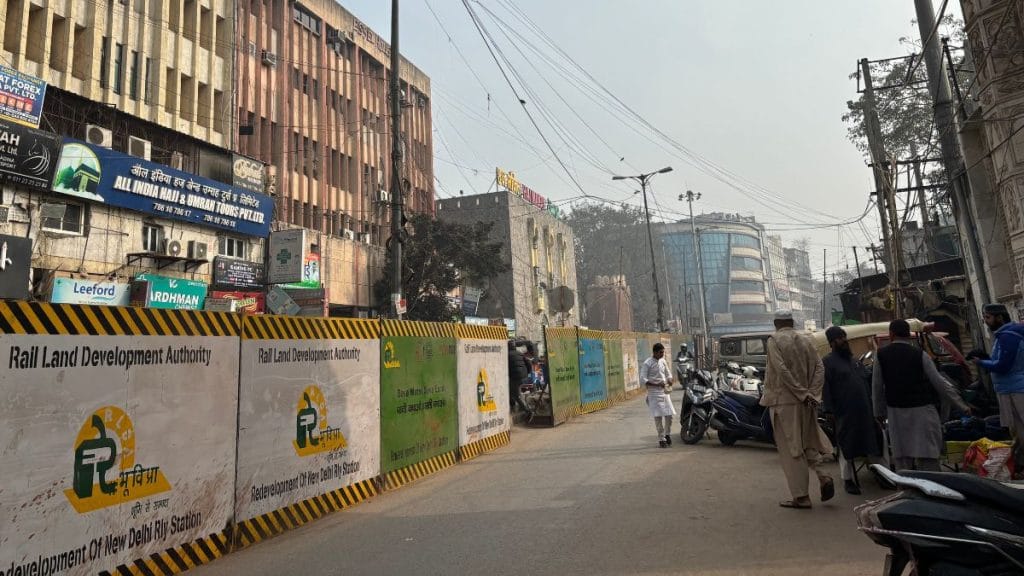
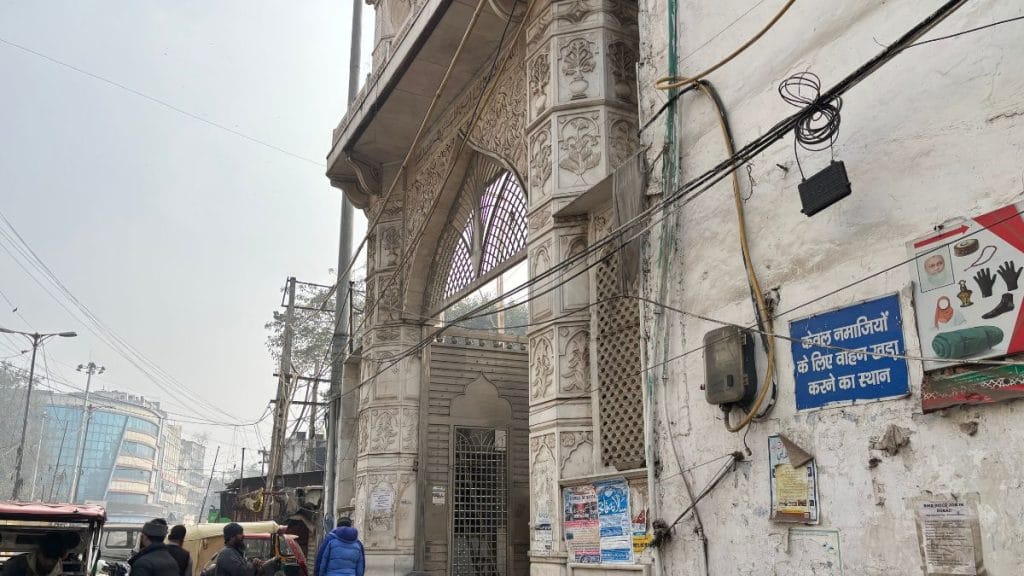
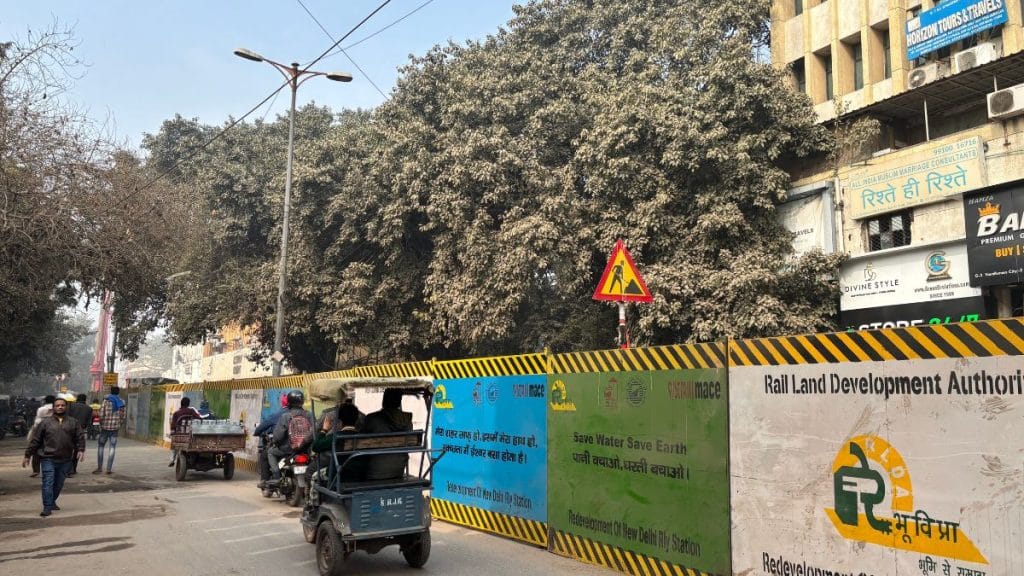
Tucked inside Turkman Gate’s narrow lanes, the Faiz-e-Ilahi Mosque sat amid auto stands, cosmetic shops, and roadside vendors, many operating there for decades. On Fridays, nearly 7,000 people gathered there for prayers, spilling into adjacent open spaces.
For residents, Bhai Preet’s petition last month — and the attention it drew — unsettled daily life.
The mosque also figured tangentially in the investigation of the Red Fort blast in November after CCTV footage showed one of the accused, Umar Mohammad, walking past it shortly before the explosion, a detail Bhai Preet later cited publicly to underline what he described as “national security concerns.”
“Auto stands are encroachments. Scooters parked on roads are encroachments,” said a shopkeeper who declined to be named. “But only mosques are questioned. If this logic is applied everywhere, our shops will go first.”
The Delhi High Court, however, declined to widen the scope of the case. In its order, the bench noted that the land belonged to the Land and Development Office (L&DO), and that the dispute appeared to lie between government departments, not with the mosque by default. The court stopped short of declaring the structure illegal.
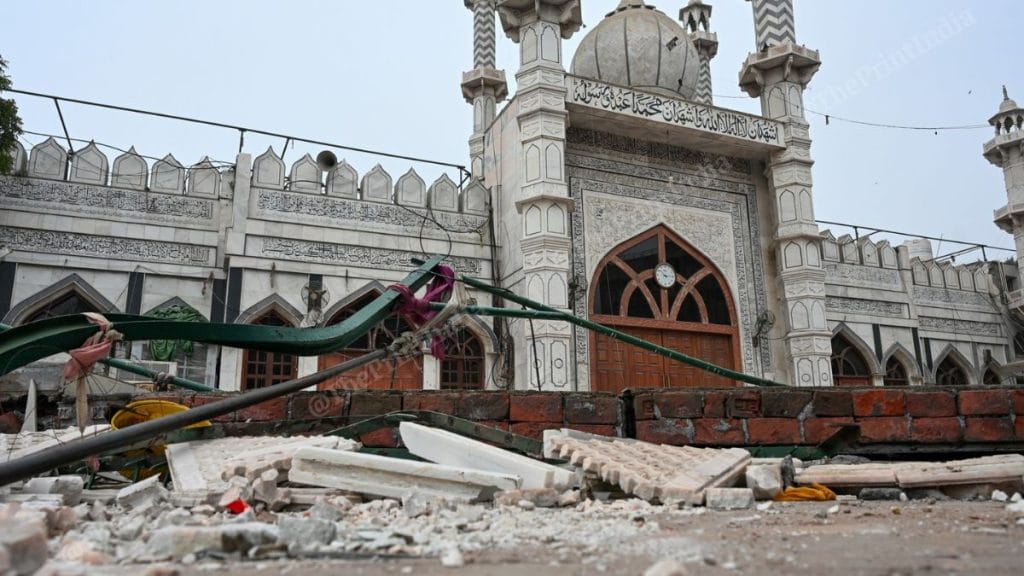
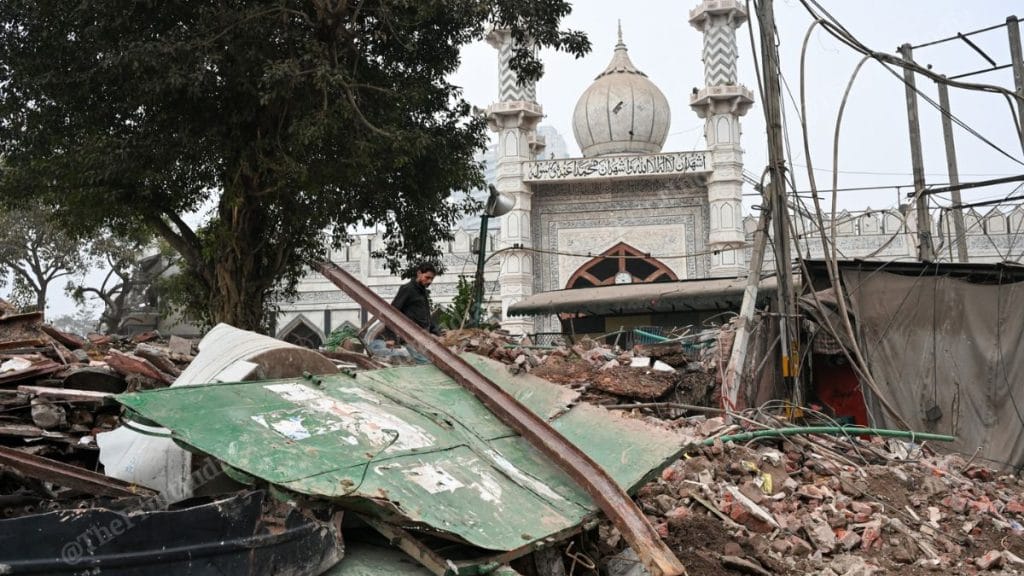
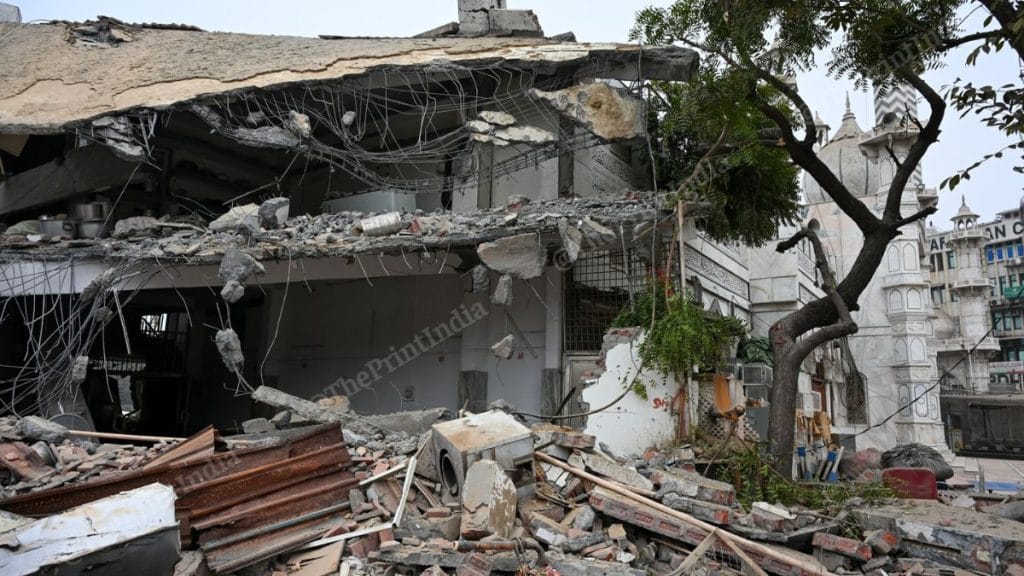
That legal restraint did not translate into calm on the ground as the Municipal Corporation of Delhi (MCD) began demolishing what it described as illegal structures at the Faiz-e-Ilahi Mosque site around 1.30 am on Wednesday.
According to police, tensions escalated before the demolition began.
“Around 150 people gathered. About 25-30 people started pelting stones at the police,” Central district DCP Nidhin Valsan said. “We had to use force to push them back. Only after that did the demolition proceed.”
Five police personnel were injured and hospitalised with minor injuries. Police said five people were arrested, while more than 15 others have been identified through body-worn camera footage.
What Muslim bodies say
The All India Muslim Personal Law Board says mosques in India fall into two categories — those owned by Waqf, and those recognised as Waqf by user, often centuries old and lacking formal paperwork.
“The mosque concerned had obtained a stay from the court,” AIMPLB spokesperson Dr SQR Ilyas said.
He also criticised the use of the term “illegal mosque.”
“There are temples built on government or private land without permission, but we are not spearheading protests against them,” Ilyas said.
The machinery behind the cases
Behind the petitions is a tightly run legal operation that Bhai Preet says turns tips and screenshots into court filings.
According to him and his lawyer Umesh Chandra Sharma, Save India Foundation — founded in 2021 — receives a steady stream of tips from across the country, often precise locations of what people claim are illegally built mosques or religious structures.
“We get more than 1,000 messages a day,” Bhai Preet said. “It’s difficult to track everything, but we work through them.”
Its social media output is constant and repetitive by design: short videos, text updates, and news clips, often sourced from TV news channels and circulated across platforms with identical captions and visuals. Reels routinely cross one lakh views, with some touching five million.
The foundation describes itself as a “social nationalist” organisation. Supporters frame its work as “raising the voice of needy people for their human rights, safety and the well-being of society and the country.” Its logo — Bharat Bachao Andolan — features the tricolour prominently.
The messages and tips to the organisation typically arrive through Instagram, Facebook, WhatsApp, and X. Some include photographs, others Google Maps locations, revenue numbers, or old complaints filed with civic agencies. Bhai Preet said volunteers sift through these leads before any legal step is taken.
Once a site is shortlisted, the process turns document-heavy. Lawyers and volunteers access land records, file RTIs, examine ownership histories, and look for earlier encroachment complaints or revenue entries. Only after paperwork is compiled, Sharma said, does the foundation decide whether a case is legally viable.
“This is not protest work,” Sharma said. “If there are no documents, there is no case.”
The petitions are then filed — mostly in the Delhi High Court — often seeking removal of alleged encroachments, sealing of commercial activity, recovery of penal charges, and directions to civic or land-owning agencies. He claims to be pursuing cases against at least 54 mosques in Delhi, and identifying over 2,500 structures nationwide that he says do not belong to the Waqf Board.
But progress remains slow.
“Most orders are stuck,” Sharma said, pointing to what he described as a pattern of government land being defended under the Waqf label. The Delhi High Court has also questioned the selective focus on mosques, asking why temples and gurdwaras are not similarly challenged.
“Our role is not to replace authorities,” Sharma said. “We question land legitimacy. That’s it.”
Muslim groups reject Bhai Preet’s framing, accusing him of turning complex land histories into online accusations.
“Why only mosques? Does he not see temples and gurdwaras?” asked Inam ur Rehman of Jamaat-e-Islami Hind. “Courts have pulled him up for this.”
Dr Mohiuddin Ghazi, national secretary of the organisation, said Islamic law itself forbids mosques on illegal land. “If land is encroached, prayer there is invalid,” he said, but warned against misinformation.
“People assume Waqf means anything goes. That’s false,” Ghazi said.
Both men said social media has magnified disputes that were once local. “Today, likes and shares have become an intoxication,” Ghazi said.
Rehman says today hatred has “become a business”.
“This kind of activism works against peace. He is not the enemy of Muslims, he is an enemy of brotherhood,” Rehman said.
Several mosque committees said Bhai Preet’s videos and posts often trigger harassment. “We have seen the language used online. There’s abuse and threats too,” said Rehman. “People file complaints, courts take cognisance, but lives of people are changed forever.”
Rehman, however, argues that ordinary Muslim and Hindu people disengage from such disputes.
“We have our own problems. Jobs, education, daily survival, education these mandir masjid debates have largely been online, we have lived together for centuries, how will they separate us now?” Rehman asked.
Not BJP, not opposition
Despite the ideological overlap his critics often point to, Bhai Preet, a Jaat from western Uttar Pradesh, insists he does not belong to any political party.
“No party helps,” he said. “No leader wants to fight this.”
He is openly dismissive of electoral politics, including the BJP, which he accuses of avoiding what he sees as politically risky battles. He argues that public land disputes are routinely ignored because they upset vote banks.
“Netas send their children abroad. Bureaucrats take VRS. Who is left to fight for the country?” he asked.
That distance from party politics is central to how Bhai Preet frames his work. He presents himself as someone stepping in where institutions, in his view, have failed.
Bhai Preet speaks about unemployment, migration, healthcare, and the education system in what he calls a “hollow state”.
“Migrants are leaving smaller towns because the governments don’t care. Schools are so expensive, there is inflation, everything is being imported, and leaders are turning India into the US and Europe,” Bhai Preet said, mocking the Centre. “It is a copy paste from abroad.”
A Swadeshi life
A vocal supporter of Swadeshi, Bhai Preet Singh rallies against foreign goods, foreign capital, and what he describes as India’s moral drift.
“We are fighting for land rights all over the country. Public land cannot be personal property,” he said, briefly glancing at his Fossil watch.
His nationalism is intensely personal. Bhai Preet says he wears only khadi stitched by a local tailor, avoids delivery apps and foreign food chains, checks labels before buying anything, drinks only cow milk, and eats fruit-based meals.
Yet he coordinates petitions, tracks cases, and fields tips from across the country on his Apple iPhone, pausing only briefly before returning to his calls.
“I am fighting encroachment in the name of religion,” he said. “Someone has to.”
His politics is performative, personal, and absolute.
That absolutism has brought consequences. Protests organised by Bhai Preet in 2021 and 2022 led to FIRs for hate speech and promoting enmity. He was arrested and later granted bail.
He dismisses it as a smear campaign.
Threats and vows
Bhai Preet has lived in Delhi since his grandfather moved to the capital in 1965. He was a wrestler and Bhai Preet, too, dabbled in the sport briefly when he was younger. He does not discuss his family further, citing death threats.
“They threaten me saying they will cut my head off, or shoot me dead, or will bomb my office,” Bhai Preet said, like he is listening to pending tasks. These messages, he says, come through calls, Instagram DMs, and X replies.
But he claims he is not scared. “I have come here for a purpose, and I will fight,” Bhai Preet said, while shifting quickly from danger to diagnosis.
As evening settles over the High Court lawns, Bhai Preet’s phone rings again. Another tip. Another document to verify. Another structure to question.
The courts may move slowly and the streets may erupt suddenly, but Bhai Preet remains convinced of one thing — that the country must be saved, even if it never asked him to do so.
“There are no model villages in India, no model state, only betrayal, decay and a country that needs saving,” he said.
His long hair and the refusal to drop his distinct look is a personal vow.
“I won’t change the way I look, or the way I fight. Until all cows are protected under law, I will continue my fight,” Bhai Preet said.
(Edited by Stela Dey)
They are bound in their hatred for the BJP to appease their minority viewership and their big daddy Congress, and the communists.
Unfortunately, I see no analysis of the actual legality of the structure that was demolished. Or infact any details on it at all.
The reporter is trying to argue emotion, where the piece should have focussed on truth, or atleast tried to “cut the clutter” on that. The continuous assertion that he doesn’t fight against illegal temples and gurudwaras aside, what exactly is the issue if someone is using purely legal mechanisms to clear out encroachments ?