





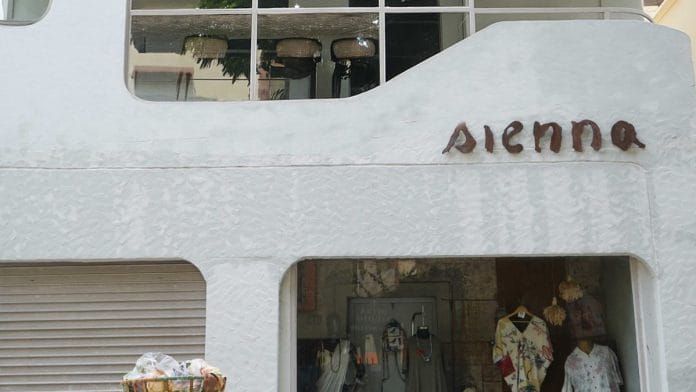



Kolkata: At 12:30 pm, the “closed” sign flips to “open” at the glass door of Kolkata’s Sienna, a restaurant housed inside a 100-year-old home at the posh Hindustan Park area in the city’s south. Within minutes, names begin filling a waiting list. Some patrons linger inside the handicrafts store at the front, while others head straight upstairs where gola bhaat, a basic, fermented rice dish associated with Bengali homes, is priced at over Rs 500.
For a city long known for eating cheap, eating often, and eating at home, Sienna represents a significant shift. Over the past decade, the cafe-cum-bar-cum-restaurant has emerged as one of Kolkata’s most influential dining spaces by doing something counterintuitive: asking Bengalis to pay premium prices for their own food. Built around hyperlocal sourcing, seasonal markets and lesser-known culinary traditions across Bengal, the restaurant’s success in Kolkata and its fame beyond marks a broader cultural change — particularly among younger diners — in a city once resistant to spending money on what was considered everyday home cooking.
“Most Bengalis would earlier refuse to go to restaurants to eat Bengali food. ‘My mother makes it better’, they’d say. Fortunately, the younger generation do not have those prejudices. So I think Bengali restaurants have come into their own,” said columnist Vir Sanghvi.
Kolkata’s restaurant culture has traditionally been neatly divided into cafes and bakeries on one side, pubs and bars on another, and ‘Bengali restaurants’ serving recognisable, standardised dishes like shorshe ilish (mustard Hilsa) and kosha mangsho (slow cooked mutton).
Brands such as Oh Calcutta, Bhojohori Manna and 6 Ballygunge Place helped mainstream Bengali food outside home, but often flattened it into a familiar, pan-Bengal template. What remained largely unexplored was the depth of the region’s culinary diversity beyond the binary of Ghoti and Bangal. Here, Sienna holds its ground as a culinary disruption that has created a space in Kolkata’s fusion and experimental food bracket.
Sienna’s journey
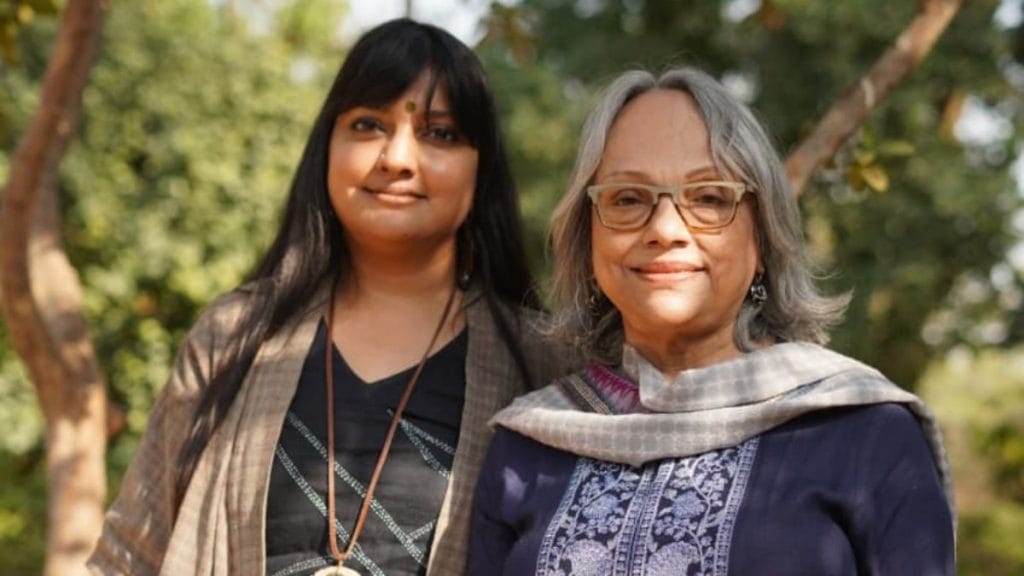
It all started in 2015, when Shuli Ghosh, a young graduate from the US taking a break to ‘figure life out’ and her architect mother, Shanta, opened a small ceramics store in Jodhpur Park. The store sold Shantiniketan-made pottery; the cafe was an afterthought.
The single storey store with shelves of ceramics and soft teal windows soon added a little café that served coffee, baked goods, and homemade cakes.
“It was a simple concept of clean and fuss-free eating–salads, avocado toast, that was still fairly new, and some cakes. We had 10-15 people at the cafe each day,” said Shuli. But slowly, as the entire lane transformed into a cafe hub, so did the footfall at Sienna. Soon, it became difficult for the duo to handle the crowd.
That was when Rewant Lokesh, Shuli Ghosh’s husband, joined as a partner, eventually bringing in chef Auroni Mookerjee, followed by Avinandan Kundu and Koyel Roy Nandy.
Mookerjee left Sienna in 2023, and Kundu was promoted to head chef, while still on his honeymoon. That was also the year when Sienna made its way to the list for top restaurant awards in the city, bagging fifth place.
Over the years, Sienna grew organically, reinvesting cash flow into the business, building a modern kitchen within an old house, and expanding from a Rs 2-crore cafe-and-store operation into a restaurant with an annual turnover of nearly Rs 10 crore. The restaurant and bar now boasts of a 35-seater space, while the all-day cafe on the ground floor has an occupancy of 22.
Beyond Ghoti and Bangal
Ghoti refers to families historically from West Bengal, while Bangal denotes those who migrated from erstwhile East Bengal, now Bangladesh. Their cuisines differ sharply — Ghoti cooking favouring poppy seeds, nutmeg and mace, while Bangal food leans heavily on mustard, chilli and a five-spice tempering (phoron).
Sienna’s attempt has been to move past this divide.
“We are trying to represent both sides, incorporating East and West Bengal in our explorations of the culinary landscape of the region,” said Ghosh, Sienna’s founder. It is important to identify the origin and source of recipes to trace the history but the idea is to represent the lesser known traditions in food and lifestyle,” she said.
Rather than adding kasundi or mustard to every plate and calling it fusion, the restaurant’s menu draws from districts across Bengal — from Kalimpong and Bankura to Medinipur — shaped by caste, class, migration and geography. Even neighbouring Bihar, whose phuchkawallas and chat vendors are scattered across the city, finds a space in Sienna’s culinary endeavours.
From bazaar to table
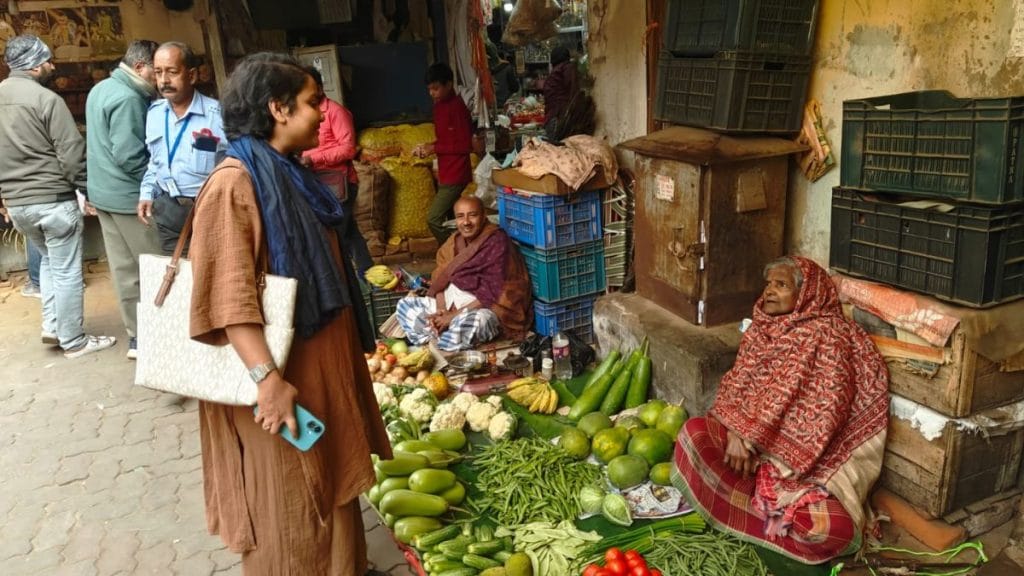
On a Sunday morning before Christmas last year, Koyel Nandy moved briskly through Gariahat market — Kolkata’s Sarojini Nagar of sorts — which also boasts of sprawling fresh produce, tucked away inside a small lane.
It also happens to be the sourcing ground for Sienna’s culinary inventions and experiments. She finally stops at a mutton shop.
The vendor gives Nandy a wide smile, offering her black tea in a tiny glass, as she chops up the meat.
For Nandy and her team, being able to check the produce and buy the freshest ingredients is an integral part of the bazaar to table concept.
“This is where I feel like home — what I have grown up doing, accompanying Maa or Baba to these haats. This is what most Bengalis do, and in the era of quick deliveries, it’s slowly fading away,” said Nandy, sipping her tea.
They have also found a butcher who comes to Sienna to teach line chefs how to score meat and chop up offals. One signature dish at Sienna is mutton offals served with chaatur porota (paratha made with sattu).
Nandy is also stringent about quality checks, even if it means spending a bit more, testing the freshness of fish and the texture of the flesh, before giving her stamp of approval.
And it is paying off.
“The eggs are brighter than in most places. The yolks glisten, showing the attention they pay to ingredients, and why their food tastes so good,” said Sanghvi.
But the bazaar to table does not necessarily end with Kolkata markets. The team also takes excursions to all over the state, to look for inspiration.
“We went to Janai in Hooghly district, and ate this dessert called monohora. North Bengal is amazing when it comes to dessert. We try to expand our own knowledge so that the food reflects the idea that we champion,” said Nandy.
‘Paying for the experience’
On a regular day at Sienna, chef Nandy multitasks with aplomb, adding final touches to dishes and passing on tips to junior chefs. She also greets customers, especially regulars, who seek her out to introduce to friends and family they have brought to Sienna.
Initially, some dishes evoked a sharp reaction.
“We do get people who will ask why should I pay so much for gola bhaat. So at Sienna, making the guests aware of what they are consuming, the story, the intent is equally important,” said Nandy.
The pricing is steep by Kolkata standards. A meal for two without alcohol costs around Rs 3,000; with cocktails, Rs 5,000. Individual dishes start at Rs 500, cocktails at Rs 750.
“Kolkata is generally price-sensitive, but overtime we have been accepted. People know we are ‘expensive’ but they also know they are paying for a certain kind of experience. That is a significant change,” said Ghosh.
Also Read: Chef Manish Mehrotra names top 5 food destinations in India
Summers hit hard. From May to July, revenue dips by nearly 30 per cent.
“In those months, we completely rely on people who are our regulars who make it a point to come in once a week,” said Kundu.
Ravinder Brar, a businessman, frequently visits the city for work. Once a colleague suggested Sienna for a ‘luxury’ dinner. Brar walked in, unsure of what to expect.
“My pockets did get lighter because I brought a client for dinner. But I was very happy with the Bheja fry and the Bhetki-al-a kiev. My client tried a few other dishes, and we closed the deal,” said the 55-year-old with a smile.
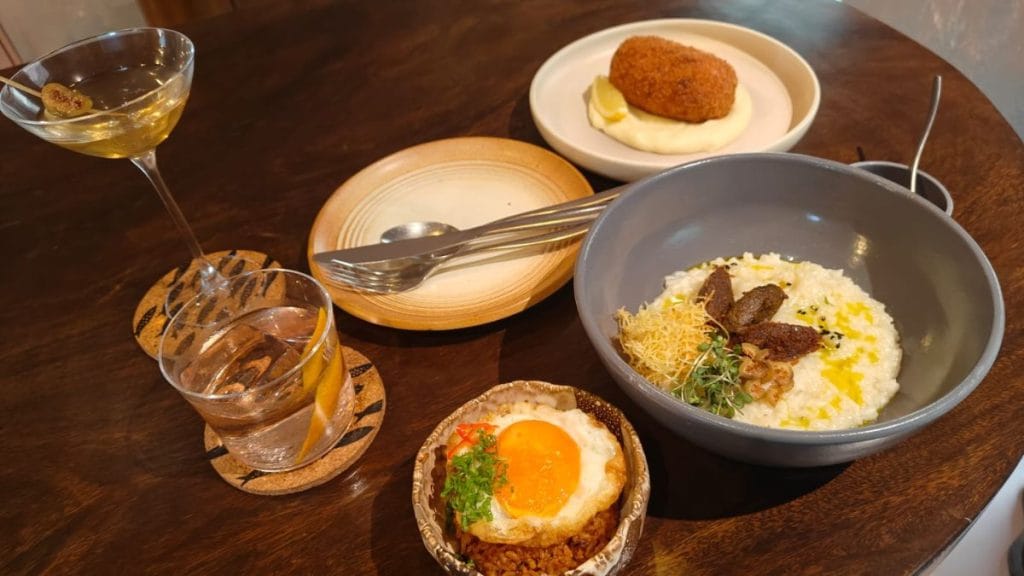
Brar’s recommendation is also a crowd favorite at Sienna. It is a nod to the signature dish of Park Street pubs, and the city’s Anglo Indians, with a twist of Bengal’s Bhetki.
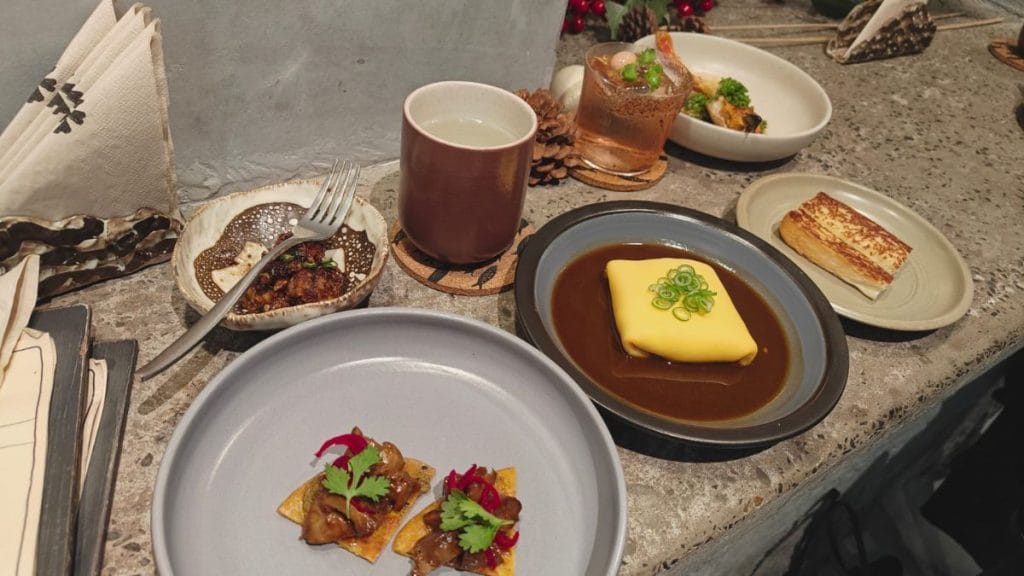
The scotch egg-style dish is served on a bed of mashed potato, flavoured with butter that oozes out when one cuts open the croquette. The chilli garlic bheja bites is an ode to the ‘shady’ old bars of Kolkata that still serve their signature chilli chicken. Sienna chefs swap chicken with bheja or brain to create addictive melt in the mouth bar bites. There is also the ros omelette, a tribute to the iconic Goan dish and the humble Bengali omelette curry, served on a thin gruel of bone marrow gravy.
Together, the food at Sienna traces the culinary influences that once shaped how the city learned to eat outside home — from Chinese eateries to pub menus built around chello kebabs and cutlets.
Wedging in the veggie
Contrary to popular belief, Bengali food has never been only about fish and meat. Greens, lentils and seasonal vegetables have long anchored everyday meals, shaped by religious practices that avoided onion and garlic, and by domestic kitchens that learned to stretch scarcity into flavour.
Widow kitchens, in particular, shaped some of Bengal’s most inventive vegetarian cooking. From posto (poppy) mixed into plain boiled potatoes to build richness, to dhokar dalna (lentil dumplings in gravy) and from fried peels of gourd and potato to echorer dalna, where raw jackfruit stood in for mutton that was forbidden for widows, thrift and ritual created a parallel culinary grammar that still survives on home plates.
At Sienna, that nostalgia is being reworked as a contemporary vegetarian language.
On the menu are bonolokkhi litti with beguner achar (brinjal pickle) and aloo makha (smashed potato), shaak risotto built around seasonal greens, bamboo shoot dal, dudhchata kagji, kalojeere (cumin) cabbage and brinjal kochu, alongside desserts rooted in regional sweet-making traditions.
Kundu and Nandy cook and plate many of the courses themselves, explaining the histories behind ingredients and techniques as the dishes arrive.
“50 per cent patrons of Ranna Ghor are from the city, while the rest come from all over the country, based on recommendations. We have also had a full house of Marwari vegetarians, which has been interesting because I never thought that would happen,” said Kundu with a smile.
The vegetarian tasting menu has evolved into one of the restaurant’s most experimental formats.
“The fried rice is my favourite, but I also love their desserts. You cannot find them anywhere else,” said Vidhi Agarwal, a counsellor, who had also brought her Chandigarh-based friend to try the food. They tried the shaak risotto. “The food is expensive but Kolkata has very few innovative vegetarian places,” said Agarwal.
From a ceramics store to fine-dining
The shift from home-style food to curated dining quite literally begins at Sienna’s front door.
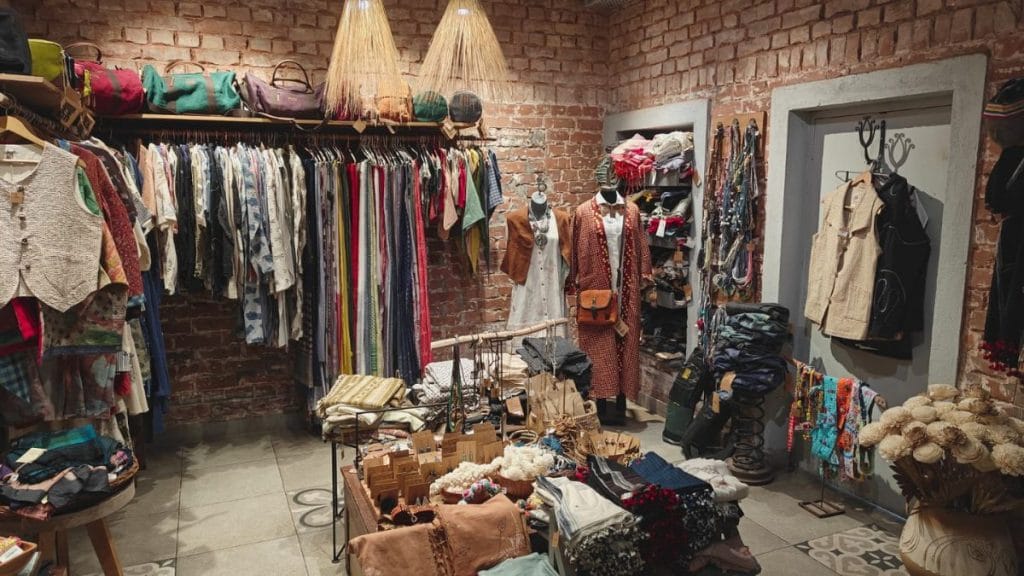
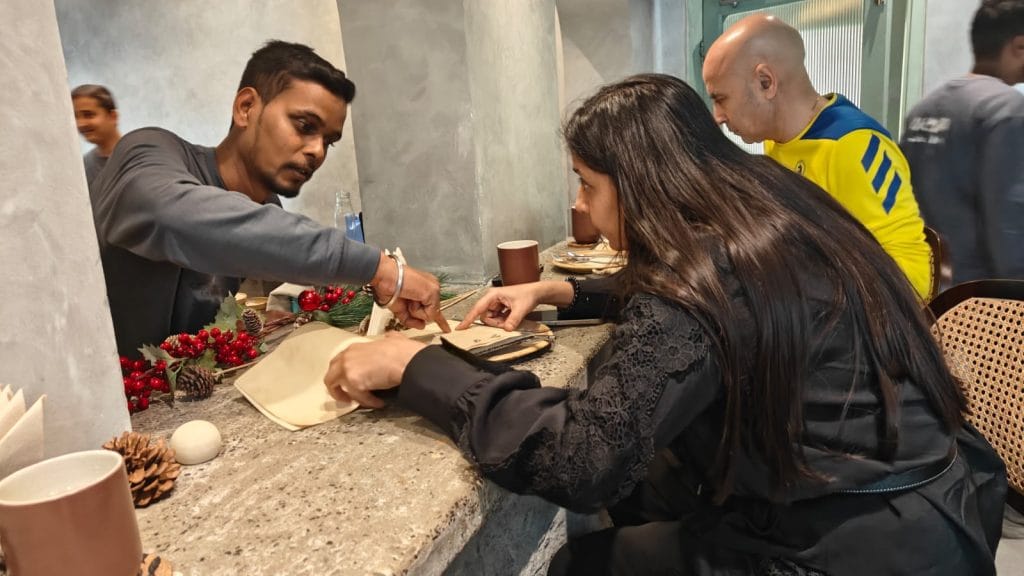
The restaurant still opens through its original ceramics store, now expanded into the reception area and the passage leading to the cafe. Shelves display pottery from Sienna’s Shantiniketan workshop, dokra figurines, fabric and brass jewellery, wood-carved utensils, jamdani and khadi clothing, handmade mirrors, bags and purses.
Sienna also retails rice, jaggery, pickles and jams sourced from neighbouring ingredient-first brand Amar Khamar.
One has to walk through this store to reach Boshar Ghor, the all-day cafe tucked at the back. Its menu sticks to South Kolkata cafe staples: pastas, burgers, sandwiches, fries, desserts and coffee.
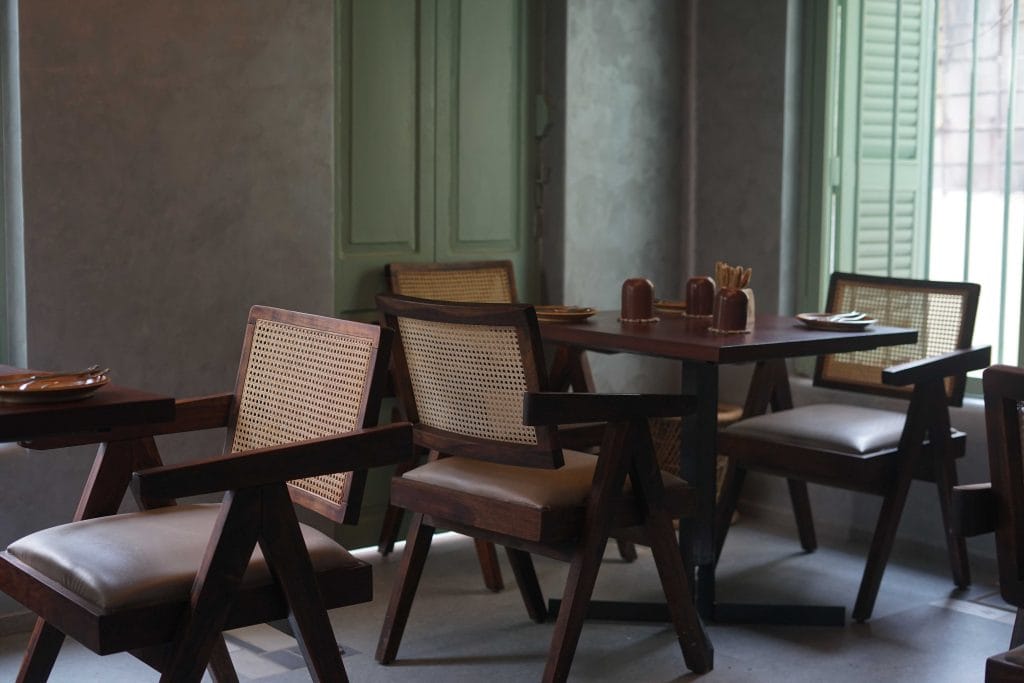
A staircase from the store leads to Khabar Ghor, the dine-in-only restaurant upstairs. Wooden tables, rattan chairs and local artwork frame the south Kolkata home that feels both rural and urbane.
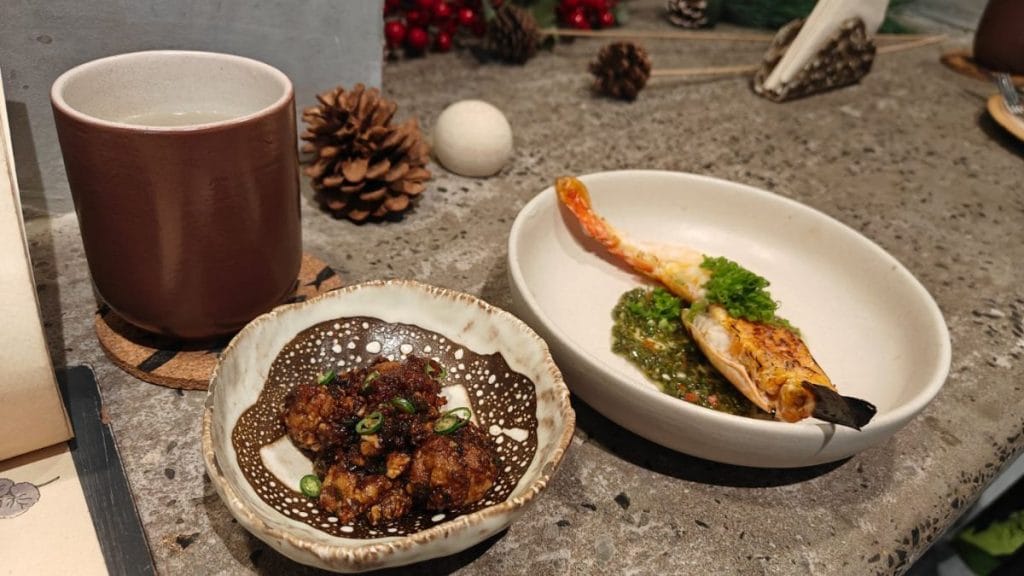
“Sienna is not actually a fine dining restaurant,” Sanghvi said. “But it is certainly a place serving serious food that doesn’t take itself too seriously. The food has become clearer, by moving away from cliches. It is easily the best Bengali inspired restaurant in the world at the moment,” said Sanghvi.
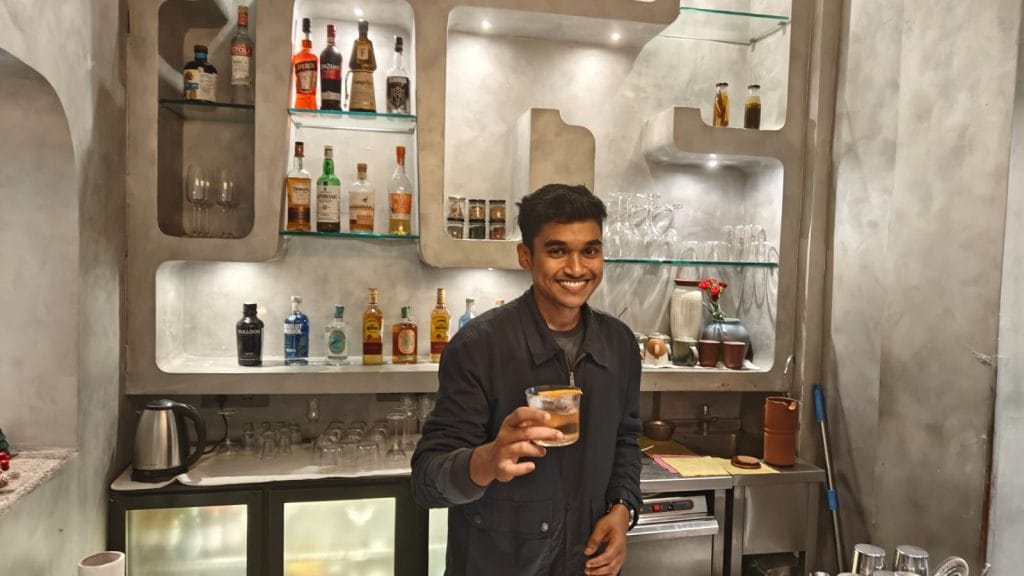
The bar follows the same philosophy. Cocktails use bazaar-sourced ingredients — kalo jeere (black cumin) martinis garnished with pickled dumur (fig), rice bitters made from radhatilak (a type of rice).
“We have memories of eating rice, and our mothers feeding food because of their medicinal qualities and rituals of eating food. I wanted to use that in the cocktails,” said Mannan Sen, who is the bartender of the newly opened bar space.
Once Sienna found its footing, the team launched Rannaghor — an eight-seater chef’s table offering a 13-course tasting menu, priced at Rs 4,500 per person and available on weekends.
The menu mirrors the traditional order of a Bengali meal starting with bitters, followed by dal, fish, meat, and dessert, but reimagined. A single piece of bitter gourd arrives on elephant foot yam foam. Mangsho bhaat (mutton rice) becomes a rezala risotto with bone marrow butter. A massive golda chingri (jumbo prawn) is stuffed and served with hollandaise made from fish ghilu (fish brain).
A collective effort
Sienna’s rise has coincided with a broader experimental turn in Kolkata’s food scene, alongside Amar Khamar, Bonne Femme and cocktail-forward spaces like Nutcase Etc.
Raina Talukder, head of brand at Amar Khamar, says the focus is on sustainability.
“Our relationship with like-minded organisations is important to us as we work towards creating an ecosystem of meaningful co- existence,” said Talukder.
Amar Khamar also opened its own lunch room in December.
“The two most interesting places to eat in Calcutta right now are Amar Khamar and Sienna,” said Sanghvi.
Kundu says he is tired of the misconceptions around Kolkata and what it has to offer.
“One restaurant cannot change that conversation but it should be a collective effort. We want to be part of that collective effort. I am extremely tired of hearing that there is nothing in Kolkata,” said Kundu.
(Edited by Stela Dey)
Nice promotion of Sienna but after so much writing about how they source the local produce and work hard to bring to the customer’s table legitimizing the high price, I couldn’t find any research made by your team to check how much do they give in return to the producer who toils hard to produce such produce. I hope you understand.