





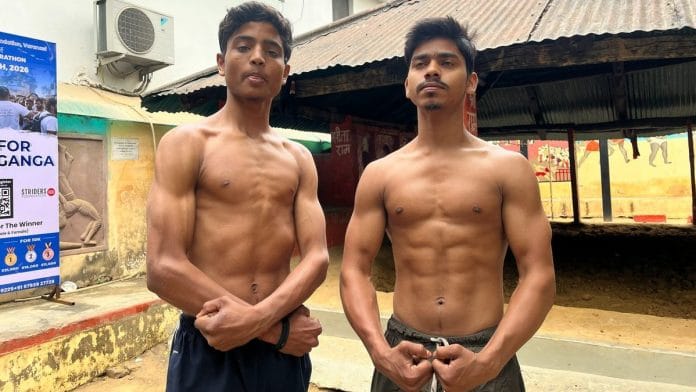


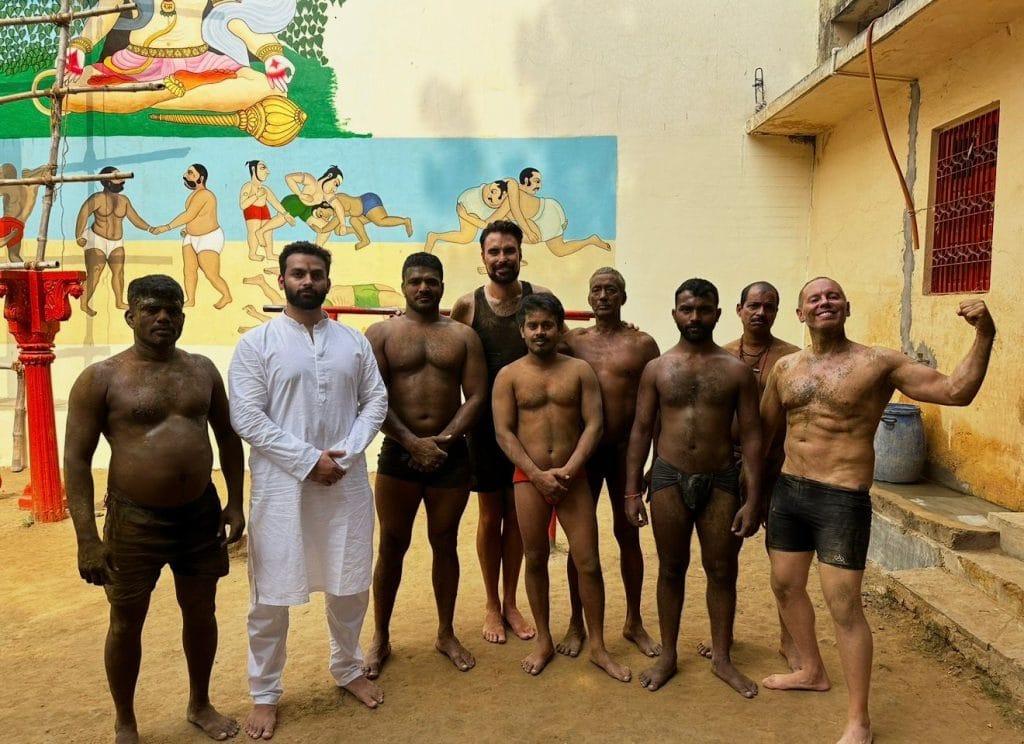
Varanasi: Lenny Romain came to India for a workout that doesn’t exist in his home country France. The boxer was inspired after chancing upon a video of Indian men wrestling in an akhada. Covered in mud, he now knows his way around the gadas, though he can’t pronounce the word ‘akhada’ yet.
Romain travels around the world to explore the workout culture in different countries, and this time he chose Varanasi. And he is learning new boxing rituals too.
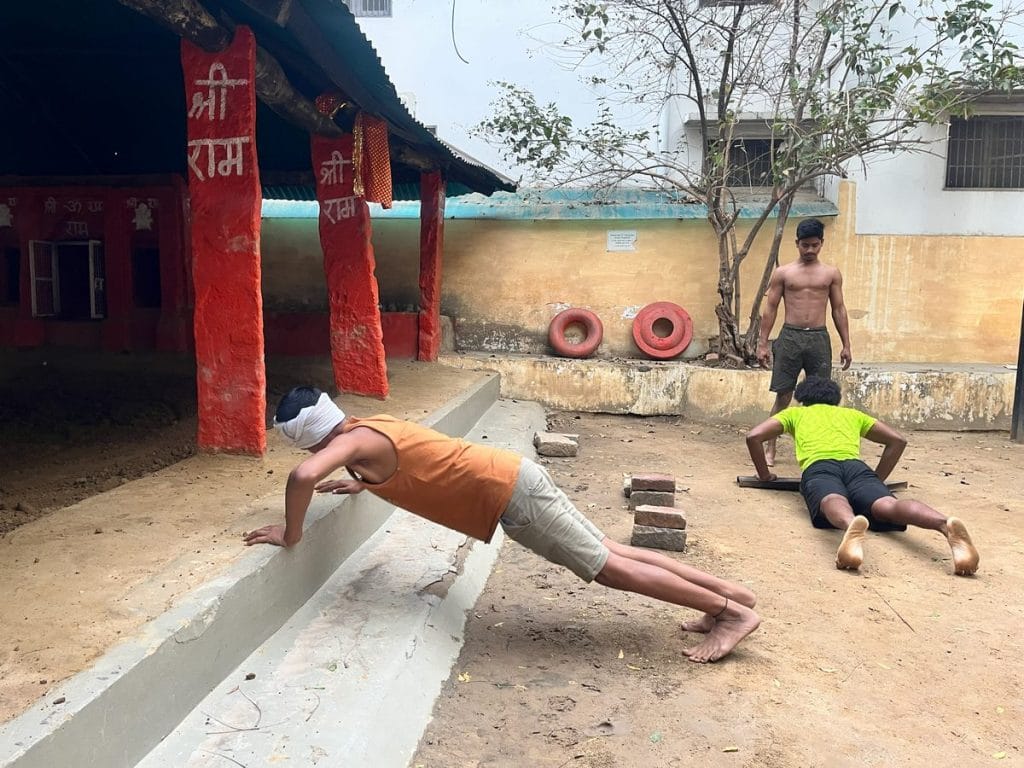
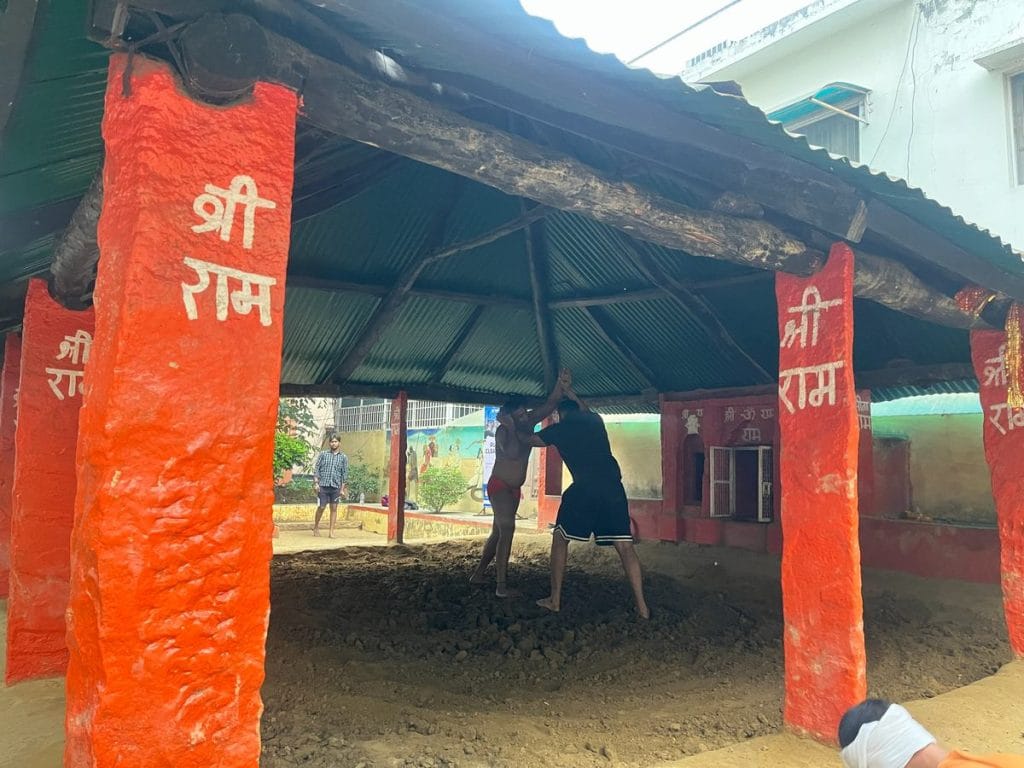
At the tin-roofed Tulsidas Goswami Akhada, he leaves his shoes outside and places his hand on the soil in reverence, just like the other pahalwans.
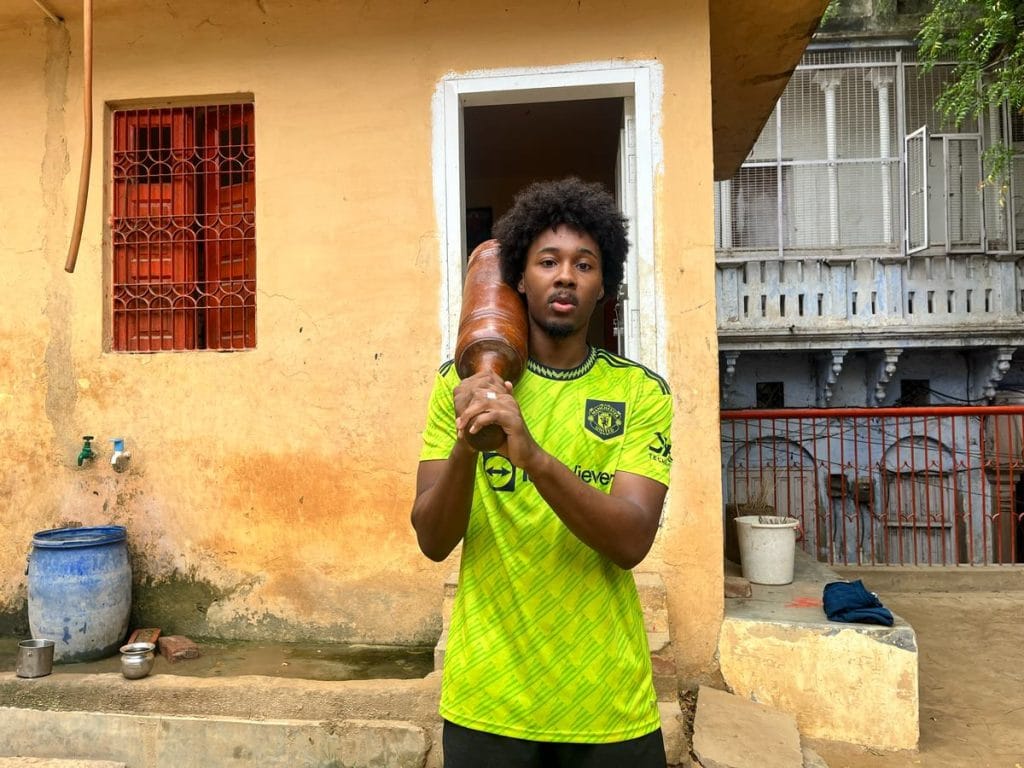
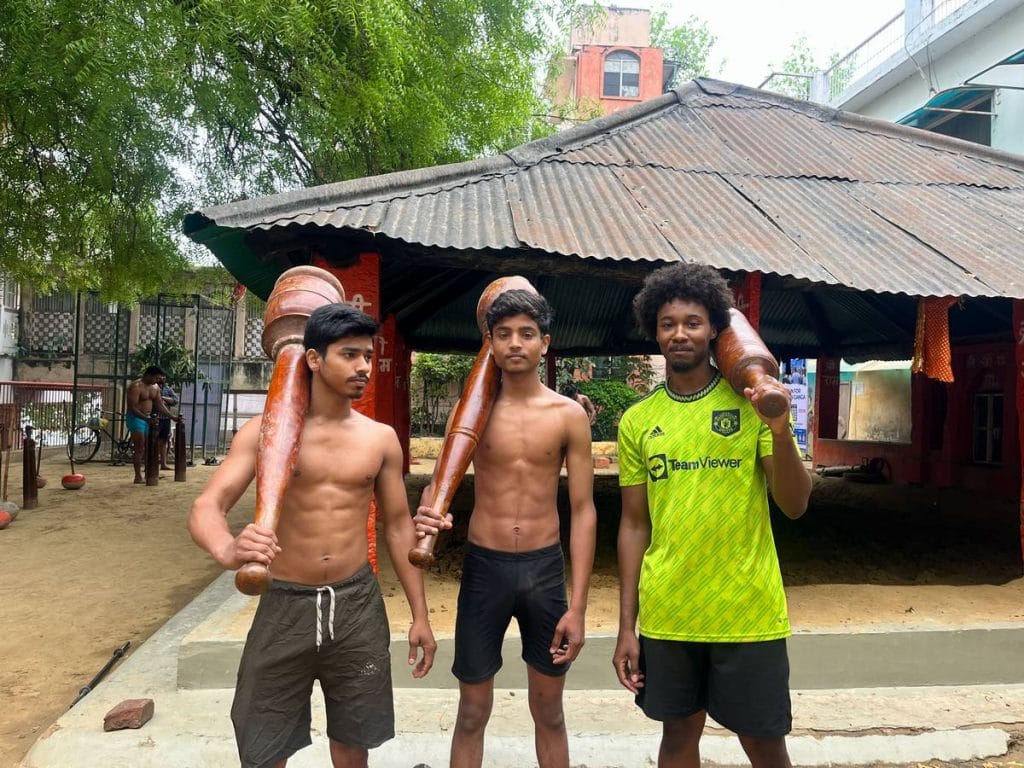
“These mud akhadas taught me a lot about physical and mental strength,” said Romain. It was his fourth day at the akhada and he had already learnt how to do desi pushups and how gada and mudgal — heavy wooden maces and clubs — are a fast track to toning muscles. He practises with them every day, lifting 8-kg mudgals in both hands, working his back, biceps and triceps in a single motion.
“In the gym I have to do three different exercises to get such a stretch on all these three muscles together,” said Romain, wearing a neon sports T-shirt and shorts at the mud arena.
Located on Tulsi Ghat by the Ganges, the 400-year-old Tulsidas Akhada — also known as Swaminath Akhada —stands as a living relic of a time when the city was dotted with traditional wrestling arenas rooted in the guru-shishya parampara. It is believed to have been established in the Mughal era at sites where the poet-saint Tulsidas composed parts of the Ramcharitmanas.
Now, as the Varanasi tradition of akhadas wanes with rising sports clubs and gyms, the Tulsidas Akhada is learning to move with the times without letting go of its legacy.
It is reinventing itself through marathons, Instagram reels, and collaborations with fitness influencers to reposition traditional workouts for a digital age. It currently trains around 100 wrestlers, many of whom compete at the university, district, and national levels.
Attached to the Sankat Mochan Mandir, Tulsidas Akhada is managed by its mahant, Vishwambhar Nath Mishra, whose family has run both for 13 generations. He and his son Pushkar Mishra are injecting new blood into an old system.
I want to make Tulsidas Akhada a global destination for traditional fitness. And Varanasi a place where people come not only for temples and ghats but to live the heritage
-Pushkar Mishra
Following the 2016 film Dangal, which got many young girls interested in trying wrestling, the Tulsi Das Akhada broke tradition and opened its mud pit to women. That decision has already paid off. Their trainee Kashish Yadav has won medals at national events and Khelo India, while Khushi Yadav won the Uttar Pradesh Kesari, a state-level championship for the top pehlwan, last year. The men’s winner, Kashik Giri, was also from Tulsi Akhada. Over the past few years, its annual Nag Panchami wrestling gala has even attracted international muscle from the Netherlands, Spain, and Israel.
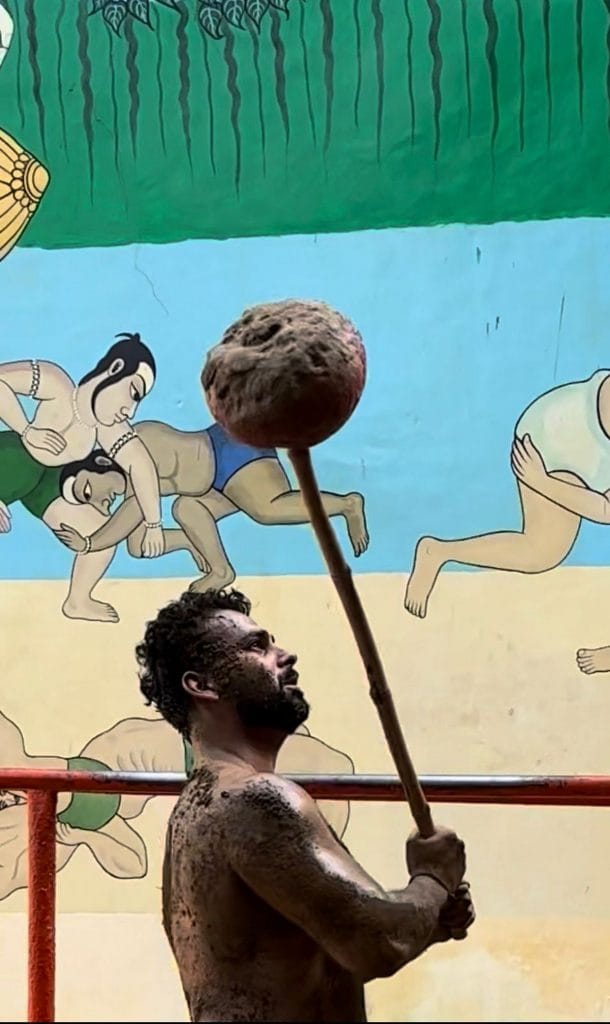
“We have to preserve what this akhada stands for, but at the same time we cannot ignore the way the world is changing — if we don’t adapt, this tradition won’t survive,” said Pushkar Mishra, the 29-year-old son of the mahant, who is driving a fresh effort to hoist Tulsi Akhada into the 21st century. Currently pursuing a PhD in electronics engineering at IIT Delhi, the Gen Z Mishra is a custodian of Varanasi’s traditions, from playing the tabla to having been a state-level wrestler himself. He is the new face of the temple and its activities, and the akhada is one of his pet causes.
“People have moved to gyms, and the fast-paced world has limited the attention of young people. We need to make it cool for young people in the Instagram world but carry our traditions with it,” Mishra added.
Also Read: Lady bouncers of Delhi NCR and their fight for dal, roti, respect
From sacred soil to Instagram spectacle
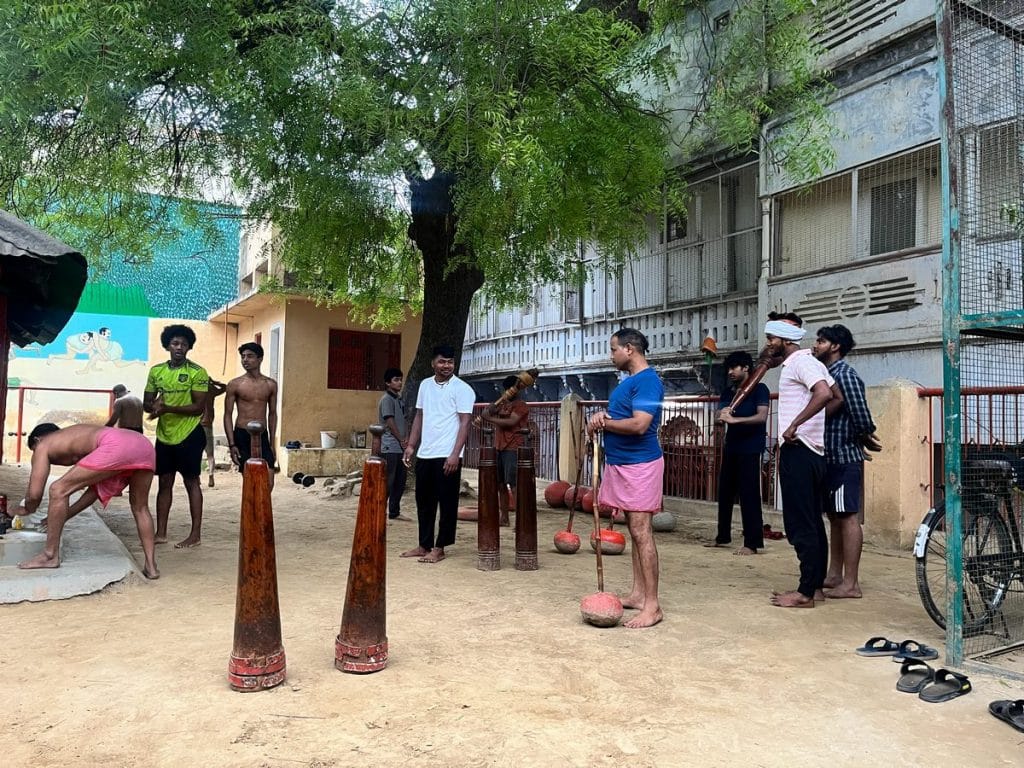
A whole new world has entered Tulsidas Akhada. While some men squat and grapple in traditional red langots, others are dressed in western sportswear. The traditional maces and mallets share space with a new pull-rope for strength training. In one corner, a young man records himself lifting a gada.
“I am trying to make it cool and popular. People like this, you know. Who knows, maybe I am the next viral guy, and along with me this art will also get viral,” he said, completing the take on his phone.
The Sankat Mochan Temple’s Instagram account often shares reels of Tulsidas Akhada with captions in English, apparently aimed not at other pehlwans but at a broader, even international, audience.
Unlike the high-machismo reels of Haryana akhadas, often set to ‘gangster’ tracks by the likes of Masoom Sharma, the content here reaches for tradition with a lick of polish. One reel of a coach demonstrating “traditional strength training” techniques, set to ‘Broken Souls’ by Shankar Ehsaan Loy got 5,300 likes; another, hashtagged #KashiOlympics, featured a pahalwan twirling batons to ‘Rama Rama Ratate Ratate’ by Pujya Prembhushanji Maharaj. Foreigners are a not infrequent sight, such as in a Facebook reel that was captioned: Munna Pahalwan vs Portugal.
The akhada does not charge fees and is run by what Vishwambhar Nath Mishra calls his charity. The Mishras, whose house is just outside the akhada, are an unusual religious dynasty — priests who are also engineers. The late Veer Bhadra Mishra, the previous mahant, was a civil engineering professor at IIT BHU who won TIME magazine’s ‘Hero of the Planet’ award in 1999 for his work to clean the Ganga. His successor Vishwambhar Nath Mishra teaches electronics engineering at the same institution and is locally well known as a voice for the protection of Varanasi’s cultural and natural heritage.
My goal is to make this art a replacement for the modern gyms. I religiously spread awareness about this. This is our tradition and we have to secure and promote it
-Utkarsh Yadav, wrestler who has formed the Banaras Akhada Bachao Society
And now Pushkar, another engineer, is turning that same energy toward the akhada — including commissioning a short documentary about Tulsidas Akhada, released on YouTube in 2024.
“Up the steps from the Ganga ghats, under a neem tree, stands Tulsi Das Akhada,” says the voiceover in the video, which has 2,700 views. “In Hindu mythology, the Mahabharata speaks of a special sport called mall-yuddha, which later became known as kushti. That’s where it all began.”
In the documentary, Vishwambhar Nath notes that in their mahant tradition, everyone wrestled, including him. He recalls being warned that academics might hurt their necks where “thinking and understanding live,” but smiles that the rule never applied to them.
But even in a video about heritage, the reinvention is visible. It features Harbert Harte Egberts, aka ‘The Flowing Dutchman,’ a fitness influencer who specialises in workouts with maces and clubs.
“I’m from the Netherlands. I came to India because these ancient practices are still alive here—back home, they’ve been replaced by steel and modern gyms,” he said in the documentary, which features him shirtless and swirling a gada.
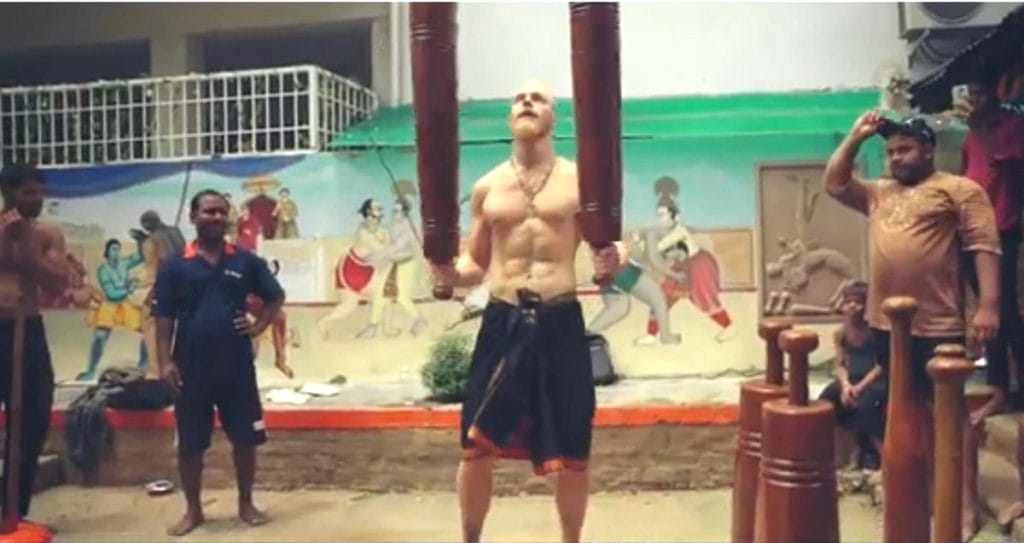
One of his pinned posts on Instagram shows him demonstrating his skills with a 40-kg gada before a cheering audience in Varanasi. “Little did I know I’d be swinging one of the heaviest Gadas I’ve ever swung in the middle of the street,” he wrote in the post, which received 1.7 million likes.
In another reel he pulled himself up with a giant rope. The caption said it was “amazing to witness” how the Akhara was improving by adding new murals, swinging tools, and the rope pull station.
“Rope pulling is very important for a wrestler, and you won’t find this much anymore in Varanasi,” he wrote.
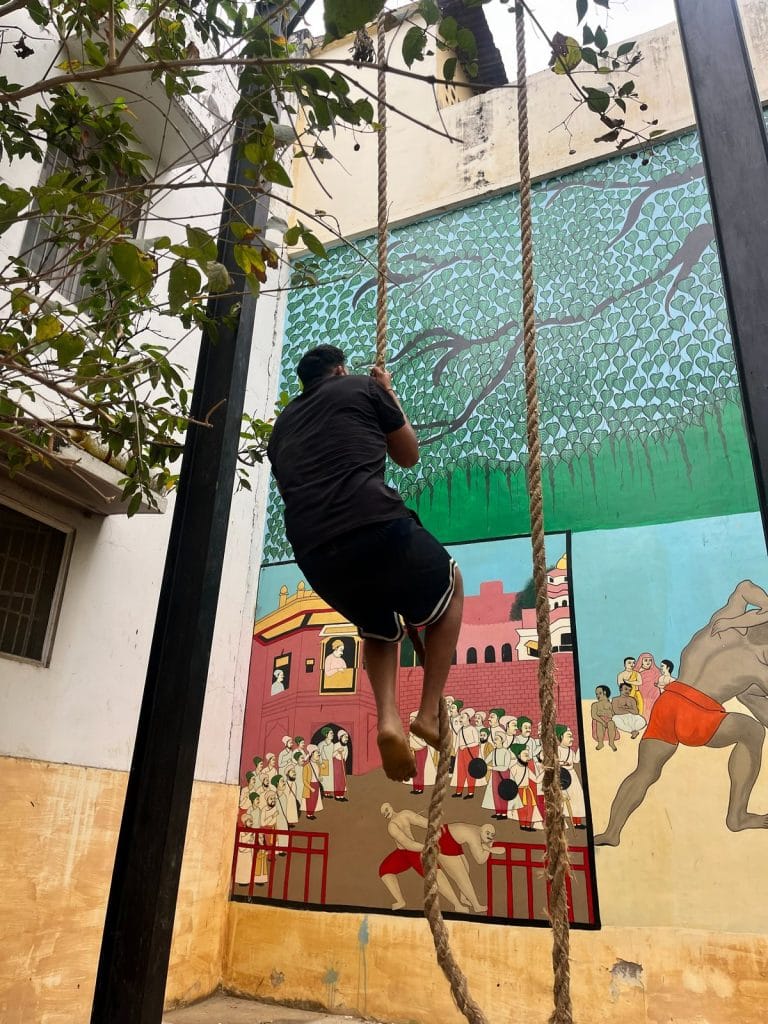
Egberts is one of several international influencers invited by Pushkar, who looks out for people who can help “motivate” the wrestlers. He insists that these influencers are not paid for these trips.
“We are collaborating with fitness influencers, cultural practitioners, and environmental initiatives to ensure the Akhada stays relevant while preserving its core traditions,” said Pushkar.
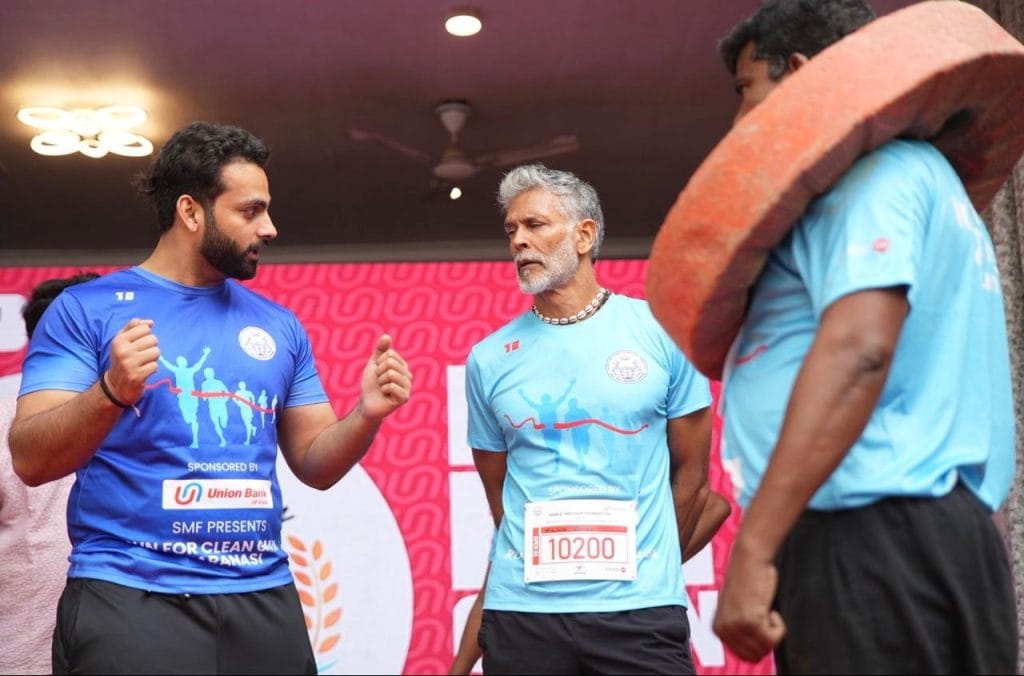
Beyond social media, Pushkar is also organising events that blend various causes close to the family. In March, he organised a ‘Clean Ganga’ marathon in Varanasi in which more than 20 members of Tulsidas Akhada took part. At the event, pehlwans performed routines that piqued the interest of Milind Soman.
“These kinds of traditional activities should be promoted more,” said Soman at the marathon event, expressing an interest in jodi and gada training.
Vanishing akhadas
Nineteen-year-old Utkarsh Yadav is a fourth-generation wrestler at Tulsidas Akhada. His father held the Uttar Pradesh Kesari title in his time, and his family has been coming here for as long as anyone can remember. But Yadav’s preoccupation isn’t with winning titles. He wants to save the akhadas themselves.
In March, he and members of several akhadas formed the ‘Banaras Akhada Bachao Society’ to protect the city’s dying wrestling arenas. The mission is threefold: reclaim akhada land that has been encroached upon for commercial developments, bring back pehlwans who have drifted away, and popularise the arts of mudgal and gada among youth.
“There are some akhadas that were forcefully occupied by people for the land, and some pehlwans also left the art. So we are working on both sides — finding the papers of those akhadas to get them back, and meeting the pehlwans to motivate them to join the art again,” said Yadav.
By some estimates, Varanasi once had as many as 500 akhadas. Today, just over three dozen survive, according to Rajesh Ranu Singh, president of the Banaras Kushti Sangh. The fall began in the late 1990s due to rapid urbanisation.
“Only around 40 akhadas are functional today, and barely 20 of them are active. Earlier, say 15 years ago, there were around 125. There was some revival after 2008, but the numbers are still far from what they used to be,” he said.
There are several reasons for the decline. Over the decades, land was grabbed, pehlwans moved to mat kushti instead of mud, and young people gravitated toward the glossy gyms that have opened across the city.
Only around 40 akhadas are functional today, and barely 20 of them are active. Earlier, say 15 years ago, there were around 125. There was some revival after 2008, but the numbers are still far from what they used to be
-Rajesh Ranu Singh, president of the Banaras Kushti Sangh
Around 800 pehlwans still train in Varanasi’s akhadas, including more than 30 women, but there’s little by way of support for them as most arenas survive on donations. While Varanasi hosted a ‘Mahadangal’ with Rs 1 lakh prize money, organised last year by the Bharatiya Paramparik Khel Association, such events are not common and prize money tends to be modest amounts of Rs 5,000 to Rs 21,000.
Yadav prepares during the day for the Common University Entrance Test (CUET) and spends two hours every evening at the pit. In his free time, he tries to convince his peers that the akhada is better than a gym membership.
“I have been training here since I was three,” Utkarsh Yadav said between sets of desi pushups. “My goal is to make this art a replacement for the modern gyms. I religiously spread awareness about this. This is our tradition and we have to secure and promote it.”
Fighting to stay relevant
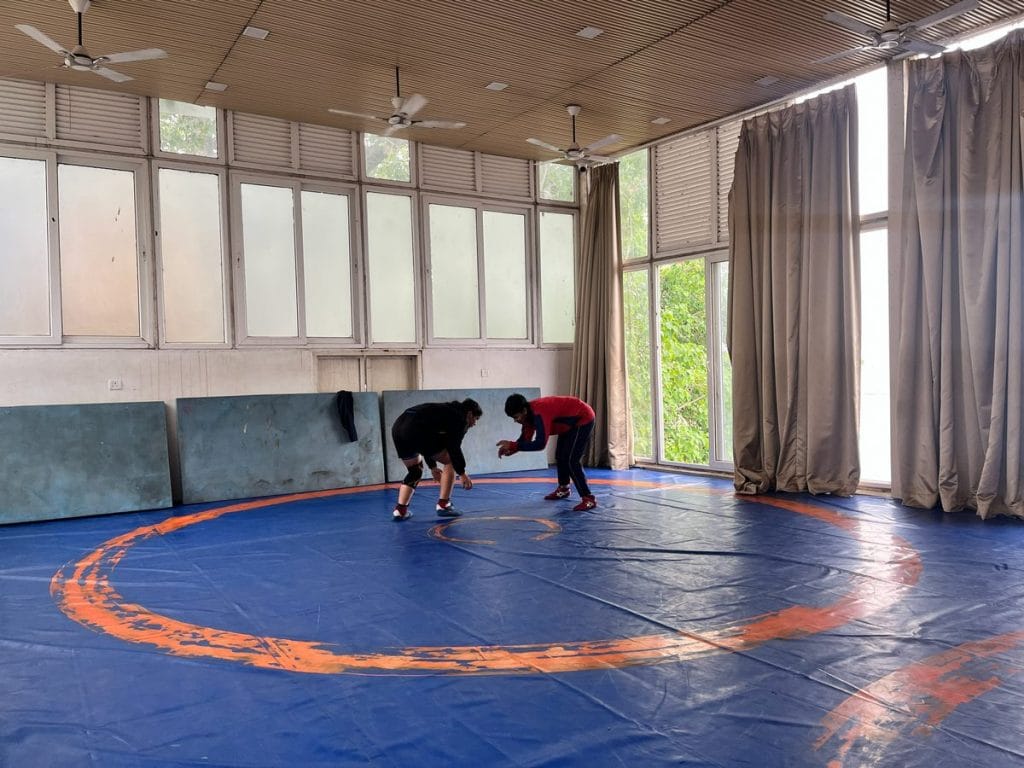
What sets Tulsidas Akhada apart from many others is that it offers three disciplines together: jori and gada training, mud kushti, and mat kushti. It has become a rare sanctuary for both traditionalists and those eyeing modern competitive wrestling. Most other akhadas in the city provide one or two, but not all three. It has also broken with some restrictive traditions that other akhadas still maintain.
“Earlier women weren’t allowed to enter but now we are adapting to modern practices because we have to get along with modernity to survive,” Yadav added.
Thirty-year-old Mukesh Pahalwan, aka Munna Pahalwan, is one of the many stars of Tulsidas Akhada. Trained there for almost two decades, he has won medals at district, state and national levels. Through the sports quota, he secured a government job, which is a gateway out of poverty for many.
“This place has given me so much — discipline, consistency, and the most important thing, staying connected with my roots. My father used to train here as well. I want to give it back by promoting the traditional ways of staying fit,” said Munna Pahalwan, heading toward the mud arena.
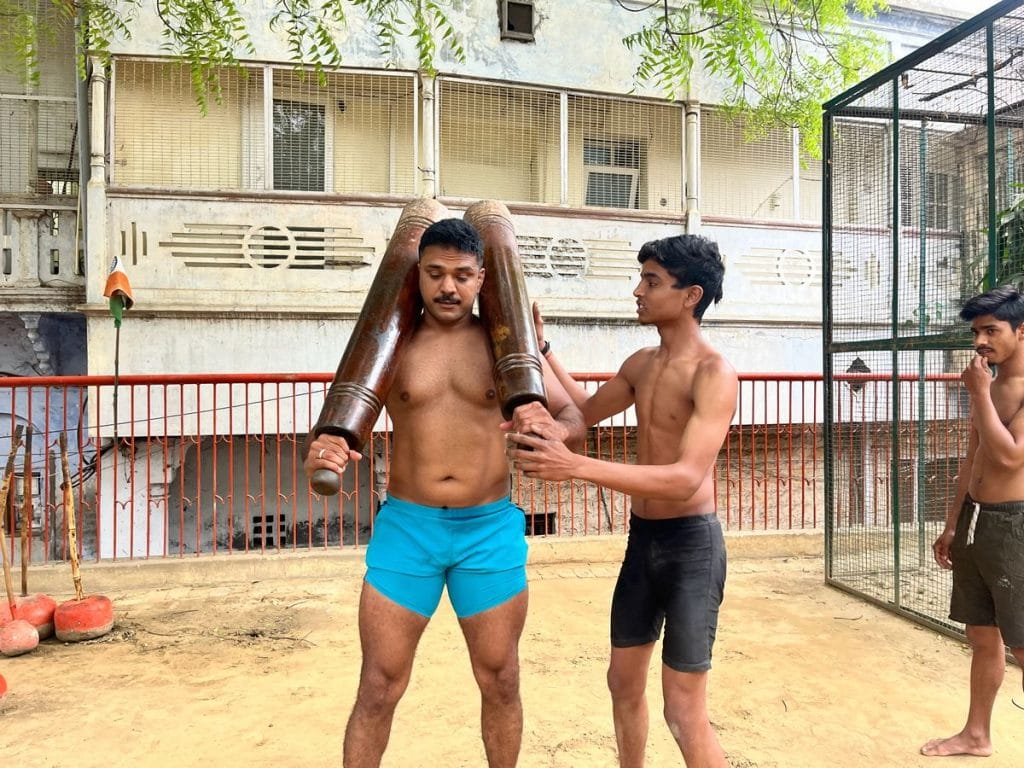
Now the next generation is trickling in. Children as young as five still come to Tulsidas Akhada to train. Most belong to traditional pehlwan families with generations in the practice. The majority are from upper-caste and Yadav backgrounds, though the akhada is not restricted by caste.
“I used to train here in my twenties, and now I want the same values and strength for my son as well. That is why I have started sending him to the akhada,” said Suryakant Tripathi, father of five-year-old Raghav. “If I had a daughter, I would send her also.”
Also Read: The secret lives of young India in small-town gyms. Dumbbells, desire, freedom
The picture-postcard pit
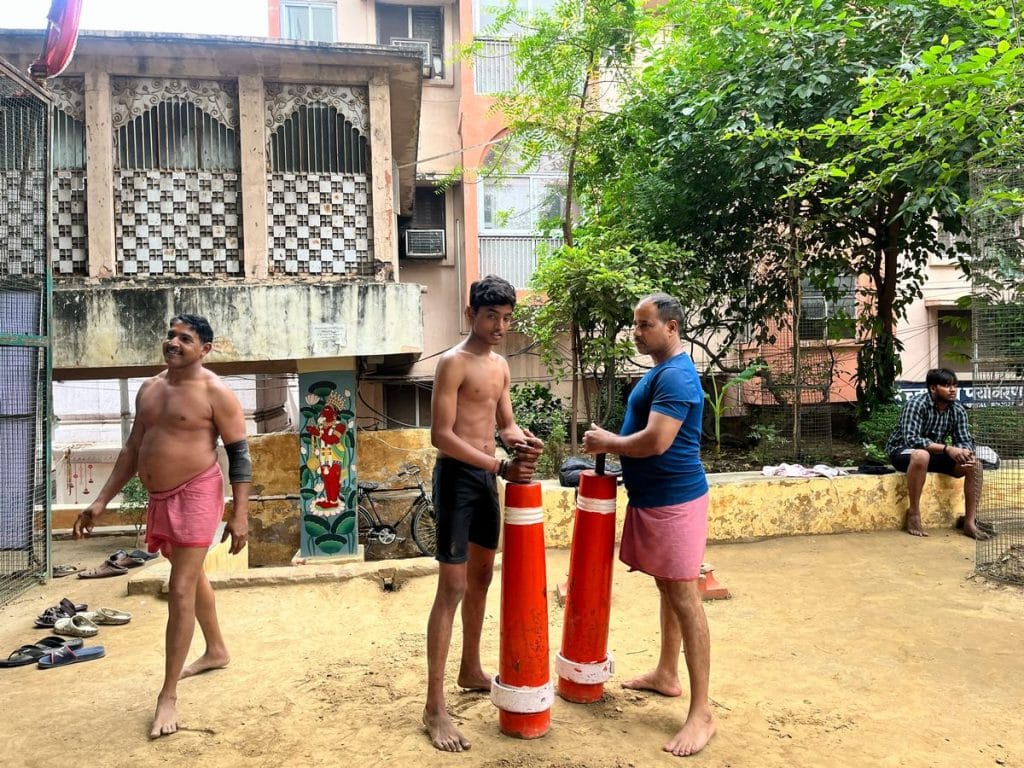
As the sun rises over the Ganga and the morning arti begins, Tulsi Das Akhada becomes a prime destination for nostalgia farming and aesthetic travel vlogs. For the tourists streaming to the ghats, the scene is a picture-postcard version of a Varanasi that is fading: bare-bodied pahalwans grappling in the mud and swinging heavy gadas against the dawn light.
Visitors often linger on the steps, cameras ready. Some even attempt a few traditional exercises.
For 51-year-old Bhawna Tyagi, who was visiting from Meerut with her husband and sister-in-law, the sight is a reminder of what is being lost.
“I should ask my son to join such traditional practices, but he is crazy about the gym,” she sighed, watching from the sidelines. “See how good it feels to follow our traditions. There is discipline, no protein powder mandate. I love this.”
Getting tips from the akhada pahalwans and training with them is an experience that many people seek out and there’s a whole subgenre of Instagram posts around it—from artful black-and-white photos of the men’s glistening bodies to hammy poses with mud-streaked wrestlers to flexing with stone ‘gar nal’ around the neck. Others treat the subject with a little more gravitas.
Sri Ganesh, a surgeon and influencer, posted a video of wrestlers doing frog jumps, set to Daler Mehndi’s Dangal. “Visited the Akhada at Tulsi ghat in Varanasi. This is one of the oldest in the country & dates back to the 1600’s,” he wrote. “It is said Tulsi Das who wrote Ramcharitmanas & Hanuman Chalisa wrestled in this Akhada next to his house. It was fun interacting with the Pahelwan’s & taking up their challenges.”
For Pushkar, Tulsidas Akhada is his personal labour of love for his city. Just as his grandfather started a movement to save the Ganga, he wants to save the wrestling culture and make it part of Varanasi’s future.
“For me, the Akhada is about spirituality and physical discipline as well,” said Pushkar. “I want to make Tulsidas Akhada a global destination for traditional fitness. And Varanasi a place where people come not only for temples and ghats but to live the heritage.”
(Edited by Asavari Singh)