


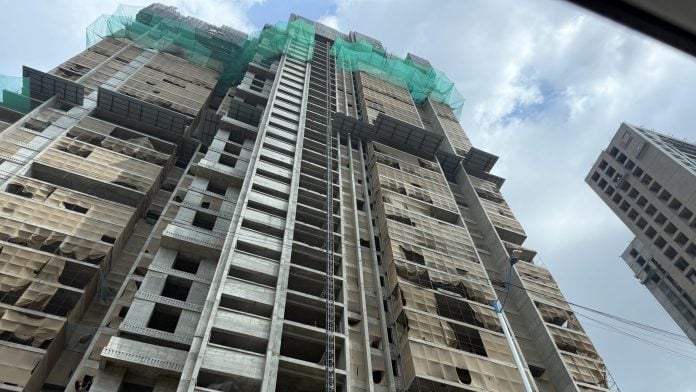
Ahmedabad: Prateek Sharma, a schoolteacher, had lived in a 1BHK in Ahmedabad’s Jeevraj Park for a decade before deciding it was time to upgrade. With both his children growing up and needing their own space, the family began househunting. They realised that a 3BHK would cost around Rs 75-80 lakh. The family knew what it would take: cut back on expenses, plan their finances and rebuild their savings.
“But by the time my wife and I had saved enough to buy the Rs 80-lakh house, its price had shot up to Rs 1 crore. We looked for a 2BHK but there aren’t many options for that. Our elder son is in Class 12 and we need to save money for his higher studies as well,” 39-year-old Sharma said.
Anticipating the price to climb even further by the time he saved Rs 1 crore, Sharma opted for a more affordable fix. He converted the hall-and-balcony space in his existing flat into a small room. His next option is to look for a house along the Vadodara Highway, 50-60 km outside Ahmedabad.
Ahmedabad, Gujarat’s commercial and financial capital, has expanded rapidly over the past three decades, with its municipal limits tripling from 150 sq km in the 1990s to 450 sq km today. Developers are betting on an infrastructure and investment boom — driven by GIFT City, the proposed bullet train, the 2030 Commonwealth Games and India’s 2036 Olympic ambitions — to bring more jobs, residents and buyers.
But as it sprawls and builds, there is a missing middle in Ahmedabad’s boom. Its housing market is leaning towards larger apartments and luxury projects, side-stepping the middle-class budgets, who have been left to struggle to afford homes despite a surplus of housing.
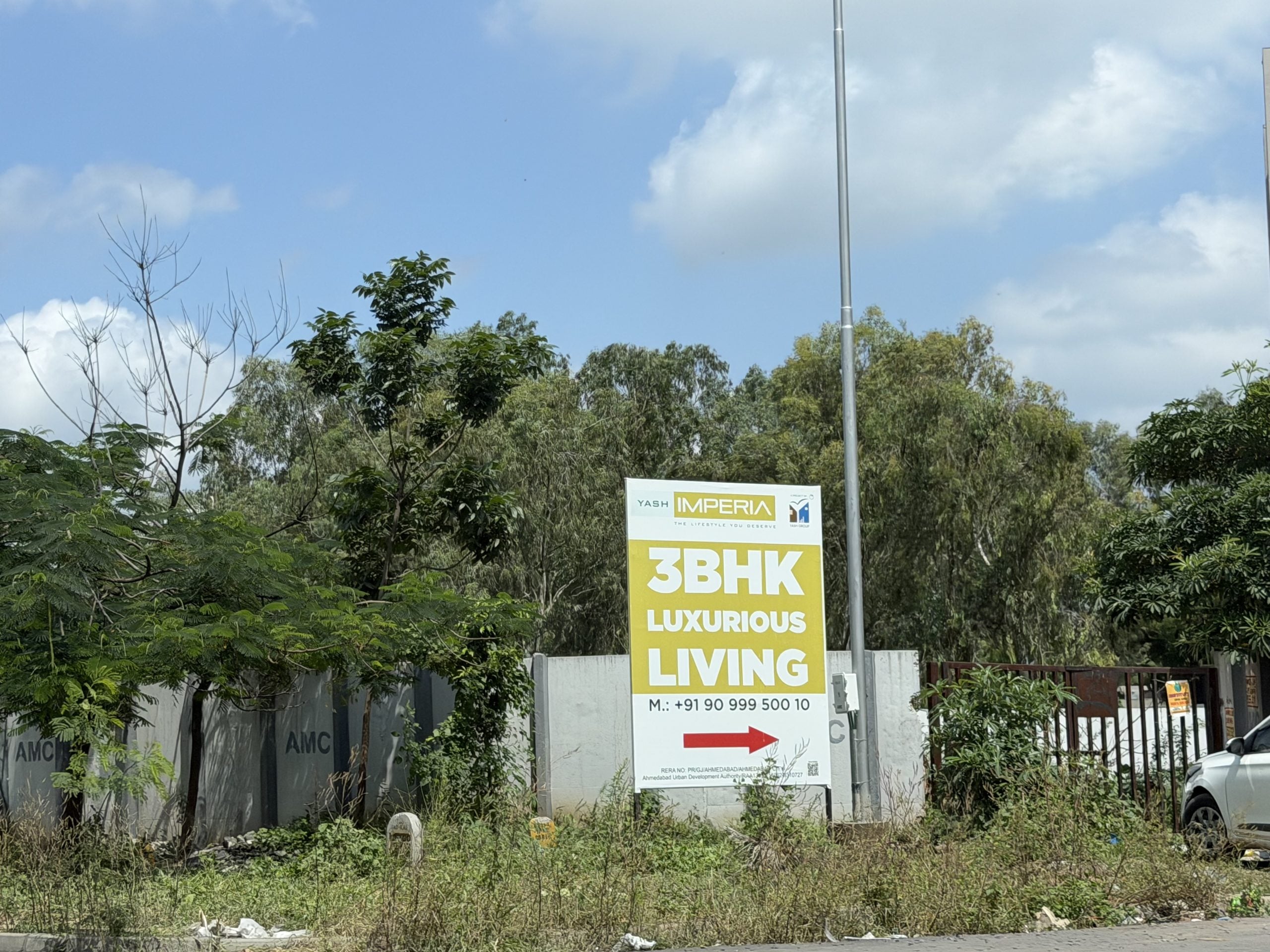
As areas along Sarkhej–Gandhinagar Highway, or SG Highway, Bopal-Shela, Shilaj and Vaishnodevi are defining Ahmedabad’s growth story, they are also exposing a growing gap between the houses being built and what the middle-class can afford.
“The SG Highway that connects Ahmedabad and Gandhinagar is the Gurugram of Ahmedabad. Only, this change has arrived late for Gujarat,” said Punit Dabi, who has been working in real estate for the last 15 years.
On the one hand, developers have moved on from studio apartments and 2BHKs to bigger 3BHK and 4BHK apartments, and luxury housing like villas and penthouses. On the other hand, 60 per cent of the estimated 5.41 lakh residential units, predominantly 3BHKs, in Ahmedabad remain unsold, according to a report based on RERA data.
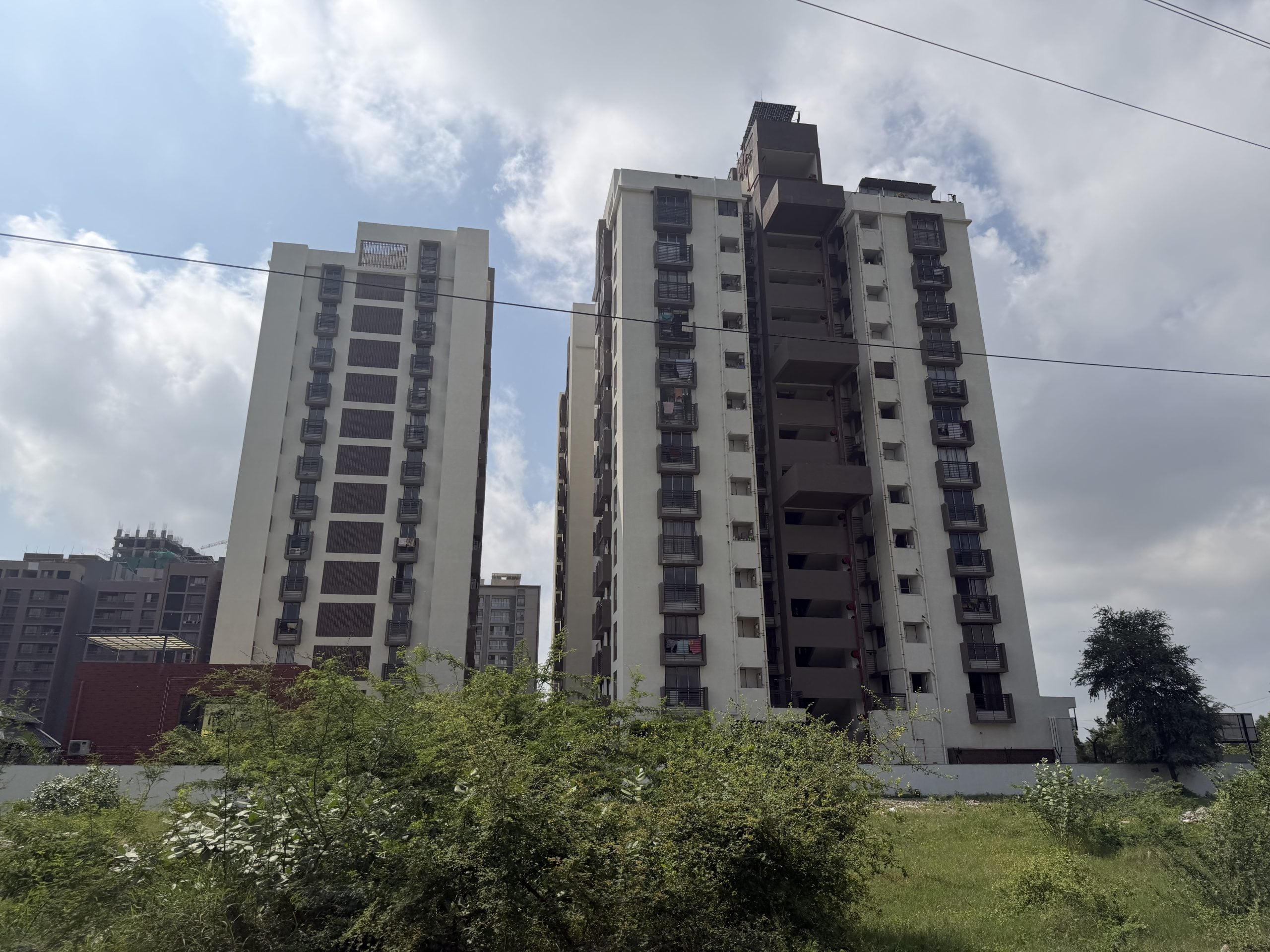
“Ten years ago, a building with 300 flats used to get sold out in two years. But now, we are unable to do it even in five years,” said Dabi, Marketing Director of Real Earth Asset Private Limited.
The demand-supply paradox
Prateek Sharma and his family are well aware about the mass supply of houses, but the problem is the pricing. “The builders are saying that there is a market slowdown and people aren’t buying houses. But that’s not the case. Demand is there but the price is too high,” said Sharma.
Taran Shah, Managing Director at Shivalik Houses said that there was a huge demand for 2BHKs but they aren’t as profitable as luxury housing. “2BHKs were built in the years after the Covid-19 pandemic but they were sold out till 2025,” Shah said.
Builders are, however, prioritising higher profit margins over high demand as the luxury segment comes with the certainty of payback, which may not be the case with a salaried middle-class professional in this economy, especially amid looming job insecurity.
“Luxury housing is attractive because margins on smaller homes have become increasingly difficult to sustain. But, how many people can afford a 4BHK? The segment is slim,” said Pavan Bhai Bakeri, one of the oldest builders in Ahmedabad.
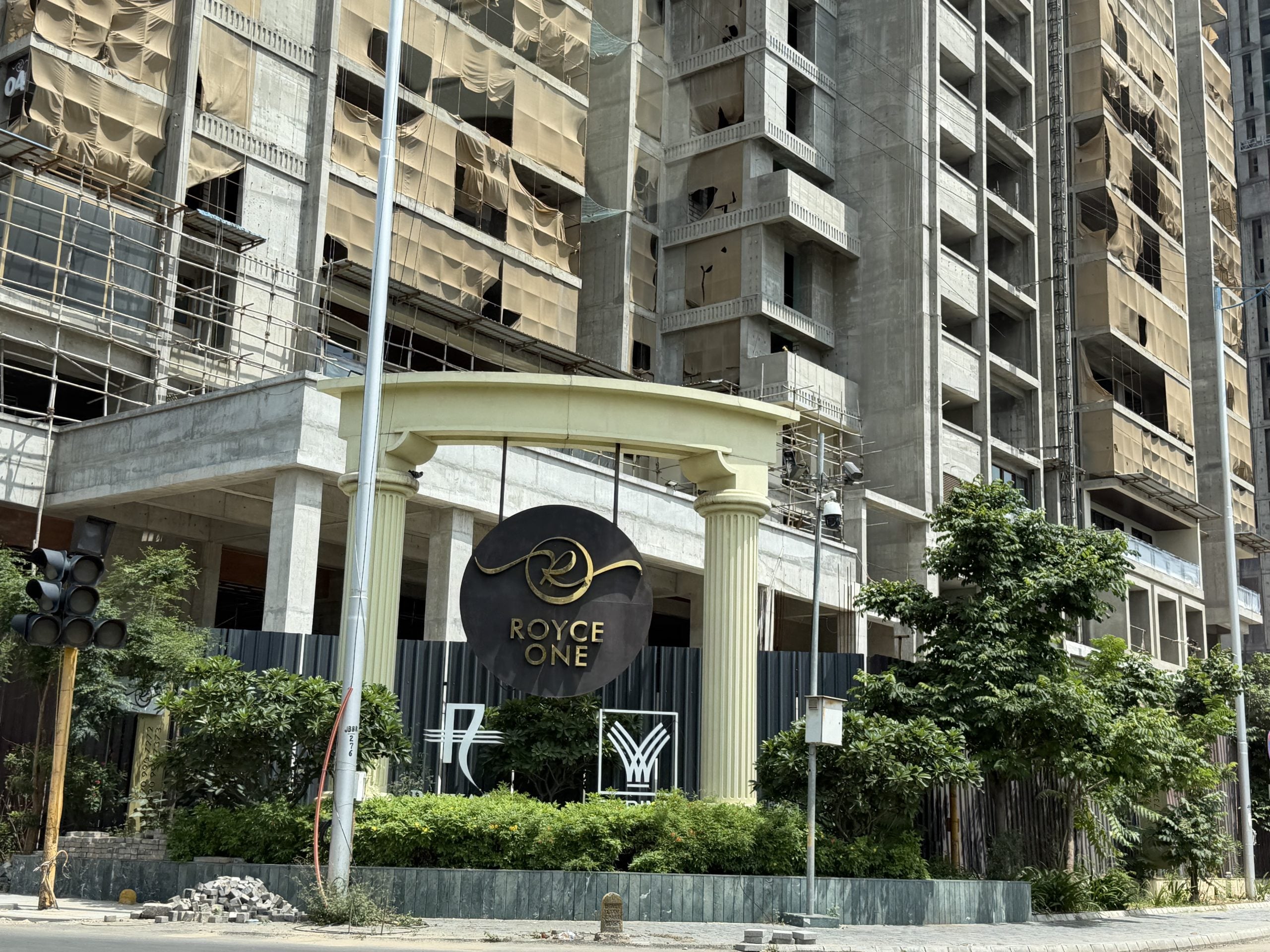
An oversupply of large homes and limited demand should have cooled prices. Instead, it has even trapped sellers, who were looking to upgrade their homes, in a vicious cycle.
60-year-old Daksha Ben wanted to move out of her decade-old 3BHK in the Bhopal area and purchase a more spacious one.“We have found a few places but the prices are too high, which we are ready to shell out provided we are able to sell our flat. We bought it for Rs 50 lakh six years ago and want Rs 65 lakh for it now but no one is paying this much,” said Daksha.
Builders say that their own costs have risen to a point where cutting prices is difficult. Bakeri, whose family has been in the real estate business for about 70 years, claimed construction costs have risen by around 35 per cent since Covid, while labour costs have gone up by about 30 per cent. Land prices too have increased.
“If we don’t increase (prices), then how will we build? And some profit is required,” he said. The result is a weakened pool of buyers. Bakeri said footfall at his projects — a measure of how many prospective buyers visit a site — has fallen by about 50 per cent compared with the better years.
“This is particularly visible in the affordable and middle-income segments, where buyers are increasingly struggling to stretch their budgets,” he said.
Developers are, however, reluctant to cut prices sharply. “If there is a 20 per cent discount, everything will be sold. But it is very difficult,” Bakeri said.
Builders are therefore banking on Ahmedabad’s expanding commercial base — including GIFT City and the growing corporate presence around the Ahmedabad-Gandhinagar corridor— to create high-paying service-sector jobs. “If their salaries go up by 25 per cent, then their EMI capacity will also increase by 25 per cent. Then they will be able to afford it,” Bakeri estimated.
For now, the Ahmedabad market sits in an unusual position. Developers say the city remains cheaper than markets such as Gurugram, Bengaluru and Mumbai, yet buyers are still holding back. But they are optimistic.The upcoming sporting events are expected to spur real estate investment as is the Mumbai-Gujarat bullet train.
“Wherever the Olympics go cities grow so we are expecting the same thing from here as well. Ahmedabad used to be 20 years away from all the other developed cities but now many big hotels are coming up, hospitals are being built, and real estate is also being built here. I am sure the upcoming time will be really good for Ahmedabad,” said Shah.
Ahmedabad has grown rapidly
As you leave Ahmedabad’s busy roads and head towards SG Highway, the skyline changes — the eye catches high-rise buildings, construction sites, big machines and cranes. The city’s long-held ambition of becoming a major business hub is taking shape, creating a steady influx of companies, workers and potential homebuyers around its expanding edges.
“Ahmedabad’s municipal boundaries have increased by three times in the last 30 years. In the 1990s, it was 150 square kilometres. Now it is 450 square kilometres. Currently, we have become twin cities — Ahmedabad and Gandhinagar — which are almost merging into each other,” said Dr Sejal Patel, Professor and Dean, Faculty of Management, CEPT University.
Punit Sureshbhai Dabi, a 40-year-old real estate professional, has witnessed this expansion first-hand. He recalled that until about 15 years ago, one prominent high-rise stood out along SG Highway: a white Vodafone tower. Today, the road looks dramatically different, dotted with high-rises every 100 metres.
“There are more than a hundred 42-storey buildings under construction. These include big hotel chains, commercial buildings, luxury apartments and corporate houses. Around 50 corporate buildings have also come up,” said Dabi.
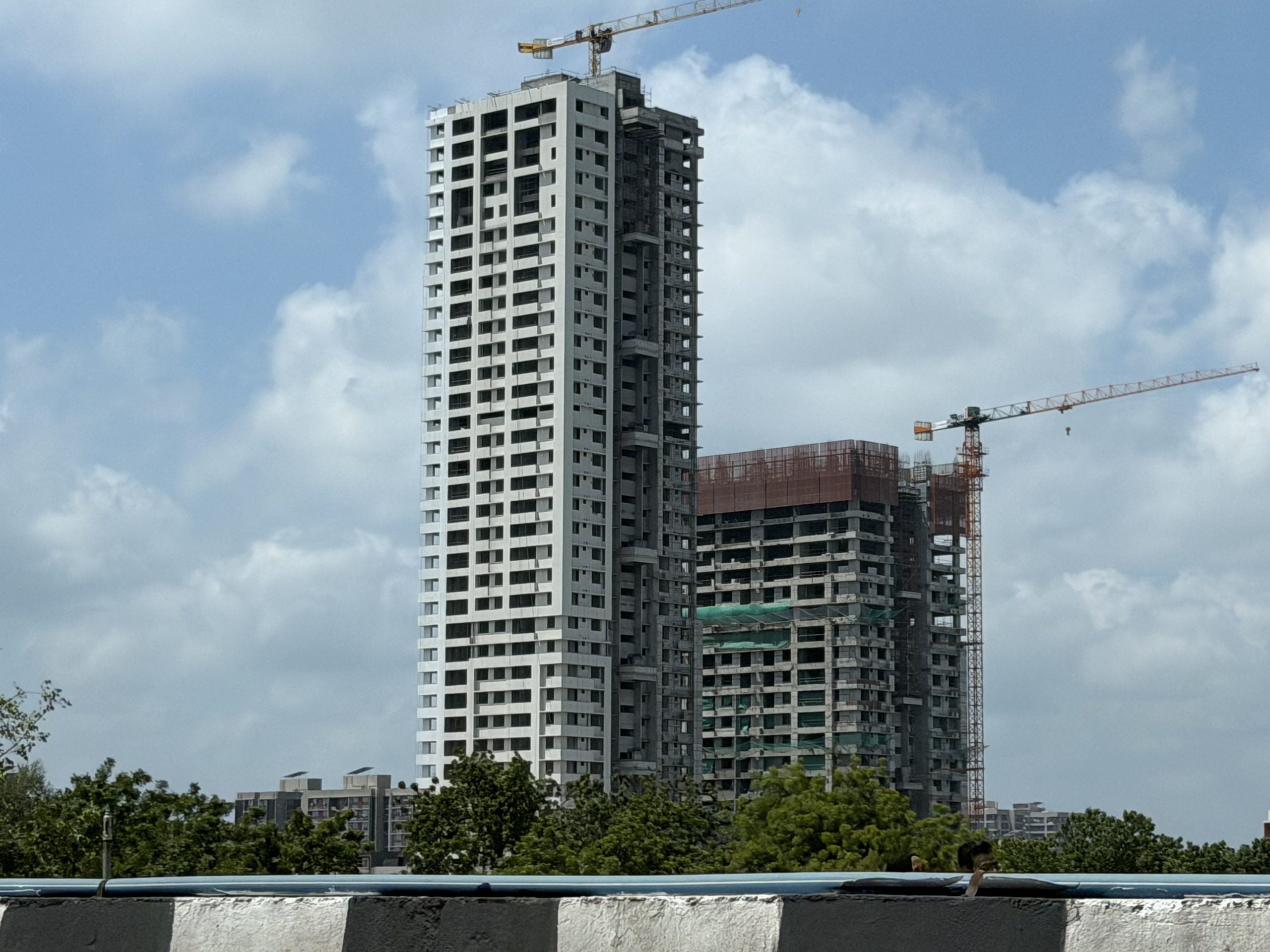
The housing sectors along the SG Highway, in Bopal-Shela, Shilaj, and Vaishnodevi are among the few in the city’s northern and eastern edges that are booming at an exponential rate.
“In Ahmedabad, there are a total of 4,665 residential projects, and they have supplied close to 5,40,000 units between Gandhinagar and Ahmedabad in 10 years. It is unprecedented growth in terms of supply,” said Patel.
She said that demand has not disappeared altogether. It varies by micro-market: some are saturated or slow, while others remain steady or are emerging. According to a CEPT University study of RERA data, Thaltej-Bodakdev-Vastrapur, Bopal-Shela-Shilaj and Sargasan-Kudasan-Raysan are among the residential clusters attracting strong buyer interest. While the first is an established western Ahmedabad locality, the other two lie in the city’s expanding suburban belt.
“Ahmedabad has affordability because the government has opened land everywhere,” said Patel, who specialises in urban planning, housing and real estate.
In 2020, the Gujarat government allowed buildings taller than 100 metres to be built in Ahmedabad, Gandhinagar, Surat, Rajkot and Vadodara, removing the earlier 70-metre-high ceiling. The rules tied this vertical development to factors including road width, with plots on roads wider than 30 metres made eligible for even higher vertical development.
That regulatory change coincided with the creation of better roads and serviced land around the SG highway. Ahmedabad Urban Development Authority (AUDA) has been opening roads through town-planning schemes between SG Highway and the SP Ring Road, while newer proposals include additional service roads around Vaishnodevi Circle.
“People are not able to buy because prices have risen faster than their purchasing power, while high-paying jobs remain limited. Builders are oversupplying in the market. There should be as much demand as there is supply,” said Patel.
But the builders, particularly the older ones, are resilient. They are completing their projects with investors’ money. The top builders say the slowdown, caused by subdued demand and a glut in housing, is cyclical and repeats almost every 10 years.
“I will not call it a slowdown. But this is the time to be patient. But this time will go away and the situation will be better soon. This is not the first time it’s happening. Small builders might get affected more by this but those who have been in the business for years know that it will pass,” said Shah.
Demand is not dead
Ahmedabad has a long industrial history, particularly in textiles, pharmaceuticals, chemicals and engineering. And now the Ahmedabad-GIFT City corridor is also emerging as a destination for global offices and Global Capability Centres (GCCs). A July 2026 Deloitte India report said more than 100 Japanese companies already operate GCCs in India and identified Ahmedabad as one of the tier-2 cities likely to see the next wave of GCC expansion.
“Industrial clusters are developing across different directions of Ahmedabad. Sanand lies to the west; Dholera Special Investment Region (SIR) to the south-west; the Kheda cluster along the Delhi-Mumbai Industrial Corridor to the south-east; and the Mandal-Becharaji SIR to the north-west—where Japanese automobile companies have invested,” said Patel.
Dabi said that the influx of Japanese companies around the Sanand-Khoraj industrial belt is expected to create demand not just for corporate offices, but also for housing.
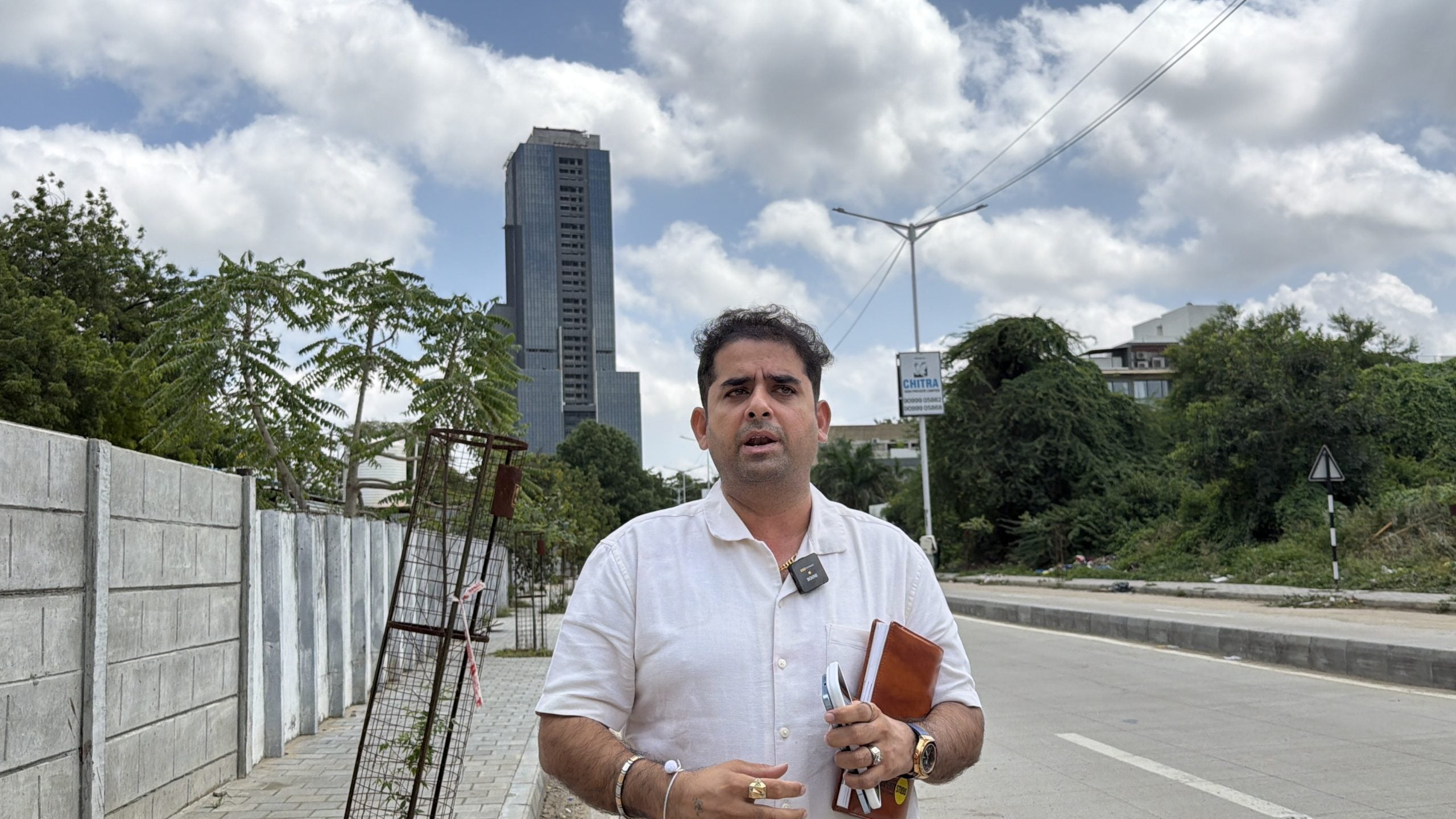
His firm recently received an order for 95 3BHK and 4BHK apartments approximately 30 km from Ahmedabad city, near Khoraj Gujarat Industrial Development Corporation (GIDC), an industrial area situated about on Ahmedabad’s north-western outskirts. Of these, 25 apartments have been delivered, and are being rented at around Rs 55,000 a month, he said.
“The housing demand is being driven by the industrial activity coming up around the Ahmedabad-Gandhinagar corridor. For example, Maruti Suzuki’s electric-vehicle plant at Khoraj is among the developments expected to bring thousands of workers to the area,” said Dabi.
Dr Sejal Patel, said, Ahmedabad’s ability to make serviced land available far beyond the old urban core has been one of the biggest drivers of its expansion.
“One of the largest and fastest supply of serviced land among Indian cities is in Ahmedabad. You will not find any area without roads. No matter how far, 15 km from the city centre, 20 km from the city centre, you will find roads have penetrated everywhere. This is possible because of the Town Planning scheme mechanism. Water supply networks and sewerage networks have also reached there,” Patel said.

Ahmedabad’s town-planning scheme pools land from multiple private landowners for planned urban development. Typically, around 40 per cent of the land is reserved for roads, parks and other public infrastructure, while the remaining plots are returned to owners in a reorganised form, with improved access and services.
This has allowed authorities to develop concrete roads, water-supply networks and sewerage systems in developing areas without acquiring every parcel of land separately.
For developers, this growing corporate and industrial base is part of the bet on Ahmedabad’s next phase of growth. Dabi said investors are being drawn by GIFT City, the bullet train and the proposed sports infrastructure — developments that, in his view, could bring more people and businesses into the corridor.
“This will be a mini Dubai in no time,” Dabi said, as he pointed to the high-rises coming up along SG Highway.
(Edited by Aakriti Handa)