





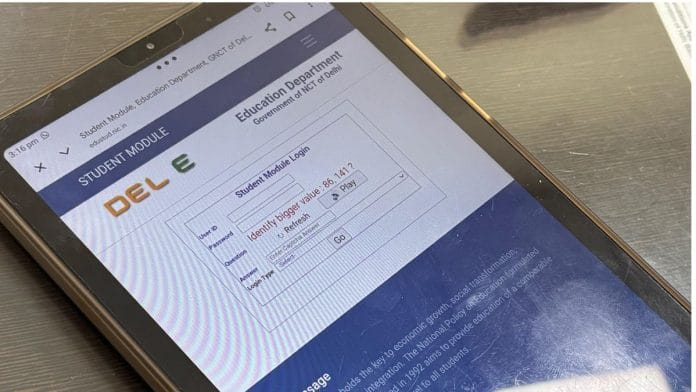



New Delhi: Government school teachers in Delhi, making classrooms digitally active, are now having a tablet-sized problem. And it is called reimbursements.
When Manisha, a mathematics teacher at a Delhi government school, logs into the Directorate of Education (DoE) portal each day to update attendance and student records, she does so on a tablet she bought with her own salary. The device cost her Rs 15,000 three years ago–more than half her monthly earnings–and the promised reimbursement is yet to arrive.
She isn’t the only one. About 60,000 school teachers have been struggling to get the Delhi government to reimburse them for the digital devices they were mandated to buy for classroom work –often with their own personal money.
“I bought the tablet because there was pressure from the principal that we would be inspected. And as a guest teacher, I did not want to risk my job,” she said. “As I earn only Rs 1,403 per day, most months my earnings barely touch Rs 25,000, making this tablet a big expense for me.”
Manisha teaches mathematics to students from classes 6 to 10 at a Government Boys Senior Secondary School in central Delhi. Much of her administrative work—attendance, marks entry, scholarship records, uniform distribution data and mid-day meal records-–is now completed through online portals that require teachers to log in individually.
She spends at least Rs 400 per month on mobile data to complete official work. Meanwhile, salaries in schools have not increased in the last eight years, she said, even as the cost of her auto ride to school has doubled in that time.
Manisha is among more than 60,000 government school teachers in Delhi, including regular and guest staff, who say they were directed by the education department to purchase tablets costing up to Rs 15,000 as part of the city’s push toward digitalisation. The first circular was issued in 2018, followed by a clarification in 2023 stating that “all referred teachers are directed to buy the tablet and submit the bill by 31.01.2024, failing which no reimbursement will be made and action as deemed fit will be initiated against defaulting teachers.”
Teachers say the AAP government promised reimbursement up to Rs 15,000 for the devices along with a monthly internet allowance of Rs 200. Many say they haven’t received reimbursement for the tablets, while the internet allowance was paid only once or twice before stopping altogether. Since then, the teachers’ association in Delhi has been running pillar to post and filling forms and petitions for the promised reimbursements, with very little success.
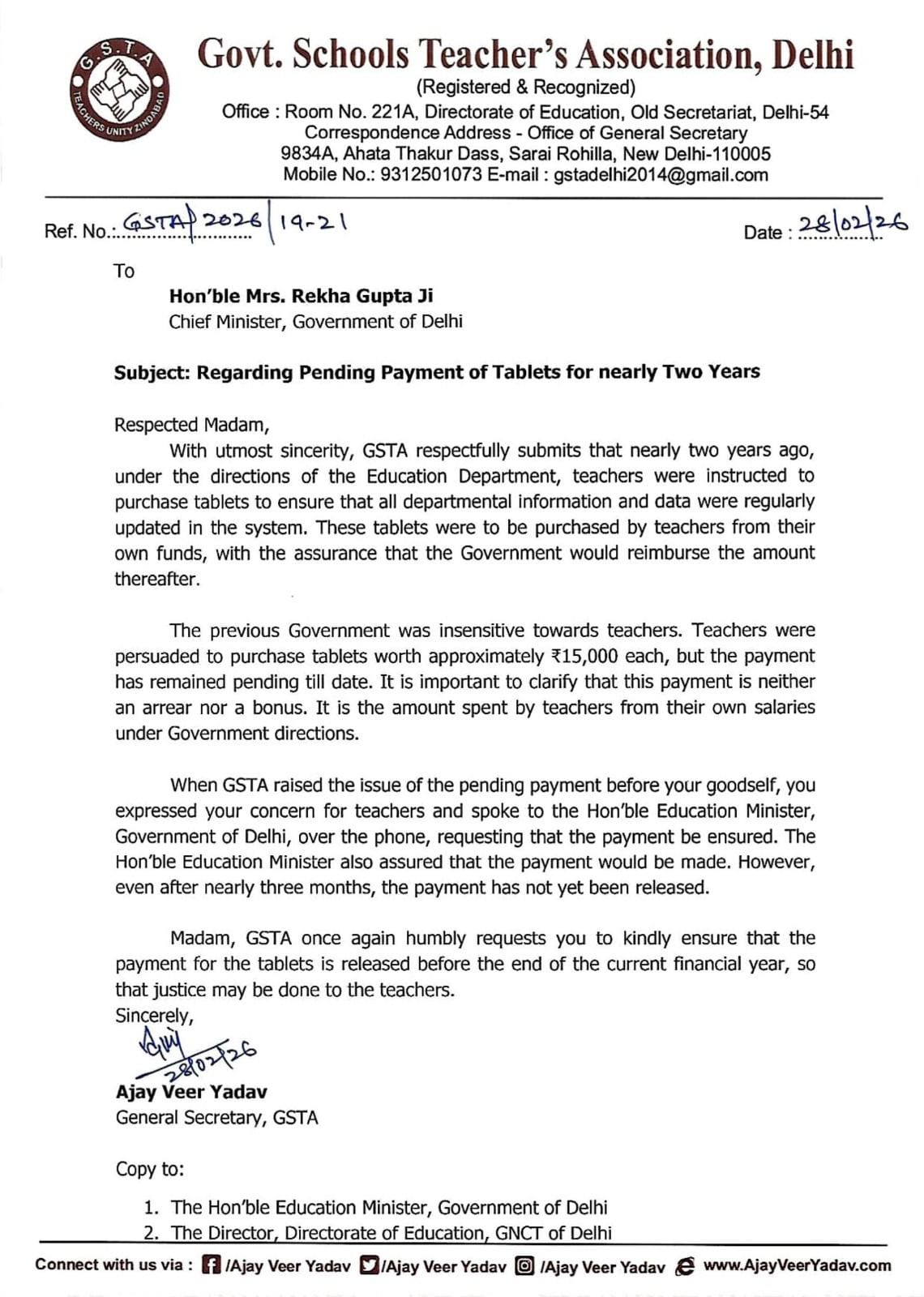
According to Ajay Veer Yadav, general secretary of the Government School Teachers Association of Delhi, the association has written to the education department and sought meetings with successive governments over the years but received little response. Despite repeated requests, he said, the association was unable to secure a meeting with then chief minister Arvind Kejriwal or the education minister. Yadav met Chief Minister Rekha Gupta after the new government took office and requested that reimbursement be included in the budget. “She said provisions would be made and asked the education minister to look into it. But nothing has happened so far.” He again met her a few weeks back, again to no avail.
The tablets were introduced during the tenure of the Aam Aadmi Party government as part of its widely publicised education reforms. In 2018, the Directorate of Education guidelines instructed teachers to purchase tablets and submit original bills to the head of the school for reimbursement, with payments to be made within 15 days of submission.
The principal of Government Boys Senior Secondary School, Mehrauli, confirmed that the scheme was introduced around 2017-18 and that teachers were asked to purchase tablets with the assurance that the government would reimburse the cost. He declined to comment on whether reimbursements had been made.
Digital push, unpaid dues
The RTI reply provided information for around 9,000 teachers across nearly 300 schools in 10 zones, and showed that none of the teachers had been reimbursed.
Years after teachers were first asked to purchase tablets for official work, reimbursements remain pending across many Delhi government schools. Information obtained through a Right to Information (RTI) application filed by PTI-Bhasha in December 2025 indicates that reimbursements remain pending even for tablets purchased in recent years.
A circular issued by the Directorate of Education on December 7, 2023, again instructed teachers to purchase tablets at their own expense and submit bills for reimbursement. The circular stated that teachers who had purchased tablets more than four years earlier under the 2018 guidelines were eligible to buy a new device worth up to Rs 15,000. The RTI reply provided information for around 9,000 teachers across nearly 300 schools in 10 zones, and showed that none of the teachers had been reimbursed.
K.S. Upadhyay, Additional Director of Education, Government of NCT Delhi, said he was not authorised to comment on the digital reforms or the reimbursement process, and said only the Director could issue a statement. ThePrint has contacted the Directorate of Education seeking clarification on reimbursements, budget allocation and whether teachers are still required to purchase tablets at their own expense. A response is awaited.
Jay Prasad, from the office of Delhi Education Minister Ashish Sood, said government school teachers facing issues related to reimbursements or other matters could approach their respective Deputy Directors of Education (DDEs). “If ma’am (Rekha Gupta) has promised, it will surely be done. This can only move forward in the upcoming budget session. It will take some time,” he told ThePrint.
ThePrint also reached out to the Aam Aadmi Party, under whose government the tablet scheme was introduced. “Kejriwal Government took a quantum leap in the field of technology-enabled education,” the party said in its response but did not address questions related to reimbursements for teachers’ tablets.
Also read: Are Delhi private schools failing the EWS test? 15 yrs of silent segregation, NGOs filling gaps
Teachers bear the cost
“This is not a bonus or an arrear. This is our own money that the government has to return.”
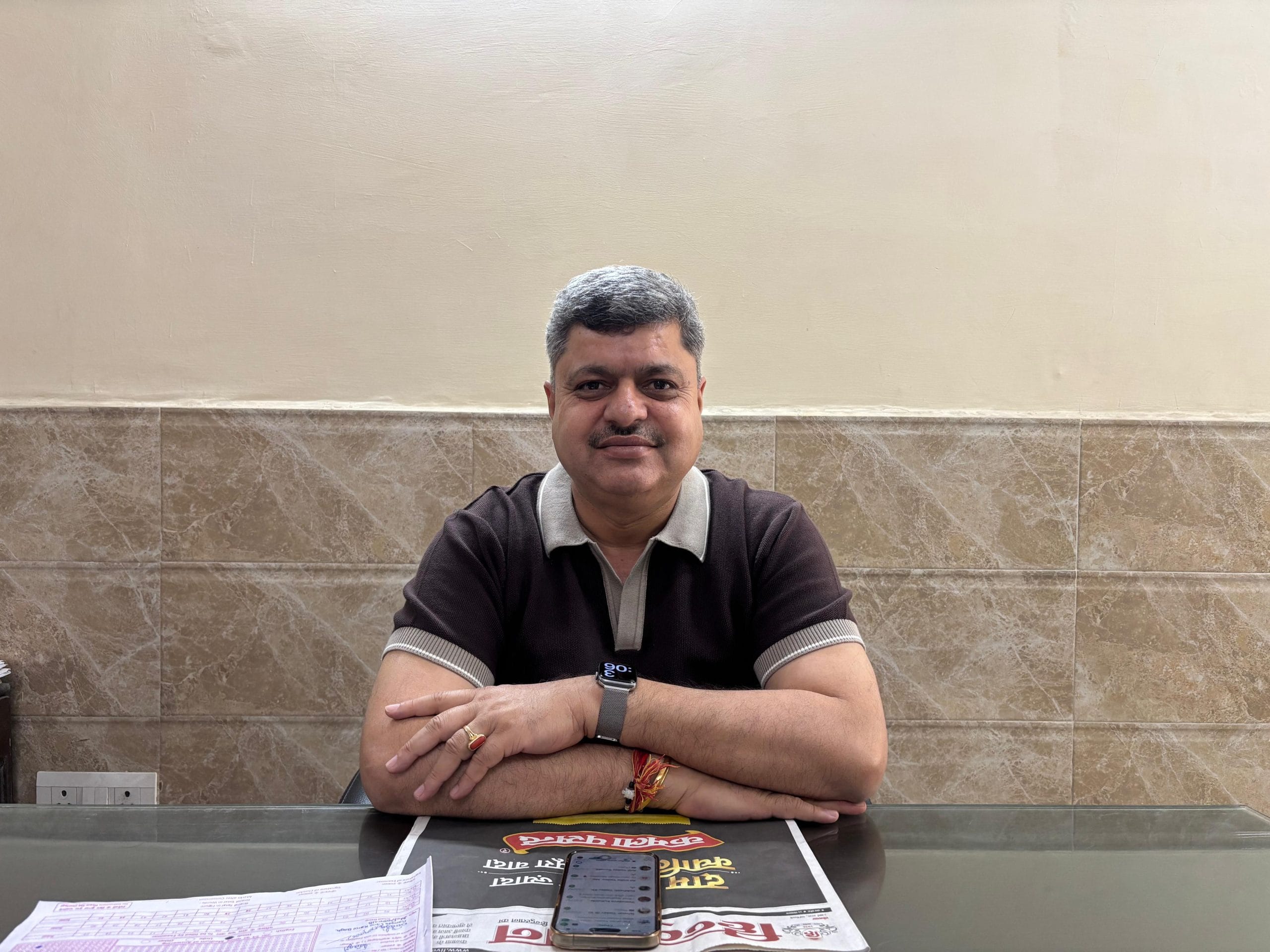
For Ajay Veer Yadav, a physical education teacher who has spent 31 years at Government Senior Secondary School in Karol Bagh, the tablet scheme is a reminder of how the cost of digital reforms has fallen on teachers themselves. For him, the struggle over tablet reimbursements began in 2018, when teachers were first instructed to purchase devices for official work.
Now general secretary of the Government School Teachers Association of Delhi, Yadav said approximately 50,000 regular teachers and between 10,000 and 14,000 guest teachers were asked to purchase tablets as part of the digitalisation drive.
Under the system outlined by the education department, teachers were required to purchase tablets with their own money and submit original bills to the school principal. The principals forwarded these claims to the Pay and Accounts Office of the Delhi government, after which funds were to be released to schools for reimbursement.
According to Yadav, the process stalled at the stage of budget allocation. Each school receives an annual budget for salaries, medical expenses and other administrative costs. A similar provision was expected for tablet reimbursements, he said, but schools never received the required funds. As a result, reimbursement claims submitted as early as 2018 remain pending in many schools.
According to Yadav, each teacher has at least Rs 15,000 stuck in the tablet purchase alone, apart from years of internet expenses. “This is not a bonus or an arrear. This is our own money that the government has to return,” he said.
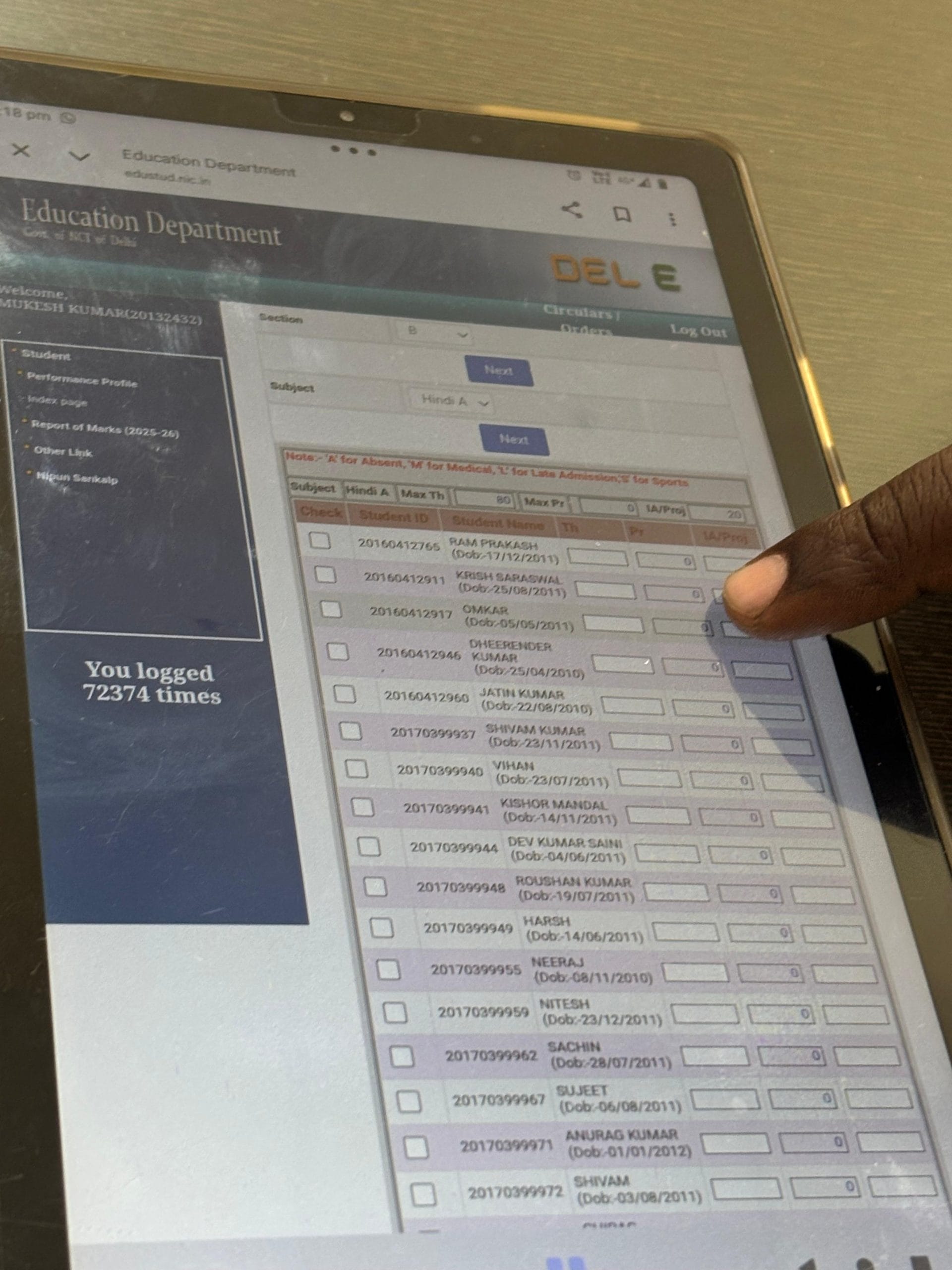
The tablets have now become central to routine administrative work in schools. Teachers use the devices to mark attendance through the DoE app, enter exam scores on the Edudel portal to generate complete results, submit Mission Buniyad (now Nipun) assessment details, scholarship records, U-DISE (Unified District Information System for Education) registration, and APAR (Automated Permanent Academic Account Registry)IDs. Teachers have to log in individually to feed data, whether they do it on a tablet or their phone.
Schools were also required to submit compliance reports confirming that teachers had purchased tablets, creating pressure to meet deadlines even when teachers could not afford the expense. “There was a cut-off date and principals had to submit compliance reports. Under that pressure, teachers bought the tablets even when they could not afford them,” Yadav said.
Many teachers say the tablets lasted only a few years and have since stopped functioning properly, forcing them to rely on personal phones or laptops for official work.
“Most tablets worked properly for only about three years. After that, the devices started failing and teachers shifted to their personal phones and laptops, but reimbursement is still pending,” Yadav said.
In 2024, teachers were again asked to purchase tablets, Yadav said, though the association advised members not to comply until earlier payments were cleared. “I told teachers not to buy new tablets because previous payments had not been made. Nobody can compel teachers to spend their salaries on official work,” he said.
Yadav said the government could have centrally procured the tablets instead of asking teachers to buy them individually. “If the government had purchased the tablets directly, there would have been accountability for quality and maintenance. Instead, teachers were told to buy any device and claim reimbursement,” he said.
Other teachers’ associations have also been raising the issue. Krishna Kumar Phogat, president of the Democratic Teachers’ Forum, Delhi, said he has met officials from both the current and previous governments regarding pending reimbursements. The most recent meeting took place about a month ago.
“While the previous government said it had no budget at the moment, the current government keeps saying this was the earlier government’s scheme and they cannot help it,” Phogat said
Support missing, teachers say
Teachers say the shift to digital systems was introduced with little formal training or institutional support.
Yadav said teachers support digitalisation but believe the transition should have been accompanied by training and the provision of official devices. Instead, he said, the reforms effectively relied on teachers’ personal resources.
The association at one point discussed a “tab-down strike”, in which teachers would refuse to use personal devices for official work, but the proposal did not move forward.
“Teachers are afraid because they don’t want to risk their jobs,” Yadav said. “But it is time for them to raise their voices on this issue.”
(Edited by Ratan Priya)