





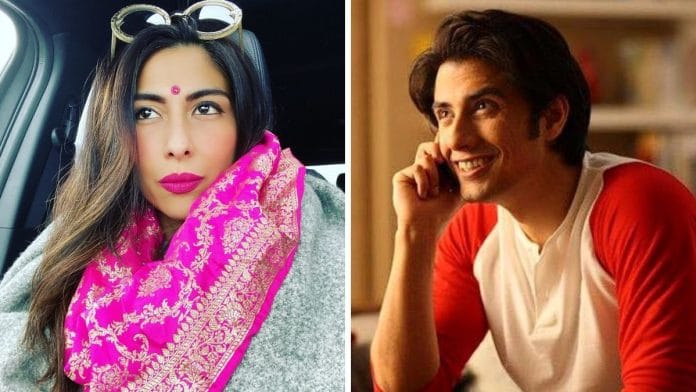



A Lahore court Wednesday ruled in favour of Pakistani singer Ali Zafar in an eight-year-old defamation case against fellow musician Meesha Shafi, ordering her to pay 5 million PKR, or Rs 1.6 million, as compensation.
The ruling stems from an April 2018 dispute that became Pakistan’s most prominent #MeToo case, after Shafi publicly accused Zafar of sexual harassment. Zafar denied the allegations and filed a defamation lawsuit the same year.
According to the court’s decision, details of which have not yet been publicly released but reviewed by several Pakistani media outlets, a series of social media posts and an interview given by Shafi in 2018 contained “false, defamatory and injurious imputations” against Zafar.
The court found that her allegations of sexual harassment of a physical nature were neither proven nor demonstrated to have been made for the public good, rendering them actionable under defamation law, Dawn reported.
The judgment further orders that Shafi be “permanently restrained from repeating, publishing, or causing to be published” the allegations in any form of media.
Shafi’s legal team has said it will challenge the decision in a higher court. Nighat Dad, her lawyer and executive director of the Digital Rights Foundation, said that the appeal would argue that the trial court misinterpreted evidence, failed to consider key material, and overlooked the broader legal context, including that Shafi’s original sexual harassment complaint remains pending before the Supreme Court of Pakistan.
Eight-year-old defamation case
In 2018, Shafi, now 44, posted a series of statements on X, accusing Zafar of sexually harassing her on multiple occasions. “I have been subjected, on more than one occasion, to sexual harassment of a physical nature at the hands of a colleague from my industry,” she wrote. (Can you get the link?)
Her statement came amid the global #MeToo movement, which gained momentum in 2017 as women across industries spoke out against sexual misconduct following allegations against Hollywood producer Harvey Weinstein.
Zafar, now 45, immediately denied the claims, writing on X that he “categorically” rejected all allegations and would pursue the matter through legal channels rather than “contesting personal vendettas on social media.”
The fallout extended beyond the two artists. Several women publicly supported Shafi and accused Zafar of inappropriate behaviour, including makeup artist Leena Ghani, who alleged boundary-crossing conduct, and journalist Maham Javaid, who made a separate claim in a now-deleted post.
The legal battle has since expanded into multiple cases. Zafar filed a one-billion-rupee defamation suit against Shafi in June 2018. Shafi responded with her own complaint before Punjab’s workplace harassment ombudsperson, which was dismissed on technical grounds due to the absence of an employer-employee relationship—a decision she has appealed to the Supreme Court.
Zafar also pursued a cybercrime complaint with Pakistan’s Federal Investigation Agency (FIA), leading to charges against Shafi and several supporters under the Prevention of Electronic Crimes Act (PECA). That case’s status remains unclear.
Meanwhile, Shafi filed a separate two-billion-rupee defamation suit against Zafar in 2019, which is still pending.
Zafar was welcomed with garlands by his wife and family back in Karachi. Shafi, on her part, chose to maintain a dignified silence and shared a poem in Urdu and a message on her Instagram story that said: “I decided I would not speak now, I would only use my craft. It is a lot more rewarding. That… was traumatising. But the trauma was real. It happened. I experienced it.”
Also read: Pakistan asks Christians to vacate Islamabad colony. Says it’s govt land
‘Reality of a man’s world’
After the local court verdict, many activists came out in support of Shafi.
Many activists called out the verdict, arguing that the case had broader implications for women across Pakistan, arguing that it could discourage survivors of harassment from speaking out.
Actor and television host Iffat Omar, a witness for Shafi, criticised the verdict in a post on X, alleging that supporters had been “silenced, pressured, bought, and scared.”
“The truth is, every woman knows that at some point in her life, she has been physically harassed,” Omar wrote.
“It’s about the fact that women will continue to be touched inappropriately, even when married, even by men who are “friends” of their husbands. We all know this is the reality of a man’s world. From today onwards, even I will not believe a woman in Pakistan — because surely, the man must be right. And my honorable courts, thank you for proving this. It’s a man’s world”, she added.
Pakistani journalist Nazrana Yousafzai agreed and wrote in Urdu: “The man had a court, The man had a lawyer, The man had a case… Even before the verdict, the criminal was a woman.”
Another Pakistani commentator, Maria Amir, highlighted the tone of online responses, noting that many dismissed harassment claims with remarks about the physical attractiveness of Shafi — a pattern she said reflects a broader societal problem.
“The bulk of the responses fall in the ‘she’s not hot enough for me to harass’ category. Zafar said this too. It is the staple move of men when they are rejected”, she wrote on X.
Pakistan’s renowned feminist outlet, Aurat March, too, condemned the verdict, calling it “abhorrent that a woman is not only being penalized, but is being ordered to pay damages to the very man she accused of harassment.”
“This decision reflects a deeply troubling pattern we are witnessing in judicial outcomes, where women who speak about harm are met not with protection, but with punishment. This is exactly why so many women choose silence! The system continues to protect their abusers!”, they wrote on X.
(Edited by Saptak Datta)