








New Delhi: US Treasury Secretary Scott Bessent has announced that the Trump administration would grant India a limited, 30-day waiver to buy sanctioned Russian oil currently stranded at sea to keep oil flowing into the global market, says The New York Times.
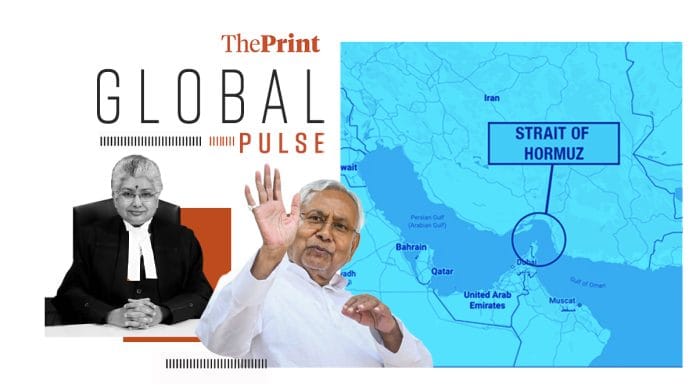
NYT correspondent Alex Travelli says ‘India is turning back to russian oil’, arguing that US President Donald Trump has “nearly made it impossible” for India to continue importing oil from the Gulf. Following US-Israeli strikes, Iran blocked the Strait of Hormuz. Nearly 90 percent of India’s oil imports came from the region.
Speaking to the NYT correspondent, Rajeev Lala, a director at S&P Global Energy, says that India’s recent experience of buying and refining large quantities of Russian crude “proved that it could do without buying very much from the Gulf”.
“India’s refineries are already rigged to process Russian supplies, and its shipping and insurance agents have their Russian contacts at the ready. It could ramp up imports of Russian oil,” Travelli writes.
Russian oil is being viewed as an alternative, just months after Trump said India must cease buying oil from the country, while a trade deal was being signed. While India’s side of the agreement did not mention any such bargain, New Delhi had started reducing its dependence on Russian crude.
While the Gulf’s energy exports travel through the Strait of Hormuz, Russian oil travels to India through several routes. “From Russia’s western ports, oil can be shipped through the Mediterranean, the Suez Canal and the Red Sea to reach India’s west coast.”
The Economist writes how ‘Investigative journalism in India is under threat’.
On 27 February, speaking at a public event on media freedom, B.V. Nagarathna, a Supreme Court judge, “sounded the alarm”. She cautioned against the rise of “selective journalism”, saying the media might be “legally free” but remained “economically constrained,” which makes sustained criticism difficult.
The column highlights three recent developments that could have prompted the judge to speak out.
A new law, which, critics say, could severely restrict investigative journalism, came into effect in November. Last month, the government empowered itself to order websites and platforms to take down any content within three hours. On 10 February, investigative journalist Ravi Nair, who has been reporting on the Adani Group, was sentenced to a year in prison.
The column also sheds light on the contradictions in the nature of Indian media.
“On the one hand, it is vast, diverse and irrepressibly noisy. It is true, as those in power like to say, that you can readily find critical voices in dozens of languages—in print, online and increasingly on video apps like YouTube. Global press freedom measures that rank India below many African autocracies can feel incongruous. On the other hand, the country has a legacy of restrictive media laws and a powerful state that is not only energetically wielding them but extending their sweep.”
It also argues that Nair’s arrest could have a “chilling effect”. While the Adani Group has filed lawsuits against 15 journalists, Nair is the first one to end up behind bars.
James Crabtree of Foreign Affairs explains how ‘How India can supercharge its development’, proposing that it join the Comprehensive and Progressive Agreement for Trans-Pacific Partnership (CPTPP)—an agreement “designed to create a high-quality trade area spanning the entire Pacific Rim”.
“The CPTPP eliminates or reduces tariffs across a wide variety of goods and services while also binding members to exacting common standards in many areas, including labour rights, intellectual property, and investment,” Crabtree writes.
The agreement has 15 members, including Australia, Canada, Chile, Japan, Malaysia, Mexico, New Zealand, Singapore, the United Kingdom, and Vietnam.
Joining would require India to make “substantial changes” to its economic framework.
“India should be under no illusions: its sheer size will not entitle it to rewrite all the rules of the club,” Crabtree argues. The agreement would require India to fully open its markets and remove trade barriers from the agriculture sector, which is a protected sector.
“For New Delhi, membership would accelerate its integration into regional supply chains while providing a catalyst for economic reforms. India suffers from having relatively few preferential deals that give its exporters access to major markets; the CPTPP would be a major fillip for Indian exports.”
In the BBC report ‘Veteran Bihar chief minister to step down for move to parliament’, Abhishek Dey writes about Nitish Kumar’s decision to step down as CM and become a Rajya Sabha member.
“This decision marks a pause for Kumar’s political career in the state where he was chief minister for most parts of the last two decades,” Dey writes.
Several of his party colleagues, Dey writes, say the decision was in the making for some time now due to his “deteriorating health”.
“Kumar may take some time to resign, one of his party colleagues said, considering that the term of the outgoing members of Rajya Sabha ends in April,” Dey writes.
(Edited by Madhurita Goswami)