



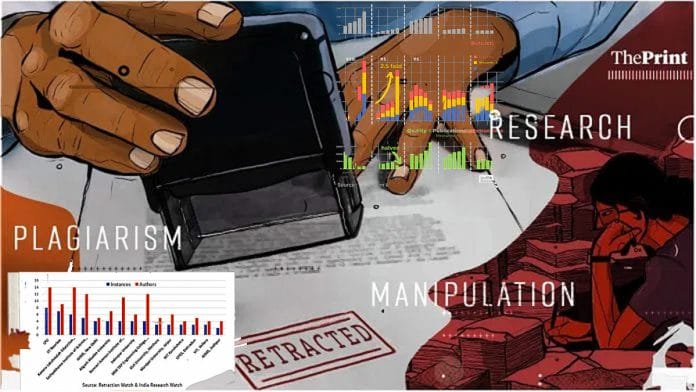
New Delhi: The Institute of Electrical and Electronics Engineers, one of the world’s largest professional associations for scientists and engineers, has retracted 1,417 conference papers in a single day following revelations that they were linked to businesses selling authorship positions on academic research.
The unprecedented move, announced on 28 October 2026, followed an investigation published in Accountability in Research, which identified thousands of potentially compromised papers in IEEE conference proceedings.
The findings expose the growing reach of so-called paper mills, businesses that sell authorship positions, produce research papers and manipulate the academic publishing process.
Thousands of papers linked to paper mills
The study, titled “Opening Pandora’s Box: Paper Mills in Conference Proceedings,” was conducted by researchers Anna Abalkina, Marie Kunešová, Yagmur Ozturk and Solal Pirelli.
The team collected more than 4,000 advertisements offering research publications or authorship positions across over 200 social media platforms, including Telegram, WhatsApp and Facebook. They matched these advertisements against papers published in IEEE conference proceedings between 2021 and 2026.
Researchers identified 2,062 papers across 366 conference proceedings, involving more than 7,500 researchers from 56 countries. In some conferences, the flagged papers accounted for as much as 23.5 per cent of the proceedings.
Authorship positions were advertised for between $43 and $400 for first authors and $11 and $200 for last authors.
“Paper mills are a public market, and the offers for sale are public on social media. Anyone can find them. Anyone can buy. Anyone can trace (them),” study co-author Anna Abalkina told Nature.
Also Read: Neuroscientists have found a way to train people to have lucid dreams
IEEE responds with mass retractions
Following the study, the institute conducted its own review and announced the withdrawal of 1,417 papers on 28 October. Nature verified that these papers had been retracted on 23 October.
A further analysis by Nature found that 1,622 of the 2,062 papers identified by researchers had since been retracted. IEEE has withdrawn nearly 3,000 papers in 2026.
Abalkina welcomed the speed of the response.
“It is unbelievable. They’re so fast,” she said.
Researchers have called for stronger oversight of conference proceedings, more comprehensive screening and conference-wide investigations when large numbers of papers appear compromised.
India’s share of the controversy
India figures prominently in the findings. Of the 109 IEEE-sponsored conferences with at least five papers matching the advertisements, 95 were held in India. Several were sponsored by regional IEEE sections, including those in Uttar Pradesh, Madras, Madhya Pradesh and Bangalore.
In a LinkedIn post discussing the retractions, founder of India Research Watch (IRW) Achal Agrawal said that India was associated with 1,263 of the 1,417 retracted papers. He warned that the figures could make India the country with the highest number of research-paper retractions globally for the first time, calling for urgent intervention by science policymakers.
The findings raise wider questions about academic publishing practices in India, where pressure to accumulate publications can create incentives for researchers to purchase authorship positions. They also highlight the need for universities and research institutions to investigate questionable publications and hold researchers accountable, rather than leaving publishers to address the problem through retractions alone.
(Edited by Insha Jalil Waziri)