





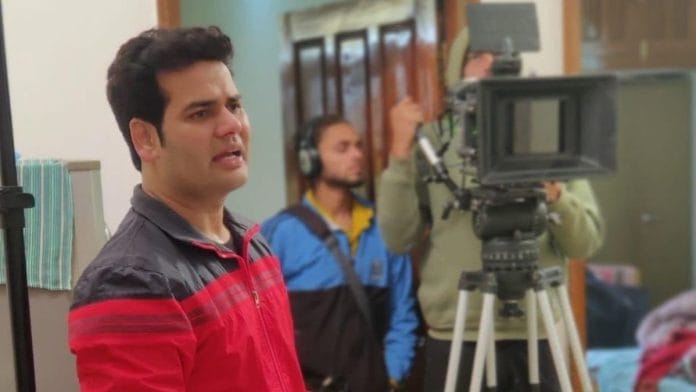

New Delhi: For a brief period this year, Vijeta Dahiya found himself in an unfamiliar role: spokesperson for the Cockroach Janta Party, a satirical political outfit whose Delhi protest brought him a burst of attention before he was removed from the post after videos of him eating a burger at the protest site went viral.
Dahiya’s stint in politics was short-lived. But his real passion lies in films and in telling stories about people and places that don’t often make it to mainstream cinema. He wants to find a way to make indie films viable.
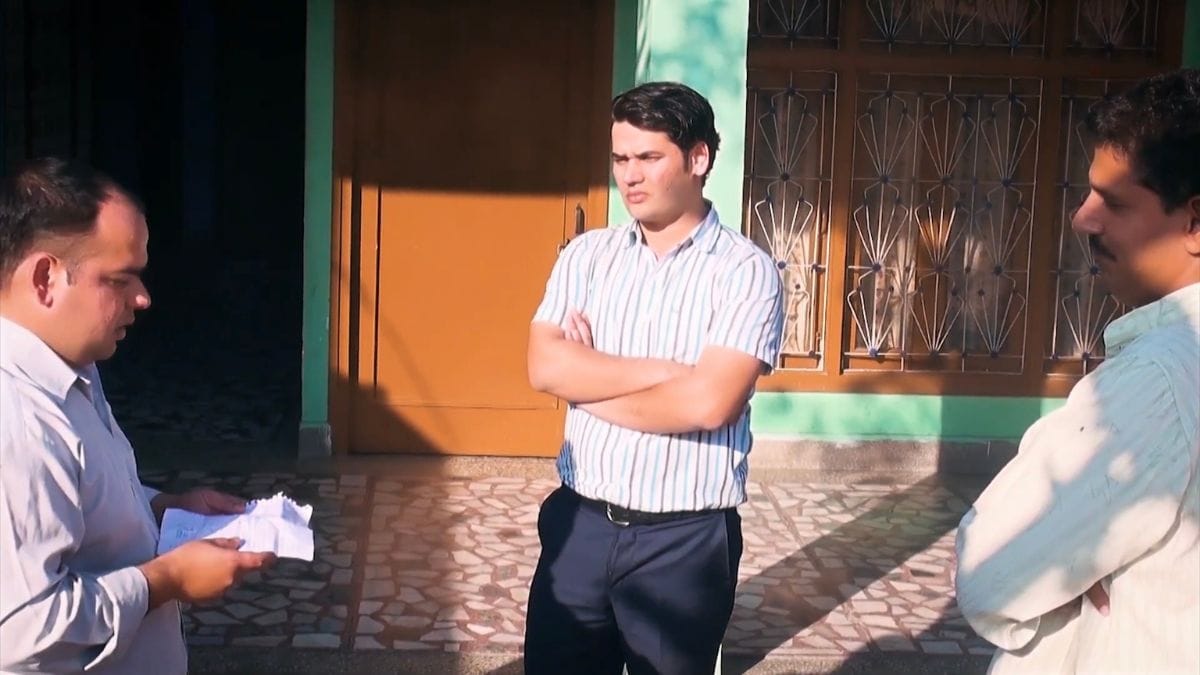
In 2021, Dahiya wrote and directed a Haryanvi family drama, Dararein, about three brothers who sit down to divide their family property. First come the killas of land. Then the cooler, fans, beds, farming equipment and other household belongings. For the eldest brother, who has spent his life in the village farming and supporting his younger siblings, the division is more than a calculation of assets. It is the dismantling of a life he thought would remain shared.
“This is the story of almost every family. Because earlier, there was an age gap between the brothers. And in a lot of families, the elder brother and sister-in-law take care of a lot. And the younger brother is a bit of a villain,” said Dahiya, a political researcher, author and filmmaker.
The film is available to stream on STAGE, Chaupal, and Tata Play Binge.
Five years after making Dararein, Dahiya is still trying to figure out what comes next.
For now, he divides his time between filmmaking, writing and creating content on Instagram. He says filmmaking cannot easily be a full-time profession for someone from a middle-class background when every new project depends on finding a producer willing to finance it.
“Maybe I will crack the code for India’s independent cinema and find some solution where filmmakers can retain their voice and also sustain filmmaking,” he said.
For Dahiya, the answer may lie in taking cinema beyond the traditional structures that have concentrated production and exhibition in a few places.
“I feel cinema should break away from industry norms and templates. It should show the lives of people as they actually are.”
Besides Dararein, Dahiya has also written, directed and edited Opri Paraai (2022), a Haryanvi web series, as well as the short film Take Care (2018). He has authored two best-selling books, Power of Universe (2024) and To Hell With That Job (2025), and written content for YouTubers including Dhruv Rathee.
Inside a Haryana household
Much of Dararein stays close to the everyday details of rural Haryana. The film is in Haryanvi, and its setting centres on the routines, objects and rhythms of village life — from food such as khichdi, churma and halwa to farming equipment and the layout of the family home.
The dispute also reflects a familiar reality in joint families: disagreements over property can eventually alter how people live under the same roof, sometimes even leading to walls being built through houses.
The women in the family are part of these tensions too. Arguments between the sisters-in-law help set the conflict in motion, while their relationships with their husbands and responsibilities within the household continue alongside the dispute.
“They were non-actors, but their own backgrounds were similar to those of the characters. That made it easier for them to understand the characters’ sensibilities and the subtext, which is why the performances feel authentic,” said Dahiya.
The production itself took considerably longer than a conventional shoot. The actors had other jobs, so filming was mostly done on weekends.
Dahiya doesn’t come from a film background. He graduated with an engineering degree from Delhi Technological University before working as an assistant at the Ministry of External Affairs. But his interest in theatre and filmmaking eventually took over. He left the job and moved to Mumbai, hoping to find work as an actor. After failing to land roles even in commercials, he moved behind the camera.
“It took one year and eight months to complete the shoot. Actors sometimes left during production and had to be replaced, while the houses used as locations remained occupied by the people who lived there,” he said.
Finding an audience beyond the multiplex
Five years after Dararein was made, Dahiya is trying to work out how to make independent cinema sustainable.
He says there is a large section of viewers who have gradually been pushed out of conventional cinema spaces. He points to the shift from the old single-screen arrangement, where audiences sat across different sections of the same theatre, to the multiplex model, which he argues has made cinema less accessible to poorer audiences.
“It is sad how the multiplexes threw the poor folks out of the cinema halls,” he said. “There is a huge market waiting to be tapped, who want to see their kind of films with their issues and sensibilities.”
That idea also changes how Dararein can be looked at now. Dahiya sees its future not simply in the conventional release cycle, but in finding new audiences through the growing digital and independent ecosystem around him.
A cinema without a template
Dahiya attended a filmmaking workshop in Mumbai and developed a largely self-taught approach to cinema. His approach to filmmaking was shaped by watching directors far removed from the mainstream tradition he had grown up with, including Satyajit Ray, Ingmar Bergman, Wong Kar-wai and Michael Haneke. Their films made him question the rules of storytelling he had assumed were fixed.
“You realise you can break out of the format you’ve been conditioned to. A film doesn’t have to have a hero, heroine, villain, fight or comedy. It can be anything,” he said.
That openness carries into his next planned film, Monu Rockstar, about a man obsessed with becoming rich after consuming online motivational content. Convinced that owning a BMW is the measure of success, he experiments with different ways of making money, including multi-level marketing. When one of his Instagram videos goes viral, an unexpected event forces him to reconsider the path he has chosen.
Dahiya described it simply as a story about “the search for meaning in life”.
For him, that search extends beyond the subject of a single film. It is also about figuring out how independent filmmakers can continue making work rooted in their own worlds without being forced into commercial templates, and how those films can reach the people whose lives they depict.
“I want stories from every place to feel authentic. They can be fantasy or realism, but the subtext has to be authentic,” he said.
(Edited by Prashant Dixit)