



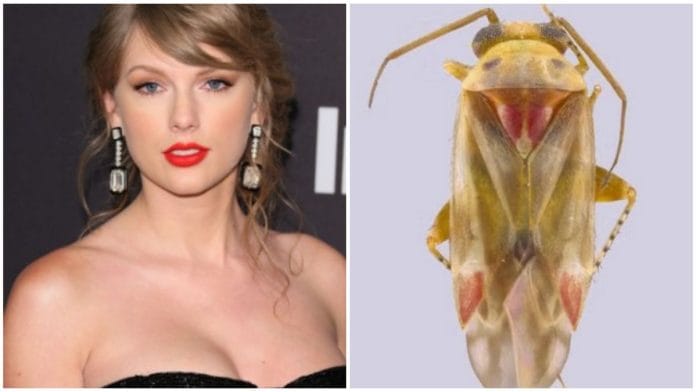

New Delhi: A newly identified genus of “blonde” Australian plant bugs has been named after US singer Taylor Swift. Not just that, four of the insects in the category have been named after her albums.
The discovery and the names were published Wednesday in a study by researchers at the University of California, Riverside, in the journal Insect Systematics and Evolution. They examined 593 specimens collected in Australia between 1995 and 2004 and identified 12 previously undescribed species.
Four of these species belong to a new genus called Swiftiephylus. Its name combines “Swiftie”, the term for a Taylor Swift fan, with “phylus”, a name commonly used for this group of insects.
The four species are Swiftiephylus taylorae, Swiftiephylus amator, Swiftiephylus intrepidus and Swiftiephylus poetorum. The names come from the Latin words for Taylor, lover, fearless and poets. The last three refer to Swift’s albums Lover, Fearless and The Tortured Poets Department.
Sarah Schroeder, a doctoral student in entomology at the University of California, Riverside, helped identify and name the insects. She said their pale yellow bodies and red markings reminded her of Swift.
“Taylor Swift’s iconic look is her blonde hair and red lips. These insects are pale yellow with accents of red throughout. In the paper I refer to them as blonde,” Schroeder said.
“It felt authentic to me as a lifelong Swiftie to honour Taylor in this way, as well as bring attention to the diversity of insects that has yet to be discovered,” she added.
Also Read: There’s a hunt for undiscovered insect species. In New York City
A way to ‘honour’ Taylor Swift — and the bugs
The insects live on Australian she-oaks, native trees and shrubs with thin, drooping green stems and cone-like fruit. Despite the name, they are not oak trees.
The bugs feed on she-oaks and may spend their entire life cycle on a single host plant. They are not known to harm the trees, people or animals. Belonging to Miridae, the largest family of true bugs, they have pale yellow bodies with red markings that may help them blend in with she-oak flowers.
Giving a species a name and formally describing it puts it on the scientific record. Researchers can then study where it lives, track its numbers and assess whether it needs protection.
“Taxonomy is the cornerstone of conservation,” Schroeder said. “If we don’t describe species, we don’t know they exist and can’t conserve them. Honouring Taylor through naming these species after her is a way to honour conservation science and bring attention to all the unknown diversity.”