





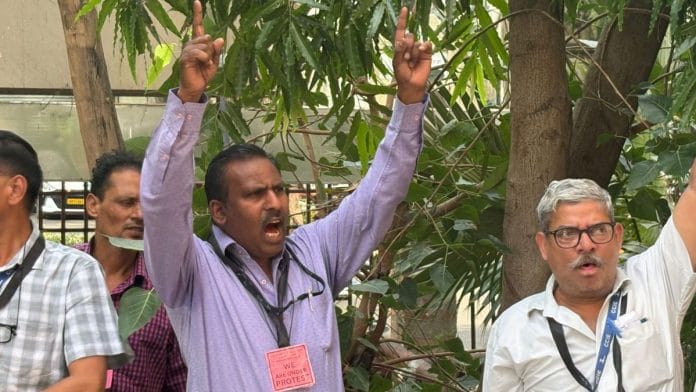


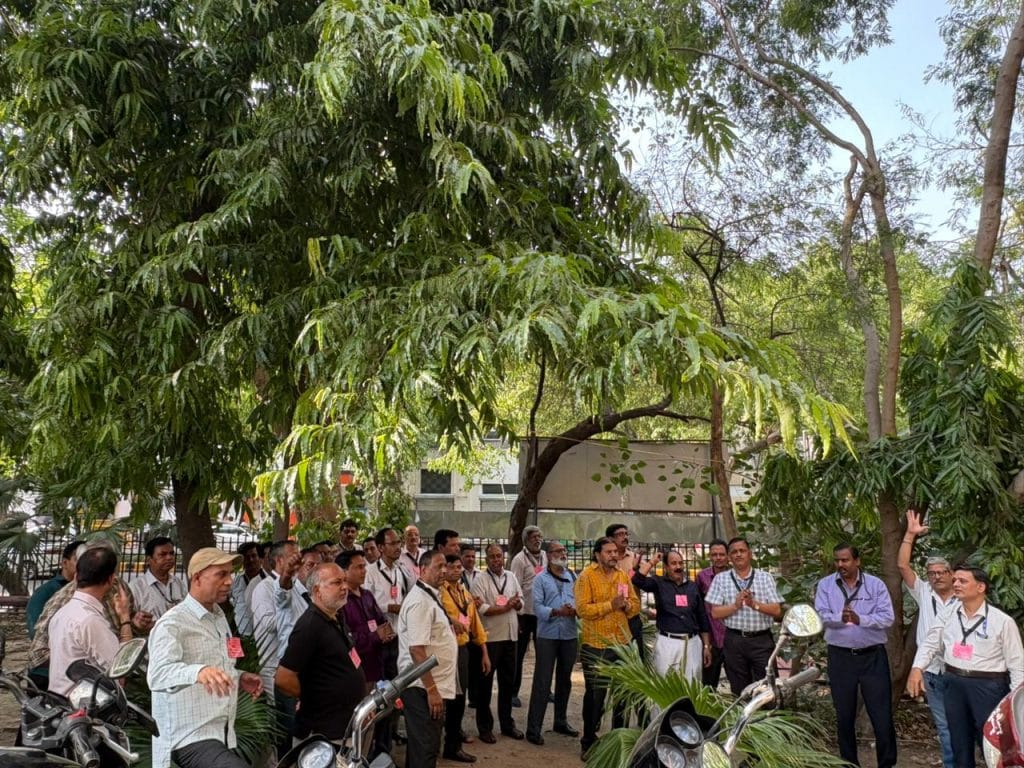
New Delhi: Every morning and evening, employees of the Central Cottage Industries Emporium stop work for 15 minutes and raise slogans inside the showroom: “Management is corrupt,” “Fulfil our demands,” “Dictatorship will not be tolerated,” “Long live the CCIC Employees’ Union.” Five months after the government approved a revival package of over Rs 81 crore for the struggling PSU, workers say little has changed on the ground.
Around Rs 50 crore of the package has been released since January, but workers allege that salaries are still delayed, increments are frozen, and vendors continue to wait for their dues. Now a long-standing silent protest has been replaced by a more assertive one.
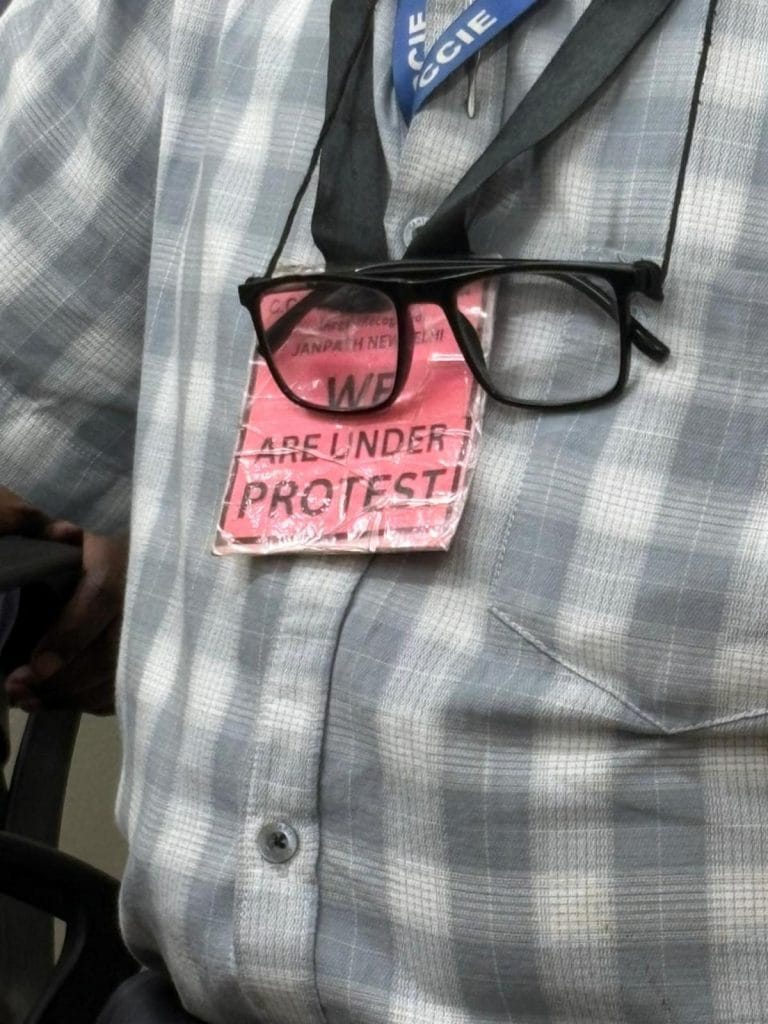
For months since July 2025, their protests were largely limited to badges saying ‘we are on protest’ as they continued to work despite unpaid wages and mounting distress. It was only on 8 May 2026 that their stoicism gave way to organised, twice-daily slogan shouting even though they still report at the emporium in Connaught Place. They are galled that intervention has arrived, but relief has not.
“We received the fund sanction letter on 20 January. The following day, Cottage Managing Director Rajiv Ashok informed the staff that the Rs 50 crore funds had been released. He shared the news with the entire staff,” said Vasudevan (52), general secretary of the CCIC Employees’ Union.
For a brief moment, hope returned. Employees said they saw the sanctioning of funds as a sign that sustained pressure had finally paid off. They recalled raising the issue with BJP leaders and ministers who visited Cottage for shopping, and receiving assurances that financial support would help stabilise the organisation.
“Employees of the CCIC Union have been facing salary delays of nearly four months. Officers at Cottage have not been paid for the past eight months, while security guards are facing delays of around three months. Now that the funds have been released, we do not understand what is preventing the management from clearing our dues,” said Vasudevan.
The management, however, says it is walking a tightrope between paying wages and keeping the organisation afloat.
“Efforts are being made to increase revenue and keep employees’ livelihoods running. If the cottage continues paying Rs 50 crore in salaries without improving revenue, it could go bankrupt again within the next 5-6 months,” said Akhilesh Kumar, chairman of the cottage emporium. “We are now trying to revamp operations so that revenue grows steadily.”
Kumar added that around 80 per cent of vendors have already been paid. Payments to some vendors whose stock is yet to be sold have been deferred and will be cleared in the coming months, with the company prioritising urgent payments to ensure funds are used efficiently, he said.
Also Read: Modi govt’s The Kunj is making handicrafts luxe, aspirational. It’s no Cottage Emporium
From silence to slogans
Anand Singh Negi, union president and an employee for 35 years, said the sanctioned money did not translate into systemic change. Other than the missing pay, annual increments, dearness allowance (DA), promotions for junior employees, and other benefits remain frozen. The broader operational crisis, from shrinking inventories to dwindling vendor trust, has persisted.
For months, employees chose restraint. But the silence was not passive. The CCIC Employees’ Union sent repeated notices to the management. The first two notices were issued in July 2025, while the remaining two were sent in February 2026 and April 2026.
The CCIC Employees’ Union has also filed a complaint before the Deputy Chief Labour Commissioner (Central), Delhi, alleging that several employee demands and salary-related issues have remained unresolved for a long time. The complaint has been filed under the Industrial Disputes Act, 1947, and the Code on Wages, 2019.
“We are only protesting in accordance with the 2004 Delhi High Court order on employee demonstrations. The order permits workers to hold protests only at a designated location within the Cottage premises, as long as entry and exit to the workplace are not obstructed,” said Negi.
Many workers said they were surviving on loans and ever-thinning savings.
Also Read: Crisis in Cottage Emporium—Rs 202 crore in dues, unpaid staff on silent protest, no AC
Funds, distrust, and a fading mission
If the first phase of the crisis was defined by scarcity, the current phase is marked by suspicion. The arrival of funds has raised new questions about allocations and priorities.
Some employees questioned whether the funds were being used as intended, pointing to the lack of basic amenities such as air conditioning. They said that without AC, customers do not stay for long, which in turn affects sales.
The hiring of highly paid officials, brought in to improve sales and identify areas for improvement, has become a flashpoint, especially as regular wages continue to remain unpaid.
“You are not able to give our salary. You are not able to give the salary of the officer. How will you give these new people Rs 1,70,000?” said Vasudevan.
The vendors who supply the emporium are also frustrated and reluctant to send their goods. And that has resulted in sparse shelves, limited stock, and declining customers.
The breakdown is both financial and cultural. For employees, the emporium represents a national idea of craftsmanship and diversity.
“You see the whole of India in one room. From Kashmir to Kanyakumari,” said Negi.
The idea, he said, is slipping away because the system supporting it has weakened.
“This is a very important heritage of India, but no one seems willing to take responsibility for its upkeep,” said Vasudevan.
(Edited by Asavari Singh)