



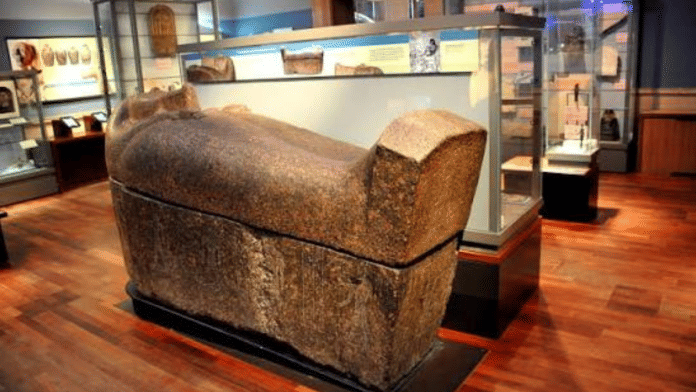
New Delhi: In a bid to pay respect to the dead, a museum in Scotland has removed a mummy from exhibition, claiming it did not have the deceased’s consent.
The decision has since attracted a lot of attention. The Kelvingrove Art Gallery and Museum in Glasgow updated its policy regarding human remains. According to The Telegraph report, the museum showed a new sign, which read that curators removed human remains from the display as a mark of respect.
The museum management explained that they made the decision after realising that people who lived thousands of years ago never gave formal permission for their bodies to be put on display.
The artefacts that were removed included a mummified male head as well as a foot, along with a mummified right hand recovered from the Valley of the Kings in Luxor, Egypt. The museum used to also exhibit the remains of Nekht, a nobleman buried in the famous 12th-Dynasty, and a Egyptian priest.
The museum management said that the changes align with updated guidelines and ethics codes emphasising the dignity of human remains.
“The International Council of Museums’ revised Code of Ethics, published in June 2026, states that museums ‘should uphold the inherent dignity of human remains and promote respect for their significance,'” a spokesperson for Glasgow Life, a publicly funded non-profit that oversees the Scottish city’s cultural institutions, said as quoted by the Daily Mail.
“Glasgow Life Museums’ draft Human Remains Policy proposes that human remains should only be displayed where there is documented and informed consent from the deceased individual or, in appropriate circumstances, their descendants,” the spokesperson added.
“In the absence of such consent, we believe removing ancient Egyptian human remains from display is more respectful to the deceased individuals.”
Call in the critics
But as most decisions go, this too soon attracted a hoard of criticism online. Critics and experts slammed the museum’s decision to remove the exhibits.
“This is woke madness at its most ridiculous. Even Egyptian mummies are now being cancelled by a society so obsessed with modern sensibilities that it has lost all sense of perspective,” said Murdo Fraser, Scottish Conservative culture spokesman.
According to Fraser, people visit museums to learn about civilisations, not to see history hidden away.
“Glasgow’s museums should be showcasing our history, not quietly removing it to appease the latest trend in political correctness,” Fraser added.
“They should be taken from the museum and displayed in another one elsewhere that isn’t insane,” read one X post.
While another user questioned if next the National History Museum will remove its display of dinosaurs.
(Edited by Insha Jalil Waziri)