








Buffalo, New York: The battle over CRISPR patents has been as groundbreaking as the science itself, and just as contentious. What began as a race to harness a revolutionary gene-editing tool has, over the past decade, evolved into one of the most closely watched intellectual property disputes in modern biology.
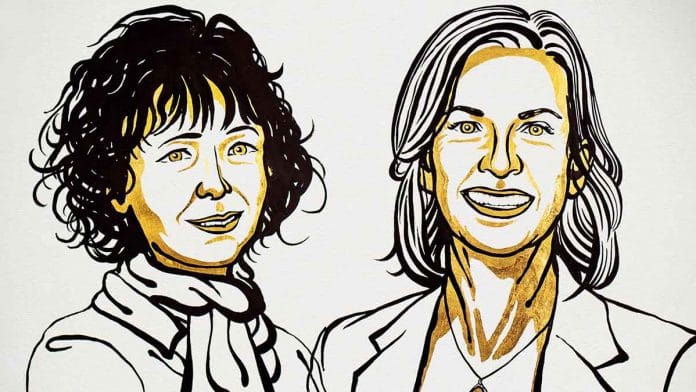
At the centre of this fight are two camps of scientists. On one side are Nobel laureates Jennifer Doudna and Emmanuelle Charpentier, who showed CRISPR could be used as a gene-editing tool. On the other is the Broad Institute, a joint venture of Harvard and MIT, whose scientist Feng Zhang was among the first to demonstrate the system working in human and animal cells. While both helped unlock CRISPR’s potential in eukaryotic cells, their claims over its application have repeatedly clashed in court.
On 26 March, 2026 the US Patent Trial and Appeal Board (PTAB) delivered its latest verdict and ruled in favour of the Broad Institute, again.
Also Read: New pill targets mutated lung cancer, shrinks tumours in 70% of patients
What the battle is about
The story dates back to 2012, when Doudna, a biochemist at the University of California, Berkeley, and French microbiologist Emmanuelle Charpentier published a landmark paper showing how CRISPR could be adapted into a gene-editing tool. CRISPR, or Clustered Regularly Interspaced Short Palindromic Repeats, is a bacterial defence system to recognise and destroy invading genetic material.
The pair won the Nobel Prize in Chemistry in 2020 for this biomedical breakthrough.
Well before this, a patent war was already underway. UC filed a patent for the process on 25 May 2012, but a contender emerged the following year when Feng Zhang, a molecular biologist at the Broad Institute in Boston successfully used the gene-editing mechanism in mouse and human cells. The institute filed its own patent on 15 October 2013 and requested an accelerated examination.
The strategy paid off: the patent was granted within six months, even as UC’s earlier application remained under review.
This set the stage for a prolonged legal confrontation. UC argued that Broad’s patent overlapped with its own foundational work and should be invalidated. However, in February 2017, the US Patent Office ruled in favour of the Broad Institute, finding that its patents—focused on use in eukaryotic cells—were sufficiently distinct from the claims filed by UC. In September 2018, the United States Court of Appeals for the Federal Circuit upheld that decision.
Instead of escalating the matter to the Supreme Court, UC pursued a different route. The university filed a new interference petition that pitted Broad’s approved patents against UC’s own pending application for use in eukaryotic cells. Broad showed explicit success in eukaryotic cells, whereas UC argued its foundational work in bacteria could be generalised to more complex organisms.
What’s at stake
With the latest verdict of the PTAB, it remains unclear whether UC is planning to reappeal, but the stakes are undeniable: these patents could be worth millions.
The commercial implications are vast. CRISPR’s precision and efficiency have made it the backbone of a new generation of gene-editing therapies, with companies racing to develop treatments for genetic disorders, cancers, and beyond. Patent ownership is no longer just symbolic; it determines who controls access, licensing and, ultimately, profit.
These kinds of patent disputes are quite rare in biotechnology but not without precedent. A dispute between Sigma-Aldrich and the Broad Institute over the same CRISPR-Cas9 technologies is also pending at PTAB. Earlier still, a landmark case in the 1990s saw Eli Lilly prevail over the UC Regents over broad insulin DNA claims, setting the tone for how courts handle high-stakes biotech innovation.
While Broad holds the key American patents for CRISPR use in eukaryotic cells, UC holds stronger patent rights in Europe, China, the UK, Japan, Australia, New Zealand, and Canada.
Arun Singh is an alumnus of The Print School of Journalism.