





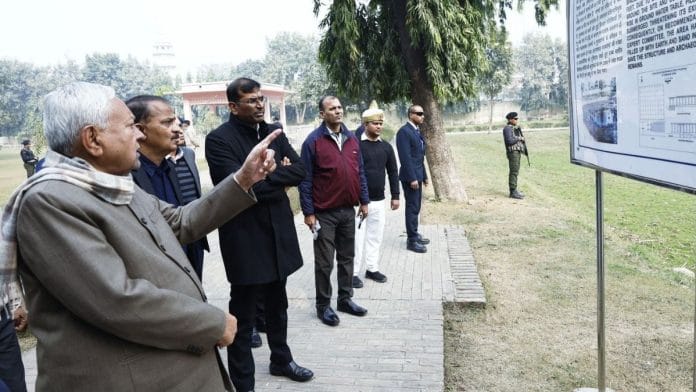



New Delhi: When Bihar Chief Minister Nitish Kumar urged the Centre to improve maintenance at the ASI-managed Kumhrar Park, a key Magadh-era archaeological site in Patna, he reopened an uncomfortable question closer home: Why are dozens of monuments under Bihar’s own protection falling apart?
Nitish Kumar’s push for better upkeep of the site has triggered a pushback from heritage experts and archaeologists, who argue that Bihar’s own record on monument conservation is far worse.
Critics point out that dozens of state-protected monuments — from British author George Orwell’s birthplace to medieval temples and forts — are crumbling due to neglect, exposing a deeper faultline between political posturing and the state’s failure to safeguard its own historical legacy.
‘Extremely poor condition’
In Bihar, 56 monuments are under the protection of the state government. Bihar’s Art and Culture Department oversees these sites. Most of the ancient sites such as Nalanda, Vaishali, and Vikramshila are maintained by the ASI.
“Before blaming and questioning ASI for the upkeep of monuments, the Bihar government should maintain the ancient structures which are under their control. There is rarely any site worth visiting which is under the state control,” said Shiv Kumar Mishra, state co-convenor of Indian National Trust for Art and Cultural Heritage (INTACH), Bihar.
“The condition of all the monuments is extremely poor”.
Mishra, who has also headed various district museums in Bihar, listed the state protected monuments which are in a dilapidated condition. These include the birthplace of George Orwell in Motihari, Munger Fort in Munger, Nepali Temple in Hajipur, House of Babu Veer Kunwar Singh in Bhojpur, Ahilya Sthan Temple in Darbhanga, Sun Temple in Saharsa’s Kandaha, Hazarimal Dharamshala in West Champaran, and Alawal Khan Tomb in Sasaram.
“Some of these monuments and structures are very ancient and related to our contemporary history. If we lose them, we’ll lose an important part of our history,” said Mishra.
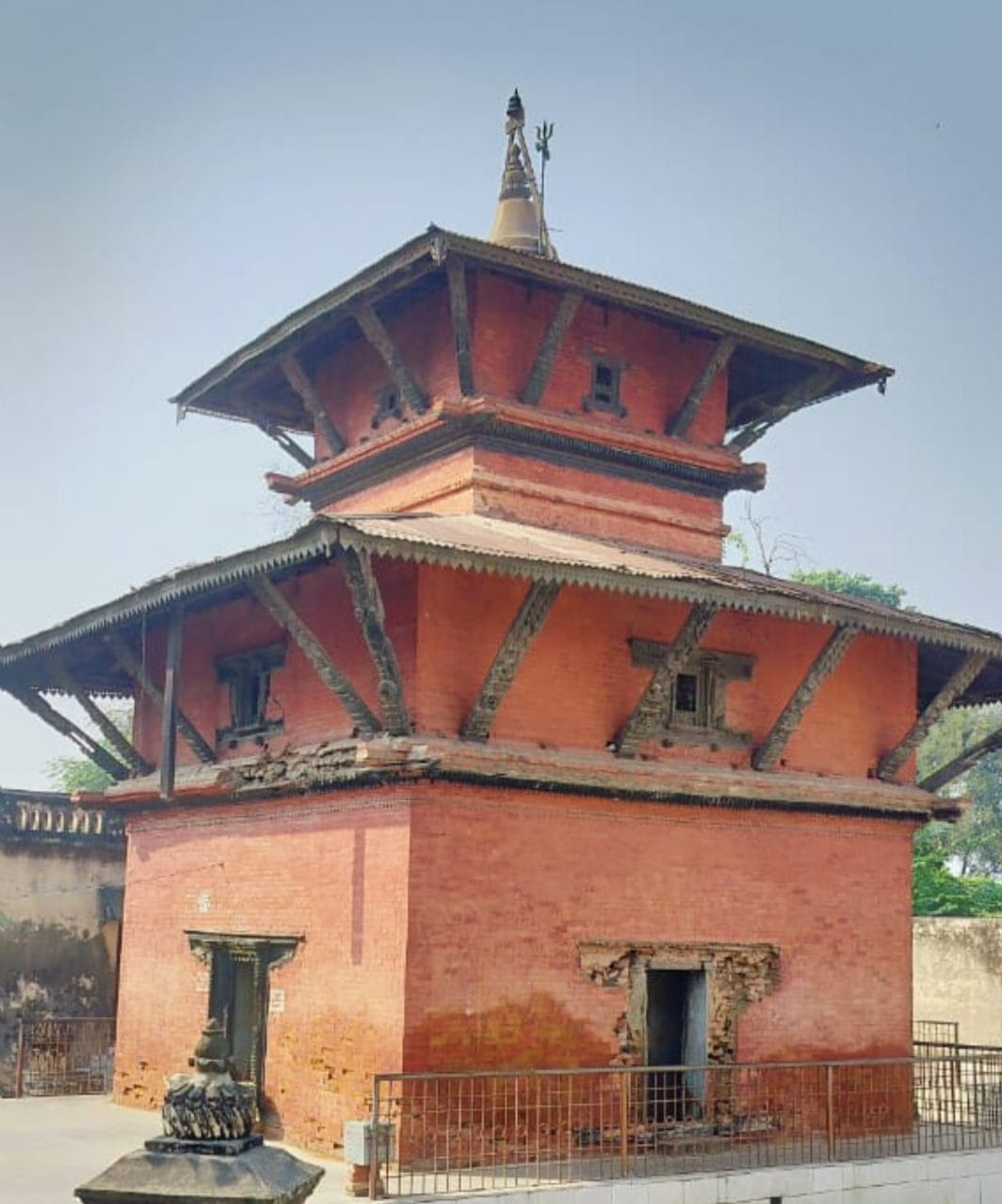
He gave the example of Nepali Temple in Hajipur, which is famously known as the Khajuraho of Bihar. The 18th-century structure is one of the oldest temples of Bihar. It looks similar to Nepal’s Pashupatinath Temple and is built in the pagoda architectural style by one of the army commanders of Nepal. The temple structure is largely built from wood, and features wooden carvings.
“The doors and woods of the temple are broken and no one is trying to conserve it,” said Mishra, adding that if the government wants to protect it, INTACH can save it.
In a similar condition is the house of George Orwell, known for his famous books 1984 and Animal Farm. He was born in 1903 in Motihari when his father was working in the Indian Civil Service.
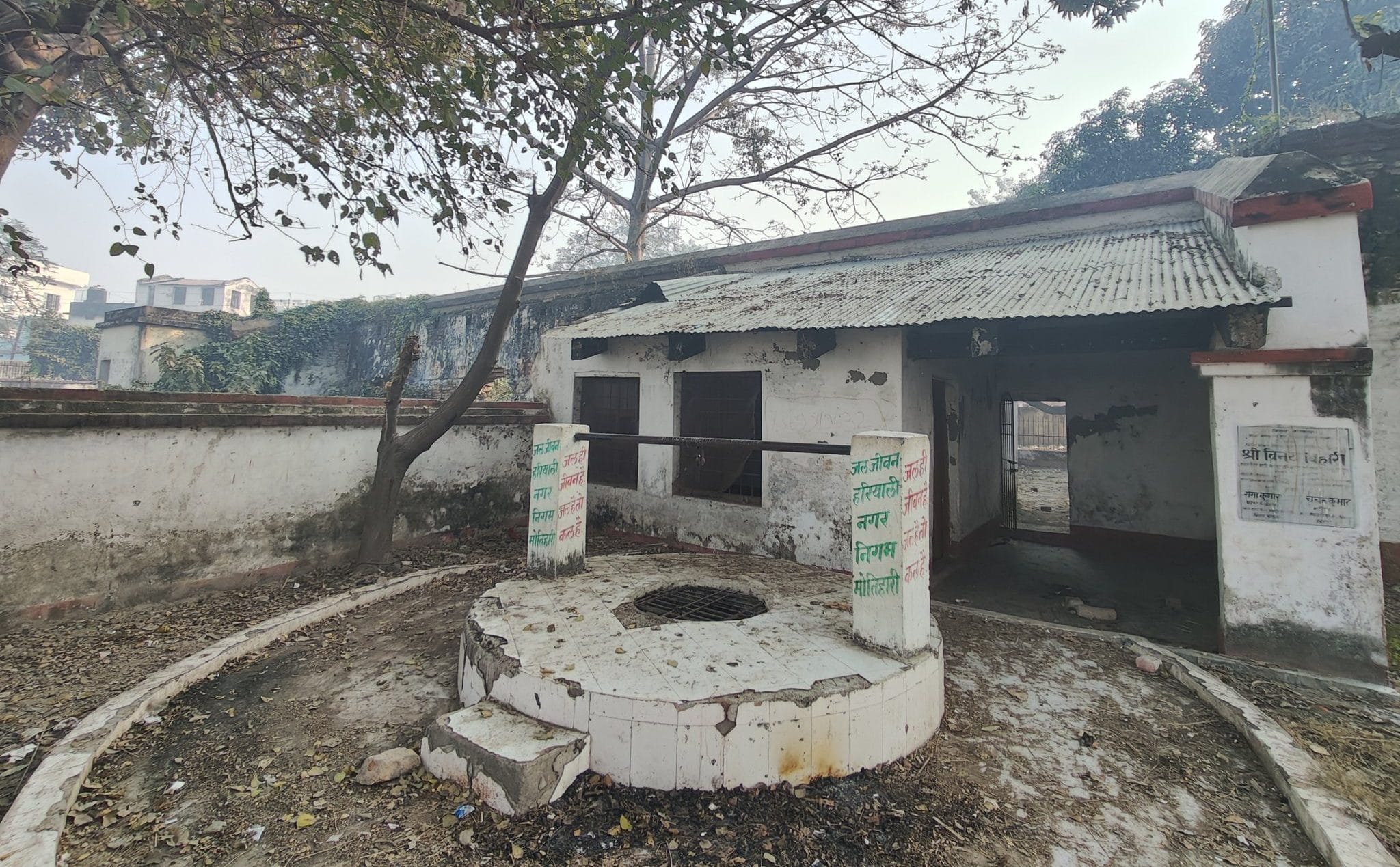
The colonial-era staff bungalow is under the protection of the state government. But the walls are peeling and the gates are broken.
In 2014, Bihar’s Art and Culture Department initiated the restoration of the bungalow and proposed a museum. But the project is still in limbo.
“This monument has been declared of state importance under the Bihar Ancient Monuments and Archaeological Sites, Remains and Antiquities Act, 1976,” reads a tattered government signboard at Orwell’s house in Motihari.
Also read: Archaeologist Amalananda Ghosh pulled ASI away from colonial roots. New book celebrates him
ASI sites vs state-protected sites
On 2 January, CM Nitish Kumar visited an exhibition of photographs related to the Kumhrar excavation ruins, the art of Patliputra, and the influence of cultures, and directed officials to write to the Modi government for the systematic upkeep of the ancient site.
“Kumhrar Park is a significant historical site connected to the ancient Magadha Empire. During the inspection, instructions were given for the better maintenance of the park premises along with the exhibits. Instructions were also given to the concerned officials to write a letter to the Government of India for the better development of the Kumhrar Park premises, so that people can easily learn and understand the information related to this site,” the CM wrote on X.
Kumhrar is one of Bihar’s significant archaeological sites connected to the Magadha Empire. It houses remains of a Mauryan-era assembly hall with 80 pillars unearthed during two phases of excavations — in 1912-15 and later in 1951-55.
Excavations at the site led to the discovery of pillared halls, monasteries, and drainage systems, “revealing the grandeur of one of the oldest cities in history,” according to Bihar Tourism website. “The most notable discovery is the 80-pillared hall, believed to be part of Emperor Ashoka’s palace. History enthusiasts and archaeology lovers visit this site to witness the remnants of India’s golden age”.
ASI officials said that the site is well maintained and over the years many facilities were introduced there. “There is always the possibility to enhance the facilities at any site. All the ASI sites in Bihar are in good condition and lakhs of visitors visit the site every year,” said an ASI official on the condition of anonymity.
Bihar, the official said, is the cradle of civilisation and many dynasties and cultures flourished here. “Many sites are under ASI’s control but many important ones are under state protection and they are in bad condition. The government should look into it before questioning our work,” he said.
However, the official accepted that some 20 years ago, the Kumhrar site, too, was in a bad condition.
On the recommendation of a high-level committee, the excavated area at Kumhrar was filled with soil and sand in 2005 as part of conservation efforts.
In the past few years, Bihar is emerging as a major tourism destination, shedding its badlands image. Between 2013 to 2023, tourist footfall rose from 2.23 crore to 8.21 crore.
“Our tourist number is increasing and we also increased our expenditure on tourism. Many places still need better infrastructure and we will work on it,” said a senior official of Bihar’s Art and Culture Department.
(Edited by Aamaan Alam Khan)