



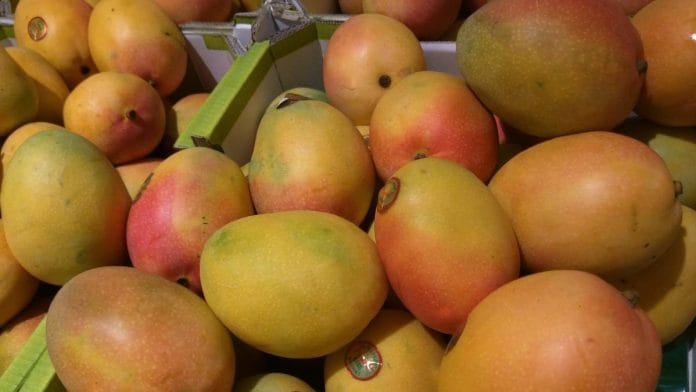
New Delhi: Nepal has imposed a ban on Indian mangoes after border quarantine inspectors detected excessive levels of chemical pesticides in imported shipments. The import restrictions by Kathmandu’s Ministry of Agriculture and Livestock Development have been in place since April-May.
Nepali authorities are framing the move as beneficial for domestic fruit varieties. Manish Kumar Pal, spokesperson for the Ministry of Land Management, Agriculture and Cooperatives of Madhes Province, told The Rising Nepal that the restriction has created greater opportunities for locally produced, “healthier fruit”.
“The federal government’s decision will provide additional encouragement to local production, while citizens will have access to healthier and safer produce,” he said.
However, mango traders in the country are worried about potential shortages, price hikes, and major losses. Although Nepal is a mango-producing country and exports more of the fruit than it imports, domestic production isn’t enough to meet local demand. Furthermore, the season for Nepali mangoes lasts for only two months.
Fruit sellers are now calling for stricter quarantine systems instead of a blanket ban on Indian fruit.
India’s top five mango exporters are the US, UAE, UK, the Netherlands and Saudi Arabia. While Nepal is not among India’s largest markets for the produce, the presence of chemical pesticides raises questions for the latter’s fruit production ecosystem.
The ban comes amid an already challenging season for Alphonso farmers in the Konkan belt, where late rains and extreme heatwaves caused devastating losses of up to 90 per cent.
Japanese ban on Indian mangoes
Last month, Japan banned India’s Kesar, Alphonso, Langra, and Banganapalli varieties for the first time in 20 years. The ban came after an inspection team found irregularities in production at Indian facilities.
In March, a team of quarantine officers from Japan, on inspection in Rehmanpur, Uttar Pradesh, found deficiencies in fumigation and related disinfection measures at treatment facilities.
Yokohama Plant Protection Association, a public-interest organisation that supports quarantine plans, notified that mango shipments carrying inspection certificates issued by India on or after 25 March this year would not be accepted anymore. According to the association, Indian mangoes would only be accepted after operational standards were improved.
Before this, Japan had banned Indian mangoes in 1986 over reported fruit fly infestations. That ban was lifted after 20 years.
Also read: Who is Xbox’s Indian-origin CEO Asha Sharma?
Thanks to Japan and Nepal we Other states Indian brothers will also taste these delicious mangoes
They dont think of own countrys ppl , thinking of other countrys ppl is far from reality , unless their govt put some strict regulations and take demeaning actions.
It is already time crossed to maintain Food Safety in fruit and Vegitable in India. But our Govt and Ministers are not bothered about to main the Quality to maintain the health of public. As you know very well even the colour and poison used to food which is very serious India .
This is called Atmanirbhar bharat, grow for yourself, eat yourself
As a country, we must begin to value quality—not just in our mangoes, but in every aspect of life. Unless we commit ourselves to the highest standards, we will continue to face such situations. Each and every one of us must strive for excellence in both our work and the things we create. Only then can India make a true quantum leap toward lasting progress and prosperity.
Vanai matra ho bazzar ma gayera hernu parxa ani thaha hunxa sacchi kai band xa taanai aai raako xa
It’s better to get agriculture from local farmers, strict regulation for agriculture that needs to be imported. And most of all stop mass mufration so the country doesn’t need to rely on import product all the time. Better yet support more the farmers needs so they cannproduce more agri product. Pay atleast the minimum wage with all the benefits to lical workers so TFW’s doesn’t need to be the sources all labour demand. Teach agriculture in school and let students learn the agriculture industry. Open the job to them during sememestral break so they can contribute and start making money, instead of them hanging out in the mall or burning their brain on social media!
Actually a blessing in disguise now we will get better mangoes when the shipping pressure is removed from exporters they will now use carbide so much now
Very good,let our farmers learn a lesson,exceive usage of pesticides from the flowering to ryping,means the mango is nothing but a poisoness capsule.lalkhs peoples suffering from these types of mangos, govt should take a serious note.