





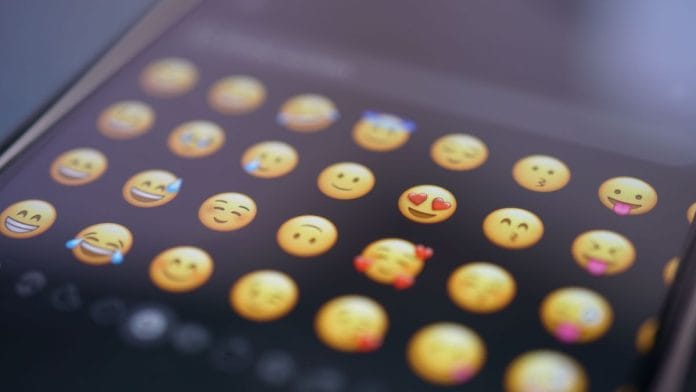

New Delhi: The loudly crying face is now the most-used emoji, surpassing rolling-on-the-floor-laughing and tears of joy emojis.
According to Google’s new usage data for 2025, the loudly crying face emoji, with tears streaming from closed eyes, has become an all-purpose emoji among the 500 most widely used emojis, expressing humor, strong emotions and crying.
Google collected the data from an anonymous sample of 665 million emojis used by people worldwide on Gboard, a Google keyboard built into most Android devices.
A report published by The New York Times, which analysed Reddit posts and consulted linguists, found that young people considered other emojis overused.
Emojis are used frequently by teenage girls, while women tend to have more social ties and a larger emotional vocabulary.
“Teenagers, particularly teenage girls, have always been at the forefront of linguistic change,” said Sali A. Tagliamonte, a professor of linguistics at the University of Toronto, quoted by The New York Times.
According to Google, the 10 most-used emojis have remained largely unchanged over the past several years, even though there are now more than 3,600 emojis available.
However, the ranking and usage of emojis continue to shift, with some emojis being replaced by others. The thumbs-up emoji, for example, is becoming less popular, while the folded-hands emoji is seeing increased use.
Replacement of emojis
Emojis have now become a huge part of online chatting. The article noted that different generations use emojis to express the same feelings, but they may choose different emojis to do so.
Younger generations create new meanings for existing emojis and replace older ones with different emojis that feel more fun and connected to them.
The wilted red rose or flower is increasingly being used by teenagers to show sadness, heartbreak, or emotional exhaustion. Earlier, these emotions were often expressed using the broken heart emoji.
Emoji trends are changing quickly. Once older generations start using a new emoji heavily, younger users often stop using it and move on to something else.
According to the data, teenagers are more likely to use the fire emoji in situations where older people might use the 100% emoji.
Another example is the moai emoji, which depicts a giant gray stone statue of a human figure. Although it was not originally designed to express an emotion, it has become popular among younger users. Gen Alpha and Gen Z often use the moai emoji as a deadpan reaction, to show a straight face or to express a sarcastic “really?” response. Its popularity has grown dramatically in recent years, rising from 482nd in 2021 to 33rd in 2025.
(Edited by Prashant Dixit)