







New Delhi: On 2 June 2026, senior advocate and mediator Sriram Panchu was having lunch with a 75-year-old lawyer friend at Chennai’s prestigious Madras Club. During the meal, a steward approached their table and informed the guest that his attire violated the club’s dress code rules. What he wore was just a simple cotton half-sleeved shirt over trousers. The dress code violation was the length of the side slit on the man’s cotton shirt.
“He is a simple man. He is Gandhian. He wears cotton,” said Panchu.
The episode was more than a dispute over clothing. Panchu saw it as evidence of a mindset that continues to privilege colonial-era notions of appearance and status over Indian traditions and personal dignity.
In a sharply worded letter to the club’s general manager, he argued that the incident exposed deeper problems within sections of India’s elite club culture. Panchu argued that the controversy raised broader questions about who defines respectability in modern India and whether elite institutions have adapted to the social realities of an independent nation.
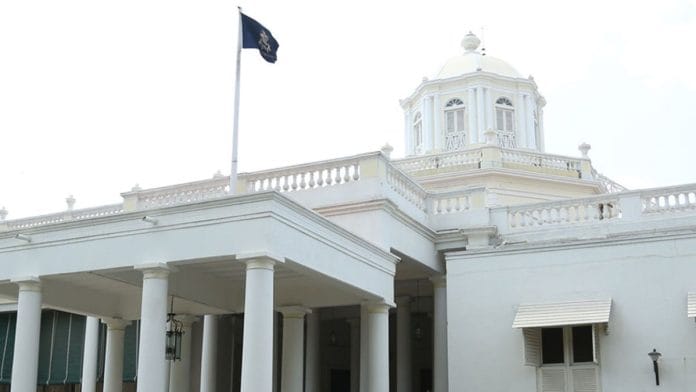
Founded in 1832 during British rule, the Madras Club is one of Chennai’s oldest and most exclusive private clubs. For nearly two centuries, it has been associated with the city’s elite, attracting prominent lawyers, business leaders, senior civil servants, and public figures. Membership is highly selective, with long waiting lists and strict admission norms. Over the years, the club has tried to modernise while preserving its traditions. Although some rules have evolved and facilities have been upgraded, it continues to be seen by many as a symbol of exclusivity and old-world privilege.
The Madras Club is not alone. Several colonial-era private clubs across India—including Madras Cricket Club and Madras Gymkhana Club in Chennai and Calcutta Swimming Club and Calcutta Club in Kolkata—continue to follow dressing rules rooted in British traditions.
These clubs generally require collared shirts, trousers, and closed shoes in formal spaces such as dining halls and bars.
“If it were English or Spanish cotton, there would be no issue. The problem is with simple Indian cotton. The club’s rules effectively ban the veshti, which reflects Tamil culture and traditional Indian dress. You cannot wear kurta-pyjamas and enter the club,” Panchu added.
Traditional Indian attire is allowed in some institutions if it is paired with a jacket or achkan.
“It is not just about attire, but about a mindset—one that fails to recognise that we have been a free and independent nation for 75 years and a proud India which has left England far behind,” said Panchu.
‘Send me the dress code’
Panchu’s guest was a lawyer who had fought significant public-interest battles and lived according to Gandhian principles. The fact that such a person could be questioned over what Panchu regarded as a minor technicality struck him as emblematic of misplaced priorities.
According to the senior advocate, the steward’s approach itself was inappropriate. He argued that any concern should have been raised discreetly with him rather than directly with his guest.
“The steward foolishly spoke to my guest. I misunderstood nothing. I upbraided the steward. However, I know that steward. He is a meek chap. He would never have done this on his own. He did it on the instructions of another member of the Club who was in the vicinity. I said, ‘What business do you have to speak to my guest? If you have any problems, tell me quietly. Don’t embarrass my guest,’” Panchu said.
In his letter, Panchu mocked what he called excessively detailed dress regulations, claiming that the rulebook had become detached from common sense. He pointed specifically to prescriptions concerning the dimensions of shirt slits, and argued that such requirements invited ridicule rather than respect.
“Some sections of our society, especially the elite fashionable society, have not gotten accustomed to the fact that this is India,” he said.
In his letter, Panchu challenged the Madras Club to explain whether its rules would even permit some of the country’s highest constitutional authorities to enter the premises in their usual attire. He argued that independent India could not continue to be governed by social codes rooted in colonial sensibilities.
“I demand that you send me the dress code of the Madras Club. I would like to see whether the same permits the Prime Minister of the country, the Chief Justice of India and the Chief Minister of Tamil Nadu to come to the club. If it doesn’t, God help you and those who run the Club,” he wrote in the letter.
Framing the issue as one of cultural identity, Panchu said India had long since moved beyond the colonial era and suggested that those who still preferred such standards were out of step with the country they lived in.
“The dress code is longer than Part III of the Constitution, which protects fundamental rights. What a joke!” he said.
A representative of the club said that the guest was allowed to have his lunch and was not denied any service. According to him, the guest was merely asked to button up his shirt in keeping with the dress code.
The Madras Club representative said that there is a new team in the club, and called the incident a misunderstanding.
“Dress code rules are followed as per the Tamil Nadu Dress Code Act, 2014, which permits national dress and allows all appropriately dressed individuals to use the club. However, different areas within the club may have specific dress expectations, so in some sections a particular dress code might be communicated, but that does not mean access to the club is denied,” the Madras Club representative said.
He clarified that generally, dress codes are common practice in clubs. Formal attire such as suits is expected during committee meetings, and members are expected to be decently dressed, including wearing shoes and socks, in dining areas.
“Even if someone is in Indian attire or wearing chappals, they are still allowed to use the club; it is not a case of denying entry or access,” he said.
Panchu rejected the club’s explanation.
“You cannot wear national or local acceptable dress in this club. Ask any member,” he said.
Accessibility concerns
Panchu is a polio survivor who relies on a cane, walker, or wheelchair. He alleged that the Madras Club failed to address concerns he had raised about wheelchair access near the swimming pool. According to him, he had warned management weeks earlier that parts of the route were unsafe and unsuitable for persons with disabilities and had been assured that repairs would be completed.
One day, he lost his balance and fell while leaving the poolside area. He had specifically highlighted broken surfaces, uneven pathways, and dangerous conditions in a letter sent weeks earlier.
“More than a month back, I told you (General Manager of the Club) that I was having great difficulty taking my wheelchair up to the swimming pool. From the car park, the usual path is cobblestoned, wholly unsuitable for a wheelchair,” he wrote in the letter.

Panchu argued that accessibility concerns should take precedence over trivial dress-code enforcement.
The club, has a different account of the situation.
“There is a fully accessible route available to all members, including wheelchair users. The issue being discussed concerns a shortcut path, not the main accessible route. The route highlighted by Panchu was a service path not meant for members. The club has a separate wheelchair-accessible pathway that is used by wheelchair users and other persons with disabilities,” the club representative said.
He added that the service path is being repaired.
“Over time, tree roots have lifted sections of the pavement along the shortcut path, making it uneven and harder to walk on. This path is currently being repaired and paved, with the work expected to be completed by tomorrow,” he said.
Panchu said the issue concerned a 10×10-foot patch that was uneven and riddled with potholes, making it unsafe for wheelchair users and people with mobility difficulties.
“They sat on my request from 2 May and did nothing. Now, after I raised the issue publicly, they are finishing the work in two days,” he said.
In addition to the accessibility issue, Panchu also raised concerns about his treatment at the club. He said he was being instructed to move to a distant designated smoking area despite his mobility challenges, an experience he characterised as targeted.
The club representative said that the matter is being addressed with Panchu.
In his letter, the senior advocate cited provisions of disability rights legislation and warned of legal action against both the club and its management.
(Edited by Prasanna Bachchhav)