








New Delhi: Twenty-nine-year-old Borna Naimi was arrested in Iran’s Kerman on 1 March allegedly for participating in the January protests over the failing economy.
But here’s the catch. Naimi’s religion, Baha’i, prohibits taking part in protests or even organising them. The case against him therefore doesn’t stand.
As per Iranian media reports, Baha’i is one of the country’s most persecuted communities. And the war in West Asia has highlighted their concerns once again.
“For one community inside Iran—the country’s largest non-Muslim religious minority—there was no ceasefire. There has never been one,” a Baha’i activist in Iran told ThePrint on the condition of anonymity. “For the Bahá’ís of Iran, the persecution is permanent, structural, and meticulously administered. It did not pause for war. It intensified under its cover.”
Activists are now calling for Naimi’s release and also trying to bring attention to the condition of Baha’is living in Iran. For many, it is like living in a perpetual state of war.
Since his arrest, Naimi, an accomplished karate athlete with gold medals in both domestic and international competitions and the father of a three-year-old, has faced at least two mock executions and severe torture by the Iranian regime, according to local news reports.
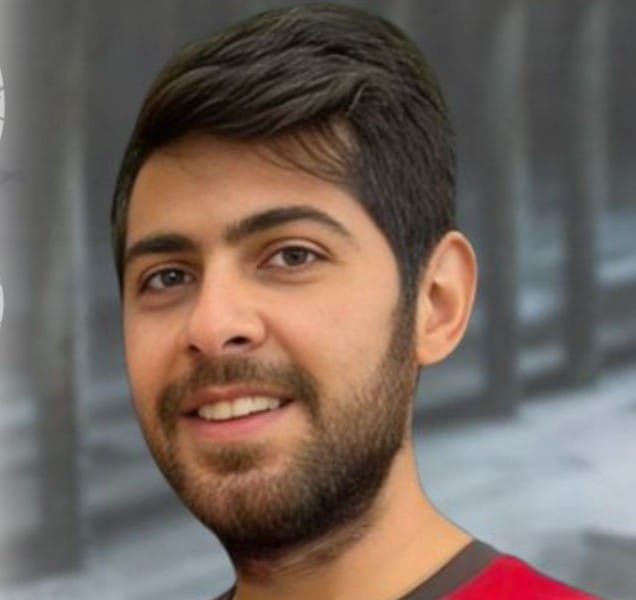
He was taken from his office by six masked officers of the Islamic Revolutionary Guard Corps (IRGC) Intelligence Organization. His family received no word of his whereabouts or wellbeing for three days.
Baha’i activists who ThePrint spoke to said that the community continues to bear the brunt of torture, mass arrests and state-sanctioned hate speech.
Also read: Iran protests and the moral confusion of Liberals
State sponsored persecution
The Baha’i community in Iran is estimated to have around 3,00,000 members, making it the country’s largest non-Muslim religious minority. Despite originating in Iran, Baha’is are not officially recognised by the Islamic regime and face systematic persecution, including limited access to education and employment.
Nilakshi Rajkhowa, a representative of the Baha’i Office of Public Affairs told ThePrint the recent cases must be seen in the context of decades-long, systemic persecution.
“These incidents are not isolated. The Baha’i community—the largest non-Muslim religious minority in Iran—has faced state-sponsored persecution for over 47 years. It is embedded in state policy at all levels,” she said.
She pointed to a 1991 government memorandum, endorsed by the leadership, which explicitly called for blocking the development of the Baha’i community. “This policy continues to be implemented to this day,” she said, adding that periods of national crisis have often coincided with intensified repression. “Whenever there is a crisis, Baha’is are made scapegoats.”
According to a 2025 UN report, since the 2022 women’s rights protests in Iran, attacks against Baha’i women have surged. Many were arrested in the months following the unrest, often held without due process and with their whereabouts unknown. Baha’i women now make up two-thirds of all Baha’i prisoners. In January 2025, 11 women were detained in pre-dawn raids without warrants. Earlier, in October 2024, ten women in Isfahan received a combined 90-year sentence, enduring abuse, denial of medical care, and legal violations.
According to Rajkhowa, the current situation follows a familiar pattern. “During this time of national crisis, the persecution has not stopped. There have been a series of arrests, summons, and detentions without due process. Many are denied access to legal representation.”
She highlighted the case of Peyvand Naimi, arrested in January, who authorities accused of involvement in protests without evidence. “The accusations are completely baseless,” she said. “No credible evidence has been presented.” She alleged that he was subjected to severe mistreatment in custody, including “brutal torture” and “mock executions,” practices that violate international law.
In Borna’s case she said, the IRGC tried to extract false confessions, “threatening to send his child to a state orphanage and force his wife to divorce him.”
“Iranian authorities deny that Baha’is are persecuted for their beliefs. They label them as spies or agents of foreign governments. But these accusations are entirely false,” Rajkhowa added.
Also read: What is the cost of this ‘Nobody’s War’ in Iran? Morality
A history of discrimination
In 2024, 71-year-old Mahvash Sabet underwent open-heart surgery after over 13 years in prison, only to be ordered back to complete her second 10-year sentence, according to local reports.
In 2010, the Iranian government sentenced her to twenty years in prison, and to another ten years in 2023 for practicing her faith. Before her arrest, she worked as a teacher and school principal but was dismissed after the 1979 Islamic Revolution because of her Baha’i faith.
“[When I left Iran to continue my education], I did not intend to emigrate. But my experience at the university outside of the country was very different, as if for the first time a burden was lifted off my shoulder and the boot on my neck had disappeared… There [abroad] I experienced a strange freedom, and for the first time I was equal with other people, and no one was pulling themselves away from me,” Negar Sabet, 38-year-old daughter of Mahvash Sabet was quoted as saying in the Human Rights Watch report on the persecution of the Baha’i community.
During a November 2023 raid in Shiraz, one woman suffered a cardiac episode after witnessing her home ransacked, while another, aged 82, returned to find her door broken down and possessions scattered across the floor, the 2025 UN report mentioned.
When Iran came under military pressure and prison authorities across the country granted temporary furloughs to hundreds of inmates, the Baha’is were singled out for exclusion. According to a Baha’i international organisation report submitted to the UN, at Dolat Abad prison in Isfahan, approximately 200 of the prison’s 250 inmates were released on furlough. Eleven Baha’i women were refused. When they asked prison officials whether they were not citizens like everyone else, the response, recorded in the report, they received was: “You are nothing.”
Eight of those women—Neda Badakhsh, Neda Emadi, Parastou Hakim, Shana Shoghifar, Mojgan Shahrezaie, Negin Khademi, Arezou Sobhanian, and Yeganeh Rouhbakhsh—have been imprisoned since December 2025, collectively sentenced to 75 years in prison, the report further stated.
They have paid the fines imposed on them. They remain behind bars regardless. The judge overseeing cases in Kerman was reportedly explicit: Baha’i prisoners would not be released simply because they are Baha’i.
Also read: Iran surveys show most Iranians favour regime change but disagree on what comes next
Hate speech
Alongside physical repression, the Iranian state has mounted a relentless propaganda campaign as well. Since 2023, the UN report recorded, over 1,60,000 posts on government-run websites and social media portray Baha’is as spies, agents of Israel, or instigators of unrest.
Senior religious leaders, including former Supreme Leader Ayatollah Ali Khamenei, labelled Baha’is as “deviant” or “morally corrupt”.
“State-linked campaigns, led by the IRGC and affiliated organizations, have even glorified historical violence against the Bahá’í faith, calling for intensified persecution,” the report stated.
In July 2023, the Islamic Revolutionary Guard Corps and an affiliated think tank coordinated a campaign celebrating historical violence against the Baha’i faith’s forerunners, the Bábis, signaling to the public that persecution is a patriotic duty.
The report noted that authorities have moved decisively to erase Baha’i’s cultural and religious life. In March 2024, bulldozers levelled more than 30 newly dug graves at Khavaran, a burial site near Tehran where the government has long forced Baha’is to inter their dead under restrictive conditions. Elsewhere, Baha’i cemeteries have been auctioned off or seized, with Tehran’s main burial ground now under intelligence control, trees cut down, and family visits restricted.
Musicians and artists have been silenced: A young Bahá’í percussionist in Golestan Province was barred from performing just an hour before his concert, authorities citing his faith as the reason.
Education remains a tool of exclusion. In 2023, university applicants were required to renounce their beliefs to gain admission to public institutions. Students attending the underground Baha’i Institute of Higher Education face harassment; in February 2024, intelligence agents raided a home where students were taking exams, confiscating textbooks and reportedly beating a young man who protested treatment of his mother.
Economic repression has intensified. In Mazandaran province, government bulldozers flattened rice paddies long farmed by Baha’i families. Walnut orchards and farmland in Ahmadabad were confiscated.
Despite facing repression, Rajkhowa noted that Baha’is continue to seek redress through legal and peaceful means. “They have never gone against the government through confrontation. They always try to follow proper legal channels,” she said. “But it is important to inform the international community about what they are facing.”
(Edited by Theres Sudeep)